Genioplasty Sydney

With Dr. Mark Kohout

Genioplasty Sydney

Dr Mark Kohout is a Specialist Plastic Surgeon with specialist registration in Surgery – Plastic Surgery, more than 25 years of practice and medical registration number MED0001133000. Genioplasty is chin surgery that changes chin projection, height, width, position or selected asymmetry using either repositioning of the patient’s own chin bone or, in appropriate cases, placement of a manufactured chin implant.

The chin contributes to lower-face proportions and its relationship with the lips, nose, jawline and neck. A chin that appears recessed, prominent, tall, short or asymmetric may represent an isolated chin difference, but in some patients it forms part of a broader lower-jaw or bite discrepancy that requires separate assessment.

Genioplasty does not reposition the tooth-bearing part of the jaw and is not a substitute for orthodontic or orthognathic treatment where a significant skeletal or dental problem exists. An in-person assessment is required to review facial anatomy, bite alignment, imaging where indicated, lower-lip and chin sensation, treatment alternatives, risks and the option of no surgery.

What Is Genioplasty, and What Does It Actually Do?

Genioplasty is facial surgery that changes the position or contour of the chin without moving the tooth-bearing portion of the lower jaw. It may involve cutting and repositioning the patient’s own chin bone or adding an implant over the front of the mandible.

  • Projection: The chin may be moved forward or, in selected cases, backward.
  • Vertical height: Bone repositioning can increase or reduce chin height.
  • Width and contour: Selected changes in frontal width or chin shape may be planned.
  • Asymmetry: A bone segment may be shifted to reduce selected side-to-side differences.
  • Implant augmentation: A manufactured implant may be used when added projection or width is the main objective.

Sliding genioplasty commonly uses plates and screws to hold the repositioned bone while it heals. Chin implants do not move the underlying jaw, and neither approach can guarantee exact symmetry or a specific facial proportion.

Genioplasty Options and Benefits

How Is Chin Position Assessed Before Genioplasty?

Assessment considers the chin in relation to the entire lower face rather than relying on a single profile photograph or measurement. Chin projection, vertical height, width and symmetry are reviewed together with jaw position, lip posture, dental alignment and neck proportions.

  • Profile assessment: Chin projection is considered relative to the lips, nose and lower facial profile.
  • Front-view assessment: Width, symmetry and midline position are reviewed.
  • Vertical proportions: Lower facial height and the balance between the lips, chin and jaw are assessed.
  • Dental relationship: Overbite, underbite, crossbite and previous orthodontic treatment are considered.
  • Soft tissues: Skin thickness, chin muscle position and the relationship between the chin and neck may influence planning.

Reference lines and facial measurements can assist planning, but they are guides rather than fixed standards that determine a correct chin position. Physical examination and, where indicated, imaging are needed to distinguish an isolated chin concern from a broader jaw discrepancy.

What Should I Know About Genioplasty at a Glance?

Genioplasty is performed in an accredited hospital or day-surgery facility using a plan based on facial examination, bite assessment and imaging where required. Recovery depends on whether the operation involves bone movement or implant placement and whether other facial procedures are performed at the same time.

Treatment Area

Bony chin and overlying soft tissues

Main Approaches

Sliding genioplasty or implant-based chin augmentation

Anaesthesia

Commonly general anaesthesia

Incision

Usually inside the mouth for sliding genioplasty; implant access may be intraoral or beneath the chin

Hospital Stay

Usually day surgery, although an overnight stay may be recommended depending on the procedure, anaesthesia and any combined surgery.

Recovery

Swelling, tightness and altered sensation may continue after light daily activity resumes

Sliding genioplasty commonly requires plate-and-screw fixation, while implant fixation depends on the device and surgical technique used. Temporary or persistent lower-lip and chin numbness can occur with either approach.

What Are the Potential Benefits of Genioplasty?

Genioplasty may provide structural changes where chin position or shape is suitable for surgical treatment. The amount of change depends on underlying bone anatomy, soft-tissue thickness, facial proportions and the selected technique.

  • Increased projection: A recessed chin may be advanced using bone movement or augmented with an implant.
  • Reduced projection: Selected prominent chins may be repositioned or reduced.
  • Vertical adjustment: Bone movement may increase or reduce chin height.
  • Asymmetry reduction: Selected differences in chin position may be addressed.
  • Post-traumatic correction: Stable irregularities following previous injury may sometimes be treated.

These possible changes should be weighed against nerve disturbance, bone-healing problems, hardware or implant concerns and the possibility of revision. Genioplasty does not correct every form of facial asymmetry or a significant problem with the way the teeth meet.

Do I Need Sliding Genioplasty, a Chin Implant or Jaw Surgery?

The appropriate procedure depends on whether the concern is isolated to the chin or reflects the position of the whole lower jaw. Sliding genioplasty, chin implants and orthognathic surgery alter different structures and therefore address different anatomical problems.

  • Sliding genioplasty: Repositions the patient’s own chin bone forward, backward, upward, downward or sideways.
  • Chin implant: Adds projection or width over the existing chin without moving the jaw.
  • Orthognathic surgery: Repositions the tooth-bearing upper jaw, lower jaw or both where a skeletal and bite discrepancy exists.
  • Orthodontic treatment: Changes tooth position and dental alignment rather than chin anatomy.
  • No surgery: May be appropriate when the expected anatomical change does not justify the operative risks.

Sliding genioplasty usually provides greater control over vertical and multidirectional skeletal movement, while an implant may be considered when added projection or width is the main objective. Examination and imaging may be required before these options can be compared meaningfully.

When Does a Recessed Chin Actually Come From the Lower Jaw?

A recessed-looking chin does not always arise from the chin itself. In some patients, the entire lower jaw sits farther back relative to the upper jaw, creating a broader skeletal pattern that genioplasty alone does not correct.

  • Isolated chin deficiency: The jaw and bite may be acceptable while the chin segment itself lacks projection.
  • Mandibular retrognathia: The entire lower jaw may be positioned posteriorly.
  • Overbite: A significant dental relationship may suggest a broader jaw discrepancy.
  • Facial asymmetry: Chin deviation may form part of asymmetry affecting the whole mandible.
  • Previous orthodontics: Tooth movement can sometimes mask or compensate for an underlying skeletal relationship.

Where the lower jaw itself is the main issue, isolated chin surgery may change the profile without correcting the bite or broader skeletal pattern. Orthodontic or oral and maxillofacial assessment may therefore be recommended before a final surgical plan is made.

Who Performs Genioplasty in Sydney?

Dr Mark Kohout is a Specialist Plastic Surgeon with specialist registration in Surgery – Plastic Surgery and medical registration number MED0001133000. He provides consultations in Sydney, with additional consultation availability in Orange, NSW.

  • More than 25 years of practice in plastic and reconstructive surgery
  • Individual assessment of chin anatomy and lower facial proportions
  • Review of bite and jaw relationships
  • Discussion of sliding and implant-based approaches
  • Surgery in accredited facilities with structured postoperative review

Care planning may involve a dentist, orthodontist or oral and maxillofacial surgeon where a broader dental or skeletal issue is suspected. Dr Kohout’s qualifications and clinical processes do not guarantee a particular surgical result.

Book your Consultation

Take the first step toward your goals by filling out the brief form below. This information helps us understand your specific needs so we can make the most of our time together during your session. Once you submit your details, a member of our team will review your request and reach out shortly to confirm your appointment.

Patient Photo Assessment

Sending photos for a patient photo assessment can help you and your plastic surgeon prepare for your consultation. By reviewing clear, accurate photos, Dr Kohout can provide preliminary patient photo assessment like insights, assess your needs, and determine the right approach for your procedure.

Tips for Uploading Photos

ASK A FRIEND

Friend takes photo

GOOD LIGHTING

Plain wall, bright light

ALL ANGLES

Front / sides/ 45°

CLEAR & SHARP

No portrait mode

SEND ORIGINALS

No edits or compression

What Happens During a Genioplasty Consultation?

A genioplasty consultation is used to assess chin anatomy, facial proportions, dental alignment, general health and the reasons surgery is being considered. It also provides time to compare procedures, review scars and discuss nerve changes, hardware, implants, recovery and alternatives.

  • Medical history: Previous surgery, trauma, allergies, bleeding risks, healing concerns and general health are reviewed.
  • Dental and orthodontic history: Bite problems, orthodontic treatment, dental infection and previous jaw procedures are discussed.
  • Facial assessment: Chin projection, height, width, midline position and asymmetry are examined from several angles.
  • Soft-tissue and sensation review: Skin thickness, chin muscle position and existing lower-lip or chin numbness are documented.
  • Planning and referral: Photography, imaging or referral to a dental or jaw specialist may be arranged where appropriate.

A photograph submitted online may assist with a preliminary discussion but cannot determine whether the concern is isolated to the chin or involves the whole jaw. Final planning requires an in-person examination and any recommended imaging or dental assessment.

What Imaging May Be Needed Before Genioplasty?

Imaging is not identical for every patient, but it may be useful where bone movement, asymmetry, dental-root position or nerve anatomy needs to be assessed in more detail. The type of imaging selected depends on the proposed procedure and whether there are associated dental or jaw concerns.

  • Clinical photography: Standardised front, profile and oblique views assist facial analysis and planning.
  • Panoramic dental imaging: May help review dental roots, mandibular anatomy and previous dental treatment.
  • Cephalometric imaging: Can assist assessment of skeletal relationships and lower facial proportions.
  • CT or cone-beam CT: May be used for selected asymmetry, complex anatomy or detailed bony planning.
  • Previous records: Existing orthodontic or jaw imaging may provide useful comparison information.

Imaging can help identify the position of the lower tooth roots, mental foramina and surrounding bone before surgery. It does not remove surgical risk, but it can provide information that is not available from external examination alone.

What Are the Different Types of Genioplasty?

Genioplasty includes several bone-based and implant-based approaches, and more than one directional movement can be incorporated into the same sliding procedure. The final technique depends on chin anatomy, facial proportions, imaging, bite assessment and the amount of change being considered.

  • Advancement sliding genioplasty: Moves the chin segment forward.
  • Setback genioplasty: Repositions selected chin bone backward where appropriate.
  • Vertical genioplasty: Lengthens or shortens the chin through planned bone movement.
  • Asymmetry-correction genioplasty: Shifts or reshapes the chin to reduce selected side-to-side differences.
  • Implant-based chin augmentation: Places a manufactured implant over the bone to add projection or width.

Revision genioplasty may involve previous bone movement, fixation hardware or an existing implant. No single approach is appropriate for every chin shape or jaw relationship.

Genioplasty Sydney

Am I a Suitable Candidate for Genioplasty?

Suitability depends on stable facial growth, chin anatomy, dental alignment, oral health, general health and the ability to follow postoperative instructions. A chin concern should be assessed in the context of the entire lower face rather than treated as an isolated feature automatically requiring surgery.

  • Stable skeletal development: Facial growth should be complete before elective bone surgery is considered.
  • Suitable anatomy: Examination confirms a chin difference that can reasonably be addressed by the proposed procedure.
  • Appropriate bite assessment: A significant jaw discrepancy has been excluded or is being managed as part of a coordinated plan.
  • Suitable oral and general health: Active dental infection and uncontrolled medical conditions are absent.
  • Realistic expectations: The patient understands nerve, hardware, implant, scar and revision considerations.

A suitable patient should also be able to avoid nicotine and follow oral-hygiene, dietary, lifting and activity restrictions during recovery. Final candidacy can only be confirmed after examination and any recommended imaging or dental assessment.

Genioplasty Candidacy and Procedure

Who May Not Be Suitable for Genioplasty?

Some patients may be advised to delay surgery or consider a different treatment when the underlying issue is not isolated to the chin or when surgical risk is increased. Suitability may change after dental treatment, nicotine cessation, medical optimisation or specialist review.

  • Ongoing facial growth: Elective skeletal surgery is generally deferred until growth has stabilised.
  • Active oral or dental infection: Infection should be treated before surgery.
  • Untreated bite discrepancy: Significant overbite, underbite, crossbite or skeletal jaw imbalance may require another treatment pathway.
  • Current nicotine use: Smoking, vaping and nicotine can impair wound and bone healing.
  • Significant medical or healing risk: Poorly controlled diabetes, bleeding disorders or other conditions may make elective surgery inappropriate.

Inadequate bone or soft-tissue support may also limit the suitability of a proposed implant or bone movement. Expectations of exact symmetry or a specific facial proportion should be addressed before surgery is considered.

How Is Sliding Genioplasty Performed?

Sliding genioplasty repositions a segment of the patient’s own chin bone while leaving the tooth-bearing part of the lower jaw in place. The exact movement is planned according to chin projection, height, asymmetry, dental-root position and the location of the mental nerves.

  • Anaesthesia: General anaesthesia is commonly used.
  • Surgical access: An incision is usually made inside the lower lip to reach the front of the mandible.
  • Bone cut: A planned osteotomy creates a mobile chin segment below the lower tooth roots.
  • Repositioning: The segment may be moved forward, backward, vertically or sideways according to the treatment plan.
  • Fixation: Plates and screws hold the repositioned bone while healing occurs.

The osteotomy must be planned carefully in relation to the tooth roots, mental foramina and nerve anatomy. The procedure changes the chin segment but does not reposition the tooth-bearing jaw or directly correct the bite.

How Is Chin Implant Surgery Performed?

Chin implant surgery adds projection or selected width by placing a manufactured implant over the existing chin bone. The implant does not move the mandible and is usually considered where augmentation rather than multidirectional skeletal repositioning is required.

  • Anaesthesia: General anaesthesia or another planned approach may be used.
  • Surgical access: The implant may be inserted through an incision inside the mouth or beneath the chin.
  • Pocket creation: A controlled pocket is created over the chin bone.
  • Implant positioning: The implant is centred and checked in relation to the facial midline and surrounding soft tissue.
  • Fixation and closure: The implant may be secured according to the selected technique before the incision is closed.

Implant size, shape, material and fixation method should be selected according to anatomy and the surgeon’s documented practice. Implant surgery introduces device-specific risks such as movement, infection, palpability and pressure-related change in the underlying bone.

What Is the Difference Between Sliding Genioplasty and a Chin Implant?

Sliding genioplasty and chin implants can both increase chin projection, but they do so in different ways and have different limitations. Sliding genioplasty changes the patient’s own bone, while an implant adds manufactured material over the existing skeleton.

  • Direction of change: Sliding genioplasty can alter projection, height and selected asymmetry in several directions.
  • Foreign material: Sliding genioplasty uses fixation hardware, while implant surgery also leaves a permanent implant unless it is later removed.
  • Vertical control: Bone repositioning generally provides greater ability to lengthen or shorten the chin.
  • Implant-specific issues: Malposition, palpability, infection and pressure-related bone change may occur with implants.
  • Bone-based issues: Sliding genioplasty introduces risks involving osteotomy, nerve disturbance, dental roots and bone union.

Neither approach is universally preferable. The appropriate option depends on the anatomical problem, required direction of change, soft-tissue coverage, bite relationship and the patient’s acceptance of the different risk profiles.

What Should I Know About Genioplasty Before and After Photos?

Before-and-after photographs can help demonstrate changes in projection, height, width and lower facial proportions after genioplasty. They cannot show bone union, nerve function, hardware position or every difference in soft-tissue response.

  • Views: Front, profile and three-quarter photographs may be used.
  • Standardisation: Head position, camera distance and lighting can change how chin projection appears.
  • Facial relationships: The chin should be assessed relative to the lips, nose, jawline and neck.
  • Healing: Early photographs may still show swelling, firmness or temporary asymmetry.
  • Limitations: Another patient’s result cannot predict an individual outcome.

Photographs are useful for discussion but do not replace physical examination or imaging. X-rays or CT studies may provide more useful information when bone movement, asymmetry or dental-root position needs to be assessed.

How Do I Request a Genioplasty Consultation?

A consultation request allows the clinic to collect basic information and arrange an appropriate appointment. It should not be used to decide whether sliding genioplasty, an implant or jaw surgery is required without an in-person assessment.

Photographs may help with an initial discussion but cannot establish the underlying skeletal relationship. Relevant dental records, orthodontic information or previous imaging may be useful at the consultation.

What Should I Expect During Genioplasty Recovery?

Recovery commonly involves swelling, bruising, tightness and altered sensation around the lower lip and chin. Oral hygiene, diet modification and protection from pressure or impact are especially important after sliding genioplasty.

  • Swelling: Usually most noticeable during the first several days.
  • Sensation: Numbness or tingling may affect the lower lip, chin or lower teeth.
  • Diet: A soft or modified diet may be required during early healing.
  • Oral care: Mouth rinses and careful brushing may be required after an intraoral incision.
  • Activity: Exercise, lifting and contact sport remain restricted until healing has progressed.

Symptoms should generally reduce over time, but sensory recovery can be slower than visible swelling. Increasing pain, fever, wound discharge, implant exposure, marked asymmetry or a new bite change should be reported promptly.

How Much Swelling and Numbness Is Expected After Genioplasty?

Swelling and altered sensation are common after genioplasty because the tissues around the chin and mental nerves are manipulated during surgery. The amount and duration vary according to the procedure, movement performed and individual healing response.

  • Early swelling: The chin and lower lip may appear swollen or uneven during the first days.
  • Lower-lip numbness: Temporary reduced sensation may occur after either bone or implant surgery.
  • Chin numbness: Sensation may be altered in the skin over the chin.
  • Tingling: Pins-and-needles sensations can occur as nerve function changes during recovery.
  • Longer-term change: Some sensory disturbance may take months to settle and can occasionally persist.

Persistent numbness does not automatically mean the nerve has been permanently injured, but ongoing symptoms should be documented and followed. New or worsening sensory loss, particularly when accompanied by increasing swelling or pain, requires assessment.

How Long Does Genioplasty Recovery Take?

Recovery occurs in stages, with visible improvement often preceding full bone healing or sensory recovery. The timeline differs between sliding genioplasty and implant-based surgery and may be longer if another facial procedure is performed at the same time.

  • First 24–72 hours: Swelling, tightness, pain management and diet modification
  • First week: Oral hygiene, dressings or tape and reduced physical activity
  • Weeks 1–2: Gradual return to desk-based work and light daily activities
  • Weeks 3–6: Progressive return to exercise as swelling continues to reduce
  • Weeks 6–12 and beyond: Ongoing bone, soft-tissue and sensory recovery

Driving may resume when head movement is comfortable and medication does not impair alertness. Contact sport and activities that risk impact to the chin should remain restricted until healing is adequate and medical clearance is provided.

Recovery varies. Dr Mark Kohout will provide advice based on the procedure performed and individual risk factors.

How Long Does the Bone Take to Heal After Sliding Genioplasty?

Bone healing begins during the first several weeks after sliding genioplasty, but consolidation and remodelling continue for months. Plates and screws maintain the planned position while new bone develops across the osteotomy site.

  • Early union: Initial bone bridging begins during the first healing phase.
  • Progressive consolidation: The osteotomy becomes more stable over the following weeks.
  • Remodelling: Bone continues adapting after initial union.
  • Risk factors: Nicotine exposure, infection, poor nutrition and medical conditions can interfere with healing.
  • Activity: Direct impact to the chin should be avoided until adequate healing has occurred.

A fixed healing date cannot be guaranteed for every patient. Delayed union, non-union or malunion are recognised complications and may require further treatment.

How Long Does the Bone Take to Heal After Sliding Genioplasty​

What Happens to the Plates and Screws After Sliding Genioplasty?

Plates and screws are commonly left in place after the chin bone has healed. In many patients they remain beneath the soft tissues without requiring further treatment.

  • Hardware may become difficult to feel once swelling resolves.
  • A plate or screw edge may occasionally be palpable.
  • Local irritation can occur.
  • Infection or exposure is possible but uncommon.
  • Removal may be discussed if hardware becomes symptomatic after bone healing.

Routine removal is not always required. Hardware removal is another surgical procedure and has its own risks, including infection, nerve disturbance and scarring.

Can a Chin Implant Move or Affect the Underlying Bone?

Yes, a chin implant can shift position or cause changes in the tissues or bone beneath it over time. The likelihood depends on implant size, material, pocket position, fixation and individual anatomy.

  • Malposition: The implant may move upward, downward or sideways.
  • Palpability: Implant edges may become noticeable in patients with limited soft-tissue coverage.
  • Infection: An infected implant may require antibiotic treatment or removal.
  • Exposure: Wound breakdown can occasionally expose the implant.
  • Bone change: Long-term pressure can produce varying degrees of resorption of the underlying mandible.

Not every radiographic bone change produces symptoms or requires treatment, but it is a recognised implant-related consideration. Persistent pain, movement, contour change or infection may lead to discussion of revision or implant removal.

How Much Does Genioplasty Cost in Sydney?

The cost of genioplasty in Sydney varies according to whether treatment involves sliding bone movement, a standard or custom implant, imaging, anaesthesia and hospital requirements. A personalised estimate can only be prepared once the proposed procedure has been established.

  • Surgeon’s fee
  • Anaesthetist’s fee
  • Hospital and theatre charges
  • Implant, plates or screws
  • Imaging, medications and postoperative follow-up

Additional costs may apply where orthodontic, dental or oral and maxillofacial assessment is required. Revision, implant removal or hardware removal may also involve separate expenses if these procedures later become necessary.

Medicare or private health insurance may contribute in selected reconstructive circumstances where current criteria are met. Elective appearance-related chin surgery should not be assumed to qualify, and eligibility should be confirmed directly with Medicare and the relevant insurer.

How Should I Prepare for Genioplasty?

Preparation involves review of dental health, bite alignment, medical conditions and practical recovery requirements. Treating infection and reducing avoidable bone-healing risks are important before either sliding or implant-based surgery.

  • Dental assessment: Treat active dental, gum or oral infection before surgery.
  • Imaging: Complete recommended X-rays, cephalometric studies or CT imaging.
  • Medication review: Discuss prescription medicines, supplements and agents that affect bleeding.
  • Nicotine cessation: Smoking, vaping and nicotine should be stopped within the advised timeframe.
  • Home preparation: Arrange transport, soft foods, mouth-care supplies and time away from work.

Patients should also plan for exercise and contact-sport restrictions. Possible sensory changes, hardware or implant issues and the need for revision should be understood before consent is provided.

What Alternatives to Genioplasty Should I Consider?

The appropriate alternative depends on whether the concern arises from the chin itself, the tooth-bearing jaw or dental alignment. Some patients may require another form of assessment before deciding that chin surgery is appropriate.

  • No surgery: Observation remains an option where the expected change does not justify the risk.
  • Orthodontic treatment: May address tooth alignment or dental compensation.
  • Orthognathic assessment: May be appropriate where the whole lower jaw is positioned too far forward, backward or asymmetrically.
  • Sliding genioplasty: May be considered where multidirectional skeletal change is required.
  • Chin implant: May be considered where additional projection or width is required without moving the jaw.

The alternatives are not interchangeable because they act on different anatomical structures. Treatment should be based on the diagnosis rather than simply choosing the procedure with the shortest recovery or smallest incision.

What Are the Risks and Complications of Genioplasty?

Genioplasty carries general surgical risks and procedure-specific risks involving nerves, teeth, bone healing, implants and fixation hardware. Risk varies according to anatomy, procedure type, oral health, nicotine exposure, medical history and the amount of movement planned.

  • Nerve and dental risks: Lower-lip or chin numbness, altered sensation, dental-root injury or changes in tooth vitality may occur.
  • Bone-healing risks: Delayed union, non-union, malunion or irregular bone contour can occur after sliding genioplasty.
  • Hardware risks: Plates or screws may become palpable, irritated, infected or require removal.
  • Implant risks: Malposition, infection, exposure, palpability or pressure-related bone change may occur.
  • General surgical risks: Bleeding, haematoma, infection, scarring, asymmetry, contour irregularity and anaesthetic complications are possible.

Soft-tissue changes may include chin-muscle disturbance, lower-lip changes or tissue descent. Revision surgery may be required where a structural, sensory, implant or contour concern persists.

A new bite change, increasing pain, fever, wound discharge, rapidly worsening swelling or implant exposure requires prompt review. Difficulty breathing, uncontrolled bleeding or another acute medical deterioration requires urgent assessment.

What Should I Understand Before Consenting to Genioplasty?

Informed consent requires understanding whether the concern is isolated to the chin or part of a broader jaw relationship. It should also include the possibility of persistent sensory changes, imperfect symmetry, hardware or implant issues and further surgery.

  • Bite assessment matters: A significant jaw discrepancy may change the recommended procedure.
  • Sensation may change: Lower-lip and chin numbness can persist.
  • Bone healing is variable: Union may take longer than expected or may require further treatment.
  • Devices can cause problems: Hardware or implants may require revision or removal.
  • No surgery remains an option: Treatment is elective where there is no reconstructive indication.

Patients should understand that the postoperative soft-tissue response is not completely predictable even when the bone or implant is positioned as planned. There should be sufficient time to ask questions, consider alternatives and seek another appropriately qualified opinion.

Why Might Patients Consider Genioplasty With Dr Mark Kohout?

Dr Mark Kohout is a Specialist Plastic Surgeon with specialist registration in Surgery – Plastic Surgery and medical registration number MED0001133000. His role includes consultation, facial and dental assessment, surgical planning, performance of surgery and structured postoperative follow-up.

  • More than 25 years of practice in plastic and reconstructive surgery
  • Individual assessment of chin position and facial proportions
  • Review of bite and jaw relationships
  • Discussion of sliding and implant-based approaches
  • Surgery in accredited facilities with Sydney and Orange consultation availability

Care may be coordinated with a dentist, orthodontist or oral and maxillofacial surgeon where appropriate. These qualifications and clinical processes do not guarantee a particular surgical, sensory or aesthetic outcome.

Dr Mark Kohout

How Do I Schedule a Genioplasty Consultation?

The first step is to arrange an in-person consultation for assessment of the chin, lower face and dental relationship. Previous orthodontic, dental or jaw-treatment records can help determine whether the concern is isolated to the chin or part of a broader skeletal pattern.

  • Contact the Sydney clinic or submit the enquiry form.
  • Obtain a GP or dental referral where appropriate.
  • Bring previous dental, orthodontic and jaw-treatment records.
  • Complete imaging where recommended.
  • Review sliding genioplasty, implant surgery, alternatives, recovery and risks.

A personalised surgical plan and fee estimate can be prepared after the required assessment is complete. Patients should allow time to consider the information, seek another opinion if desired and proceed only after informed consent.

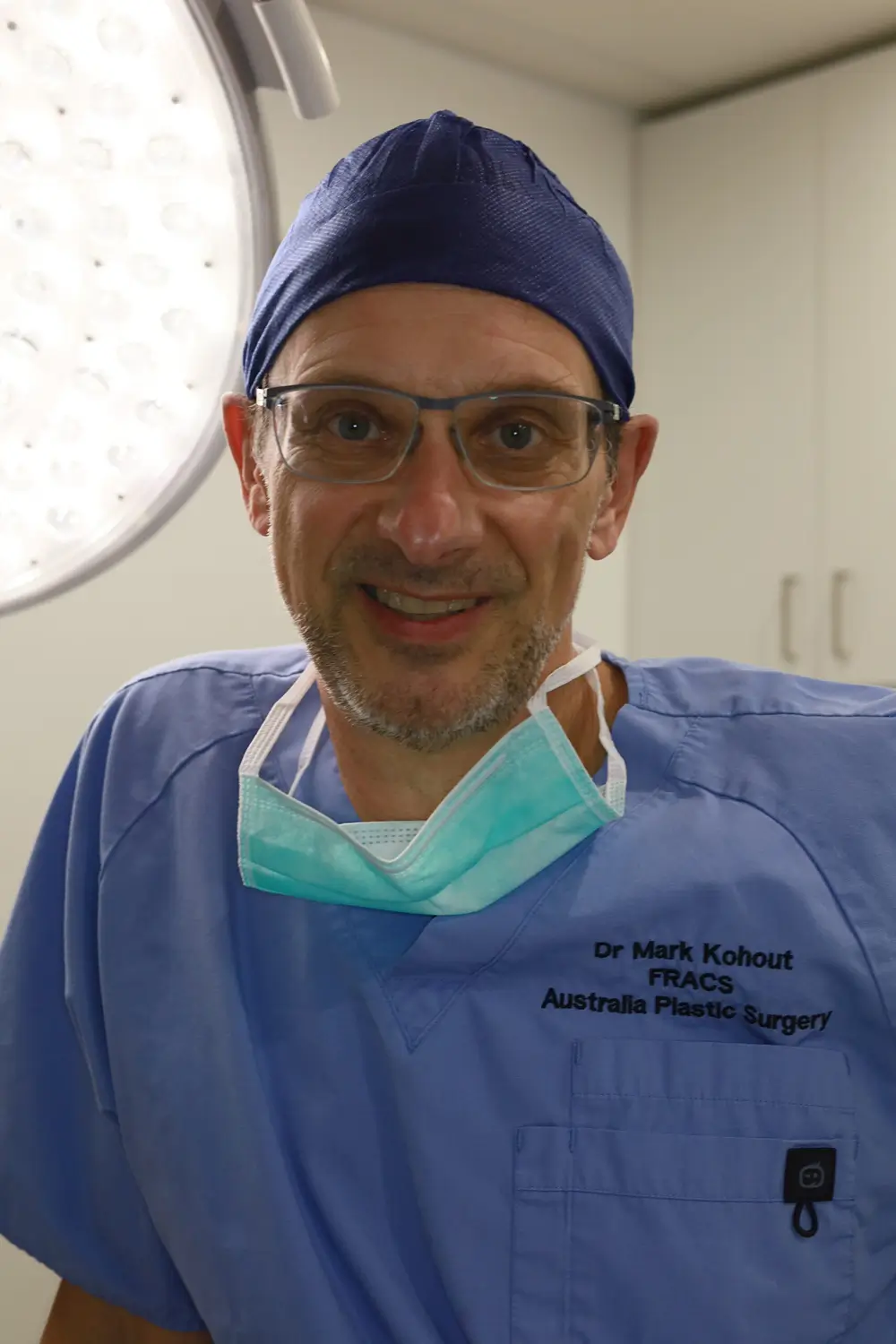
Dr Mark Kohout Portrait Image

Genioplasty FAQs

How can I tell whether my recessed chin is an isolated chin problem or caused by the whole lower jaw sitting too far back?

A recessed chin may arise from the chin segment itself or from a broader mandibular position associated with an overbite or other skeletal relationship. Facial examination, bite assessment and imaging can help determine whether isolated genioplasty, orthodontic treatment or orthognathic assessment is more appropriate.

When is sliding genioplasty more appropriate than a chin implant for increasing chin projection?

Sliding genioplasty may be considered when projection needs to be combined with vertical, sideways or other multidirectional bone movement. A chin implant may be considered when additional projection or width is the main requirement, but the two approaches have different nerve, bone, hardware and implant-related risks.

Can sliding genioplasty change chin height and asymmetry at the same time as moving the chin forward?

Yes, the mobile chin segment can potentially be repositioned in more than one direction during the same operation when anatomy permits. The achievable movement depends on bone dimensions, dental roots, nerve position, fixation and the surrounding soft tissues.

Why can the lower lip and chin remain numb for months after sliding genioplasty?

The mental nerves provide sensation to the lower lip and chin and lie close to the operative area, so they may be stretched or irritated during dissection and bone repositioning. Sensation often changes gradually during healing, but persistent altered sensation is a recognised complication and cannot be excluded before surgery.

What happens to the titanium plates and screws after the chin bone has fully healed?

Fixation hardware is commonly left in place once the repositioned bone has united and may never require further treatment. Plates or screws that become painful, palpable, infected or exposed may be considered for removal after adequate bone healing.

Can a chin implant gradually move, become visible or cause resorption of the bone underneath it?

Yes, recognised implant-related problems include malposition, palpability, infection, extrusion and pressure-related change in the underlying mandible. A systematic review found mandibular bone resorption beneath chin implants across multiple implant materials, although the amount and clinical importance varied between studies.

Can genioplasty affect the roots, sensation or vitality of the lower front teeth?

The osteotomy used for sliding genioplasty is performed below the lower tooth roots, but root injury or altered tooth sensation is still possible if nearby structures are affected. Preoperative imaging and careful bone-cut planning help define the relationship between the proposed osteotomy, dental roots and mental nerves.

What happens if the chin bone heals slowly or does not unite after sliding genioplasty?

Delayed union or non-union can leave the segment less stable than expected and may require prolonged observation or further surgery depending on the findings. Nicotine exposure, infection, general health, nutrition and mechanical stability are among the factors that can influence bone healing.

Can genioplasty correct facial asymmetry when the underlying lower jaw is also asymmetric?

Genioplasty may reduce asymmetry that is mainly confined to the chin, but it does not reposition the remainder of an asymmetric mandible. Where the jaw, bite or dental midline is also affected, orthodontic or oral and maxillofacial assessment may be needed before isolated chin surgery is planned.

Which symptoms after genioplasty suggest infection, nerve problems, implant movement or another complication requiring prompt review?

Increasing pain, fever, wound discharge, rapidly worsening swelling, implant exposure, marked new asymmetry or a new bite change should be assessed promptly. Difficulty breathing or swallowing, uncontrolled bleeding or sudden neurological deterioration requires urgent medical assessment.

Medical References

Take our Plastic Surgery Quiz to find out if you’d be a good candidate and if you are ready for cosmetic surgery.​

Further Reading

Welcome to the Practice of
Dr. Mark Kohout

With over 25 years of experience and Harvard training, Dr. Mark Kohout offers experienced plastic and reconstructive surgery at his Sydney and Orange clinics. His patient-first approach focuses on delivering safe, natural results tailored to your unique goals.

What's Next?

Whether you are ready for a professional evaluation or just have a quick question, we’ve made it easy to connect with our team. Choose the option that best fits your needs below.

Book your Consultation

Take the first step toward your goals by filling out the brief form below. This information helps us understand your specific needs so we can make the most of our time together during your session. Once you submit your details, a member of our team will review your request and reach out shortly to confirm your appointment.

Patient Photo Assessment

Sending photos for a patient photo assessment can help you and your plastic surgeon prepare for your consultation. By reviewing clear, accurate photos, Dr Kohout can provide preliminary patient photo assessment like insights, assess your needs, and determine the right approach for your procedure.

Tips for Uploading Photos

ASK A FRIEND

Friend takes photo

GOOD LIGHTING

Plain wall, bright light

ALL ANGLES

Front / sides/ 45°

CLEAR & SHARP

No portrait mode

SEND ORIGINALS

No edits or compression

Dr. Mark Kohout Plastic Surgery in Sydney & Orange

Experienced Plastic Surgeon

Dr. Mark Kohout

A qualified plastic surgeon who operates with care and integrity, based in central Sydney with over 20 years of experience in the cosmetic field. His extensive training and experience assures patients they are in highly trained surgical hands. Dr. Kohout is a dedicated, friendly professional who is committed to providing the high quality care, support and results, alongside his compassionate team.

Dr Mark Kohout (MED0001133000)
Specialist Plastic Surgeon
Specialist registration in Surgery – Plastic Surgery

25

Years of Experience

Years of Delivering Exceptional Cosmetic Care.

10000+

Surgical Procedures

Procedures performed by our qualified surgeons.

15+

Available Treatments

Cosmetic treatment options tailored to your needs.

Our Trusted

Accreditations

fracs

Dr Mark Kohout is a qualified plastic surgeon based in central Sydney, with over 20 years of experience in the field of cosmetic and reconstructive surgery. He draws on extensive surgical training and clinical experience to tailor care to the individual needs and goals of each patient.

Dr Kohout is known for his thoughtful, patient-centred approach, guiding individuals through each stage of their surgical journey — from initial consultation to post-operative care. Working alongside a compassionate and professional team, he is committed to providing high standards of care in a supportive and respectful environment.

Locations

Opening Hours

Monday - Friday

8:30AM - 05:00PM

Saturday - Sunday

Closed

Disclaimer: Dr Mark Kohout (MED0001133000) a Registered Medical Practitioner, Specialist Plastic Surgeon. All surgical or invasive procedures carry risks and complications. We recommend seeking a second opinion from an appropriately qualified medical practitioner before proceeding with any surgery. Results depend on individual patient circumstances and can vary significantly. Results may also be impacted by a variety of factors including your lifestyle, weight, nutritional intake and overall health. Consult your Specialist Plastic Surgeon for details. This information is general in nature and is not intended to be medical advice nor does it constitute a doctor-patient relationship. Surgery risks and complications will be covered in detail during a consultation with your Surgeon. We recommend seeking a second opinion from an appropriately qualified medical practitioner before proceeding with surgery.

©2024  All Rights Reserved

This website contains imagery which is only suitable for audiences 18+. All surgery contains risks, read more here.

Close Welcome Bar

Get Your Buttock Lift & Implants Guide

Get Your Skin Tightening with Renuvion and Bodytite Guide

Get Your Facial Aesthetic

Get Your Breast Implant Removal

Get Your Female Genital Surgery Guide

Get Your Excess Skin Guide

Get Your Gynaecomastia Guide

Get Your Liposuction Guide

Get Your Abdominoplasty Guide

Get Your Cost of Surgery Guide

Get Your Breast Implant Replace Guide

Get Your Breast Reduction Guide

Get Your Breast Augmentation Guide

Make an Enquiry