Breast Implant Removal Sydney

With Dr. Mark Kohout

Breast Implant Removal and Replacement by Dr Mark Kohout

Dr Mark Kohout is a Specialist Plastic Surgeon with specialist registration in Surgery – Plastic Surgery, more than 25 years of practice and medical registration number MED0001133000. Breast implant removal, also called breast explant surgery, is an operation to remove previously placed breast implants. Depending on the reason for removal and the condition of the surrounding tissues, surgery may involve implant removal alone, capsulectomy, breast lift surgery, replacement implants or another individually planned breast procedure.

What Is Breast Implant Removal?

Breast implant removal is surgery to take one or both breast implants out of their existing implant pockets. Some or all of the surrounding scar capsule may also be removed when there is a clinical reason to do so.

The body naturally forms scar tissue around every breast implant, known as the capsule. Capsules vary considerably between patients, so the amount of capsule removed is determined by findings such as contracture, rupture, abnormal tissue and surgical risk rather than by one standard approach.

Breast implant removal may involve:

What Is Breast Implant Removal by Dr Mark Kohout

Why Might Someone Have Breast Implants Removed?

Breast implants may be removed because of an implant complication, changes in breast shape or a personal preference not to retain implants. The reason for removal influences the investigations and surgical plan.

Some patients have capsular contracture or a confirmed implant problem, while others have no diagnosed complication and simply prefer removal. A consultation helps distinguish between these situations and establish realistic expectations about how the breasts may look afterwards.

Reasons can include:

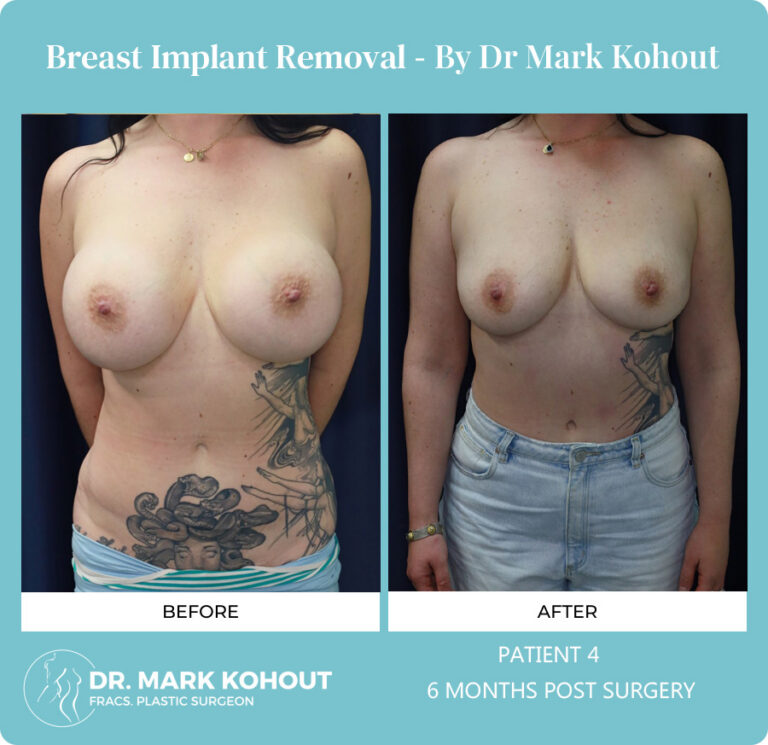
What Will the Breasts Look Like After Implant Removal?

Breasts do not necessarily return to their pre-implant appearance after explant surgery. Their appearance depends on natural breast tissue, implant size, skin elasticity, implant duration and changes from ageing, pregnancy or weight variation.

Removing an implant reduces the volume that has been occupying the breast envelope. Some patients may therefore notice loose skin, reduced upper-breast fullness, lower nipple position or greater visibility of pre-existing asymmetry.

Possible changes include:

  • Reduced breast volume
  • Loose breast skin
  • Breast ptosis
  • Changes in nipple position
  • More noticeable asymmetry

What Is a Capsulectomy?

Capsulectomy is surgical removal of some or all of the scar capsule surrounding an implant. It is a separate step from removing the implant itself and is not automatically required in every explant procedure.

A partial capsulectomy removes selected capsule tissue, while a total capsulectomy aims to remove the entire capsule when clinically appropriate and technically feasible. Dr Kohout’s current information describes capsulectomy as being performed when indicated rather than routinely for every implant removal.

Capsule management may involve:

  • Leaving appropriate capsule tissue in place
  • Partial capsulectomy
  • Total capsulectomy
  • More extensive oncological removal for specific diagnosed disease

Does Every Implant Removal Need Total Capsulectomy?

No, complete capsule removal is not required for every patient having breast implants removed. The decision depends on the condition of the capsule, implant findings and the potential risks of additional dissection.

Removing capsule tissue from the chest wall can require more extensive surgery close to the ribs, pectoral muscle and chest cavity. For this reason, the expected benefit of capsulectomy needs to be weighed against risks such as bleeding, tissue injury and pneumothorax.

Capsulectomy may be discussed when there is:

  • Significant capsular contracture
  • Abnormal capsule tissue
  • Certain implant ruptures
  • A specific implant-related diagnosis

What Does “En Bloc” Implant Removal Mean?

“En bloc” is an oncological surgical term and should not be used as a general synonym for total capsulectomy. It refers to removing diseased tissue together with an appropriate surrounding margin when required for cancer treatment.

It is not considered routinely necessary for every patient seeking breast implant removal. When conditions such as BIA-ALCL are suspected or diagnosed, management follows specific diagnostic and oncological pathways.

It is useful to distinguish between:

  • Implant removal
  • Partial capsulectomy
  • Total capsulectomy
  • Oncological en bloc resection

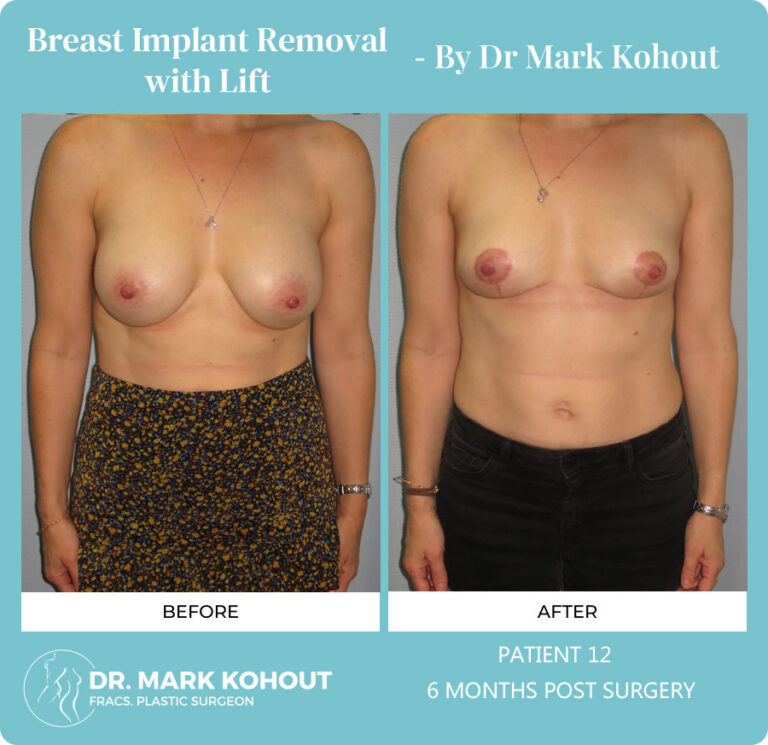
Can Breast Implant Removal Be Combined With a Breast Lift?

Breast implant removal may be combined with breast lift surgery when significant skin laxity or breast ptosis is present. A breast lift is not automatically required after explant surgery.

The decision depends on nipple position, skin quality, implant dimensions and the amount of remaining natural breast tissue. Adding breast lift surgery also adds additional scars and recovery considerations, which should be weighed against the expected changes from implant removal alone.

A lift may be considered when there is:

  • Loose breast skin
  • Low nipple position
  • Significant breast ptosis
  • A need to reposition existing breast tissue

Can Breast Implants Be Removed and Replaced?

Breast implants can sometimes be removed and replaced with new implants during the same operation. This is different from permanent explant surgery and requires a separate surgical plan.

Replacement may involve changing implant dimensions, modifying the implant pocket or addressing capsule tissue. Dr Kohout’s current breast surgery information separately lists implant removal and implant replacement procedures.

Replacement planning may involve:

  • New implant selection
  • Implant-pocket adjustment
  • Capsulectomy when indicated
  • Breast lift surgery in selected patients

What Happens if an Implant Has Ruptured?

A suspected breast implant rupture should be assessed before surgery so the implant type, location of implant material and condition of surrounding tissues can be considered. Imaging may be required in selected patients.

Silicone gel may remain within the capsule or extend beyond it, while saline implant rupture behaves differently. The presence of rupture does not automatically determine the exact extent of capsule surgery required.

Assessment may include:

  • Implant records
  • Clinical examination
  • Ultrasound
  • MRI where indicated
  • Review of the capsule and surrounding tissues

What Should Patients Know About Breast Implant Illness?

Breast implant illness, or BII, is a patient-used term describing a range of systemic symptoms attributed to breast implants. There is currently no single diagnostic test for BII, and symptom response after implant removal varies.

Some patients report improvement after explant surgery, while others have partial, temporary or no change. Current evidence does not support promising symptom resolution or stating that complete capsulectomy is necessary for every patient reporting systemic symptoms.

Reported symptoms may include:

  • Fatigue
  • Cognitive complaints
  • Joint or muscle symptoms
  • Other nonspecific systemic symptoms

What Is BIA-ALCL?

Breast implant-associated anaplastic large cell lymphoma, or BIA-ALCL, is a rare lymphoma associated predominantly with textured breast implant exposure. It requires specific investigation and management rather than routine elective explant surgery.

Symptoms such as new late breast swelling, fluid around an implant or a breast or capsular mass require assessment. Confirmed BIA-ALCL is generally managed through a multidisciplinary pathway with implant removal and appropriate oncological capsule surgery.

Symptoms requiring assessment can include:

  • Late breast swelling
  • New fluid around an implant
  • A breast or capsule mass
  • Persistent change in breast size or shape

What Happens During Breast Implant Removal Surgery?

Breast implant removal generally involves accessing the implant pocket through an appropriate incision and carefully removing the implant. Capsule surgery or another breast procedure is then performed according to the preoperative plan and operative findings.

An existing breast augmentation scar can often be used, although additional incisions may be required when breast lift surgery is performed. The operation can vary considerably in complexity depending on implant position, rupture, contracture and previous surgery.

Surgery may involve:

  • Reopening an existing scar
  • Accessing the implant pocket
  • Removing the implant
  • Removing capsule tissue when indicated
  • Closing the incision in layers

Before and After Photos of Breast Implant Removal Surgery

View breast implant removal before-and-after images from individual patient cases.

Disclaimer

Individual results vary due to personal health factors and genetics, and all surgical procedures carry inherent risks that should be discussed with a qualified health professional.

What Is Recovery Like After Breast Implant Removal?

Recovery depends on whether surgery involves implant removal alone or additional procedures such as capsulectomy or breast lift surgery. Swelling, bruising, tightness and temporary changes in sensation may occur during early healing.

Patients receive individual instructions regarding wound care, support garments, driving, work and exercise. Recovery is generally more involved when extensive capsule surgery or a breast lift is performed.

Early recovery may involve:

  • Breast swelling and bruising
  • Incision discomfort
  • A support bra when recommended
  • Temporary lifting restrictions
  • Follow-up appointments
What Is Recovery Like After Breast Implant Removal Infographic by Dr Mark Kohout

When Can Exercise and Work Resume?

Walking usually returns before strenuous exercise, chest training or heavy lifting. Return to work depends on the surgery performed and the physical demands of the patient’s occupation.

Desk-based employment may require less physical recovery than work involving lifting, childcare, nursing or manual tasks. Patients should discuss the actual demands of their work and exercise routine during consultation rather than relying on a fixed online timetable.

Recovery planning may consider:

  • Walking
  • Driving
  • Upper-body exercise
  • Heavy lifting
  • Physically demanding work

What Are the Risks of Breast Implant Removal?

Breast implant removal carries risks including bleeding, infection, fluid accumulation, wound-healing problems, altered sensation and permanent scars. More extensive capsulectomy or combined breast lift surgery can introduce additional risks.

Breast shape after removal can also differ from what a patient anticipates, particularly after large implants or long periods of implantation. Further surgery may sometimes be considered after the tissues have settled.

Potential risks include:

  • Bleeding or haematoma
  • Infection
  • Seroma
  • Altered nipple or skin sensation
  • Breast asymmetry
Breast Implant Removal and Replacement by Dr Mark Kohout

Who Might Consider Breast Implant Removal?

Implant removal may be considered by patients who no longer wish to retain their implants or who have a clinical reason for removal. Suitability for surgery still requires medical assessment and informed discussion of alternatives.

Any unexplained swelling, breast mass, suspected rupture or significant implant-related symptom should be investigated appropriately rather than proceeding directly to elective removal without assessment.

Consultation may consider:

  • Implant history
  • Current breast symptoms
  • General medical health
  • Previous breast surgery
  • Expectations after removal

What Happens During a Consultation With Dr Mark Kohout?

A consultation with Dr Mark Kohout allows the implants, capsule and breast tissues to be assessed before an individual surgical plan is proposed. The discussion may include implant removal alone, capsulectomy, replacement or breast lift surgery where appropriate.

Patients should bring implant records and recent breast imaging when available. The consultation is also an opportunity to discuss likely breast changes after removal, permanent scars, surgical risks and the limitations of each option.

Useful information includes:

  • Implant card or implant details
  • Previous operative reports
  • Recent breast imaging
  • Current medication list
  • Details of breast or systemic symptoms
Dr Mark Kohout

What Questions Should Patients Ask About Implant Removal?

Patients should understand exactly what tissue will be removed and why before proceeding with surgery. Terminology such as explant, capsulectomy and en bloc is often used inconsistently online, so clarification is important.

It is also useful to discuss what may happen if implant removal alone is chosen rather than combining it with another procedure.

Questions can include:

  • Do I need capsule tissue removed?
  • What type of capsulectomy are you proposing and why?
  • What might my breasts look like after removal?
  • Is a breast lift optional in my case?
  • What are the main risks of the proposed operation?
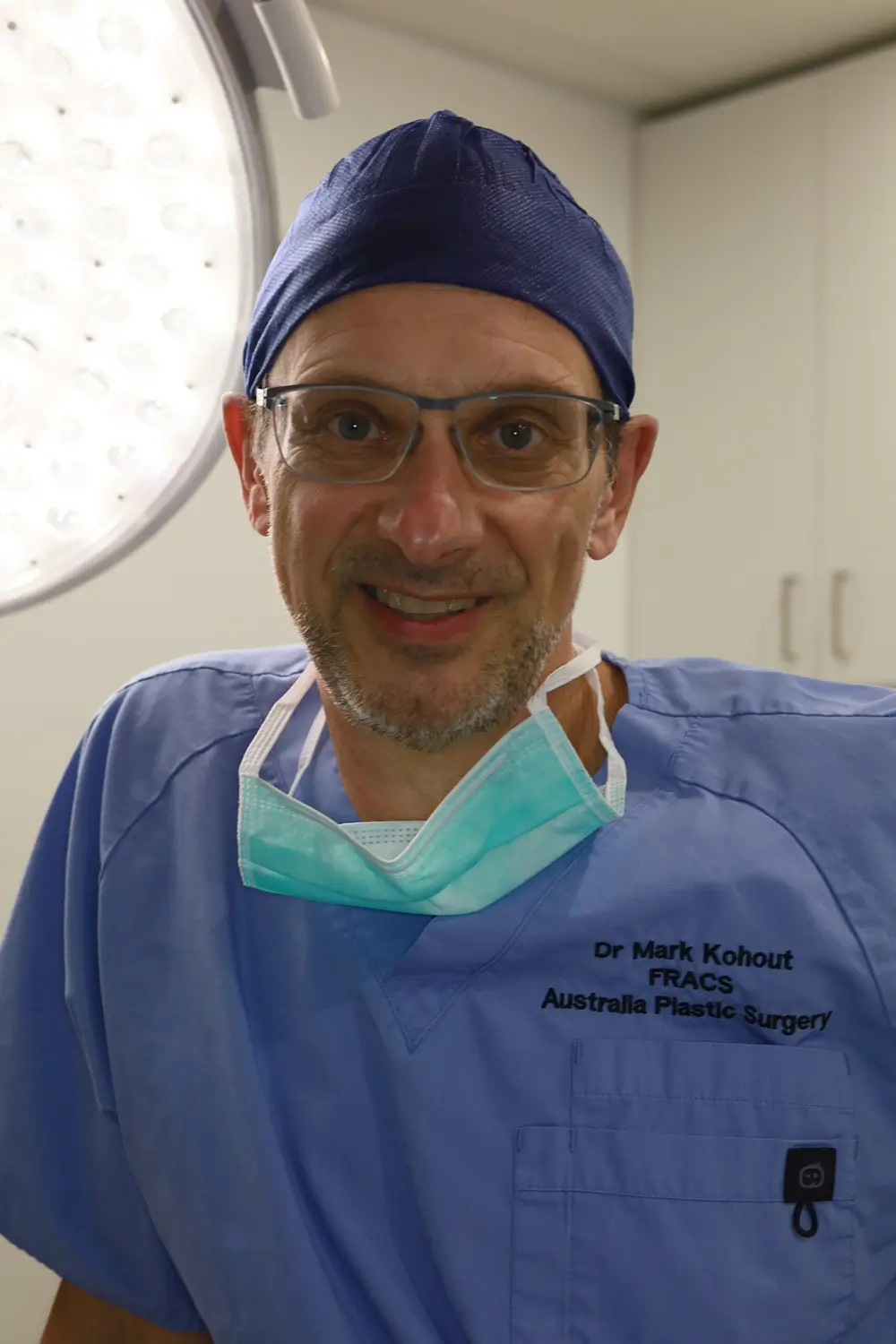
Dr Mark Kohout Portrait Image

Breast Implant Removal FAQs

Can old implant scars sometimes be used again for removal surgery?

Yes, an existing augmentation scar may sometimes provide suitable access for implant removal. Additional or extended scars may still be necessary if capsulectomy, breast lift surgery or another procedure is performed.

Can breast implants look intact on the outside even if one has ruptured?

Yes, particularly with silicone implants, a rupture may not always cause an obvious change in breast appearance. Imaging such as ultrasound or MRI may be considered when rupture is suspected.

Can one breast settle differently from the other after implant removal?

Yes, natural asymmetry, previous implant position, capsule differences and variations in breast tissue can cause each side to settle differently. Some asymmetry may become more noticeable once the implants are no longer present.

Can breast sensation change even if the nipple is not operated on directly?

Yes, sensation can change because nerves within the breast and implant pocket may be affected during surgery. Numbness, tingling or altered sensitivity can be temporary or, less commonly, persist.

Can removing implants make the ribs or chest wall feel more noticeable?

It can, especially in patients with relatively little natural breast tissue. Once the implant volume is removed, the underlying chest wall and breast anatomy may be more apparent.

Can implants be removed years after they were inserted without being replaced?

Yes, implants can be removed without replacement regardless of how long they have been present, provided surgery is medically appropriate. The likely breast shape after removal depends on tissue quality, implant size and changes that have occurred over time.

Can breast implant removal affect how bras fit afterwards?

Yes, breast volume and shape can change significantly after explant surgery, so previous bra sizing may no longer be accurate. Patients often need to wait until swelling settles before reassessing long-term bra fit.

Can a capsule stay in the breast without causing a problem?

Yes, thin or uncomplicated capsule tissue does not automatically need to be removed. The decision to perform capsulectomy depends on clinical findings, implant condition and the reason for surgery.

Can implant removal be more complicated if the implants are under the muscle?

It can be, because submuscular implants and their capsules may involve deeper tissue planes close to the chest wall. The complexity also depends on rupture, contracture, previous surgery and the amount of capsule that needs to be addressed.

Can a decision about breast lift surgery be delayed until after implant removal?

Yes, in selected patients it may be reasonable to remove the implants first and reassess the breast after the tissues have settled. Staging can sometimes provide a clearer indication of whether additional skin-reduction surgery is desired or appropriate.

Medical References
  • Cuenca-Pardo J, Ramos-Gallardo GO, Lira-Álvarez M, et al. Breast Implant Explantation and Capsulectomy in Symptomatic Patients: Is There Any Improvement With the Procedure? Systematic Review and Meta-analysis. JPRAS Open. 2026;50:152–164. https://pmc.ncbi.nlm.nih.gov/articles/PMC13147829/
  • Glicksman C, McGuire P, Kadin M, et al. Impact of Capsulectomy Type on Post-Explantation Systemic Symptom Improvement: Findings From the ASERF Systemic Symptoms in Women-Biospecimen Analysis Study: Part 1. Aesthetic Surgery Journal. 2022;42(7):809–819. https://pmc.ncbi.nlm.nih.gov/articles/PMC9208825/
  • Hillard C, Fowler JD, Barta R, Cunningham B. Silicone Breast Implant Rupture: A Review. Gland Surgery. 2017;6(2):163–168. https://pmc.ncbi.nlm.nih.gov/articles/PMC5409893/

What Are the Next Steps for Someone Considering Breast Implant Removal?

The next step is an individual consultation to establish why the implants are being removed and what surgical approach may be appropriate. Any suspected implant complication should be investigated before the final operative plan is determined.

Dr Mark Kohout currently lists breast implant removal within his Sydney breast surgery practice, with capsulectomy performed when indicated. Consultation provides an opportunity to review implant history, likely breast changes, scar placement, risks, recovery and alternatives before deciding whether to proceed.

Patients can prepare by:

  • Finding their implant card where available
  • Bringing relevant breast imaging
  • Listing medications
  • Recording current breast symptoms
  • Preparing questions about capsule management
Take our Plastic Surgery Quiz to find out if you’d be a good candidate and if you are ready for cosmetic surgery.​

Further Reading

Welcome to the Practice of
Dr. Mark Kohout

With over 25 years of experience and Harvard training, Dr. Mark Kohout offers experienced plastic and reconstructive surgery at his Sydney and Orange clinics. His patient-first approach focuses on delivering safe, natural results tailored to your unique goals.

What's Next?

Whether you are ready for a professional evaluation or just have a quick question, we’ve made it easy to connect with our team. Choose the option that best fits your needs below.

Book your Consultation

Take the first step toward your goals by filling out the brief form below. This information helps us understand your specific needs so we can make the most of our time together during your session. Once you submit your details, a member of our team will review your request and reach out shortly to confirm your appointment.

Patient Photo Assessment

Sending photos for a patient photo assessment can help you and your plastic surgeon prepare for your consultation. By reviewing clear, accurate photos, Dr Kohout can provide preliminary patient photo assessment like insights, assess your needs, and determine the right approach for your procedure.

Tips for Uploading Photos

ASK A FRIEND

Friend takes photo

GOOD LIGHTING

Plain wall, bright light

ALL ANGLES

Front / sides/ 45°

CLEAR & SHARP

No portrait mode

SEND ORIGINALS

No edits or compression

Dr. Mark Kohout Plastic Surgery in Sydney & Orange

Experienced Plastic Surgeon

Dr. Mark Kohout

A qualified plastic surgeon who operates with care and integrity, based in central Sydney with over 20 years of experience in the cosmetic field. His extensive training and experience assures patients they are in highly trained surgical hands. Dr. Kohout is a dedicated, friendly professional who is committed to providing the high quality care, support and results, alongside his compassionate team.

Dr Mark Kohout (MED0001133000)
Specialist Plastic Surgeon
Specialist registration in Surgery – Plastic Surgery

25

Years of Experience

Years of Delivering Exceptional Cosmetic Care.

10000+

Surgical Procedures

Procedures performed by our qualified surgeons.

15+

Available Treatments

Cosmetic treatment options tailored to your needs.

Our Trusted

Accreditations

fracs

Dr Mark Kohout is a qualified plastic surgeon based in central Sydney, with over 20 years of experience in the field of cosmetic and reconstructive surgery. He draws on extensive surgical training and clinical experience to tailor care to the individual needs and goals of each patient.

Dr Kohout is known for his thoughtful, patient-centred approach, guiding individuals through each stage of their surgical journey — from initial consultation to post-operative care. Working alongside a compassionate and professional team, he is committed to providing high standards of care in a supportive and respectful environment.

Locations

Opening Hours

Monday - Friday

8:30AM - 05:00PM

Saturday - Sunday

Closed

Disclaimer: Dr Mark Kohout (MED0001133000) a Registered Medical Practitioner, Specialist Plastic Surgeon. All surgical or invasive procedures carry risks and complications. We recommend seeking a second opinion from an appropriately qualified medical practitioner before proceeding with any surgery. Results depend on individual patient circumstances and can vary significantly. Results may also be impacted by a variety of factors including your lifestyle, weight, nutritional intake and overall health. Consult your Specialist Plastic Surgeon for details. This information is general in nature and is not intended to be medical advice nor does it constitute a doctor-patient relationship. Surgery risks and complications will be covered in detail during a consultation with your Surgeon. We recommend seeking a second opinion from an appropriately qualified medical practitioner before proceeding with surgery.

©2024  All Rights Reserved

This website contains imagery which is only suitable for audiences 18+. All surgery contains risks, read more here.

Close Welcome Bar

Get Your Buttock Lift & Implants Guide

Get Your Facial Aesthetic

Get Your Breast Implant Removal

Get Your Female Genital Surgery Guide

Get Your Excess Skin Guide

Get Your Gynaecomastia Guide

Get Your Liposuction Guide

Get Your Abdominoplasty Guide

Get Your Cost of Surgery Guide

Get Your Breast Implant Replace Guide

Get Your Breast Reduction Guide

Get Your Breast Augmentation Guide

Make an Enquiry