


Breast Revision Sydney

With Dr. Mark Kohout

Breast Revision Sydney

Dr Mark Kohout is a Specialist Plastic Surgeon with specialist registration in Surgery – Plastic Surgery, more than 25 years of practice and medical registration number MED0001133000. Breast revision surgery modifies the result of a previous breast augmentation or reconstruction and may involve implant exchange, implant removal, capsule surgery, pocket adjustment or additional breast tissue reshaping.

The appropriate procedure depends on the condition and position of the implants, the surrounding capsule, breast tissue, skin quality, previous operations, current symptoms and the patient’s treatment priorities. Revision surgery may be considered for concerns such as implant rupture, capsular contracture, implant movement, asymmetry, discomfort or changes in breast shape over time.

Dr Kohout performs breast revision surgery in Sydney and also consults with regional patients in Orange, NSW. Care is provided in accredited facilities with structured assessment, surgical planning and postoperative review.

All surgery carries risks, and outcomes vary between individuals. Patients are encouraged to involve their general practitioner, consider all available options and seek a second opinion from another appropriately qualified medical practitioner before deciding whether to proceed.

What Is Breast Revision Surgery, and What Does It Actually Do?

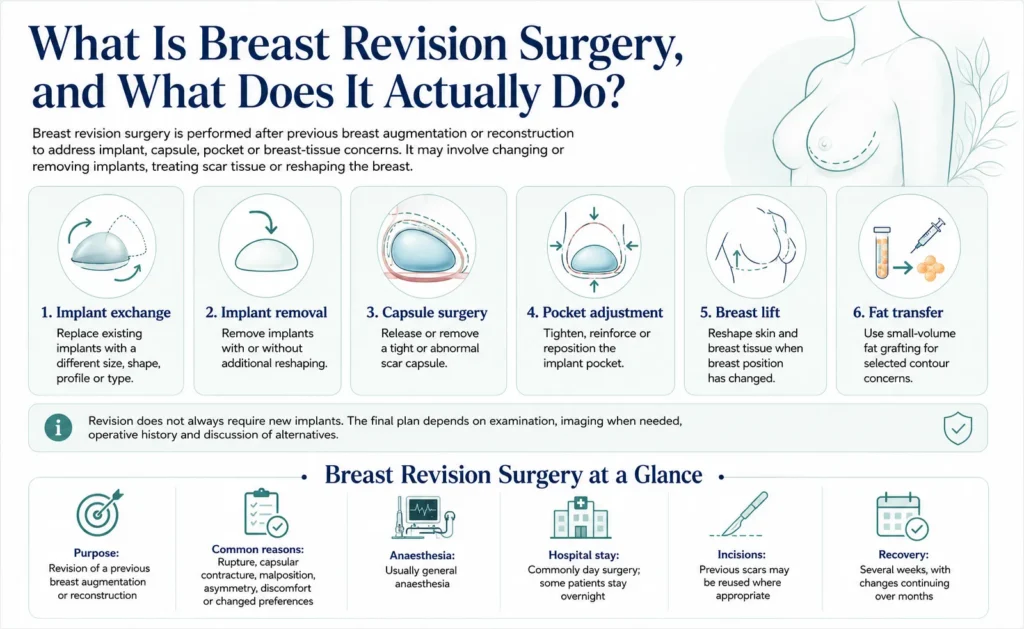
Breast revision surgery is an operation performed after previous breast augmentation or reconstruction to address an implant, capsule, pocket or breast-tissue concern. It may involve changing the implant, removing it, adjusting the surrounding scar tissue or modifying the breast tissues.

  • Implant exchange: Existing implants are removed and replaced with implants of a different size, shape, profile or type.
  • Implant removal: Implants are removed without replacement, with or without additional breast reshaping.
  • Capsule surgery: A tight or abnormal scar capsule may be released or partially or completely removed.
  • Pocket adjustment: The space holding the implant may be tightened, reinforced or repositioned.
  • Breast lift: Skin and breast tissue may be reshaped when the breast position has changed.
  • Fat transfer: Small-volume fat grafting may be considered for selected contour or tissue-coverage concerns.

Breast revision does not always require new implants, and implant replacement is not appropriate for every patient. The final plan is based on examination, imaging where indicated, operative history and discussion of the available alternatives.

What Is Breast Revision Surgery by Dr Mark Kohout

Breast Revision Surgery at a Glance

Breast revision surgery is usually performed under general anaesthesia in an accredited hospital or surgical facility. The operation can range from a relatively limited implant exchange to a more involved procedure requiring capsule removal, pocket repair or breast lifting.

  • Purpose: Revision of a previous breast augmentation surgery or reconstruction
  • Common reasons: Rupture, capsular contracture, malposition, asymmetry, discomfort or changed preferences
  • Anaesthesia: Usually general anaesthesia
  • Hospital stay: Commonly day surgery, although some patients remain overnight
  • Incisions: Previous scars may be reused where appropriate
  • Recovery: Several weeks, with swelling, implant position and scars continuing to change over months

A support bra, dressings and sometimes drains may be used during early recovery. The procedure, scar pattern and recovery requirements vary according to what needs to be revised.

What Are the Potential Benefits of Breast Revision Surgery?

Breast revision surgery may address an implant-related complication, change implant characteristics or modify breast shape after previous surgery. The possible benefits depend on the condition being treated and cannot be guaranteed.

  • Changing implant size or profile: Existing implants may be replaced with implants that better match the current surgical plan.
  • Removing implants: Patients may choose explant surgery without inserting another implant.
  • Addressing capsular contracture: Capsule surgery may reduce firmness, distortion or discomfort associated with a tight capsule.
  • Correcting malposition: The implant pocket may be adjusted when implants sit too high, low, lateral or close to the midline.
  • Managing rupture or deflation: Damaged implants can be removed, with replacement considered where appropriate.
  • Reshaping breast tissue: A lift or limited fat transfer may be included when tissue position or coverage has changed.

Revision may reduce selected symptoms or change the breast outline, but it cannot guarantee complete symptom resolution or exact symmetry. Additional scars, future tissue changes and the possibility of further surgery must also be considered.

Do I Need Implant Exchange, Implant Removal or Breast Revision?

The term breast revision covers several different procedures rather than one standard operation. The appropriate option depends on the implant condition, capsule, pocket, breast tissue and whether the patient wants to retain implants.

  • Implant exchange may be considered when the patient wants to retain implants but change their size, shape, type or position.
  • Implant removal may be chosen when the patient no longer wants implants or when replacement is not medically appropriate.
  • Capsulectomy or capsulotomy may be discussed when scar tissue is tight, thickened, painful or affecting implant position.
  • Pocket revision may be required when an implant has moved or the original implant space has stretched.
  • Breast lift with revision may be considered when the breast skin and tissue have changed position.
  • Monitoring without surgery may be appropriate in selected cases where there is no urgent clinical concern.

Imaging, physical examination and review of previous operative records help determine which option may be suitable. Some patients require more than one technique during the same operation, while others may be advised to stage treatment.

Who Performs Breast Revision Surgery in Sydney?

Breast revision surgery in Sydney is performed by Dr Mark Kohout, a Specialist Plastic Surgeon with specialist registration in Surgery – Plastic Surgery. He consults in Sydney and Orange and performs surgery in accredited facilities.

  • Medical registration number MED0001133000
  • More than 25 years of cosmetic and reconstructive surgical experience
  • Experience with primary and revision breast procedures
  • Individual review of implant, capsule, pocket and breast-tissue concerns
  • Discussion of alternatives, scars, risks and recovery requirements
  • Scheduled postoperative review and follow-up care

No surgeon can guarantee the outcome of breast revision surgery. Results are affected by previous surgery, tissue quality, implant history, scar formation, health, nicotine exposure and wound healing.

What Happens During a Breast Revision Consultation?

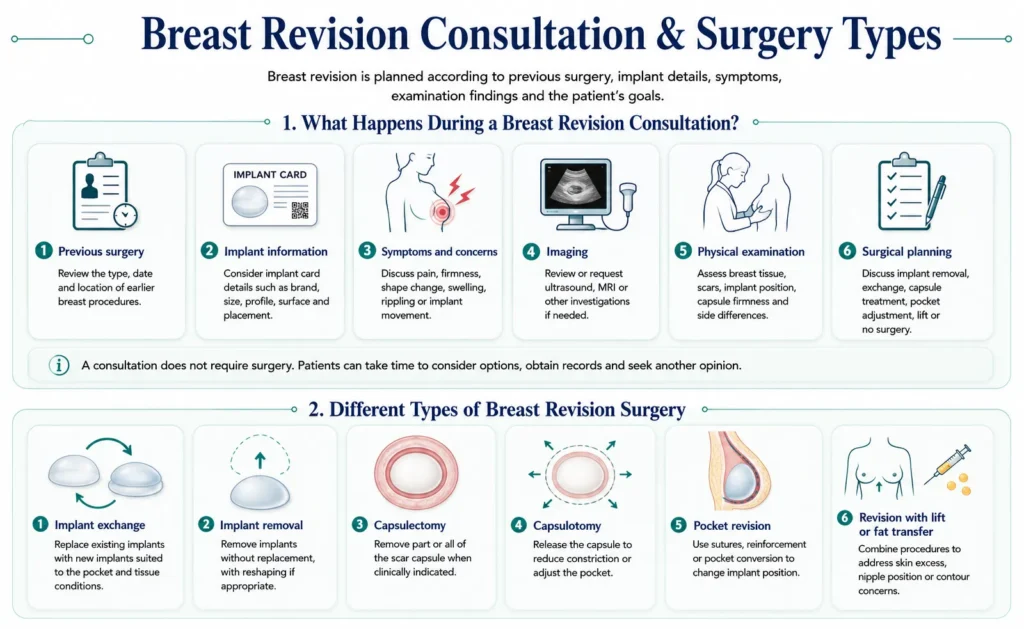
A breast revision consultation is used to identify the reason for revision and determine whether surgery may be appropriate. It also allows the patient to review possible techniques, limitations, scars, recovery and costs.

  • Previous surgery: The type, date and location of earlier breast operations are reviewed.
  • Implant information: Implant cards, brand, size, surface, profile and placement are considered where available.
  • Symptoms and concerns: Pain, firmness, shape change, swelling, rippling or changes in implant position are discussed.
  • Imaging: Ultrasound, MRI or other investigations may be reviewed or requested.
  • Physical examination: Breast tissue, scars, implant position, capsule firmness and differences between the sides are assessed.
  • Surgical planning: Implant removal, exchange, capsule treatment, pocket adjustment, lift or no surgery may be discussed.

The consultation does not require a patient to proceed with an operation. Time should be allowed to consider the information, obtain records and seek another opinion where desired.

Breast Revision Consultation and Surgery Types by Dr Mark Kohout

What Are the Different Types of Breast Revision Surgery?

Breast revision may involve one procedure or a combination of techniques. The plan is based on the current implant, surrounding capsule, pocket position, breast tissue and the patient’s preference regarding future implants.

  • Implant exchange: Existing implants are removed and replaced with new implants selected for the revised pocket and tissue conditions.
  • Implant removal without replacement: Implants are removed, and the remaining tissues may be left to settle or reshaped where appropriate.
  • Capsulectomy: Part or all of the scar capsule is removed when clinically indicated.
  • Capsulotomy: The capsule is surgically released to reduce constriction or allow pocket adjustment.
  • Pocket revision: Sutures, tissue reinforcement or pocket conversion may be used to alter implant position.
  • Revision with breast lift or fat transfer: Additional procedures may be included to address skin excess, nipple position or selected contour concerns.

Reconstructive breast revision may require a different approach from revision after cosmetic augmentation. Previous radiation, mastectomy, flap reconstruction or cancer treatment may affect tissue quality and risk.

Am I a Suitable Candidate for Breast Revision Surgery?

Suitability depends on the reason for revision, general health, tissue condition and whether the proposed operation is likely to address the patient’s concerns. It cannot be confirmed through photographs or an online assessment alone.

  • Implant-related complication: There is suspected or confirmed rupture, capsular contracture, malposition or another implant concern.
  • Long-standing change in preference: The patient wishes to change implant size, type or remove implants after careful consideration.
  • Stable general health: Medical conditions are sufficiently controlled for anaesthesia and surgery.
  • Realistic expectations: The patient understands that exact symmetry and a specific result cannot be guaranteed.
  • No current nicotine use: Smoking, vaping and nicotine products can be stopped for the required period.
  • Willingness to complete investigations: Imaging, pathology or specialist review can be undertaken where indicated.

A suitable patient also understands that revision may create additional scars and may not remove every symptom or contour difference. Future monitoring or further surgery may still be required.

Who May Not Be Suitable for Breast Revision Surgery?

Some patients may be advised not to proceed or to delay surgery until medical or practical concerns have been addressed. The significance of each factor depends on the proposed operation and the patient’s individual risk profile.

  • Uncontrolled medical conditions: Poorly managed diabetes, heart disease or clotting disorders may increase surgical risk.
  • Active infection: Breast, skin or systemic infection should be assessed and treated before elective revision.
  • Current nicotine use: Smoking, vaping and nicotine products increase wound-healing and infection risks.
  • Uninvestigated symptoms: New swelling, a breast mass, persistent pain or sudden shape change may require imaging or specialist review first.
  • Expectations outside the likely range of outcomes: Surgery cannot guarantee invisible scars, exact symmetry or freedom from future procedures.
  • Inadequate tissue quality: Thin, damaged or irradiated tissues may limit what can be performed safely.

Pregnancy, breastfeeding or recent major weight change may also affect timing. Final suitability is determined after examination, review of prior surgery and discussion of the available options.

How Is Breast Revision Surgery Performed?

Breast revision surgery is usually performed under general anaesthesia in an accredited hospital or surgical facility. The exact steps depend on the condition of the implants, scar capsule, implant pocket, breast tissue and previous incisions.

  • Preoperative planning: Breast position, scars, tissue thickness and implant location are assessed before surgery.
  • Anaesthesia: An anaesthetist monitors breathing, circulation, temperature, fluid balance and pain management.
  • Incision placement: Existing scars may be reused where appropriate, although additional incisions may be required.
  • Implant and capsule management: Existing implants are removed or inspected, and the capsule may be released or excised.
  • Pocket adjustment: The implant space may be tightened, reinforced or repositioned.
  • Closure and dressings: The wounds are closed in layers, and dressings, drains or a support bra may be applied.

Some patients also require a breast lift or limited fat transfer as part of the revision plan. More involved revision may require an overnight stay or staged surgery.

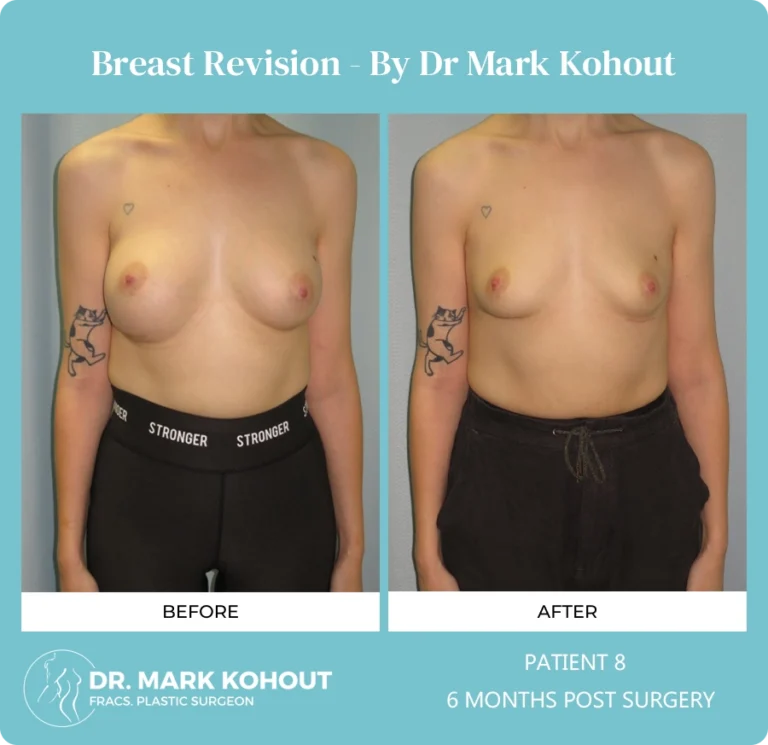
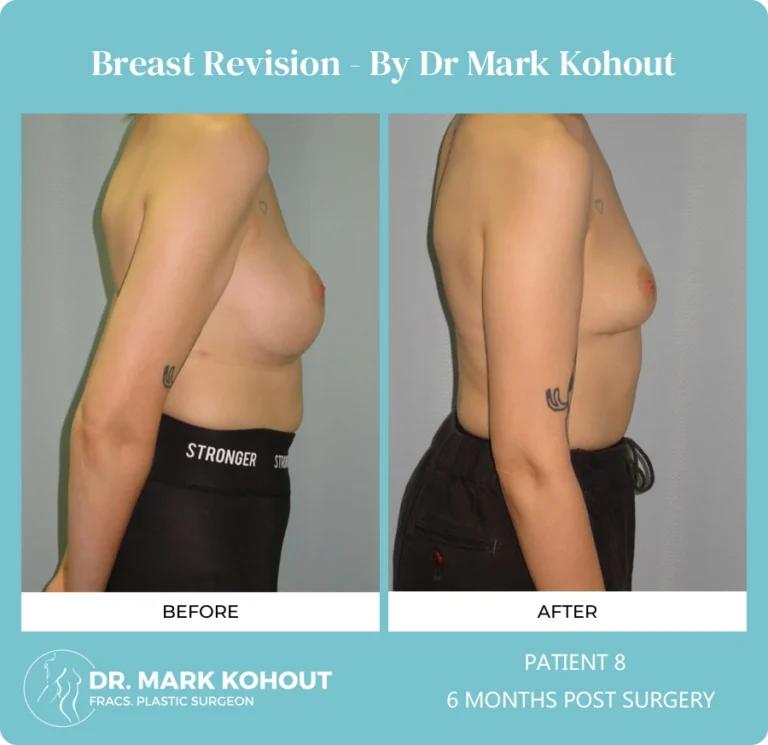
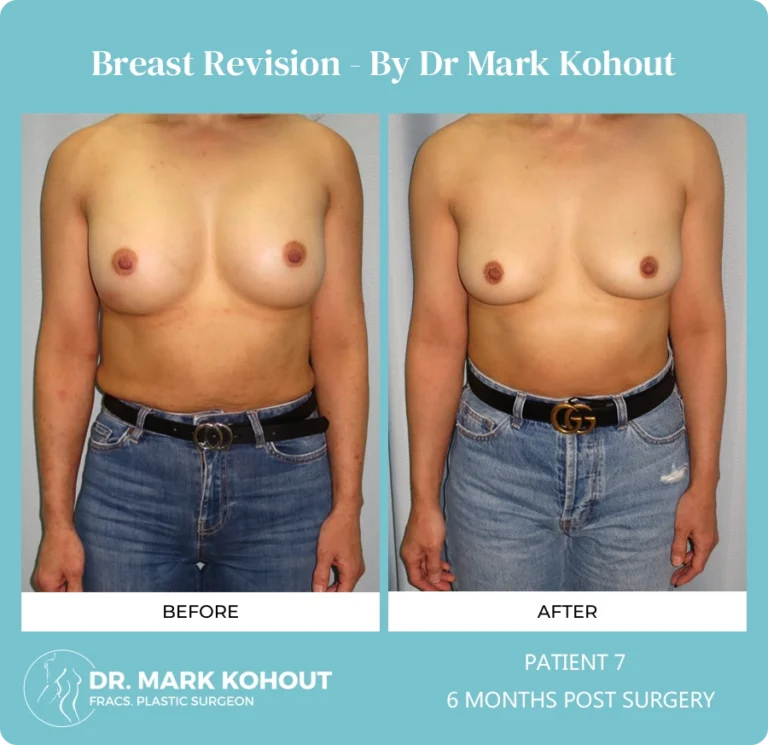
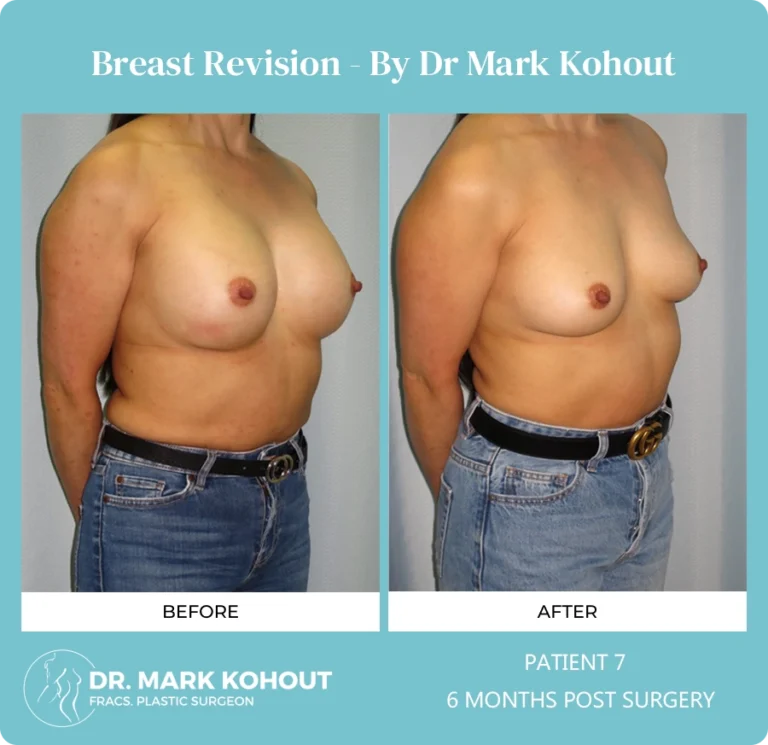
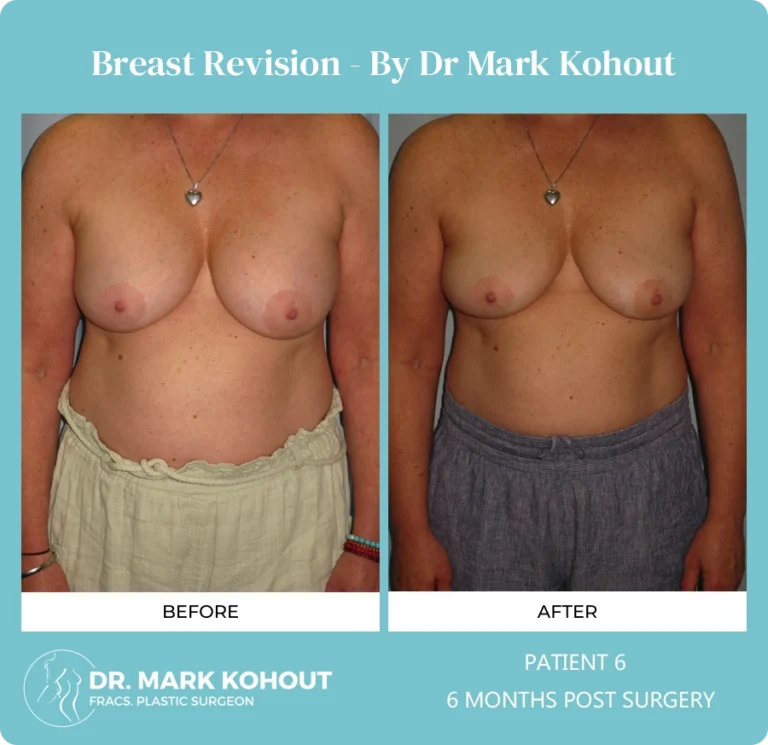
Breast Revision Before and After Photos

Before-and-after photographs can show changes in implant size, position, breast shape and scar pattern after revision. They should be viewed as examples rather than predictions of another patient’s outcome.

  • Images should only be displayed with patient consent.
  • Each result reflects individual anatomy and prior surgery.
  • Scar position depends on the procedures performed.
  • Swelling and implant position change during healing.
  • Lighting, posture and timing affect appearance.
  • A consultation is required to discuss what may be reasonable.

Photographs cannot guarantee a similar result and should not be the sole basis for deciding on surgery. Dr Kohout can explain which examples may be relevant to the proposed revision.

Before and After Photos of Breast Revision Surgery

See the difference it has made for our clients.

Disclaimer

Individual results vary due to personal health factors and genetics, and all surgical procedures carry inherent risks that should be discussed with a qualified health professional.

What Should I Expect During Breast Revision Recovery?

Breast Revision SurgeryRecovery after breast revision depends on whether the procedure involves implant exchange, capsule removal, pocket repair, breast lifting or a combination. Swelling, bruising, tightness and temporary changes in sensation are common during the early stages.

  • Hospital monitoring: Many patients return home the same day, while some remain overnight.
  • Pain management: Prescribed medication may be used for discomfort and chest tightness.
  • Dressings and drains: Dressings protect the incisions, and drains may be used temporarily.
  • Support bra: A surgical or support bra may be worn as directed.
  • Movement: Gentle walking is encouraged, while arm and upper-body activity are limited.
  • Follow-up: Reviews are scheduled to monitor wounds, implant position and recovery.

Recovery may be more involved when extensive capsulectomy or a lift is performed. Increasing pain, redness, swelling, discharge, fever, shortness of breath or one-sided leg swelling requires prompt medical review.

How Long Does Breast Revision Recovery Take?

Breast revision recovery usually progresses in stages, but timing depends on the complexity of surgery, tissue quality and whether complications occur. Activity should increase gradually and only in accordance with postoperative advice.

  • First 24-48 hours: Pain management, wound checks, short walks and support-bra use are usually required.
  • First week: Swelling, bruising and tightness are common, and overhead arm movement is limited.
  • Two to six weeks: Daily activities may increase gradually, while lifting and strenuous upper-body activity remain restricted.
  • Six to twelve weeks: More demanding activity may resume after medical review if healing is satisfactory.
  • Longer-term scar maturation: Scars and breast position may continue changing for 12 months or longer.
  • Ongoing recovery: Residual swelling, firmness or altered sensation may take several months to settle.

Recovery varies. Dr Mark Kohout will provide advice based on your procedure and individual risk factors.

✓ Return to Driving

Driving should not resume until the patient can move both arms freely, wear a seatbelt comfortably and perform an emergency stop without hesitation. Sedating pain medication must no longer be required.

  • Upper-body movement should be adequate.
  • Pain should be controlled.
  • Seatbelt pressure should be tolerable.
  • Reaction time should not be impaired.
  • Insurance requirements should be checked.
  • Medical clearance may be recommended.

Some patients may return to driving after one to two weeks, while others require longer. Individual advice should be followed.

✓ Return to Work

Return to work depends on the procedure performed, commute and physical demands of the role. Desk-based work may be possible sooner than employment involving lifting, repetitive arm use or manual activity.

  • Desk-based roles may require one to two weeks away.
  • Working from home may assist some patients.
  • Long commutes can increase discomfort.
  • Manual work usually requires a longer absence.
  • A staged return may be appropriate.
  • Complications can delay return to employment.

Work arrangements should be discussed before surgery so adequate leave can be planned. A fixed return date cannot be guaranteed.

✓ Return to Exercise

Walking is encouraged early when medically appropriate, but upper-body exercise is restricted while wounds and deeper tissues heal. Exercise should resume gradually after review by the treating team.

  • Short, frequent walks are usually encouraged.
  • Heavy lifting should be avoided.
  • Chest and shoulder training are delayed.
  • Running and high-impact exercise require clearance.
  • Swimming should wait until wounds are fully healed.
  • Contact sport may require longer restrictions.

Returning too quickly may increase swelling, pain, wound tension or implant movement. Timing depends on the procedure and individual progress.

How Much Does Breast Revision Surgery Cost in Sydney?

The cost of breast revision surgery in Sydney varies because each operation is planned individually. A written estimate can usually be provided after consultation, examination and review of imaging or previous surgical records.

  • Surgeon’s fee: Covers assessment, planning, surgery and scheduled postoperative care.
  • Anaesthetist’s fee: Depends partly on the duration and complexity of the operation.
  • Hospital fees: May include theatre time, nursing care, equipment and overnight accommodation.
  • Implant costs: New implants may create an additional expense.
  • Investigations: Ultrasound, MRI, pathology or specialist review may be required.
  • Postoperative items: Support bras, dressings and medications may add to the total cost.

Some medically indicated revisions may attract Medicare or private health-insurance rebates. Eligibility does not guarantee full coverage, and patients should confirm current benefits directly with Medicare and their insurer.

A Practical Guide to Preparing for Breast Revision Surgery

Practical Guide for Breast RevisionPreparation focuses on gathering previous surgical information, reducing avoidable risks and arranging support for recovery. Instructions are tailored to the patient’s health and proposed revision.

  • Obtain a GP referral: This supports coordinated care and may be relevant where Medicare criteria are considered.
  • Gather previous records: Implant cards, operative reports and imaging should be provided where available.
  • Complete recommended imaging: Ultrasound or MRI may be requested before surgical planning.
  • Stop nicotine use: Smoking, vaping and all nicotine products should be avoided for the required period.
  • Review medications: Medicines and supplements should only be adjusted under medical guidance.
  • Prepare for recovery: Arrange transport, home help, leave from work and suitable support bras.

Patients should follow fasting and hospital instructions carefully. Preparing practical support in advance can reduce difficulties after discharge.

What Are the Risks and Complications of Breast Revision Surgery?

Breast revision surgery carries risks related to anaesthesia, previous surgery, implants and scar tissue. Complications may require medication, imaging, further procedures or implant removal.

  • Bleeding and haematoma: Blood may collect around the implant or beneath the tissues and require drainage.
  • Infection or wound problems: Infection, delayed healing or wound separation can occur.
  • Seroma: Fluid may collect in the implant pocket or surrounding tissues.
  • Capsular contracture or malposition: Tight scar tissue or implant displacement can recur.
  • Scarring and sensation changes: Scars may widen or become raised, while nipple or breast sensation may change.
  • Implant-related conditions: Rupture, rippling, visible edges, BIA-ALCL and other implant-associated concerns may occur.

Risk is influenced by health, tissue quality, previous radiation, nicotine exposure, implant type and procedure complexity. Preventive measures reduce risk but cannot eliminate it.

Breast Revision Surgery with Dr Mark Kohout

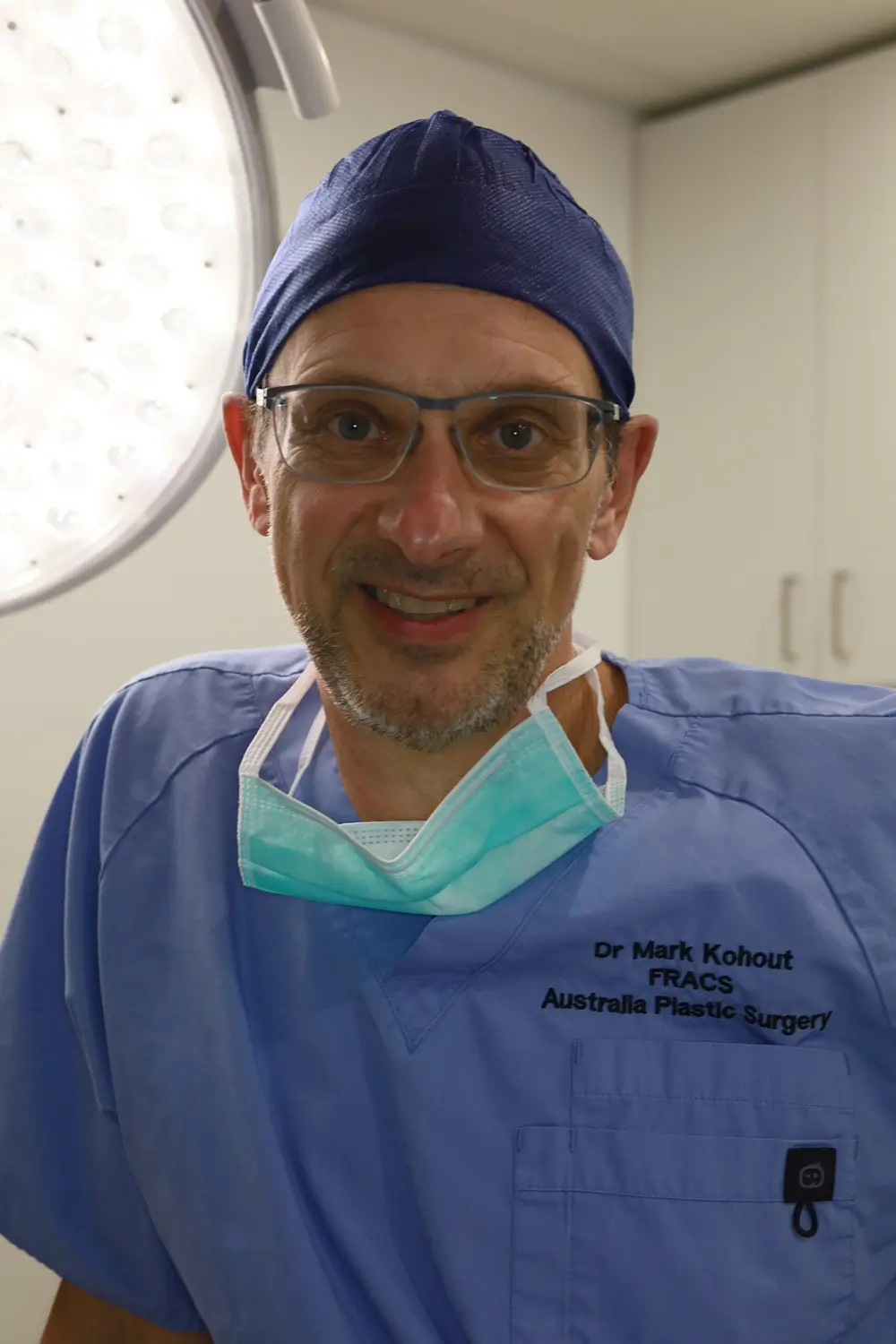
Dr Mark Kohout provides breast revision consultation, surgery and postoperative care for appropriately selected patients in Sydney. His approach includes review of previous surgery, implant information, imaging and current breast-tissue condition.

  • Specialist registration in Surgery – Plastic Surgery
  • Medical registration number MED0001133000
  • More than 25 years of cosmetic and reconstructive surgical experience
  • Experience with primary and revision breast procedures
  • Consultations available in Sydney and Orange
  • Surgery performed in accredited facilities

These qualifications and services do not guarantee a particular result. Patients may verify current registration through Ahpra and seek another medical opinion before proceeding.
Dr Mark Kohout

How Do I Schedule a Breast Revision Consultation?

The next step is to contact the clinic and request an in-person consultation. Examination, imaging review and previous operative information are usually required before a revision plan can be confirmed.

  • Contact the Sydney clinic or submit the consultation form.
  • Obtain a GP referral where appropriate.
  • Gather implant cards and previous operative reports.
  • Bring relevant ultrasound or MRI results.
  • Attend an in-person assessment.
  • Review the proposed procedure, scars, risks, recovery and fees.

Submitting an enquiry does not commit a patient to surgery. Any decision to proceed should follow informed consent and completion of the required medical and preoperative assessments.

Dr Mark Kohout

Breast Revision FAQs

Can breast revision surgery use the same scar as my original operation?

The existing incision can often be reused when it provides suitable access to the implant, capsule and pocket. Additional scars may be required if a breast lift, extensive capsule removal or another form of tissue reshaping is included.

Does every capsular contracture require a complete capsulectomy?

No, the appropriate treatment depends on the severity of the contracture, implant condition, tissue quality and previous surgery. Options may include capsulotomy, partial capsulectomy, complete capsulectomy, implant exchange or implant removal.

Can breast implants move again after pocket repair?

Yes, implant malposition can recur if tissues stretch, sutures loosen or later weight and breast-tissue changes affect the repaired pocket. Implant size, tissue strength, existing scars and the direction of the original displacement influence the risk.

What happens if my original implant records are unavailable?

The surgeon can assess implant position, approximate dimensions, breast tissue and existing scars through examination and imaging, but some device details may remain uncertain until surgery. Previous clinic records, implant cards and radiology reports should be requested where possible.

Can a ruptured silicone implant remain contained inside the capsule?

Silicone from an intracapsular rupture may remain largely within the surrounding scar capsule and cause few obvious external changes. Imaging is often required because silicone implant rupture may not be apparent on physical examination alone.

Can breast implants be removed without performing a breast lift?

Implant removal can be performed without a lift when the patient accepts how the remaining skin and breast tissue may settle. A lift may be discussed when there is substantial skin excess, a lower nipple position or a preference for additional tissue reshaping.

Why might each breast need a different revision technique?

The breasts may differ in implant position, capsule thickness, tissue coverage, scar pattern or degree of skin stretch. Different pocket repairs, capsule procedures or implant selections may therefore be considered for each side, although exact symmetry cannot be guaranteed.

Can previous radiotherapy affect breast revision surgery?

Radiotherapy can reduce tissue elasticity, alter blood supply and increase the risk of wound-healing problems or capsular contracture. Revision planning may therefore require a different implant position, tissue reinforcement, staged surgery or a reconstructive alternative.

Is fat transfer enough to correct implant rippling?

Fat transfer may increase tissue coverage over selected areas of visible implant rippling, but the amount that can be transferred safely is limited. More substantial rippling may also require implant exchange, pocket adjustment or a change in implant position.

Can capsular contracture return after breast revision?

Capsular contracture can recur after capsule surgery and implant replacement because a new scar capsule forms around any retained or replacement implant. Previous contracture, infection, radiation exposure, implant characteristics and individual scar response may affect recurrence risk.

Medical References

Take our Plastic Surgery Quiz to find out if you’d be a good candidate and if you are ready for cosmetic surgery.​

Further Reading

Welcome to the Practice of
Dr. Mark Kohout

With over 25 years of experience and Harvard training, Dr. Mark Kohout offers experienced plastic and reconstructive surgery at his Sydney and Orange clinics. His patient-first approach focuses on delivering safe, natural results tailored to your unique goals.

What's Next?

Whether you are ready for a professional evaluation or just have a quick question, we’ve made it easy to connect with our team. Choose the option that best fits your needs below.

Book your Consultation

Take the first step toward your goals by filling out the brief form below. This information helps us understand your specific needs so we can make the most of our time together during your session. Once you submit your details, a member of our team will review your request and reach out shortly to confirm your appointment.

Patient Photo Assessment

Sending photos for a patient photo assessment can help you and your plastic surgeon prepare for your consultation. By reviewing clear, accurate photos, Dr Kohout can provide preliminary patient photo assessment like insights, assess your needs, and determine the right approach for your procedure.

Tips for Uploading Photos

ASK A FRIEND

Friend takes photo

GOOD LIGHTING

Plain wall, bright light

ALL ANGLES

Front / sides/ 45°

CLEAR & SHARP

No portrait mode

SEND ORIGINALS

No edits or compression

Dr. Mark Kohout Plastic Surgery in Sydney & Orange

Experienced Plastic Surgeon

Dr. Mark Kohout

A qualified plastic surgeon who operates with care and integrity, based in central Sydney with over 20 years of experience in the cosmetic field. His extensive training and experience assures patients they are in highly trained surgical hands. Dr. Kohout is a dedicated, friendly professional who is committed to providing the high quality care, support and results, alongside his compassionate team.

Dr Mark Kohout (MED0001133000)
Specialist Plastic Surgeon
Specialist registration in Surgery – Plastic Surgery

25

Years of Experience

Years of Delivering Exceptional Cosmetic Care.

10000+

Surgical Procedures

Procedures performed by our qualified surgeons.

15+

Available Treatments

Cosmetic treatment options tailored to your needs.

Our Trusted

Accreditations

fracs

Dr Mark Kohout is a qualified plastic surgeon based in central Sydney, with over 20 years of experience in the field of cosmetic and reconstructive surgery. He draws on extensive surgical training and clinical experience to tailor care to the individual needs and goals of each patient.

Dr Kohout is known for his thoughtful, patient-centred approach, guiding individuals through each stage of their surgical journey — from initial consultation to post-operative care. Working alongside a compassionate and professional team, he is committed to providing high standards of care in a supportive and respectful environment.

Locations

Opening Hours

Monday - Friday

8:30AM - 05:00PM

Saturday - Sunday

Closed

Disclaimer: Dr Mark Kohout (MED0001133000) a Registered Medical Practitioner, Specialist Plastic Surgeon. All surgical or invasive procedures carry risks and complications. We recommend seeking a second opinion from an appropriately qualified medical practitioner before proceeding with any surgery. Results depend on individual patient circumstances and can vary significantly. Results may also be impacted by a variety of factors including your lifestyle, weight, nutritional intake and overall health. Consult your Specialist Plastic Surgeon for details. This information is general in nature and is not intended to be medical advice nor does it constitute a doctor-patient relationship. Surgery risks and complications will be covered in detail during a consultation with your Surgeon. We recommend seeking a second opinion from an appropriately qualified medical practitioner before proceeding with surgery.

©2024  All Rights Reserved

This website contains imagery which is only suitable for audiences 18+. All surgery contains risks, read more here.

X

Get Your Facial Aesthetic

Get Your Breast Implant Removal

Get Your Female Genital Surgery Guide

Get Your Excess Skin Guide

Get Your Gynaecomastia Guide

Get Your Liposuction Guide

Get Your Abdominoplasty Guide

Get Your Cost of Surgery Guide

Get Your Breast Implant Replace Guide

Get Your Breast Reduction Guide

Get Your Breast Augmentation Guide

Make an Enquiry