Breast Reduction Sydney

With Dr. Mark Kohout

breast

Breast reduction surgery with Dr Mark Kohout is offered at his Sydney clinic, with services also available for patients in regional NSW through his Orange location. Dr Kohout (MED0001133000) is a Specialist Plastic Surgeon with specialist registration in Surgery – Plastic Surgery and more than 20 years of experience in cosmetic and reconstructive procedures.

Care is delivered in accredited facilities with a team-based approach. Of integral note is that all surgical or invasive procedures carry risks and potential complications, outcomes vary between individuals, and patients are encouraged to read the risk information, review procedure guides and seek a second opinion from another appropriately qualified medical practitioner before proceeding.

What is Breast Reduction?

Breast reduction (reduction mammoplasty) is a breast surgery procedure that removes excess breast tissue, fat and skin to achieve a smaller breast size that is more in proportion to the rest of the body. It is typically considered by individuals whose breast size is associated with symptoms such as:

  • Neck, back or shoulder pain
  • Shoulder grooves from bra straps
  • Skin irritation or rashes beneath the breast fold
  • Difficulty finding supportive, well-fitting clothing or sportswear

During surgery, Dr Kohout reshapes the breast by:

  • Removing selected amounts of glandular tissue, fat and skin
  • Reconstructing the remaining breast tissue into a smaller, more elevated mound
  • Repositioning the nipple–areola complex to a more central location on the breast, while maintaining blood supply and sensation as far as possible
  • Reducing the diameter of the areola if it has stretched over time

Different incision patterns (commonly “lollipop” or “anchor”) are used depending on breast size, tissue quality and desired reduction. In some cases, liposuction is also used to address the chest or side-breast area, but breast reduction is not the same as liposuction alone.

While breast reduction can change breast size and position, it does not stop ageing or prevent future changes due to weight variation, pregnancy, breastfeeding or hormonal shifts. Individual results vary according to anatomy, health, scarring tendencies and lifestyle.

Who May Benefit

Breast reduction is often sought by people whose breast size and weight are contributing to discomfort or practical difficulties. Common situations include:

✓ Physical symptoms

Many people living with larger breasts report:

  • Persistent neck, upper-back or shoulder pain
  • Shoulder strap indentations where bra straps support a heavy load
  • Headaches or postural strain
  • Recurrent skin irritation, rashes or moisture-related problems in the fold beneath the breast

In some individuals, these symptoms persist despite supportive bras, physiotherapy, weight management and other conservative measures. Breast reduction may then be considered as one of the options to help reduce breast weight and volume, with the aim of easing some of these symptoms. Clinical studies and guidelines support the role of reduction mammoplasty in improving physical symptoms for appropriately selected patients, though the degree of improvement varies.

✓ Practical and clothing issues

Large, heavy breasts can make it difficult to:

  • Find bras that offer sufficient support without discomfort
  • Choose clothing, swimwear or uniforms that fit both upper and lower body comfortably
  • Participate in some forms of exercise, particularly running or high-impact sport

Even with good sports bras and clothing adaptations, some people still find day-to-day tasks and physical activities harder. Breast reduction may help by reducing volume and weight so that supports and garments function more effectively.

✓ Asymmetry and body proportions

Some individuals have a noticeable difference in size or shape between the two breasts, or feel that breast size makes the upper body appear out of proportion to the rest of their frame. Reduction mammoplasty can be planned to reduce both breasts or to reduce and reshape them in slightly different ways in an attempt to improve symmetry, although minor differences almost always remain. The goal is usually to support a breast size that the person feels better matches their overall body shape, within the limits of their tissue and health.

Not everyone with large breasts chooses surgery, and not everyone seeking surgery will be a suitable candidate. A detailed assessment with a Specialist Plastic Surgeon is needed to explore symptoms, anatomy, non-surgical options and whether breast reduction is appropriate.

Take our Plastic Surgery Quiz to find out if you’d be a good candidate and if you are ready for cosmetic surgery.​

Am I a Candidate?

There are three key areas for an appropriate candidate: Discomfort, Skin Issues, and Active Lifestyle. In consultation, this is usually broadened to consider health, expectations and timing.

✓ Discomfort

Appropriate candidates often include individuals with chronic back, neck or shoulder pain related to breast size. These symptoms may have been present for years and can persist despite supportive bras, physiotherapy, analgesia and exercise.

Your surgeon will typically ask:

  • Where you feel discomfort and how long it has been present
  • What non-surgical treatments you have tried
  • How much your symptoms affect sleep, work, caregiving and daily activities

This information helps determine whether breast weight is likely to be a substantial contributing factor and whether reduction could reasonably form part of a broader management plan.

✓ Skin Issues

Breast reduction can be an option for people who have ongoing irritation or rashes beneath the breasts from friction and moisture. These can include:

  • Recurrent intertrigo (inflammation in skin folds)
  • Fungal or bacterial infections
  • Chafing and breakdown of the skin
  • Need for frequent medicated creams or powders

Breast reduction may help by lifting the breast off the chest wall and reducing the volume of tissue resting in the fold, though it does not guarantee that all skin problems will disappear. Good hygiene, appropriate bras and, where needed, dermatological care remain important.

✓ Active Lifestyle

People may also turn to breast reduction if they want to increase their ability to participate in physical activities. Large, heavy breasts can make impact sports and some gym activities difficult, even with good sports bras. After reduction, many individuals find it easier to choose supportive garments and may feel more comfortable exercising, but this varies and depends on overall health and motivation.

More broadly, ideal candidates usually:

  • Are in good general health, with any chronic conditions reasonably controlled
  • Have a stable, sustainable weight (large fluctuations can alter results)
  • Understand the extent and permanence of scars
  • Accept that breastfeeding may be affected and that further breast changes can occur with life events

These points are covered in detail in Dr Kohout’s breast reduction guide, which you can download.

arm body

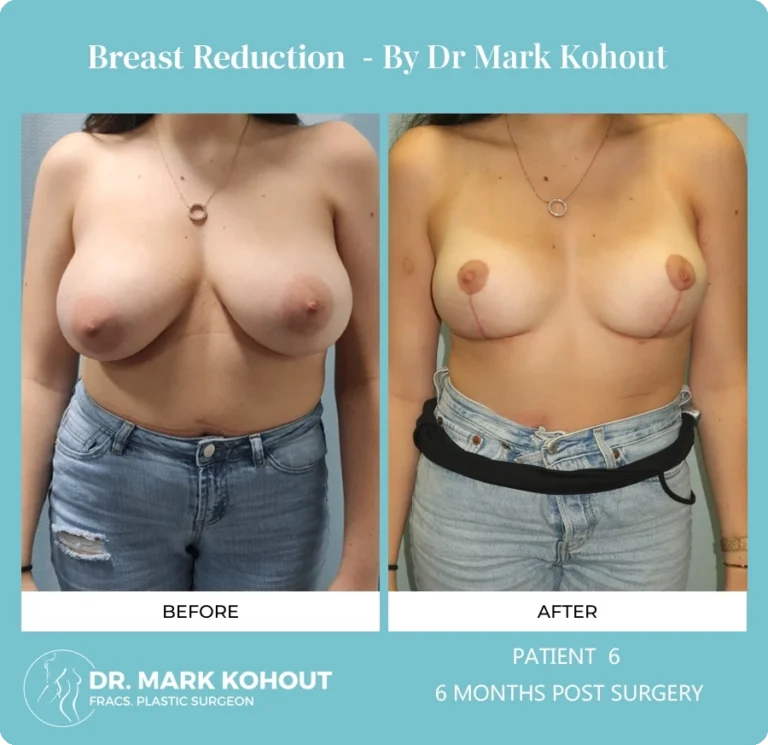
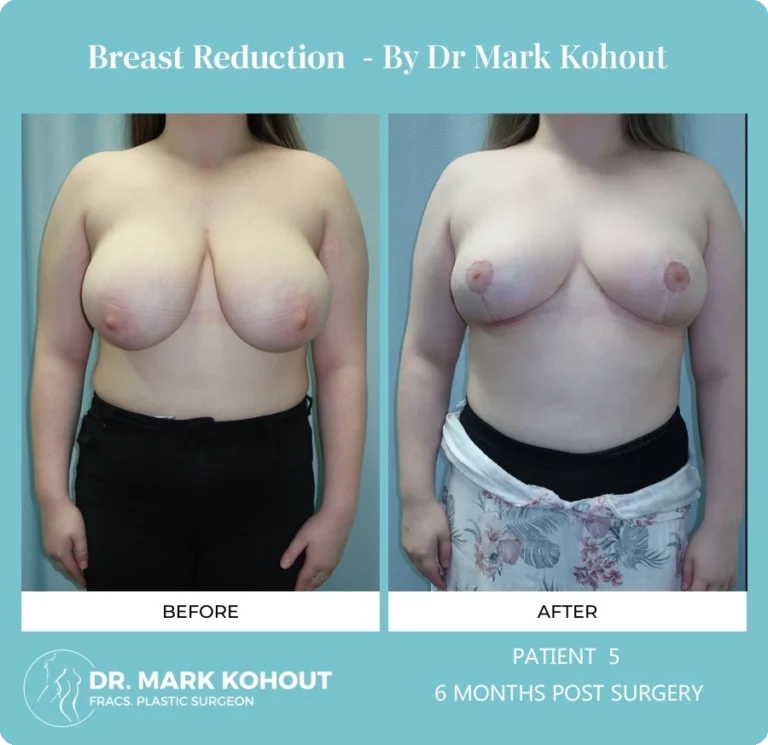
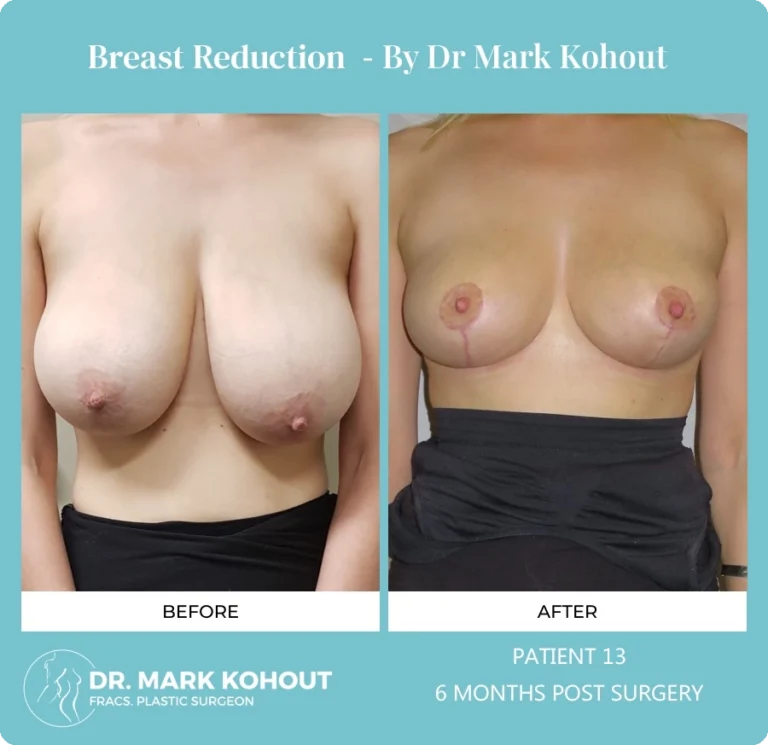
Before and After Photos of Breast Reduction Surgery

See the difference it has made for our clients.

Disclaimer

Individual results vary due to personal health factors and genetics, and all surgical procedures carry inherent risks that should be discussed with a qualified health professional.

A before-and-after gallery may be helpful for understanding the types of changes that can occur following breast reduction surgery. However, the images are indicative only, as each patient’s anatomy, surgical plan, healing response and outcome will differ.

Before-and-after images may illustrate:

  • Common scar patterns, including vertical and anchor-shaped scars, and where they are typically located
  • Potential changes in breast size and position
  • How reduction mammoplasty may appear in patients with different breast shapes and degrees of enlargement

Results vary between individuals and depend on factors such as general health, lifestyle, skin quality and healing. All surgery carries risks and potential complications. During a consultation, selected images may be used to discuss what may be realistic in your circumstances, while making clear that they are examples rather than predictions of an individual outcome.

How is the Procedure Performed?

The breast reduction process can be broken down into Anaesthetic Administered, Incision Technique, and Tissue Removal and Reshaping.

✓ Anaesthetic Administered

According to the site and procedure guide, breast reduction is performed under general anaesthesia in an accredited hospital, so you are asleep and monitored throughout. Before surgery you will:

  • Receive instructions on fasting and which medications to stop or adjust
  • Have your medical history and tests reviewed by the anaesthetist and surgeon
  • Discuss pain-relief options for the early postoperative period

Many patients stay in hospital at least one night after breast reduction so that discomfort levels, drains (if used) and early mobility can be monitored.

✓ Incision Technique

Incisions may be around the areola, vertically down to the breast fold, or in a T-shape, depending on the amount of reduction required. Common patterns include:

  • Vertical (“lollipop”) – incision around the areola plus a vertical line to the fold. Often used for moderate reductions with a focus on reshaping and lifting.
  • Wise-pattern (“anchor” or “inverted-T”) – incision around the areola, vertically down and along the breast fold. Used more often for larger reductions or when there is significant extra skin.

The choice of technique depends on breast size, tissue quality, degree of descent, and your goals. The aim is to balance effective reduction and reshaping with scar length and placement, while maintaining blood supply to the nipple–areola complex.

✓ Tissue Removal and Reshaping

Once incisions are made:

  • Excess breast tissue, fat and skin are removed according to the planned reduction
  • Remaining tissue is shaped to form a smaller breast mound
  • The nipple – areola complex is repositioned higher on the breast; the areola may be reduced in diameter if needed
  • In some very large breasts, a “free nipple graft” technique may be used, where the nipple and areola are repositioned as a skin graft; this has specific trade-offs around sensation and breastfeeding potential and is discussed carefully beforehand

Liposuction may be used to refine the contour at the sides of the chest or in the axillary (underarm) region. After reshaping, incisions are closed in layers – often with dissolving sutures beneath the skin – and dressings and a supportive postoperative bra are applied.

What is the Recovery Like?

Breast reduction recovery may involve swelling and discomfort, which can be managed with prescribed medication. Patients are generally advised to avoid strenuous activity for several weeks, attend regular follow-up appointments, and may be able to resume most usual activities within approximately four to six weeks. Dr Kohout’s recovery blogs and guide provide a more detailed, staged overview of the recovery process. 

✓ Early postoperative period (first few days)

  • You may wake with dressings and a support bra in place; drains may be used in some cases.
  • Swelling, bruising and a feeling of tightness across the chest are common and usually most noticeable in the first 48–72 hours.
  • Pain is typically managed with oral medication; you will be encouraged to walk short distances early to support circulation and reduce the risk of blood clots.

✓ First two to three weeks

  • Bruising gradually fades; swelling starts to settle, although it can remain for several weeks.
  • Sutures (if not dissolvable) are usually removed within 1–2 weeks; adhesive strips or tapes may be used to support healing scars.
  • Many people with desk-based work return between 2–3 weeks after surgery, depending on comfort, commute and workplace flexibility.

During this phase you are generally advised to:

  • Continue wearing a supportive, non-underwired bra day and night as directed
  • Avoid lifting, pushing or pulling heavy objects (including young children or heavy shopping)
  • Avoid sleeping on the front and minimise sudden arm movements above shoulder level

✓ Weeks four to six and beyond

  • Swelling continues to improve; breasts gradually soften and settle into a more stable shape and position.
  • Light exercise (such as walking) is usually increased gradually; more vigorous activities and upper-body strength work are reintroduced only with your surgeon’s approval, often from around 4–6 weeks or later depending on recovery.
  • Scars may initially look pink or firm and can feel raised; they often soften and fade over 12–18 months but remain permanent.

Some temporary changes in nipple or breast sensation are common and may take many months to stabilise; in some individuals there may be longer-term alteration. If at any time you experience increasing pain, redness, discharge, fever, sudden swelling, shortness of breath or leg pain, you should seek medical review promptly.

Dr Mark Kohout

What are the Risks?

Breast reduction surgery carries risks, including infection, anaesthetic complications, scarring, altered sensation and unsatisfactory results. The procedure guide provides further detail on possible complications:

  • Bleeding and haematoma – bleeding into the surgical area may require urgent return to theatre to remove the blood and control bleeding.
  • Infection – usually appearing within the first week; may slow healing, alter scar appearance and sometimes require antibiotics or further treatment.
  • Swelling and bruising – expected after surgery, typically most pronounced in the first 1–2 weeks.
  • Scarring – scars are unavoidable; while they usually fade over 12–18 months, some people develop thicker, wider or darker scars (hypertrophic or keloid), which can sometimes be treated.

Other possible risks include:

  • Asymmetry – breasts may not be perfectly even in size or nipple position after surgery; minor differences are common and, in some cases, revision may be considered.
  • Changes in nipple or breast sensation – nipples may become more sensitive, less sensitive or feel numb; recovery of sensation varies and changes may be long-term.
  • Compromised blood supply – in rare cases, especially with very large breasts, smoking or circulation problems, there can be partial or complete loss of nipple, areola or skin.
  • Fat necrosis – areas of fat within the breast can harden and form lumps that may need monitoring or treatment.
  • Effects on mammography – surgery can change the appearance of the breast on imaging; radiology services can usually adjust techniques, but you should inform them of prior surgery.
  • Anaesthetic risks – including allergic reactions and heart or lung-related events, which are discussed with the anaesthetist.

Risk levels depend on factors such as general health, smoking status, BMI, breast size, the extent of reduction and adherence to postoperative instructions. The website and guides repeatedly recommend discussing risks in detail with your surgeon and seeking a second opinion from another appropriately qualified medical practitioner before proceeding.

middle body

What are the Costs?

Breast reduction surgery costs vary and usually include the surgeon’s fee, facility charges and anaesthesia costs, as well as pre-operative consultations, postoperative appointments and required medications. Many clinics offer financing options, and Dr Kohout’s practice notes a commitment to providing flexible payment plans to help reduce financial pressure.

Typical cost components are:

  • Surgeon’s fee – consultation, planning, performing the surgery and scheduled follow-up visits
  • Anaesthetist’s fee – for administering and monitoring anaesthesia
  • Hospital or day-surgery facility fees – operating-theatre time, nursing care, equipment, dressings and bed fees (if staying overnight)
  • Pre-operative tests – such as blood tests, imaging or specialist reviews, if required
  • Post-operative costs – medications, supportive bras, dressings and any additional follow-up outside the routine schedule

In Australia, some breast reduction procedures may qualify for Medicare item numbers and private health-fund rebates when strict medical criteria are met (for example, documented physical symptoms and degree of breast hypertrophy). Whether a particular case is eligible depends on clinical details, current Medicare rules and health-fund policies. Patients are encouraged to confirm any potential rebates directly with Medicare and their insurer using information provided at consultation, as policies can change over time.

An accurate quote is generally only possible after a face-to-face assessment, once your anatomy, health status, anticipated operative time and hospital stay have been considered.

Welcome to the Practice

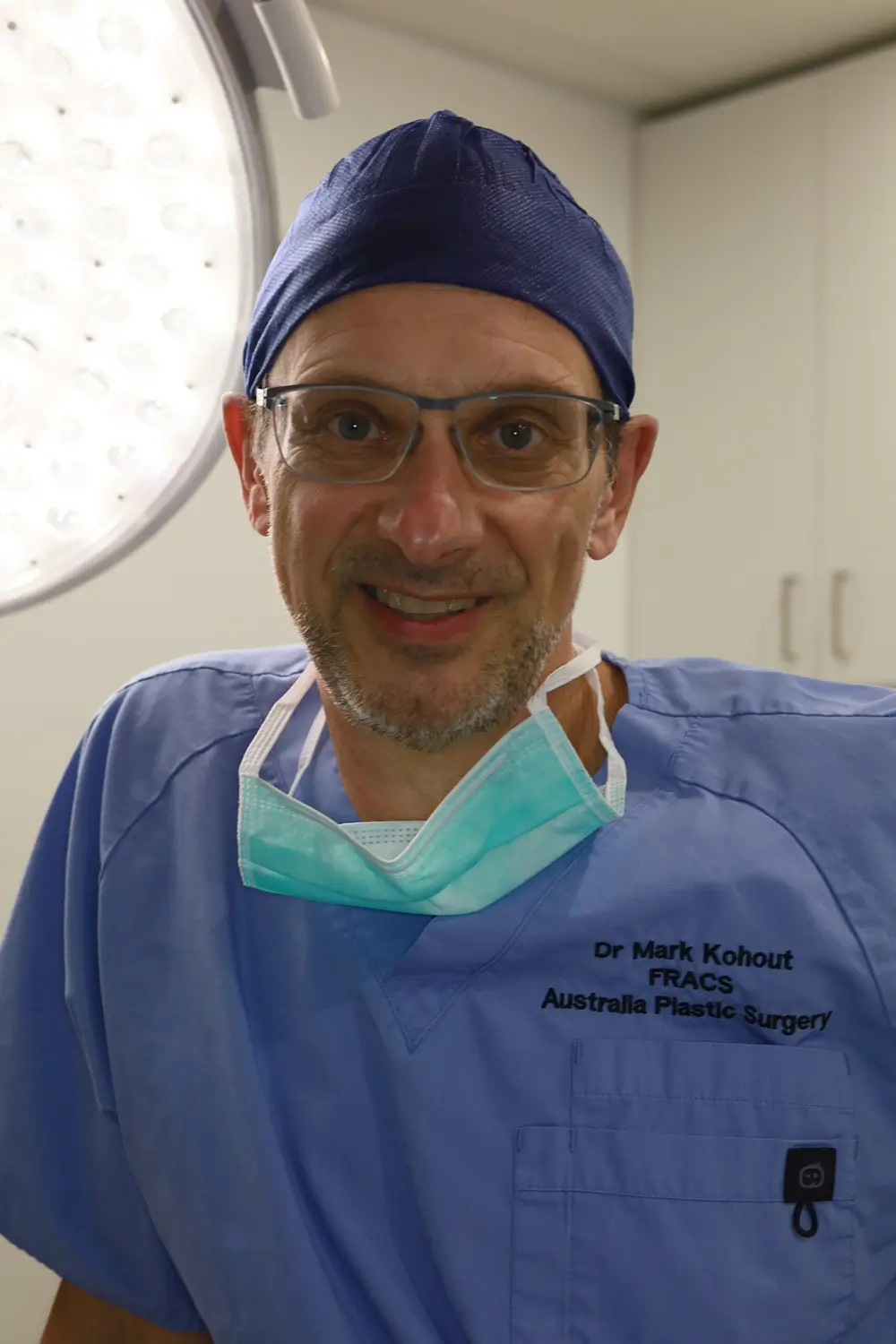
Dr Mark Kohout is a qualified plastic surgeon based in central Sydney with over 25 years of experience in cosmetic and reconstructive surgery. He holds specialist registration in Surgery – Plastic Surgery (MED0001133000) and practises in Sydney and Orange.

The practice highlights:

  • Extensive training in Australia, Great Britain and the United States
  • Procedures performed in accredited facilities
  • A patient-centred approach focused on clear explanation of options, risks, limitations and recovery
  • Repeated reminders that all surgical or invasive procedures carry risks, outcomes vary, and a second opinion from another appropriately qualified medical practitioner is recommended before proceeding

Care is delivered by a team aiming to provide respectful, transparent support from first enquiry through to long-term postoperative review.

Download
Breast Reduction
Surgery Guide

Ultimate Procedure Guide - Breast Reduction Surgery Card Image

What’s Next?

If you are considering breast reduction, the next step is usually a face-to-face consultation with Dr Kohout or another Specialist Plastic Surgeon. At this appointment, your medical history, symptoms, breast anatomy, imaging (if relevant) and lifestyle can be reviewed, and potential options – including non-surgical measures, surgical techniques, expected scars, risks, recovery and costs – can be discussed in the context of your personal circumstances.

We also offer a patient photo-assessment form and downloadable procedure guides, which can help you prepare questions and understand the process in more detail. However, any decision to proceed should only be made after an in-person clinical assessment and, if you wish, a second opinion from another appropriately qualified medical practitioner. Whether you are ready for a professional evaluation or just have a quick question, we’ve made it easy to connect with our team. Choose the option that best fits your needs below. 

Further Reading

Book your Consultation

Take the first step toward your goals by filling out the brief form below. This information helps us understand your specific needs so we can make the most of our time together during your session. Once you submit your details, a member of our team will review your request and reach out shortly to confirm your appointment.

Patient Photo Assessment

Sending photos for a patient photo assessment can help you and your plastic surgeon prepare for your consultation. By reviewing clear, accurate photos, Dr Kohout can provide preliminary patient photo assessment like insights, assess your needs, and determine the right approach for your procedure.

Tips for Uploading Photos

ASK A FRIEND

Friend takes photo

GOOD LIGHTING

Plain wall, bright light

ALL ANGLES

Front / sides/ 45°

CLEAR & SHARP

No portrait mode

SEND ORIGINALS

No edits or compression

Dr. Mark Kohout Plastic Surgery in Sydney & Orange

Experienced Plastic Surgeon

Dr. Mark Kohout

A qualified plastic surgeon who operates with care and integrity, based in central Sydney with over 20 years of experience in the cosmetic field. His extensive training and experience assures patients they are in highly trained surgical hands. Dr. Kohout is a dedicated, friendly professional who is committed to providing the high quality care, support and results, alongside his compassionate team.

Dr Mark Kohout (MED0001133000)
Specialist Plastic Surgeon
Specialist registration in Surgery – Plastic Surgery

25

Years of Experience

Years of Delivering Exceptional Cosmetic Care.

10000+

Surgical Procedures

Procedures performed by our qualified surgeons.

15+

Available Treatments

Cosmetic treatment options tailored to your needs.

Our Trusted

Accreditations

fracs

Dr Mark Kohout is a qualified plastic surgeon based in central Sydney, with over 20 years of experience in the field of cosmetic and reconstructive surgery. He draws on extensive surgical training and clinical experience to tailor care to the individual needs and goals of each patient.

Dr Kohout is known for his thoughtful, patient-centred approach, guiding individuals through each stage of their surgical journey — from initial consultation to post-operative care. Working alongside a compassionate and professional team, he is committed to providing high standards of care in a supportive and respectful environment.

Locations

Opening Hours

Monday - Friday

8:30AM - 05:00PM

Saturday - Sunday

Closed

Disclaimer: Dr Mark Kohout (MED0001133000) a Registered Medical Practitioner, Specialist Plastic Surgeon. All surgical or invasive procedures carry risks and complications. We recommend seeking a second opinion from an appropriately qualified medical practitioner before proceeding with any surgery. Results depend on individual patient circumstances and can vary significantly. Results may also be impacted by a variety of factors including your lifestyle, weight, nutritional intake and overall health. Consult your Specialist Plastic Surgeon for details. This information is general in nature and is not intended to be medical advice nor does it constitute a doctor-patient relationship. Surgery risks and complications will be covered in detail during a consultation with your Surgeon. We recommend seeking a second opinion from an appropriately qualified medical practitioner before proceeding with surgery.

©2024  All Rights Reserved

This website contains imagery which is only suitable for audiences 18+. All surgery contains risks, read more here.

X

Get Your Facial Aesthetic

Get Your Breast Implant Removal

Get Your Female Genital Surgery Guide

Get Your Excess Skin Guide

Get Your Gynaecomastia Guide

Get Your Liposuction Guide

Get Your Abdominoplasty Guide

Get Your Cost of Surgery Guide

Get Your Breast Implant Replace Guide

Get Your Breast Reduction Guide

Get Your Breast Augmentation Guide

Make an Enquiry