Calf Implants in Sydney

With Dr. Mark Kohout

Calf Implant Procedure Featured

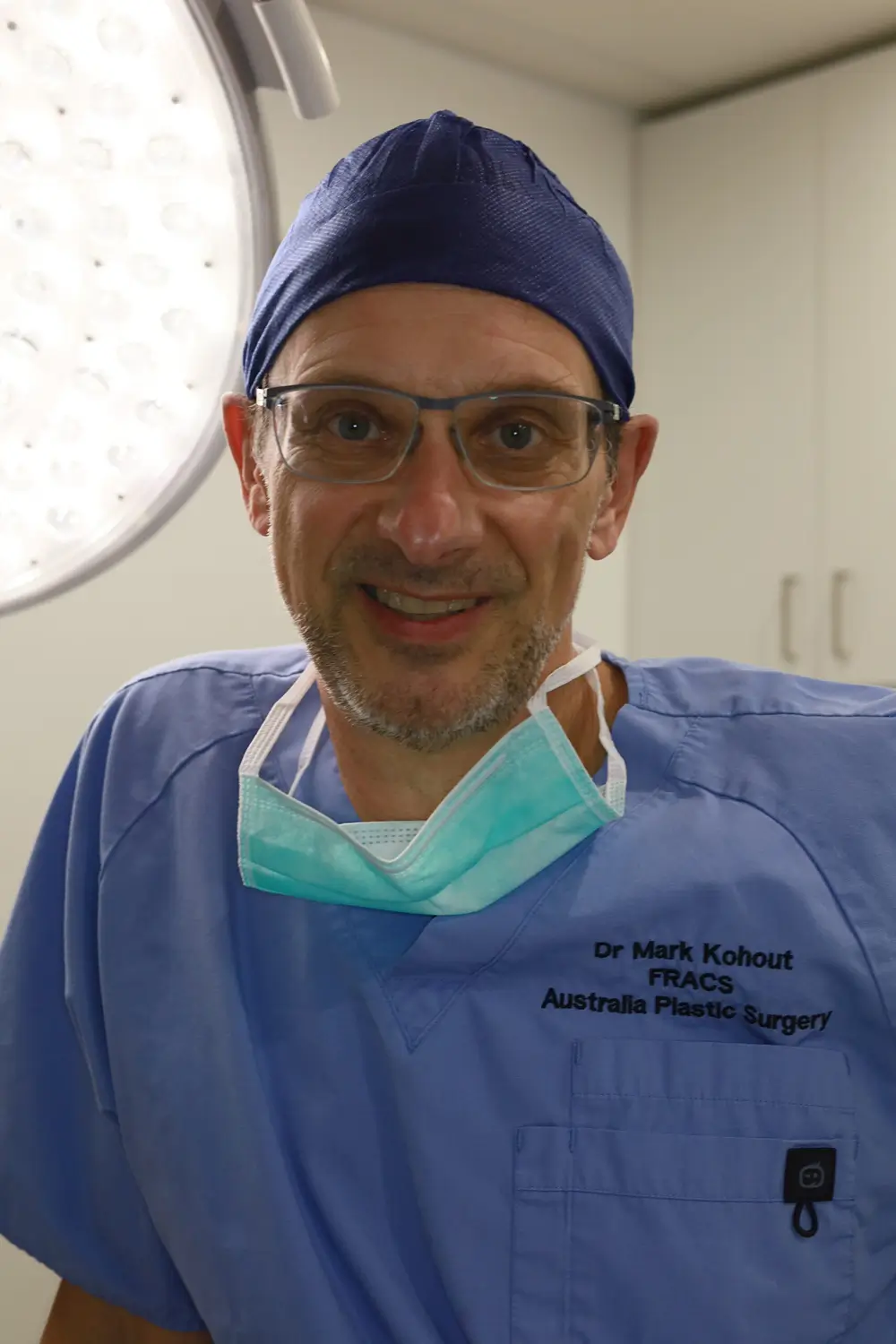
Dr Mark Kohout is a Specialist Plastic Surgeon with specialist registration in Surgery – Plastic Surgery, more than 25 years of practice and medical registration number MED0001133000. Calf augmentation is a form of body surgery that uses shaped silicone implants to increase selected areas of lower-leg volume.

Calf implants may be considered for appearance-related reasons or as part of a reconstructive plan following congenital difference, trauma, muscle underdevelopment or another stable condition affecting lower-leg contour. Implants may be positioned along the inner calf, outer calf or both, depending on anatomy, tissue capacity and the proposed change.

Calf implants do not increase muscle strength, improve circulation or treat joint, nerve or gait disorders. An in-person assessment is required to review lower-leg anatomy, vascular and neurological history, scars, implant-related risks, recovery restrictions, alternatives and the option of no surgery.

What are Calf Implants, and What do they Actually Do?

Calf implants are cohesive silicone devices placed within a surgically created pocket near the gastrocnemius muscle. They add fixed volume to selected parts of the lower leg without changing the strength or function of the underlying muscle.

  • Medial calf placement: An implant may be positioned along the inner side of the calf to add volume in that region.
  • Lateral calf placement: An implant may be positioned along the outer calf where additional contour is planned.
  • Combined placement: More than one implant may be used in one leg when both inner and outer volume are being addressed.
  • Subfascial positioning: The implant is commonly placed beneath the fascia covering the calf muscle.
  • Reconstructive use: Implants may be considered for selected stable contour differences following injury, congenital conditions or muscle underdevelopment.
  • Long-term device: The implant is intended to remain in place for an extended period but may later require revision or removal.

Calf implants do not treat blood-vessel disease, muscle weakness, joint symptoms or nerve-related problems. Surgery can alter contour, but it cannot guarantee exact symmetry or a particular calf shape.

Calf Implant at a Glance

Calf implant surgery is performed in an accredited hospital or day-surgery facility using a plan based on lower-leg examination, medical history and activity requirements. The operation usually involves an incision behind the knee and placement of the implant within a measured pocket beside the calf muscle.

Treatment Area

Inner calf, outer calf or both

Main Purpose

Appearance-related contour change or selected reconstruction

Implant Material

Cohesive silicone

Anaesthesia

Usually general anaesthesia

Incision

Commonly positioned within the crease behind the knee

Hospital Stay

Day surgery or overnight admission in selected cases

Early assisted walking is usually introduced according to comfort and surgical advice. Scars are permanent, and the implants should not be regarded as lifetime devices.

What Are the Potential Benefits of Calf Implant Surgery?

Calf implant surgery may provide a measurable change in lower-leg volume for appropriately selected patients. The extent of change depends on implant dimensions, muscle anatomy, skin and fascial quality, existing asymmetry and the available soft-tissue space.

  • Increased inner-calf volume: A medial implant may add volume along the inner border of the lower leg.
  • Increased outer-calf volume: A lateral implant may change the contour of the outer calf.
  • Selected asymmetry reduction: Different implant sizes or positions may reduce visible differences between the legs.
  • Reconstructive contour change: Surgery may address stable tissue deficiency following trauma or developmental difference.
  • Proportional adjustment: The relationship between the calf, ankle and thigh may change.
  • Consistent added volume: Implant volume does not depend on muscle growth through resistance training.

Calf implants cannot guarantee equal calf size or reproduce the appearance of developed muscle. They also do not improve athletic performance, muscle power or lower-limb function.

Calf Implant Surgery

Do I Need Calf Implants or Another Treatment?

A relatively small or asymmetric calf may result from genetics, muscle anatomy, previous injury, nerve impairment or another medical condition. The appropriate approach depends on whether the concern is limited to contour or involves function, circulation, weakness or gait.

  • Calf implants: Add fixed volume using silicone devices positioned near the calf muscle.
  • Resistance training: May increase muscle bulk but cannot alter every anatomical pattern.
  • Fat transfer: Uses the patient’s own fat, although available donor tissue and fat survival vary.
  • Reconstructive planning: May involve implants, fat transfer, scar treatment or a combined approach.
  • Medical assessment: Vascular, neurological or orthopaedic review may be needed where symptoms are present.
  • No surgery: May be appropriate where the concern is minor or implant-related risk outweighs the likely change.

Calf implants should not be used to mask unexplained muscle wasting, swelling, pain or weakness without investigation. A clinical assessment helps determine whether another diagnosis or specialist review should come first.

Who Performs Calf Implant Surgery in Sydney?

Dr Mark Kohout is a Specialist Plastic Surgeon with specialist registration in Surgery – Plastic Surgery and medical registration number MED0001133000. He provides consultations in Sydney, with additional consultation availability in Orange, NSW.

  • More than 25 years of practice in plastic and reconstructive surgery
  • Individual assessment of calf, ankle and thigh proportions
  • Review of appearance-related and reconstructive indications
  • Discussion of implant number, position and limitations
  • Surgery in accredited facilities
  • Coordination with other medical specialists where appropriate

Consultation, surgery and scheduled follow-up are personally provided or overseen by Dr Kohout with support from the clinical team. His qualifications and care processes do not guarantee a particular result or recovery experience.

Book your Consultation

Take the first step toward your goals by filling out the brief form below. This information helps us understand your specific needs so we can make the most of our time together during your session. Once you submit your details, a member of our team will review your request and reach out shortly to confirm your appointment.

Patient Photo Assessment

Sending photos for a patient photo assessment can help you and your plastic surgeon prepare for your consultation. By reviewing clear, accurate photos, Dr Kohout can provide preliminary patient photo assessment like insights, assess your needs, and determine the right approach for your procedure.

Tips for Uploading Photos

ASK A FRIEND

Friend takes photo

GOOD LIGHTING

Plain wall, bright light

ALL ANGLES

Front / sides/ 45°

CLEAR & SHARP

No portrait mode

SEND ORIGINALS

No edits or compression

What Happens During a Calf Implant Consultation?

A calf implant consultation is used to assess lower-leg anatomy, general health, activity requirements and the reasons for considering surgery. It also provides time to review implant placement, scars, walking restrictions, long-term device considerations and alternative options.

  • Medical history: Diabetes, vascular disease, clotting history, neurological conditions and previous operations are reviewed.
  • Leg history: Previous injury, surgery, muscle wasting, swelling and mobility concerns are discussed.
  • Physical examination: Calf circumference, muscle bulk, ankle contour, thigh proportions and asymmetry are assessed.
  • Tissue assessment: Skin thickness, fascial capacity and soft-tissue coverage are considered.
  • Activity review: Running, impact sport, heavy leg training and occupational demands are discussed.
  • Implant planning: Possible implant size, shape, position and number are reviewed.

Clinical photographs and measurements may be taken for planning and the medical record. A photo assessment alone cannot determine pocket capacity, vascular status or surgical suitability.

What Are the Different Types of Calf Implant Surgery?

Calf implant surgery can be adapted according to whether the inner calf, outer calf or both regions require added volume. The number and size of implants may also differ between legs where there is pre-existing asymmetry.

  • Medial calf implant: Adds volume along the inner calf.
  • Lateral calf implant: Adds volume along the outer calf.
  • Combined medial and lateral implants: Uses two implants in one calf to treat both regions.
  • Bilateral calf implants: Treats both lower legs during the same operation.
  • Asymmetric implant planning: Uses different implant sizes or positions between the legs.
  • Reconstructive calf implantation: Addresses selected stable contour differences associated with trauma, congenital conditions or muscle underdevelopment.

Revision surgery may address implant movement, discomfort, infection, scarring or a change in implant preference. Implant removal is also possible, although the leg may not return to its exact preoperative contour.

Am I a Suitable Candidate for Calf Implants?

Suitability depends on lower-leg anatomy, tissue capacity, vascular and neurological health, general medical fitness and the ability to follow mobility restrictions. A visible size difference or limited calf development does not by itself establish that implant surgery is appropriate.

  • Stable lower-leg anatomy: The calf contour and any underlying medical condition should be stable.
  • Suitable soft-tissue coverage: There should be enough skin, fascia and surrounding tissue to cover the implant.
  • No active infection: Skin and soft-tissue infections must be treated before surgery.
  • Suitable vascular and neurological health: Unexplained swelling, weakness or altered sensation may require further assessment.
  • No current nicotine use: Smoking, vaping and nicotine increase wound and infection risk.
  • Realistic expectations: The patient understands scars, asymmetry, implant complications and possible future body surgery.

A suitable candidate should also be able to follow instructions relating to walking, leg elevation, wound care and exercise restrictions. Final suitability can only be confirmed after an in-person examination and any recommended specialist review.

Calf Implants Sydney costs

Who May Not Be Suitable for Calf Implants?

Some patients may be advised not to proceed or to delay surgery until a medical or lower-limb concern has been investigated. Unsuitability may relate to vascular disease, infection, inadequate tissue coverage, healing risk or recovery limitations.

  • Active skin or soft-tissue infection: Infection must be treated before an implant is placed.
  • Unexplained leg swelling: Vascular or other medical assessment may be required.
  • Previous or current blood clot: Further review may be necessary before elective lower-limb surgery.
  • Significant nerve symptoms: Weakness, numbness or gait disturbance should be investigated.
  • Current nicotine use: Smoking, vaping and nicotine may interfere with wound healing.
  • Inadequate recovery capacity: The patient must be able to limit walking, lifting and high-impact activity.

Poorly controlled diabetes, major wound-healing risk or unrealistic expectations may also make surgery unsuitable. Some patients may become suitable after medical optimisation, nicotine cessation or review by a vascular, neurological or orthopaedic specialist.

How Is Calf Implant Surgery Performed?

Calf implant surgery is planned according to lower-leg anatomy, implant size, pocket location and the amount of contour change being considered. The procedure usually involves placement of one or more shaped silicone implants through an incision behind the knee.

  • Preoperative markings: The calf contours, proposed implant position and incision location are marked before anaesthesia.
  • Anaesthesia: General anaesthesia is commonly used, although the final plan depends on health and procedure extent.
  • Surgical access: An incision is usually made within the crease behind the knee.
  • Pocket creation: A measured pocket is developed beneath the fascia or adjacent to the calf muscle.
  • Implant insertion: The implant is introduced and positioned along the inner calf, outer calf or both.
  • Closure and support: The incision is closed in layers, followed by dressings and compression support where advised.

Nerves, blood vessels, fascia and muscle structures must be protected during pocket creation. Implant position is checked with the knee and ankle moved through a limited range before closure.

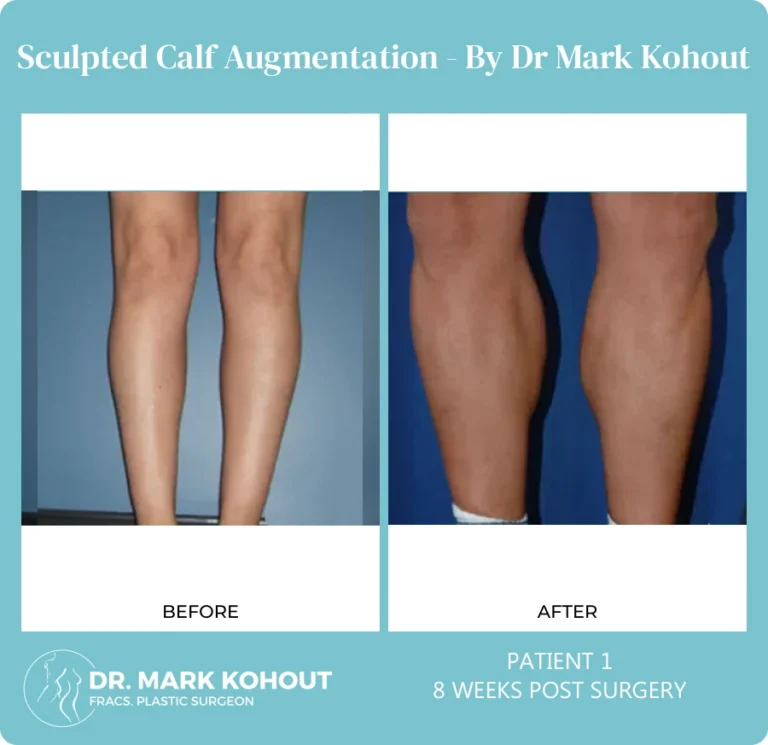
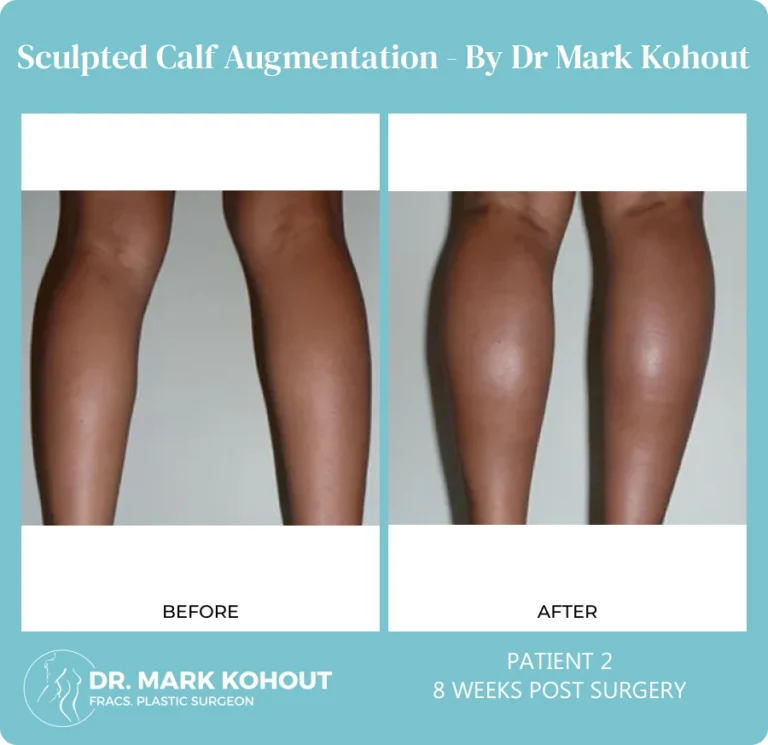
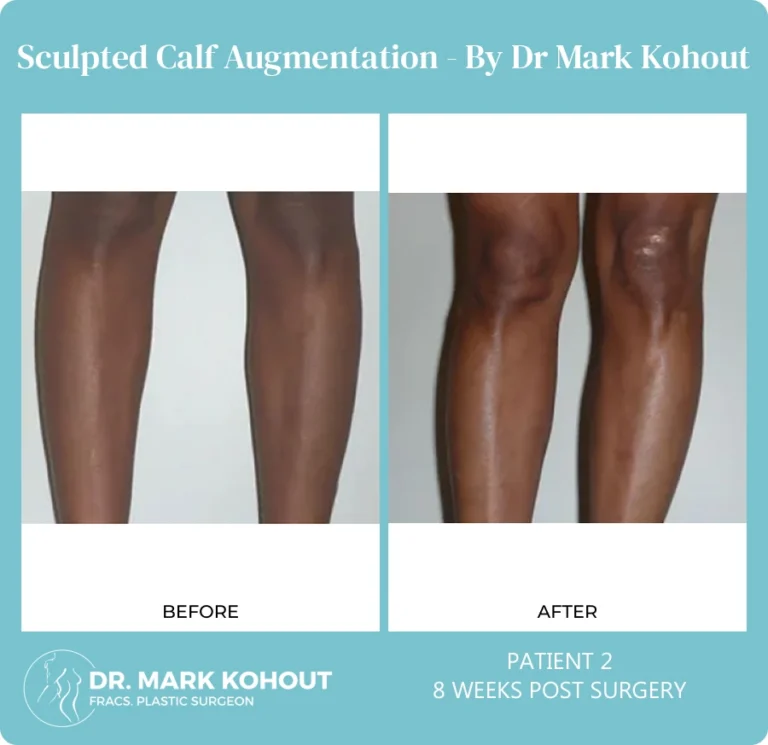
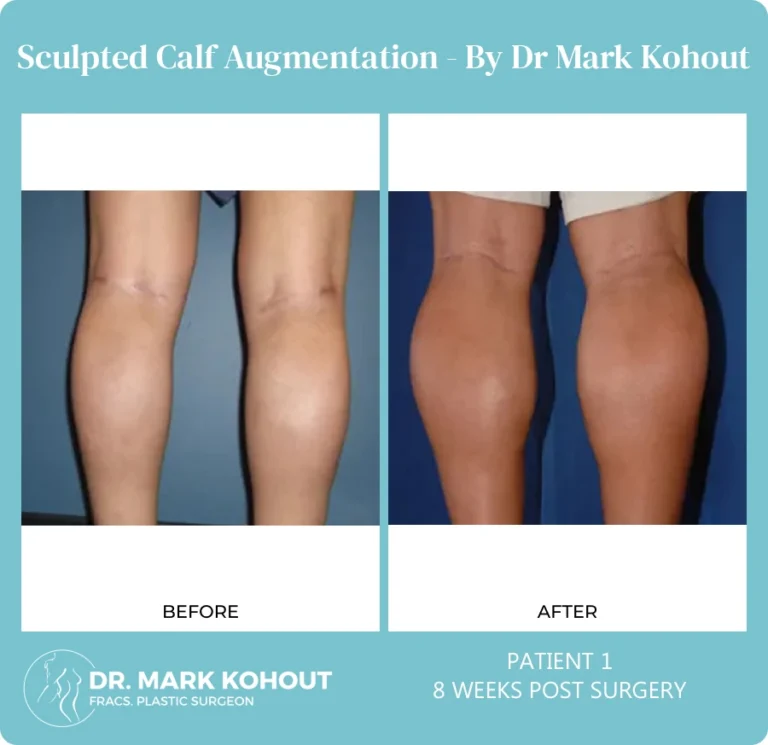
Calf Implant Surgery Procedure steps and What Before-and-After Photos Can Show

Before and After Photos of Calf Implant Surgery

View examples of individual calf implant surgery patient outcomes.

Disclaimer

Individual results vary due to personal health factors and genetics, and all surgical procedures carry inherent risks that should be discussed with a qualified health professional.

Before-and-after photographs may help explain possible changes in lower-leg volume, inner-calf contour, outer-calf contour and asymmetry. They cannot show implant position beneath the tissues or predict how another patient will heal.

  • Images require written patient consent.
  • Standing position and foot rotation can affect calf appearance.
  • Lighting and camera distance may alter visible contour.
  • Muscle bulk and exercise history influence the final appearance.
  • Early photographs may still show swelling or firmness.
  • Another patient’s result is not predictive of an individual outcome.

Scars are usually positioned behind the knee but remain permanent. Photographs should be used as educational examples rather than expected results.

Request a Calf Implant Consultation

A consultation allows lower-leg anatomy, medical history, circulation, nerve symptoms and activity requirements to be assessed before a surgical plan is proposed. The initial enquiry form should collect only the information needed for the clinic to arrange appropriate contact.

Photographs may assist with an initial discussion but cannot confirm pocket suitability or vascular and neurological risk. Final planning requires an in-person examination.

What Should I Expect During Calf Implant Recovery?

Recovery after calf implant surgery commonly involves swelling, tightness, bruising and discomfort when standing or walking. The early priority is to protect the implant pocket while maintaining enough movement to support circulation.

  • Short assisted walks may begin early according to comfort.
  • Leg elevation may be recommended while resting.
  • Dressings or compression support should be used as instructed.
  • Wound care is required around the crease behind the knee.
  • Running, jumping, uphill walking and heavy calf loading should be avoided.
  • Follow-up appointments are used to assess healing and implant position.

Tightness and altered sensation may continue after bruising has reduced. Sudden severe pain, rapidly increasing swelling, wound discharge, fever, chest pain or shortness of breath requires urgent assessment.

How Long Does Calf Implant Recovery Take?

Recovery occurs in stages, with walking comfort usually improving before swelling, scar maturation and implant settling are complete. Timing varies according to implant number, pocket location, occupation and individual healing.

  • First 24–72 hours: Swelling, tightness, assisted walking and leg elevation
  • First week: Short walks, wound care and restricted knee and calf strain
  • Weeks 1–2: Gradual return to desk-based work and routine household activity
  • Weeks 3–6: Progressive walking and low-impact exercise
  • Weeks 6–12: Gradual return to more demanding leg exercise after review
  • Several months: Implant settling, scar maturation and sensory recovery

Driving may resume when walking is comfortable, braking can be performed reliably and medication does not affect alertness. Running and contact sport should only resume after tissue healing and medical clearance.

Recovery varies. Dr Mark Kohout will provide advice based on the procedure performed and individual risk factors.

Calf Implants Sydney costs

How Much Do Calf Implants Cost in Sydney?

The cost of calf implant surgery varies according to whether one or both legs are treated, the number of implants used and whether the procedure is cosmetic or reconstructive. A personalised estimate can only be prepared after examination and confirmation of the operative plan.

  • Surgeon’s fee
  • Anaesthetist’s fee
  • Hospital or day-surgery charges
  • Implant cost
  • Blood tests or imaging where indicated
  • Dressings, compression support and follow-up care

Additional costs may apply if vascular, neurological or orthopaedic assessment is required. Revision surgery or implant removal may involve separate fees if needed later.

Medicare or private health insurance may contribute in selected reconstructive cases that meet current criteria. Eligibility is not automatic and should be confirmed directly with Medicare and the insurer.

A Practical Guide to Preparing for Calf Implant Surgery

Preparation includes reviewing medical risk, lower-limb symptoms and the practical limits that will apply during early recovery. These steps help identify issues that may need assessment or treatment before surgery.

  • Obtain a GP referral where appropriate.
  • Arrange vascular, neurological or orthopaedic review if recommended.
  • Treat any skin or soft-tissue infection before surgery.
  • Review blood-thinning medicines and supplements.
  • Stop smoking, vaping and nicotine within the advised timeframe.
  • Arrange transport and home support for the early recovery period.

Patients should prepare a suitable area for leg elevation, loose clothing and reduced walking. Time away from work and a pause from running, jumping and heavy leg training should also be planned.

The possibility of implant movement, infection, nerve symptoms, blood clots and later revision should be understood before consent is provided. Patients may also seek another opinion or choose not to proceed.

What Are the Risks and Complications of Calf Implant Surgery?

Calf implant surgery carries general surgical risks as well as complications involving implant position, wound healing, nerves, fascia, muscle and circulation. Risk depends on anatomy, implant size, medical history, nicotine exposure, activity and adherence to postoperative instructions.

  • Bleeding or haematoma: Blood may collect around the implant and require further treatment.
  • Infection: Infection may require antibiotics, drainage or implant removal.
  • Seroma: Fluid may collect around the implant and need monitoring or drainage.
  • Implant movement: Displacement or rotation can alter contour and may require revision.
  • Nerve or sensory change: Numbness, tingling, pain or altered sensation may affect the calf or foot.
  • Wound-healing problems: Delayed healing, wound breakdown or thickened scarring may occur.

Other risks include asymmetry, contour irregularity, implant visibility, capsular tightening, persistent tightness, muscle or fascial injury, difficulty walking and implant damage. Revision surgery or implant removal may be required.

Deep vein thrombosis and pulmonary embolus are uncommon but serious complications of lower-limb surgery. One-sided swelling, severe calf pain, chest pain, sudden shortness of breath or coughing blood requires emergency medical assessment.

Calf Implant Surgery With Dr Mark Kohout

Dr Mark Kohout is a Specialist Plastic Surgeon with specialist registration in Surgery – Plastic Surgery and medical registration number MED0001133000. His role includes consultation, lower-leg assessment, surgical planning, performance of the procedure and structured postoperative review.

  • More than 25 years of practice in plastic and reconstructive surgery
  • Individual assessment of calf, ankle and thigh proportions
  • Review of appearance-related and reconstructive indications
  • Discussion of implant position, size and alternatives
  • Coordination with other specialists where appropriate
  • Surgery in accredited facilities

Care planning places emphasis on vascular and neurological history, mobility restrictions and long-term implant considerations. These qualifications and processes do not guarantee a particular result.

Dr Mark Kohout

How Do I Schedule a Calf Implant Consultation?

The first step is to arrange an in-person consultation for assessment of the calves, lower limbs and medical history. Relevant vascular, neurological, orthopaedic or rehabilitation records may help clarify whether implant surgery is suitable.

  • Contact the Sydney clinic or submit the enquiry form.
  • Obtain a GP referral where appropriate.
  • Bring previous lower-limb treatment records.
  • Attend an in-person calf and circulation assessment.
  • Complete imaging or specialist review where recommended.
  • Review implant position, scars, recovery, risks and alternatives.

A personalised fee estimate can be prepared once the surgical plan has been established. Patients should allow time to consider the information, seek another opinion and proceed only after informed consent and preoperative assessment.

Dr Mark Kohout Portrait Image

FAQs About Calf Implants

Where are calf implants positioned in relation to the muscle?

Calf implants are commonly placed beneath the fascia covering the gastrocnemius muscle, although selected techniques position them more deeply between muscle layers. The chosen plane depends on anatomy, tissue coverage, implant dimensions and the surgeon’s operative plan.

Can calf implants affect walking or ankle movement?

Walking may be limited temporarily because swelling, tightness and discomfort can make it difficult to extend the knee or move the ankle normally. Persistent weakness, altered gait or restricted ankle movement should be assessed rather than assumed to be part of routine healing.

Why can the calves feel very tight after surgery?

Tightness can result from swelling and the addition of implant volume within a relatively confined fascial space. Rapidly increasing tightness accompanied by severe pain, numbness, weakness or a tense calf requires urgent assessment because pressure within the lower leg may be affecting nerves or circulation.

Can calf implants move or rotate during recovery?

Yes, an implant may shift or rotate if the pocket is too large, the tissues are disrupted or calf loading resumes before healing is adequate. Movement can alter contour, produce discomfort or lead to revision surgery.

Can I return to running and heavy calf training?

Many patients may gradually return to demanding exercise after the pocket and surrounding tissues have healed, but timing varies with implant position, activity type and recovery. Running, jumping and heavy calf loading should only be resumed after examination and medical clearance.

How are different-sized calves treated?

Implant dimensions and pocket positions may be varied between the legs to reduce a visible difference. Exact symmetry cannot be assured because muscle bulk, bone position, skin thickness and healing may remain different on each side.

Can calf implants be removed later?

Calf implants can be removed if infection, movement, discomfort, implant damage or a change in preference occurs. Removal may leave residual asymmetry, skin looseness, scar tissue or a contour that differs from the preoperative leg.

What happens if the scar tissue around an implant tightens?

A fibrous capsule normally forms around an implant, but excessive tightening may cause firmness, discomfort, visible contour change or implant displacement. Further surgery may involve releasing or removing the capsule, repositioning the implant, replacing it or removing it.

Can calf implants cause nerve symptoms in the leg or foot?

Nerves may be irritated, stretched or compressed during pocket creation, by postoperative swelling or by implant pressure. New numbness, tingling, burning pain, weakness or altered foot movement should be reported promptly.

What symptoms after calf implant surgery require urgent review?

Severe or rapidly increasing calf pain, marked tightness, one-sided swelling, a cold or pale foot, progressive numbness, weakness, fever or wound discharge requires urgent medical assessment. Chest pain, sudden shortness of breath, faintness or coughing blood requires emergency care because these symptoms may indicate a pulmonary embolus.

Medical References

Take our Plastic Surgery Quiz to find out if you’d be a good candidate and if you are ready for cosmetic surgery.​

Further Reading

Welcome to the Practice of
Dr. Mark Kohout

With over 25 years of experience and Harvard training, Dr. Mark Kohout offers experienced plastic and reconstructive surgery at his Sydney and Orange clinics. His patient-first approach focuses on delivering safe, natural results tailored to your unique goals.

What's Next?

Whether you are ready for a professional evaluation or just have a quick question, we’ve made it easy to connect with our team. Choose the option that best fits your needs below.

Book your Consultation

Take the first step toward your goals by filling out the brief form below. This information helps us understand your specific needs so we can make the most of our time together during your session. Once you submit your details, a member of our team will review your request and reach out shortly to confirm your appointment.

Patient Photo Assessment

Sending photos for a patient photo assessment can help you and your plastic surgeon prepare for your consultation. By reviewing clear, accurate photos, Dr Kohout can provide preliminary patient photo assessment like insights, assess your needs, and determine the right approach for your procedure.

Tips for Uploading Photos

ASK A FRIEND

Friend takes photo

GOOD LIGHTING

Plain wall, bright light

ALL ANGLES

Front / sides/ 45°

CLEAR & SHARP

No portrait mode

SEND ORIGINALS

No edits or compression

Dr. Mark Kohout Plastic Surgery in Sydney & Orange

Experienced Plastic Surgeon

Dr. Mark Kohout

A qualified plastic surgeon who operates with care and integrity, based in central Sydney with over 20 years of experience in the cosmetic field. His extensive training and experience assures patients they are in highly trained surgical hands. Dr. Kohout is a dedicated, friendly professional who is committed to providing the high quality care, support and results, alongside his compassionate team.

Dr Mark Kohout (MED0001133000)
Specialist Plastic Surgeon
Specialist registration in Surgery – Plastic Surgery

25

Years of Experience

Years of Delivering Exceptional Cosmetic Care.

10000+

Surgical Procedures

Procedures performed by our qualified surgeons.

15+

Available Treatments

Cosmetic treatment options tailored to your needs.

Our Trusted

Accreditations

fracs

Dr Mark Kohout is a qualified plastic surgeon based in central Sydney, with over 20 years of experience in the field of cosmetic and reconstructive surgery. He draws on extensive surgical training and clinical experience to tailor care to the individual needs and goals of each patient.

Dr Kohout is known for his thoughtful, patient-centred approach, guiding individuals through each stage of their surgical journey — from initial consultation to post-operative care. Working alongside a compassionate and professional team, he is committed to providing high standards of care in a supportive and respectful environment.

Locations

Opening Hours

Monday - Friday

8:30AM - 05:00PM

Saturday - Sunday

Closed

Disclaimer: Dr Mark Kohout (MED0001133000) a Registered Medical Practitioner, Specialist Plastic Surgeon. All surgical or invasive procedures carry risks and complications. We recommend seeking a second opinion from an appropriately qualified medical practitioner before proceeding with any surgery. Results depend on individual patient circumstances and can vary significantly. Results may also be impacted by a variety of factors including your lifestyle, weight, nutritional intake and overall health. Consult your Specialist Plastic Surgeon for details. This information is general in nature and is not intended to be medical advice nor does it constitute a doctor-patient relationship. Surgery risks and complications will be covered in detail during a consultation with your Surgeon. We recommend seeking a second opinion from an appropriately qualified medical practitioner before proceeding with surgery.

©2024  All Rights Reserved

This website contains imagery which is only suitable for audiences 18+. All surgery contains risks, read more here.

Close Welcome Bar

Get Your Skin Tightening with Renuvion and Bodytite Guide

Get Your Buttock Lift & Implants Guide

Get Your Facial Aesthetic

Get Your Breast Implant Removal

Get Your Female Genital Surgery Guide

Get Your Excess Skin Guide

Get Your Gynaecomastia Guide

Get Your Liposuction Guide

Get Your Abdominoplasty Guide

Get Your Cost of Surgery Guide

Get Your Breast Implant Replace Guide

Get Your Breast Reduction Guide

Get Your Breast Augmentation Guide

Make an Enquiry