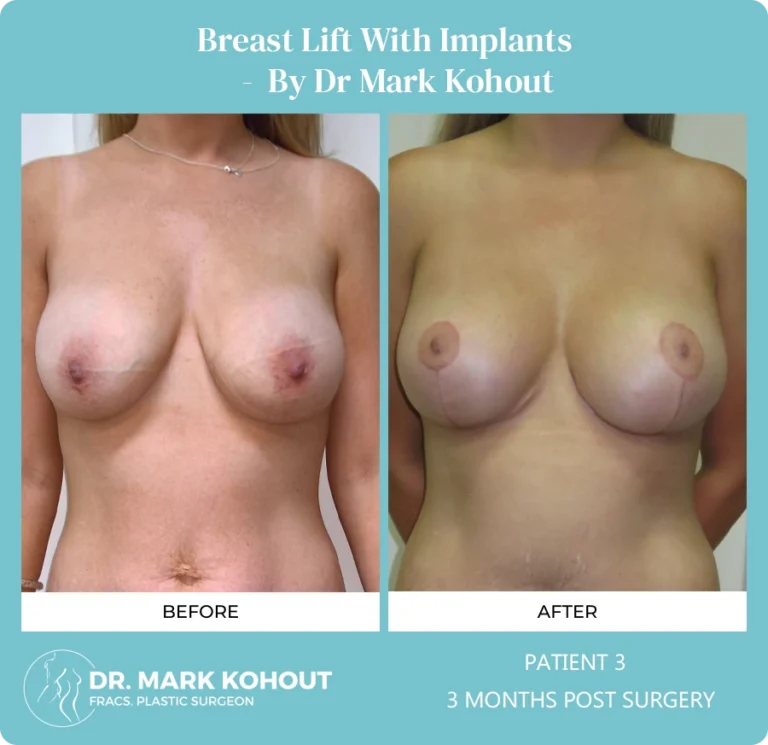
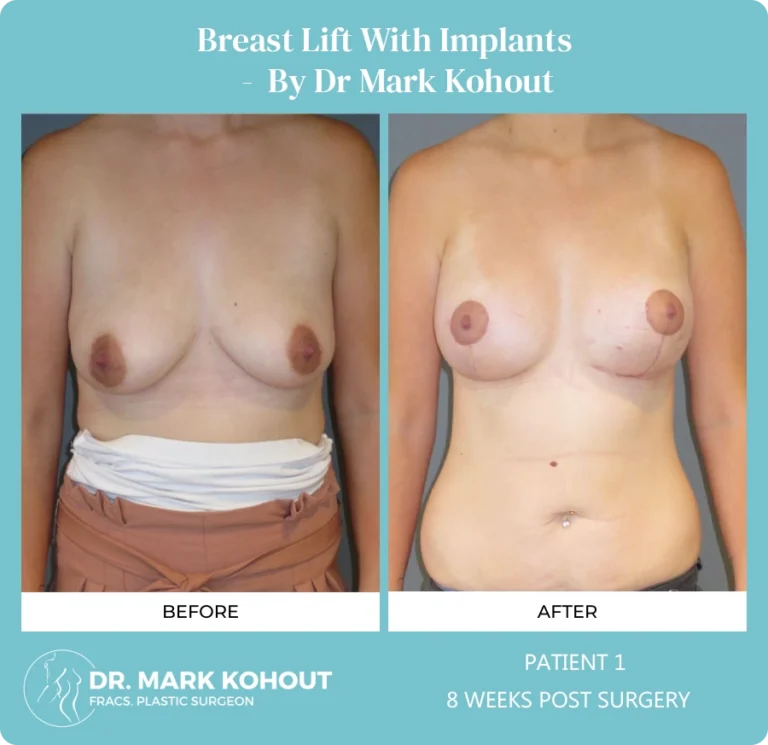
Breast Lift with Implants Sydney

With Dr. Mark Kohout

Breast Lift with Implants Sydney by Dr Mark Kohout

For people considering a breast lift with implants in Sydney, understanding whether the main concern relates to breast position, breast volume, or a combination of both is an important starting point. Also known as augmentation mastopexy, this breast procedure combines a breast lift with breast implant placement and may be considered after pregnancy, breastfeeding, weight changes, ageing or other changes in breast tissue and skin elasticity. A breast lift can reposition and reshape existing tissue, while an implant can add volume, meaning the two procedures address different anatomical concerns.

Dr Mark Kohout MBBS (Syd), FRACS (Plast) is a Specialist Plastic Surgeon with more than 25 years of experience in plastic and reconstructive surgery. His practice includes breast lift surgery, breast augmentation, breast reduction and breast revision surgery. For patients considering breast lift with implants, Dr Kohout assesses breast and chest anatomy, nipple position, existing breast tissue, skin quality, asymmetry, medical history and individual preferences before discussing whether a combined procedure, breast lift alone, breast augmentation alone, or another approach may be appropriate.

What Is a Breast Lift with Implants?

A breast lift with implants, or augmentation mastopexy, combines two procedures that address different anatomical features. Mastopexy reshapes and repositions existing breast tissue and removes selected areas of excess skin where required. The nipple – areola complex may also be repositioned as part of the surgical plan. Breast augmentation adds an implant to increase breast volume.

These procedures may be performed together when a patient has both a lower breast position and a preference for additional volume. However, an implant is not required for every breast lift, and an implant alone may not adequately address significant breast ptosis. The appropriate approach depends on the relationship between the existing breast tissue, skin envelope, nipple position and chest wall.

  • Mastopexy primarily addresses breast position and skin excess.
  • Breast implants primarily add volume.
  • Both procedures can be combined in selected patients.
  • A breast lift can also be performed without implants.
  • The surgical plan is determined after individual assessment.

Breast Lift Alone, Implants Alone or Both?

A breast lift alone may be considered when a person has adequate existing breast volume but would like to address breast tissue or nipple position. During mastopexy, existing tissue is rearranged and the skin envelope is adjusted. Because no implant is introduced, the operation relies on the patient’s own breast tissue to determine postoperative breast volume.

Breast augmentation alone may be considered when breast position is suitable and the main preference is additional volume. When more substantial ptosis is present, an implant by itself may not adequately address breast or nipple position. A breast lift with implants in Sydney may therefore be discussed when both breast position and volume are relevant to the patient’s concerns.

  • A breast lift does not automatically require an implant.
  • Breast augmentation does not reliably correct significant ptosis.
  • Combined surgery may address both breast position and volume.
  • Existing tissue volume influences the available options.
  • Examination is required before recommending a procedure.
Breast Lift with Implants Comparison Infographic on Breast Lift with Implant

Who May Be Suitable for Breast Lift with Implants?

Changes to breast volume, skin elasticity and breast position can occur after pregnancy, breastfeeding, weight variation and with ageing. Genetics, breast size, skin characteristics and tissue quality can also influence how the breasts change over time. These are normal variations, and cosmetic surgery is one elective option rather than a necessary response to them.

Suitability for augmentation mastopexy is based on more than breast appearance. General health, medical conditions, medications, nicotine use, previous breast surgery, breast screening history, weight stability and future pregnancy plans may all influence surgical planning. Expectations also need to account for permanent scars, possible asymmetry, individual healing and future changes in breast tissue.

  • General health and medical history require assessment.
  • Weight stability may influence surgical timing.
  • Nicotine use is relevant because it can affect tissue healing.
  • Previous breast surgery can alter surgical planning.
  • Future pregnancy and breastfeeding plans should be discussed.
  • Exact symmetry or a specific cup size cannot be guaranteed.

Consultation and Cosmetic Surgery Requirements in Australia

A consultation for breast lift with implants includes review of the patient’s medical history, reasons for considering surgery and relevant breast and chest anatomy. Assessment may include breast width, nipple position, inframammary fold position, existing breast volume, tissue thickness, skin characteristics and pre-existing differences between the breasts. Alternatives, including breast lift without implants, breast augmentation alone and not proceeding with surgery, should also be discussed.

Under current Medical Board of Australia requirements, patients seeking cosmetic surgery need a referral, preferably from their usual GP or another independent GP or eligible medical specialist. The practitioner performing the surgery must also assess the patient’s reasons and expectations, screen for body dysmorphic disorder using a validated tool and discuss alternatives. There must be at least a seven-day cooling-off period after two consultations and informed consent before surgery can be booked or a deposit paid.

  • An independent referral is required for cosmetic surgery.
  • Medical history and individual anatomy are assessed.
  • Expectations and reasons for considering surgery are discussed.
  • Psychological screening forms part of the current requirements.
  • Alternatives, including no surgery, must be considered.
  • A mandatory cooling-off period applies.

Choosing Breast Implants and Implant Position

Choosing a breast implant involves several measurements rather than volume alone. Implant width needs to be considered in relation to the patient’s breast base and chest dimensions, while projection affects how far the implant extends forward. Existing tissue thickness, skin characteristics and the amount of breast tissue available to cover the implant are also relevant.

Implants may be placed above or partly beneath the pectoralis major muscle depending on anatomy and the proposed technique. A dual-plane approach positions part of the implant beneath the muscle and part in relation to the breast tissue. Each position has potential advantages and limitations, and there is no single implant plane or implant dimension appropriate for every patient.

  • Implant width is considered alongside chest dimensions.
  • Projection and volume affect the overall change in breast size.
  • Existing tissue contributes to implant coverage.
  • Implant placement may be above or partly beneath the muscle.
  • Dual-plane placement may be considered in selected patients.
  • Breast implants are medical devices and are not lifetime devices.

How Breast Lift with Implant Surgery Is Performed

Augmentation mastopexy is generally performed under general anaesthesia in an appropriately accredited surgical facility. The exact operative sequence depends on the patient’s anatomy and the technique selected. An implant pocket is created in the planned tissue plane, and the breast implant is positioned according to the preoperative measurements and surgical plan.

Mastopexy then involves rearranging breast tissue and adjusting the skin envelope. Where required, excess skin is removed and the nipple–areola complex is repositioned while maintaining its tissue attachment and blood supply. The incisions are closed in layers, and dressings and a supportive postoperative garment may be used during the early healing period.

  • Surgery is generally performed under general anaesthesia.
  • Implant placement follows the individual surgical plan.
  • Breast tissue and skin may be repositioned.
  • The nipple-areola complex may be moved when indicated.
  • Incisions are closed in layers.
  • Postoperative support garments may be recommended.

Breast Lift Incisions and Scars

Breast lift surgery produces permanent scars because skin incisions are required to reposition the breast. The location and extent of these scars depend primarily on breast anatomy and the amount of skin and tissue adjustment required. A peri-areolar incision is positioned around the areola and may be appropriate for selected cases requiring limited repositioning.

A vertical mastopexy commonly includes an incision around the areola and another extending towards the inframammary fold. When a greater amount of skin adjustment is required, an additional incision may be placed within the breast crease. Scars usually change in colour and texture as they mature, but their final appearance varies between patients and cannot be predicted precisely.

  • Mastopexy scars are permanent.
  • Scar pattern depends on the amount of repositioning required.
  • Incisions may be around the areola.
  • A vertical incision may also be required.
  • Some procedures require an incision within the breast crease.
  • Scar appearance varies according to individual healing.

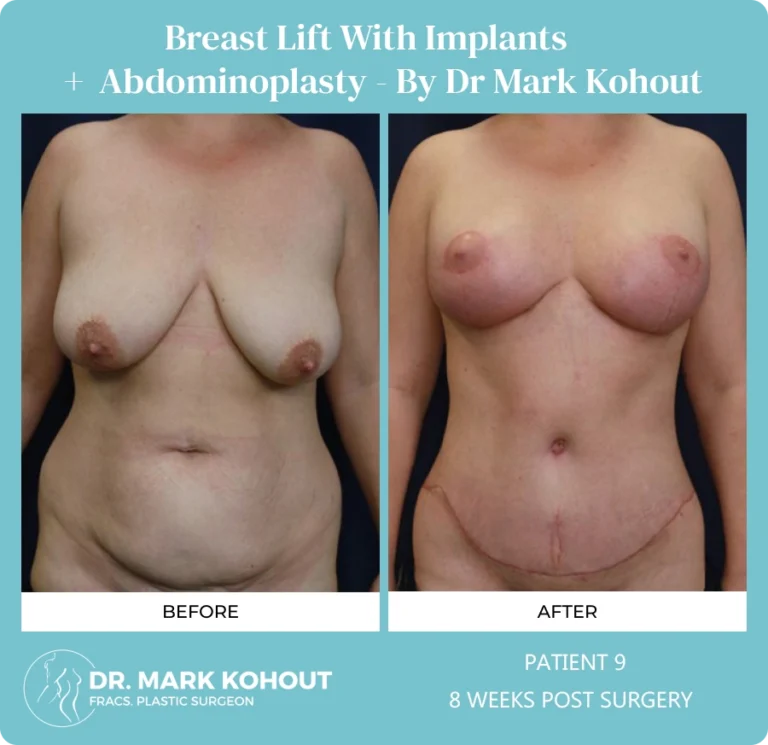
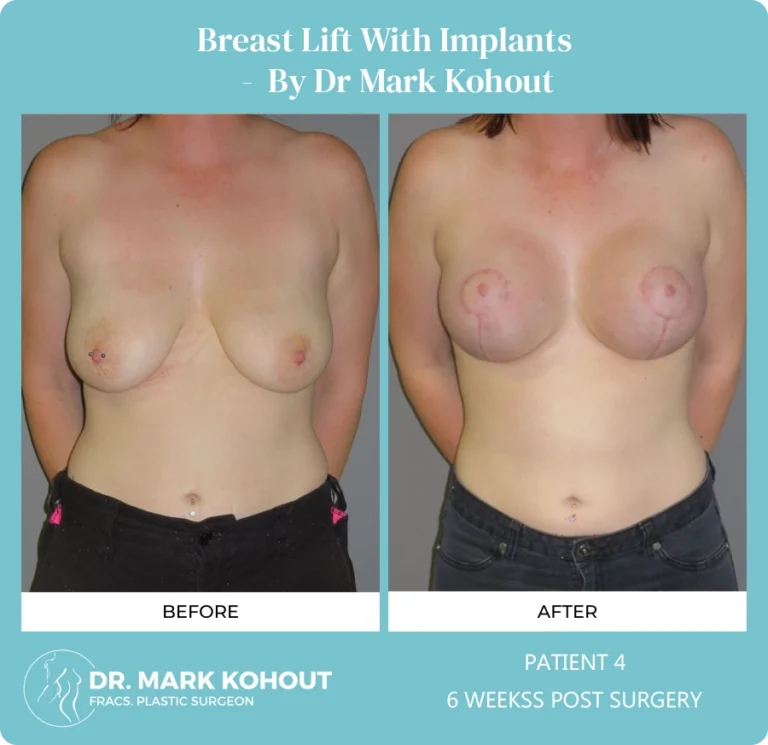
Before and After Photos of Breast Lift with Implants Surgery

View examples of individual breast lift with implants cases.

Disclaimer

Individual results vary due to personal health factors and genetics, and all surgical procedures carry inherent risks that should be discussed with a qualified health professional.

Recovery After Breast Lift with Implants

Recovery after breast lift with implants differs between individuals and is influenced by the extent of surgery, implant position, general health and the physical demands of work and everyday activities. Swelling, bruising, tightness and discomfort are expected during the early postoperative period. Prescribed medications and postoperative instructions are provided according to individual requirements.

A supportive bra may be recommended, and patients receive instructions regarding wound care, sleeping position, showering, driving and activity. People with physically demanding occupations may require more time away from work than those performing desk-based duties. Heavy lifting, impact activity and upper-body resistance exercise are generally restricted until healing has progressed sufficiently and postoperative review supports increasing activity.

  • Swelling and bruising are expected after surgery.
  • Tightness and discomfort can occur during early healing.
  • A postoperative support garment may be advised.
  • Return to work depends partly on occupational demands.
  • Strenuous physical activity is restricted initially.
  • Healing and breast position continue to change over time.
Recovery After Breast Lift with Implants Infographic by Dr Mark Kohout

Risks and Possible Complications

All surgical procedures have potential complications. General surgical risks associated with augmentation mastopexy include bleeding, infection, haematoma, delayed wound healing, wound separation, blood clots and complications related to anaesthesia. Breast lift surgery can also result in permanent scarring, asymmetry, changes in breast or nipple sensation, fat necrosis, changes in nipple position and, uncommonly, problems with blood supply to the nipple–areola complex.

Implant-related complications include capsular contracture, implant rupture, movement or displacement, visible or palpable implant edges, rippling and the possibility of further surgery. Breast implants are also associated with uncommon implant-related conditions, including breast implant-associated anaplastic large cell lymphoma (BIA-ALCL). Current implant-specific information and individual risk factors should be discussed during informed consent. Advertising guidance specifically requires cosmetic-surgery information to address risks and recovery rather than minimising the complexity of treatment.

  • Bleeding and infection are recognised surgical risks.
  • Wound-healing problems can occur.
  • Breast or nipple sensation may change.
  • Asymmetry can remain or develop.
  • Capsular contracture can affect implant shape or firmness.
  • Implants can rupture or change position.
  • Further breast surgery may be required.
  • Uncommon implant-associated conditions should be discussed.

Long-Term Considerations After Breast Implant Surgery

Breast implants should not be considered permanent devices requiring no further attention. Some remain in place for many years, while others require investigation, removal or replacement because of rupture, capsular contracture, symptoms, position change or changes in the surrounding breast tissue. There is no single replacement interval that applies to every patient.

Pregnancy, breastfeeding, weight variation and ageing can also alter breast volume, skin elasticity and breast position after surgery. Some people can breastfeed following mastopexy and breast augmentation, but this cannot be guaranteed because surgery can affect glandular tissue, milk ducts or nerve pathways. Future pregnancy plans and breastfeeding preferences should therefore be discussed before surgery.

  • Breast implants are not lifetime devices.
  • Future monitoring or imaging may be recommended.
  • Implant removal or replacement may become necessary.
  • Pregnancy can change breast appearance after surgery.
  • Breastfeeding may be possible but cannot be guaranteed.
  • New breast symptoms should be medically assessed.

Dr Mark Kohout and Breast Surgery in Sydney

Dr Mark Kohout MBBS (Syd), FRACS (Plast) is a Specialist Plastic Surgeon practising in Sydney, with consultations also available in Orange, NSW. He has more than 25 years of experience in plastic and reconstructive surgery and is registered with AHPRA with specialist registration in Surgery – Plastic Surgery. His current practice includes breast augmentation, breast lift, breast reduction and breast revision procedures.

For patients considering breast lift with implants in Sydney, consultation with Dr Kohout involves assessment of medical history, breast and chest anatomy and the patient’s individual concerns. Where surgery is being considered, the discussion includes available approaches, implant choices, incision patterns, recovery, limitations, possible complications and alternatives. Patients are also encouraged to seek a second opinion from another appropriately qualified medical practitioner before proceeding.

  • Specialist Plastic Surgeon practising in Sydney.
  • MBBS (Syd) and FRACS (Plast).
  • More than 25 years of experience in plastic and reconstructive surgery.
  • AHPRA registration number MED0001133000.
  • Current practice includes breast lift and breast implant surgery.
  • Consultation includes discussion of risks, alternatives and limitations.
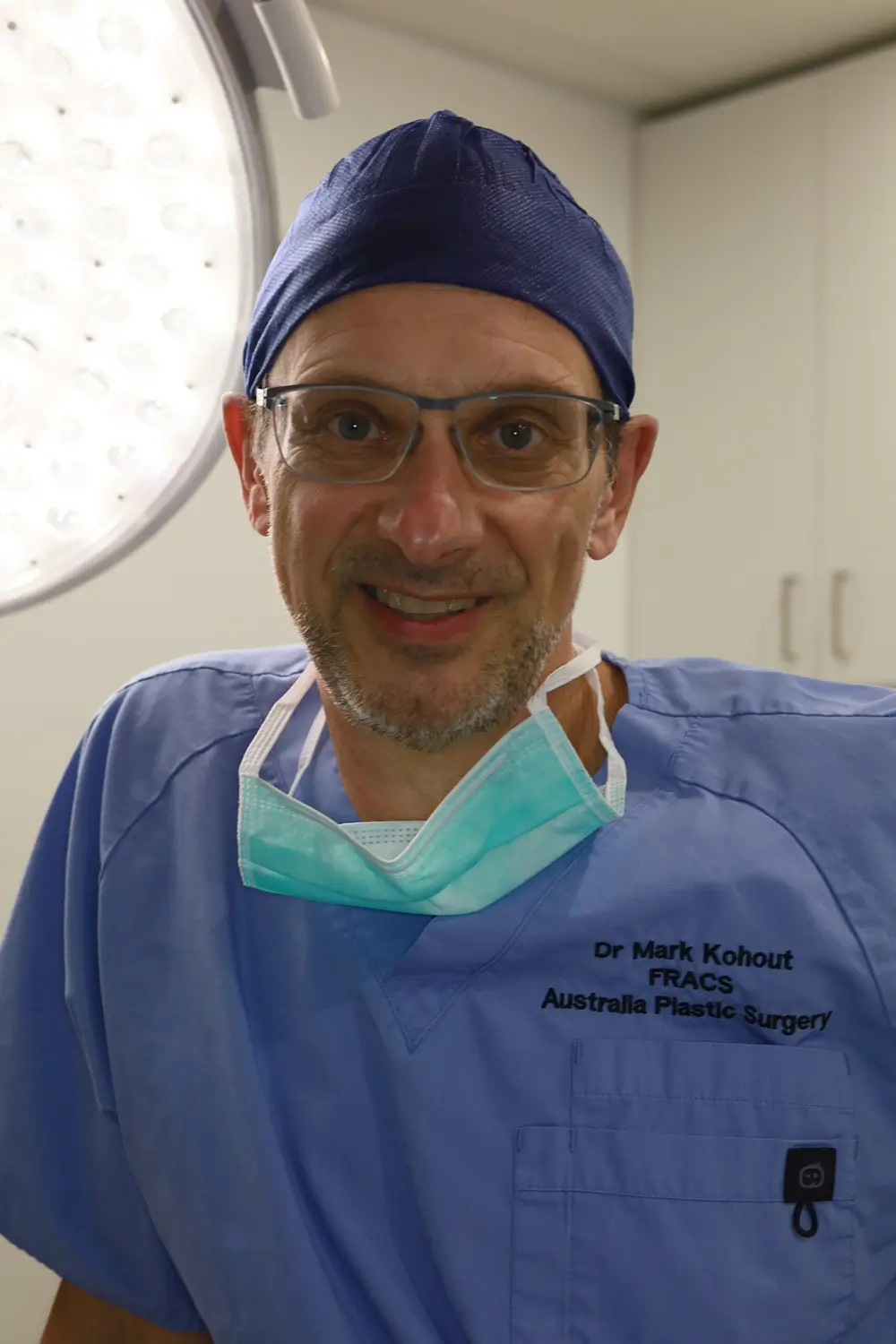
Dr Mark Kohout
Dr Mark Kohout Portrait Image

FAQs About Breast Lift with Implants in Sydney

Do I need implants if I am having a breast lift?No. Mastopexy can be performed without implants. If there is sufficient existing breast volume and the main concern relates to breast position, a breast lift alone may be considered. An implant may be discussed when a patient also prefers additional breast volume.
Can breast implants lift breasts without mastopexy?Implants increase breast volume but do not reliably correct significant breast ptosis. When the nipple or breast tissue sits substantially lower on the chest, mastopexy may need to be considered. Examination is necessary to determine which approach may be appropriate.
What scars will I have after a breast lift with implants?Scars depend on the degree of breast repositioning required. They may be located around the areola, extend vertically towards the breast fold and, in some cases, continue along the inframammary crease. All mastopexy scars are permanent, although their appearance generally changes with time.
How long is recovery after breast lift with implants?Recovery varies between patients. Swelling, bruising, tightness and discomfort are common initially, while return to work depends partly on occupational requirements. Heavy lifting and strenuous physical activity are generally restricted during the earlier stages of healing.
How long do breast implants last?Breast implants are not lifetime devices, and there is no universal replacement date. Some remain in place for many years, while others may need investigation, removal or replacement because of rupture, capsular contracture, symptoms or other changes.
What are the main risks of breast lift with implants?Potential complications include bleeding, infection, healing problems, permanent scars, changes in sensation and asymmetry. Implant-related risks include capsular contracture, rupture, displacement, rippling and the possibility of future surgery. Less common implant-associated conditions are also discussed during consultation.
What is the first step if I am considering breast lift with implants in Sydney?Current Australian requirements mean patients seeking cosmetic surgery need an independent referral, preferably from their usual GP, before consultation for the proposed cosmetic surgery. The consultation then allows individual assessment and discussion of surgical options, alternatives, risks, recovery and long-term considerations.
Medical References

Start With Answers, Not Assumptions

Choosing between a breast lift, breast implants or a combination of both begins with understanding your individual anatomy, the potential limitations of each procedure and the risks involved. Online information can provide a useful overview, but it cannot determine which surgical approach, if any, is appropriate for an individual patient. A personal consultation allows these considerations to be assessed in the context of your medical history, breast anatomy and treatment preferences.

If you are considering breast lift with implants in Sydney, a consultation with Dr Mark Kohout, Specialist Plastic Surgeon, provides an opportunity to discuss your concerns, review the surgical options that may apply to you and receive information about implant choices, scars, recovery, potential complications and long-term considerations. Contact Dr Kohout’s Sydney practice to arrange a consultation and begin with clear, individualised information about your options.

Download
Breast Lift
Surgery Guide

Breast Lift Procedure Guide Card
Take our Plastic Surgery Quiz to find out if you’d be a good candidate and if you are ready for cosmetic surgery.​

Further Reading

Welcome to the Practice of
Dr. Mark Kohout

With over 25 years of experience and Harvard training, Dr. Mark Kohout offers experienced plastic and reconstructive surgery at his Sydney and Orange clinics. His patient-first approach focuses on delivering safe, natural results tailored to your unique goals.

What's Next?

Whether you are ready for a professional evaluation or just have a quick question, we’ve made it easy to connect with our team. Choose the option that best fits your needs below.

Book your Consultation

Take the first step toward your goals by filling out the brief form below. This information helps us understand your specific needs so we can make the most of our time together during your session. Once you submit your details, a member of our team will review your request and reach out shortly to confirm your appointment.

Patient Photo Assessment

Sending photos for a patient photo assessment can help you and your plastic surgeon prepare for your consultation. By reviewing clear, accurate photos, Dr Kohout can provide preliminary patient photo assessment like insights, assess your needs, and determine the right approach for your procedure.

Tips for Uploading Photos

ASK A FRIEND

Friend takes photo

GOOD LIGHTING

Plain wall, bright light

ALL ANGLES

Front / sides/ 45°

CLEAR & SHARP

No portrait mode

SEND ORIGINALS

No edits or compression

Dr. Mark Kohout Plastic Surgery in Sydney & Orange

Experienced Plastic Surgeon

Dr. Mark Kohout

A qualified plastic surgeon who operates with care and integrity, based in central Sydney with over 20 years of experience in the cosmetic field. His extensive training and experience assures patients they are in highly trained surgical hands. Dr. Kohout is a dedicated, friendly professional who is committed to providing the high quality care, support and results, alongside his compassionate team.

Dr Mark Kohout (MED0001133000)
Specialist Plastic Surgeon
Specialist registration in Surgery – Plastic Surgery

25

Years of Experience

Years of Delivering Exceptional Cosmetic Care.

10000+

Surgical Procedures

Procedures performed by our qualified surgeons.

15+

Available Treatments

Cosmetic treatment options tailored to your needs.

Our Trusted

Accreditations

fracs

Dr Mark Kohout is a qualified plastic surgeon based in central Sydney, with over 20 years of experience in the field of cosmetic and reconstructive surgery. He draws on extensive surgical training and clinical experience to tailor care to the individual needs and goals of each patient.

Dr Kohout is known for his thoughtful, patient-centred approach, guiding individuals through each stage of their surgical journey — from initial consultation to post-operative care. Working alongside a compassionate and professional team, he is committed to providing high standards of care in a supportive and respectful environment.

Locations

Opening Hours

Monday - Friday

8:30AM - 05:00PM

Saturday - Sunday

Closed

Disclaimer: Dr Mark Kohout (MED0001133000) a Registered Medical Practitioner, Specialist Plastic Surgeon. All surgical or invasive procedures carry risks and complications. We recommend seeking a second opinion from an appropriately qualified medical practitioner before proceeding with any surgery. Results depend on individual patient circumstances and can vary significantly. Results may also be impacted by a variety of factors including your lifestyle, weight, nutritional intake and overall health. Consult your Specialist Plastic Surgeon for details. This information is general in nature and is not intended to be medical advice nor does it constitute a doctor-patient relationship. Surgery risks and complications will be covered in detail during a consultation with your Surgeon. We recommend seeking a second opinion from an appropriately qualified medical practitioner before proceeding with surgery.

©2024  All Rights Reserved

This website contains imagery which is only suitable for audiences 18+. All surgery contains risks, read more here.

Close Welcome Bar

Get Your Buttock Lift & Implants Guide

Get Your Facial Aesthetic

Get Your Breast Implant Removal

Get Your Female Genital Surgery Guide

Get Your Excess Skin Guide

Get Your Gynaecomastia Guide

Get Your Liposuction Guide

Get Your Abdominoplasty Guide

Get Your Cost of Surgery Guide

Get Your Breast Implant Replace Guide

Get Your Breast Reduction Guide

Get Your Breast Augmentation Guide

Make an Enquiry