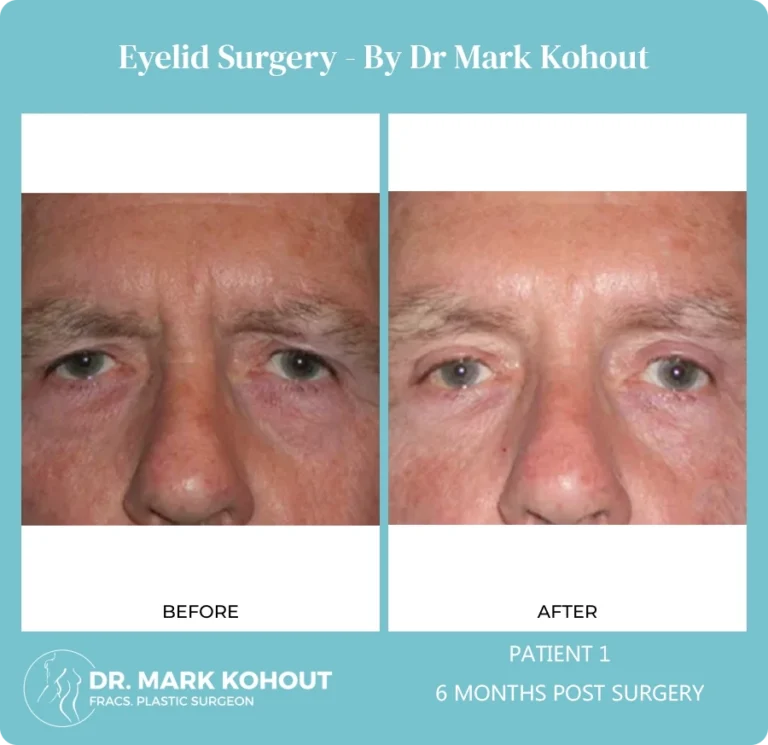
Can blepharoplasty change the shape of my eyes?
Blepharoplasty is intended to address selected eyelid tissues rather than deliberately change the natural shape of the eyes. However, changes in skin, fat or eyelid position may alter how the eye area appears.
Can brow position affect whether I need upper blepharoplasty?
Yes. A lower brow position can contribute to the appearance of upper eyelid heaviness or excess skin. This is one reason the brow and eyelids should be assessed together before deciding whether upper blepharoplasty is appropriate.
Can blepharoplasty help if one eyelid looks different from the other?
Blepharoplasty may address selected causes of eyelid asymmetry, but not all asymmetry is caused by excess skin or tissue. Natural differences in brow position, muscle activity, bone structure or eyelid support may remain after surgery.
Can dry eye symptoms affect blepharoplasty planning?
Yes. Existing dry eye symptoms may be relevant because eyelid surgery can temporarily affect eye comfort and tear function. Significant or poorly controlled symptoms may require further assessment before surgery is considered.
Can previous eye surgery affect blepharoplasty?
Previous eye or eyelid surgery can influence anatomy, tissue support, scarring and treatment planning. Details of previous procedures should be discussed during consultation so they can be considered as part of the assessment.
Can blepharoplasty correct dark circles under the eyes?
Not necessarily. Dark circles can be caused by pigmentation, skin thickness, shadowing, blood vessels, volume changes or other anatomical factors, and some of these are not addressed by blepharoplasty.
Why can my eyelids look uneven during recovery?
Swelling does not always occur evenly on both sides, so temporary differences can be noticeable during early healing. The appearance may continue to change as swelling settles and tissues heal.
Can contact lens use affect recovery after blepharoplasty?
Patients may need to temporarily modify contact lens use after surgery depending on healing and eye symptoms. Individual instructions should be provided as part of post-operative care.
Does blepharoplasty stop future eyelid changes?
No. Blepharoplasty does not stop ongoing changes associated with ageing, skin quality or other anatomical factors. The tissues around the eyes can continue to change over time after surgery.
Can blepharoplasty affect how completely I close my eyes?
Temporary changes in eyelid closure may occur during recovery, and difficulty closing the eyes is also a recognised potential complication. Eyelid closure and support are therefore important parts of pre-operative assessment and surgical planning.
Medical References