
Breast implants are a significant consideration for many individuals exploring cosmetic or reconstructive breast surgery. For patients in Sydney and surrounding areas, understanding how long breast implants last is an essential part of planning and managing expectations.
Â
Dr Mark Kohout, Specialist Plastic Surgeon based in Sydney, provides evidence-based insight into breast implant longevity, including factors that may influence when replacement is needed and what patients should monitor over time. Implant longevity is not only a practical concern but also closely linked with aesthetic satisfaction, health maintenance, and informed decision-making over time.
What Are Breast Implants Made Of?
Breast implants are medical devices most commonly filled with either silicone gel or saline solution. In Australia, cohesive silicone gel implants are frequently chosen for their stability, structural integrity, and shape retention. These implants have a silicone shell and are filled with a firm, gel-like silicone designed to mimic the feel of natural breast tissue. The cohesive gel is less likely to migrate in the rare event of a rupture, which contributes to a more secure long-term result and makes them a popular choice in Sydney and other parts of Australia.
Â
Saline implants, though less commonly used today, consist of a silicone outer shell filled with sterile salt water. They are often inserted empty and then filled once positioned, allowing for smaller incisions during breast implant surgery. In the event of rupture, saline is harmlessly absorbed by the body, making detection straightforward. However, saline implants may be more prone to visible rippling in patients with thinner tissue coverage.
Â
There are also variations in shell texture – smooth versus textured. Smooth implants are more commonly used in Australia due to a lower association with certain complications. Textured implants, once popular for their stability, are now less frequently selected due to the association with BIA-ALCL (discussed later). Patients should be aware that each type of implant has different handling characteristics, which are best reviewed in a tailored consultation with a qualified Plastic Surgeon like Dr Mark Kohout.
Average Lifespan Of Breast Implants
Breast implants are not lifetime devices. Most modern implants can last 10 to 20 years, although this varies significantly between individuals. Factors like implant type, surgical technique, body changes, and lifestyle choices all play a role. Clinical studies suggest that roughly 20% of patients who undergo cosmetic breast augmentation may require revision surgery within 10 years. However, many others live with their implants far beyond that without issues.
Â
It is not uncommon for implants to remain in good condition for over two decades, especially with careful monitoring and absence of complications. Implant lifespan is influenced by a complex interplay of mechanical forces, biological responses, and environmental factors. It is important to emphasise that the decision to replace implants is often driven more by personal factors – such as a change in aesthetic preferences or body composition – than by device failure. Some individuals choose to update their implants in conjunction with other procedures such as breast lifts or to reflect changes in lifestyle.
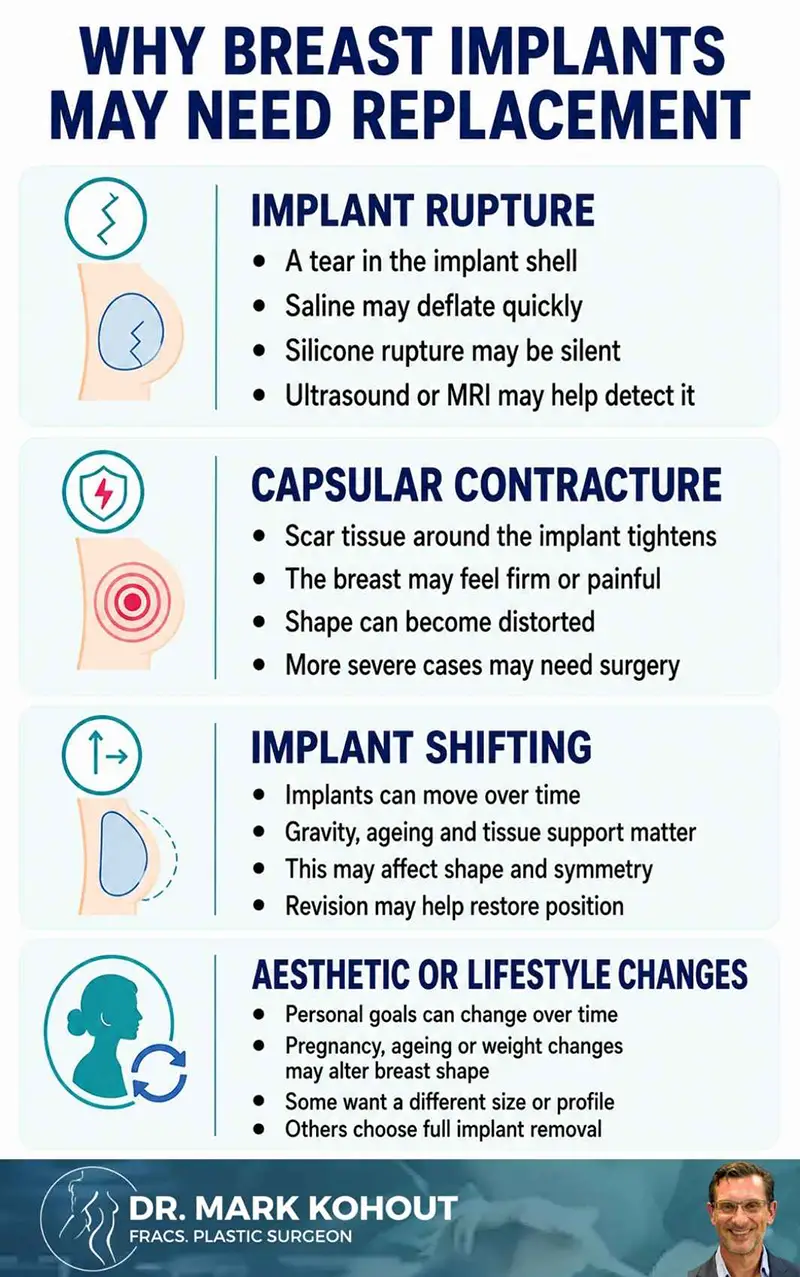
Why Breast Implants May Need Replacement

Several medical and lifestyle factors can prompt implant revision or removal. These factors typically arise either from structural changes in the implant itself or from how the body responds to the implant over time. While some revisions are medically indicated, others are driven by personal choice, especially when a patient's desired appearance evolves.
Implant Rupture
Rupture refers to a break in the implant shell. In saline implants, rupture leads to noticeable deflation as the saline is absorbed by the body. Silicone gel ruptures can be more difficult to detect - known as "silent ruptures" - and are typically discovered through imaging, such as ultrasound or MRI. Implant rupture may occur due to trauma, shell fatigue, or manufacturing defects, although these events are relatively rare with current-generation implants.
Over time, the implant shell may degrade due to natural wear, physical trauma, or manufacturing defects. Regular surveillance is critical to detect early signs of rupture, especially in silicone implants where symptoms may not be obvious. A prompt diagnosis allows for timely surgical intervention, which can reduce the risk of inflammation or tissue distortion.
Capsular Contracture
The body forms a natural capsule of scar tissue around breast implants. In some cases, this capsule can tighten or harden, causing the breast to feel firm, appear distorted, or become painful. This condition - known as capsular contracture - can occur months or years after surgery. The cause is not fully understood but may involve subclinical bacterial contamination, hematoma, or genetic predisposition.
Its severity is often graded on a scale (Baker grades I to IV), with higher grades potentially requiring surgical intervention. Capsular contracture may be influenced by surgical technique, infection, implant surface texture, or individual biological response. In advanced cases, it may require complete capsulectomy and implant exchange to restore comfort and breast shape.
Implant Malposition Or Shifting
Implants may gradually move from their original position due to gravity, changes in skin elasticity, weight fluctuations, or other physical factors. Misalignment can affect appearance and symmetry, prompting patients to consider revision. Factors such as poor tissue support, overly large implants, or natural ageing can contribute to this displacement.
Â
In some cases, implants may rotate (particularly anatomical-shaped implants) or bottom out – where the implant descends below the intended fold – affecting both comfort and aesthetics. These issues may also arise from trauma or inadequate initial surgical support and often require surgical correction to restore ideal positioning and contour.
Aesthetic Or Lifestyle Changes
Over time, a person’s goals and preferences may evolve. Breast shape, skin tone, and body proportions change naturally with age, pregnancy, or weight fluctuation. Some individuals may wish to change implant size or profile, while others may opt for complete removal. These decisions are highly individual and can be influenced by a desire for a more subtle or natural look, changes in fashion, or a shift in personal values.
Â
In these cases, the revision is elective and aimed at aligning with personal lifestyle changes or aesthetic goals. Dr Mark Kohout often consults with patients in Sydney who return many years after their initial augmentation seeking a refreshed look that reflects where they are in life now.
How To Know When Breast Implants Need To Be Replaced
Recognising the signs that your implants may need review is crucial. These signs are not always dramatic and may include subtle changes that develop gradually over time. Any new discomfort or irregularity should prompt a professional assessment.
Â
It’s also possible for patients to experience symptoms that are less obviously related to the implants, such as generalised discomfort or vague changes in sensation. Other signs, including hardening, inflammation, or breast asymmetry, may be associated with complications like rupture or capsular contracture. If you notice any of these changes, consulting a qualified Plastic Surgeon such as Dr Mark Kohout in Sydney can help determine whether a revision is advisable. Timely evaluation ensures that small concerns are addressed before they escalate into more significant problems.
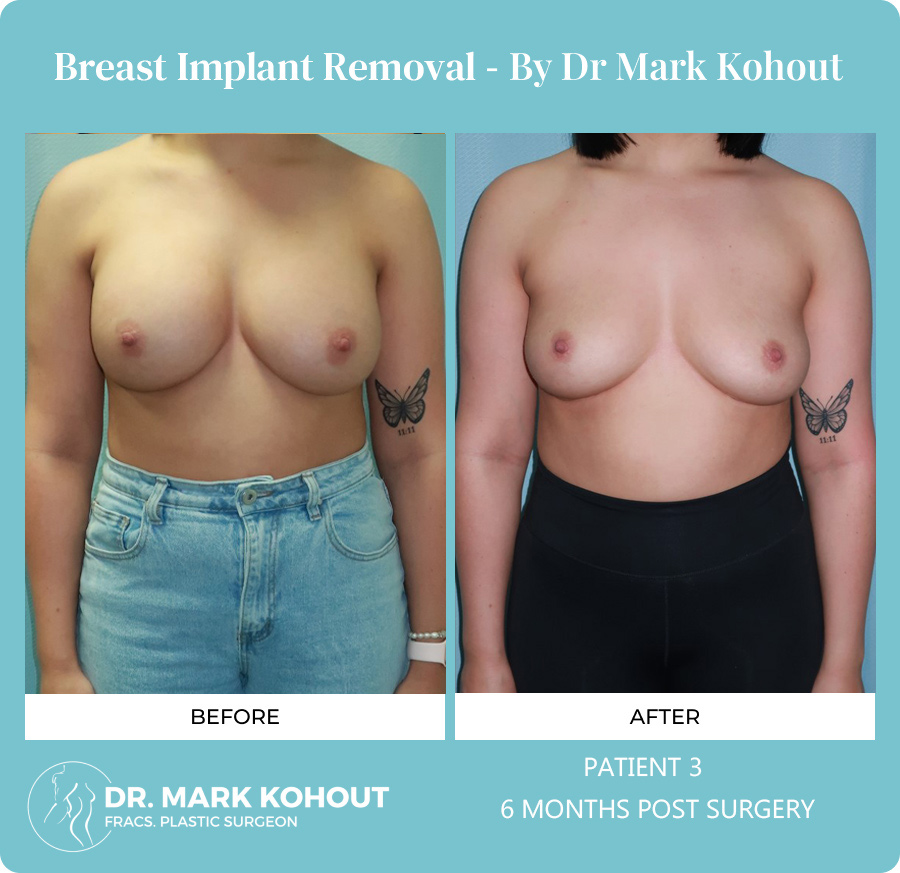
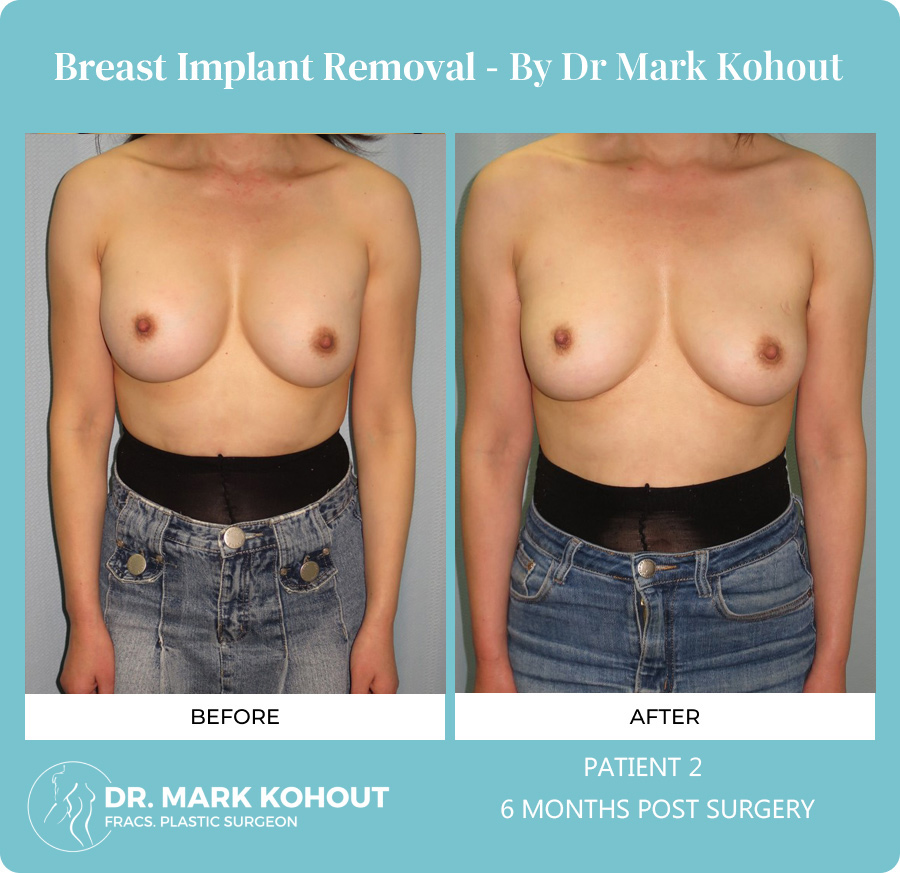
Breast Implant Removal Before and After Images
Monitoring Implant Health Over Time
Ongoing care is essential for maintaining the safety and aesthetics of breast implants. Regular monitoring allows early identification of issues and supports better long-term outcomes. A proactive approach includes clinical assessments, patient self-awareness, and appropriate imaging at intervals tailored to individual risk factors.
Â
MRI remains the gold standard for detecting silent silicone ruptures, though high-resolution ultrasound is increasingly used for routine surveillance in Australia due to accessibility and cost-effectiveness. Dr Mark Kohout may recommend an imaging schedule based on your implant type, age, and personal health history.
Â
Emerging techniques, such as ultrasound elastography, are being explored to detect subtle stiffness changes that may indicate implant wear or rupture after 8–10 years. This may become a useful non-invasive screening tool in the future. Patients are advised to maintain a long-term relationship with their Plastic Surgeon to facilitate regular reviews and early detection of potential complications. Periodic reviews also provide an opportunity to discuss any changes in aesthetic preferences or explore new implant technologies.
Breast Implant Safety Considerations
Breast implant safety in Australia is overseen by the Therapeutic Goods Administration (TGA). Only TGA-approved devices are available for use, and surgeons follow stringent protocols to ensure safety. This regulatory oversight ensures that implants used in Australian practices meet high standards for design, testing, and post-market surveillance.
Â
Certain textured implants have been associated with a rare cancer known as breast implant-associated anaplastic large cell lymphoma (BIA-ALCL). This condition arises in the scar tissue capsule and is most commonly linked to specific brands of textured implants. The estimated risk varies, but smooth-surface implants show a significantly lower associated risk.
Â
Dr Mark Kohout, Plastic Surgeon in Sydney, ensures all patients are thoroughly informed about the risks and benefits associated with each implant type. Detailed discussions during consultation help patients make choices aligned with their personal needs and medical profile. Informed consent is a cornerstone of ethical plastic surgery, and education is integral to the decision-making process.
FAQs About Breast Implant Longevity
Can breast implants be safely retained for life if there are no symptoms?
While some individuals may retain their breast implants for decades without complications, the recommendation is not to assume implants are permanent. Even in the absence of symptoms, changes can occur that are only detectable through imaging. Periodic reviews with your Plastic Surgeon are essential to ensure implant integrity over time.Is it possible for implants to change position years after surgery?
Yes, implants can gradually shift position due to changes in the body such as skin laxity, weight fluctuations, or ageing. These movements may occur years after the initial procedure and might not always be immediately noticeable. If positional changes affect appearance or comfort, surgical revision may be considered.Do breast implants affect breast cancer screening or detection?
Breast implants may make mammogram imaging more complex, but experienced radiologists are trained to perform implant-displaced views to evaluate the breast tissue effectively. It’s important to inform your imaging technician about your implants prior to any breast screening so that the correct technique is used.What role does body weight or lifestyle have in implant longevity?
Significant weight fluctuations can alter breast shape and skin support, potentially affecting implant position and appearance. Additionally, high-impact sports without proper support or trauma to the chest area may increase the likelihood of implant displacement over time. Lifestyle factors, while not directly altering implant materials, can influence the environment in which the implant exists.How do patients usually feel about their implants after 10 or 15 years?
Patient perceptions vary. Some individuals remain satisfied with their results long-term, while others begin to consider changes due to shifts in body shape, personal style, or comfort. Consultation with a Plastic Surgeon can help explore options if expectations or anatomy evolve.Can implants be removed without being replaced, and what is the result?
Yes, implants can be removed without replacement. Some individuals choose to undergo explant surgery and may opt to combine it with a breast lift to reshape the natural tissue. The final appearance depends on several factors, including original breast volume, skin elasticity, and the duration the implants were in place.Is there a specific age when implants should be replaced?
There is no set age for replacement. The need for breast revision is determined by the condition of the implants, clinical findings, and patient preference. Some implants may last more than 20 years without requiring intervention, while others may need attention earlier due to complications or lifestyle changes.Medical References
- Recognizing and Managing Breast Implant Complications: A Review for Healthcare Providers – Dove Medical Press. https://pmc.ncbi.nlm.nih.gov/articles/PMC12067747/
- Breast Implants – StatPearls / National Center for Biotechnology Information, U.S. National Library of Medicine. https://www.ncbi.nlm.nih.gov/books/NBK441998/
- Incidence of Long-Term Complications in Breast Implant “Prosthesis” – MDPI Journal of Clinical Medicine. https://www.mdpi.com/2673-1592/7/2/38
The Role Of The Plastic Surgeon In Managing Long-Term Outcomes
A qualified Plastic Surgeon plays a vital role not only in performing the initial surgery but also in guiding long-term management. Dr Mark Kohout offers individualised care that includes pre-operative planning, implant selection, and ongoing monitoring. Patients are encouraged to maintain regular contact with their surgeon to discuss any changes, concerns, or questions.
Â
The continuity of care is especially important when considering future health or aesthetic adjustments. A long-standing relationship with a Plastic Surgeon fosters trust and ensures that patients receive consistent, tailored advice over time. By fostering an ongoing relationship, Dr Kohout supports patients in maintaining the integrity and visual appeal of their breast implants, adjusting plans as needs evolve.
Further Reading​
- Read more about Breast Implants Sydney
- Read Dr Mark Kohout’s Blog on Recovery After Breast Augmentation Surgery
- Read Dr Mark Kohout’s Blog on Auto-Augmentation after Breast Implant Removal
- Read Dr Mark Kohout’s Blog on Breast Implant Myths and Misconceptions
- Read Dr Mark Kohout’s Blog on Correcting The Waterfall Deformity With Breast Revision Surgery
Related Blog Posts
FAQs About Breast Augmentation with Breast…
Breast augmentation with breast implants is a procedure many individuals consider for various reasons, including balancing asymmetry, restoring volume after pregnancy or weight loss, or achieving a sought aesthetic appearance.…
Auto-Augmentation after Breast Implant Removal
A Guide to Auto-Augmentation after Breast Implant Removal When you’re considering breast implant removal, it’s normal to have concerns about how your breasts will look and feel afterwards. Some women…
Choosing Breast Implants – A Guide
One of the most requested cosmetic procedures is breast implant surgery. Many women undergo this operation to reshape their bodies and achieve their sought appearance. Breast augmentation allows individuals to…
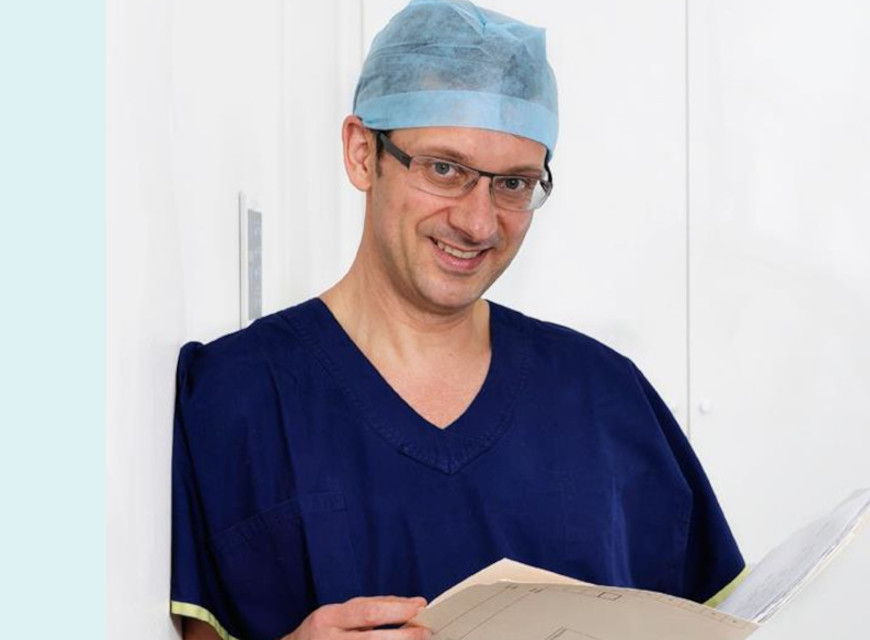
Experienced Plastic Surgeon
Dr. Mark Kohout
A qualified plastic surgeon who operates with care and integrity, based in central Sydney with over 20 years of experience in the cosmetic field. His extensive training and experience assures patients they are in highly trained surgical hands. Dr. Kohout is a dedicated, friendly professional who is committed to providing the high quality care, support and results, alongside his compassionate team.
Dr Mark Kohout (MED0001133000)
Specialist Plastic Surgeon
Specialist registration in Surgery – Plastic Surgery