
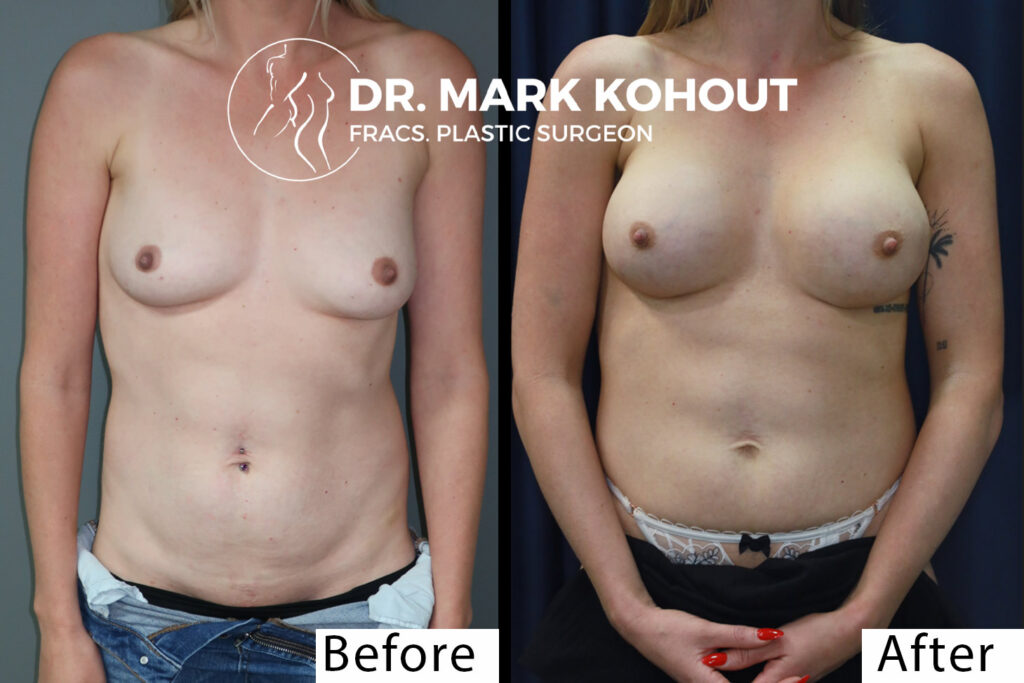
Breast augmentation with breast implants is a procedure many individuals consider for various reasons, including balancing asymmetry, restoring volume after pregnancy or weight loss, or achieving a sought aesthetic appearance. Dr Mark Kohout, a Specialist Plastic Surgeon based in Sydney, Australia, offers patients a clear, informed path to exploring whether breast augmentation aligns with their goals.
This article answers the most frequently asked questions about breast augmentation with breast implants, guided by Dr Kohout’s extensive experience and adherence to best medical practices.
What Is Breast Augmentation with Breast Implants?
Breast augmentation involves surgically placing implants to adjust or restore breast volume. It is distinct from reconstructive surgery, which typically follows mastectomy or trauma. While some patients seek a more proportional appearance, others may wish to adjust size differences or alter their figure after significant life events. Breast augmentation can be performed using a range of surgical techniques depending on the desired result and anatomical features.
For individuals in Sydney, consulting with a Specialist Plastic Surgeon such as Dr Mark Kohout ensures that the procedure is tailored to personal goals and medical suitability. His practice emphasises patient education and evidence-based techniques to support optimal outcomes.
What Types of Breast Implants Are Available?
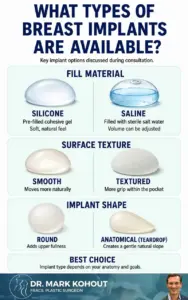
Patients typically choose between silicone and saline implants. Silicone implants are pre-filled with a cohesive gel that closely mimics the feel of natural breast tissue, and they are widely selected for their durability and natural consistency. These implants are often preferred by patients looking for a softer, more lifelike feel, especially if they have less natural breast tissue. Saline implants, on the other hand, are filled with sterile salt water and can be adjusted for volume during surgery. In the event of a rupture, the saline is safely absorbed by the body, which may offer reassurance to some individuals.
Beyond the fill material, implant options also vary in terms of surface texture and shape. Smooth implants allow for more natural movement within the breast pocket, while textured implants adhere to the surrounding tissue and may lower the risk of shifting. The shape of the implant is another important consideration. Round implants can optimise upper breast fullness, while anatomical (teardrop) implants offer a gradual slope that may appear more proportionate on certain body types.
All these factors are thoroughly discussed during a consultation with Dr Mark Kohout, who uses his expertise to guide patients toward choices that best suit their individual anatomy and aesthetic goals.
Where Are Breast Implants Placed?
Implant placement is another key decision in breast augmentation. Implants may be positioned under the chest muscle (submuscular), over the muscle but under the breast tissue (subglandular), or using a dual-plane technique that combines both approaches. Each option offers unique benefits and potential drawbacks.
Submuscular placement is often recommended for patients with limited natural breast tissue. This approach provides additional coverage for the implant, which can lead to more balanced results and a lower risk of capsular contracture. However, recovery may take slightly longer due to the involvement of the muscle.
Subglandular placement is typically better suited for individuals who have adequate breast tissue to cover the implant. It generally allows for a shorter recovery time and can be a good option for those seeking a less invasive approach. The dual-plane method involves placing the upper part of the implant under the muscle and the lower part under the breast tissue, balancing the advantages of both techniques.
Dr Mark Kohout will assess each patient’s anatomy, skin elasticity, and intended outcome to determine the most appropriate placement strategy.
What Should I Expect Before Surgery?
A thorough pre-operative process ensures that patients are physically and emotionally prepared for surgery. During the initial consultation, Dr Mark Kohout will conduct a complete medical assessment, including a review of your health history, any medications or supplements you take, and any known allergies. In some cases, blood tests or diagnostic imaging may be required to confirm suitability for surgery.
This consultation also serves as an opportunity to discuss personal motivations and aesthetic goals. Patients are encouraged to share photos or descriptions that help communicate their expectations. Dr Kohout will explain the surgical options, help select the appropriate implant type and size, and outline the likely surgical approach.
Patients are provided with comprehensive pre-operative instructions, which may include discontinuing certain medications, adhering to fasting guidelines, and refraining from smoking. Preparing for surgery also involves arranging post-operative support at home, as rest is critical in the early recovery period.
What Is the Recovery Like After Breast Augmentation?
Recovery experiences vary, but a typical journey begins with several days of rest and reduced activity. During this period, patients may experience swelling, bruising, and discomfort, all of which are managed with prescribed medications. Support garments, such as surgical bras, help stabilise the implants and support healing.
Within one to two weeks, most patients are able to return to light daily activities, though they should continue to avoid heavy lifting and strenuous exercise. Follow-up appointments during this time are crucial for monitoring healing progress. Between three to six weeks post-surgery, patients can gradually reintroduce physical activities under the guidance of their surgeon. Scar management techniques, such as massage or topical treatments, may be recommended.
Over the months that follow, the implants will settle into position, and final results become more apparent. Dr Mark Kohout closely monitors each stage of recovery and adjusts aftercare recommendations to suit individual healing timelines.
How Long Do Breast Implants Last?
Although breast implants are designed to be long-lasting, they are not considered lifetime devices. On average, implants may last 10 to 15 years, but some patients maintain them longer without complications. Regular follow-up is essential to monitor implant integrity and detect any changes early.
Implants may need to be replaced or revised due to rupture, capsular contracture, implant shifting, or evolving aesthetic preferences. Life events such as pregnancy, weight changes, and ageing can also influence breast appearance and lead to an inclination for revision.
During consultations, Dr Mark Kohout provides a comprehensive explanation of long-term expectations and the importance of monitoring for potential complications. Patients are advised to report any changes in breast shape, sensation, or comfort.
Can I Breastfeed After Having Breast Implants?
Breastfeeding after breast augmentation is possible for many women, particularly when specific surgical techniques are used. Implants placed beneath the chest muscle and incisions located under the breast (in the inframammary fold) tend to have the least impact on breastfeeding ability. These methods minimise disruption to the milk ducts and nerves associated with lactation.
However, some individuals may experience reduced milk production or changes in nipple sensation. The extent of impact varies based on anatomy and surgical variables. Dr Mark Kohout discusses these considerations with patients who plan to have children in the future, offering honest, medically informed guidance to help them make the best decision for their circumstances.
Breast Augmentation Before and After Images
What Are the Potential Risks and Complications?
Like all surgeries, breast augmentation carries risks. Possible complications include bleeding or haematoma formation, infection, and capsular contracture, where scar tissue hardens around the implant. Implant rupture or deflation may occur, especially with older implants, and sensation changes in the nipples or breasts can also arise.
Aesthetic issues, such as asymmetry or dissatisfaction with results, may necessitate revision surgery. Dr Mark Kohout ensures that patients are fully informed about all risks and complications before making a decision. Comprehensive risk discussions are an essential part of his consultation process in Sydney.
How Do I Know If Breast Augmentation Is Right for Me?
Appropriate candidates for breast augmentation are in good physical and emotional health, have realistic expectations, and fully understand the potential benefits and limitations of the procedure. Surgery should not be performed during pregnancy or while breastfeeding, and patients should not view augmentation as a solution to deeper psychological concerns.
During consultations, Dr Mark Kohout takes the time to assess each patient’s motivations, lifestyle, and health status. He ensures that patients are making well-considered decisions and that surgery is appropriate for their goals.
How Much Does Breast Augmentation with Breast Implants Typically Cost in Sydney?
The cost of breast augmentation in Sydney varies based on several factors, including the surgeon’s fee, the choice of implants, hospital and anaesthesia costs, and the complexity of the procedure. Premium implant brands or cohesive gel models may carry higher costs, and additional expenses may include surgical garments and post-operative medications.
After an in-depth consultation, Dr Mark Kohout provides a detailed written quotation outlining all expected costs. Transparent pricing helps patients plan appropriately and understand what is included. Flexible payment options or staged treatments may also be discussed during consultation.
Choosing the Right Plastic Surgeon in Sydney
Selecting a qualified Plastic Surgeon is critical. Patients should verify credentials, such as the FRACS (Plast) qualification, which indicates formal training in plastic surgery and specialist recognition in Australia. The surgeon should also be registered with AHPRA and have significant experience with breast procedures.
Dr Mark Kohout meets these standards and is known throughout Sydney for his personalised, patient-focused care. His methodical approach ensures each treatment plan is built around individual goals and medical suitability.
Additional FAQs About Breast Augmentation with Breast Implants
Can breast implants change in feel or position over time?
Yes, the feel and position of breast implants can change gradually. This may be influenced by factors such as ageing, gravity, changes in body weight, or lifestyle habits. Over time, the breast tissue and skin may stretch, potentially leading to implant shifting or sagging. Regular follow-ups with your plastic surgeon can help identify and manage these changes early.
How does physical activity affect breast implants long-term?
High-impact activities, especially those involving chest movement or intense upper-body exercise, can influence implant longevity and placement. Dr Mark Kohout advises patients in Sydney to gradually resume physical activity post-surgery and to wear supportive garments when exercising to help preserve implant position and reduce strain on breast tissue.
Are there any sensations I might experience that are considered normal after surgery?
It’s not uncommon to experience sensations such as tingling, numbness, or heightened sensitivity in the nipples or surrounding breast tissue in the weeks or months following surgery. These changes are usually temporary and often resolve on their own, though Dr Mark Kohout monitors these responses during routine post-operative reviews.
Can breast implants affect posture or cause muscular discomfort?
Some patients may notice changes in posture or mild muscular tightness, especially with submuscular placement. The body may take time to adjust to the new weight distribution and anatomical changes. Exercises and physical therapy may be recommended if discomfort persists.
How do I know when implants might need replacing if I feel fine?
Even in the absence of symptoms, regular assessments are key. Imaging such as ultrasound or MRI may be recommended to check for silent ruptures, especially in silicone implants. Dr Mark Kohout advises patients to attend routine follow-ups to monitor implant integrity and breast tissue health.
What if I become pregnant after breast augmentation?
Pregnancy can lead to significant changes in breast volume and skin elasticity, which may affect the appearance of augmented breasts. While implants themselves are not typically harmed, natural changes may lead some individuals to consider revision surgery post-pregnancy. These scenarios are discussed during the initial consultation to ensure patients are well-prepared.
Are there lifestyle factors that influence long-term results?
Yes. Smoking, significant weight fluctuations, and sun exposure can all affect skin quality and breast aesthetics over time. Leading a healthy lifestyle and following your surgeon’s post-operative care instructions are essential in maintaining the results of breast augmentation with implants.
Medical References
- Breast Augmentation – Mayo Clinic – https://www.mayoclinic.org/tests-procedures/breast-augmentation/about/pac-20393178
- Breast Implants: Saline vs. Silicone – Mayo Clinic – https://www.mayoclinic.org/healthy-lifestyle/womens-health/in-depth/breast-implants/art-20045957
- Breast Augmentation – StatPearls – NCBI Bookshelf – https://www.ncbi.nlm.nih.gov/books/NBK482206/
- Silicone Breast Implants: What Happens if They Rupture? – Mayo Clinic – https://www.mayoclinic.org/healthy-lifestyle/womens-health/expert-answers/breast-implants/faq-20058454
Next Steps: Booking a Consultation with Dr Mark Kohout
If you are considering breast augmentation with breast implants, the next step is to arrange a consultation. During this meeting, Dr Mark Kohout will perform a clinical examination, review your goals, and explain your surgical options. Each recommendation is tailored to your body and preferences, ensuring you have the information needed to make an informed choice.
At his Sydney practice, Dr Kohout combines surgical precision with a compassionate approach to care. Every stage of your journey is guided by medical expertise and a commitment to your well-being.
Further Reading
- Read more about Mastopexy – Breast Lift Sydney
- Read more about Breast Revision Sydney
- Read Dr Mark Kohout’s Blog on Auto-Augmentation after Breast Implant Removal
- Read Dr Mark Kohout’s Blog on Correcting The Waterfall Deformity with Breast Revision Surgery
- Read Dr Mark Kohout’s Blog on Dr Mark Kohout on Motiva Implants: Tailored Options for Your Aesthetic Goals
Related Blog Posts
Recovery After Breast Lift Surgery (Mastopexy)
When planning for plastic surgery, it is important to consider not only the operation itself but also the recovery period that follows. A breast lift, or mastopexy, is a procedure…

Medicare for Breast Lift – Mastopexy
Immediate Post-Operative Period: First 24-48 Hours A breast lift, also known as mastopexy, is a surgical procedure designed to reshape and lift the breasts, also addressing the contour. While many…
Cost of Breast Lift Surgery in…
An In-Depth Look at the Cost of a Breast Lift in Sydney A breast lift, medically referred to as Mastopexy, is a surgical procedure designed to raise and reshape the breasts. Many individuals…
Experienced Plastic Surgeon
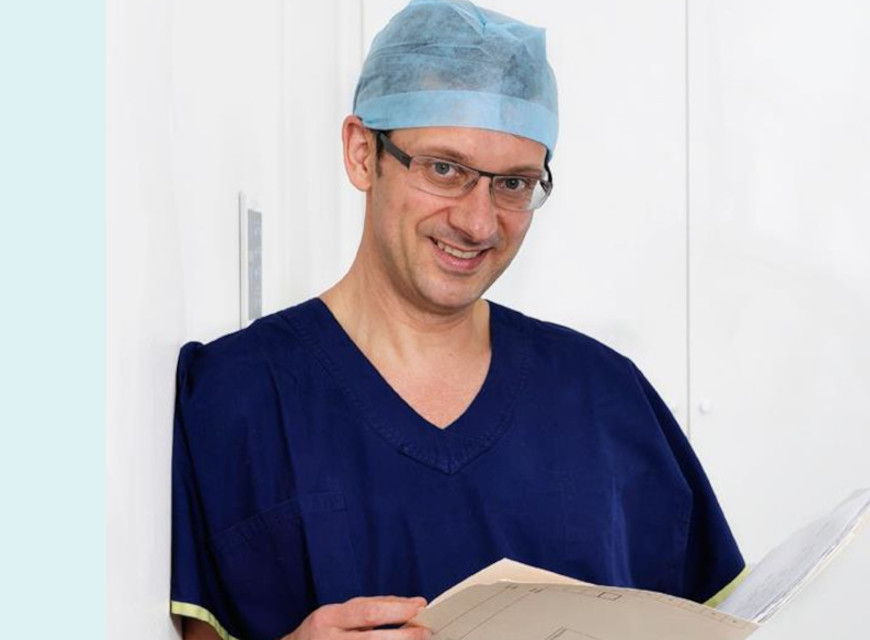
Dr. Mark Kohout
A qualified plastic surgeon who operates with care and integrity, based in central Sydney with over 20 years of experience in the cosmetic field. His extensive training and experience assures patients they are in highly trained surgical hands. Dr. Kohout is a dedicated, friendly professional who is committed to providing the high quality care, support and results, alongside his compassionate team.
Dr Mark Kohout (MED0001133000)
Specialist Plastic Surgeon
Specialist registration in Surgery – Plastic Surgery