Breast implants have been a part of many people’s lives for a long time. They may have been placed in early adulthood, after pregnancy, or as part of breast reconstruction. Once healed, many patients hardly think about them from day to day. Years later, though, a familiar question often appears in the back of the mind:
“Are my implants still intact… or could I have a breast implant rupture?“
For some, this question starts after noticing a change in breast size or shape. For others, it follows an ultrasound or MRI report that mentions the implant shell or capsule. Occasionally, it arises simply because the implants are getting older and the person has heard that implants are not lifetime devices.
Dr Mark Kohout is a Specialist Plastic Surgeon in Sydney with many years of clinical experience in plastic and reconstructive surgery, including a focused practice in breast procedures. He regularly sees patients who are concerned about their breast implants, whether they were placed locally, interstate or overseas. This article reflects how he explains breast implant rupture in consultation, in a way that aims to support informed, realistic decision-making.
What Is a Breast Implant Rupture?
To understand rupture, it helps to picture the basic structure of a breast implant. Each implant has:
- An outer shell, made of silicone
- An inner filling, which is either:
- Sterile salt water (saline), or
- Cohesive silicone gel
Over time, the shell can develop a defect. This may relate to the age of the implant, long term movement and pressure, muscle activity, or occasionally blunt trauma to the chest. In some cases, damage may have occurred during insertion without being obvious at the time. When there is a defect in the shell, the implant is said to be ruptured.
With saline implants, a rupture usually leads to the saline gradually or sometimes more quickly leaking out. The saline is absorbed and passed by the body. The breast on that side typically loses volume, so that one breast appears smaller or less full than the other.
With silicone gel implants, the situation is different. The cohesive gel has a tendency to stay near where it was placed. If the gel remains contained within the scar tissue capsule that the body forms around the implant, this is known as an intracapsular rupture. If the gel moves beyond the capsule into surrounding tissues, this is called an extracapsular rupture.
In many cases of silicone rupture, the breast does not suddenly change in size. From the outside, it may look very similar. For this reason, a silicone breast implant rupture is often detected on imaging such as ultrasound or MRI rather than by visible changes alone.
In his Sydney practice, Dr Kohout often meets patients who had no clear symptoms but were sent for imaging because their implants are older, or because they reported more general breast changes. The scan may then show signs consistent with rupture, even though the person has not noticed anything dramatic.
Long Term Devices, Not Lifetime Devices
A central idea that Dr Kohout discusses with patients is that implants are long term devices, but they are not lifetime devices. From the moment they are placed, implants experience:
- Constant movement as the chest expands, contracts and twists
- Pressure from the pectoral muscles and surrounding soft tissue
- External forces from bras, clothing, exercise and daily activities
- Changes associated with weight fluctuations, pregnancy and breast feeding
Over many years, these factors can affect the silicone shell. The risk of breast implant rupture generally increases as the implants age, though the exact timing varies from person to person.
In Sydney, Dr Kohout routinely sees patients:
- Who had implants more than a decade ago and have never had them checked
- Who had surgery abroad and now want local follow up
- Who no longer have their implant cards and are unsure what type or size they have
Part of the consultation often involves piecing together this history, reviewing any available records, and deciding what imaging and monitoring may be appropriate.
Rupture is one reason to consider breast revision surgery, but it is not the only one. Implants may also be reviewed or replaced because of:
- Capsular contracture, where the scar around the implant becomes thicker and tighter
- Changes in breast tissue after pregnancies or major weight changes
- Implant movement or rotation
- Personal preference about size, shape or whether to continue with implants at all
In practice, several of these issues often overlap, and treatment planning takes all of them into account.
How Might a Breast Implant Rupture Present?

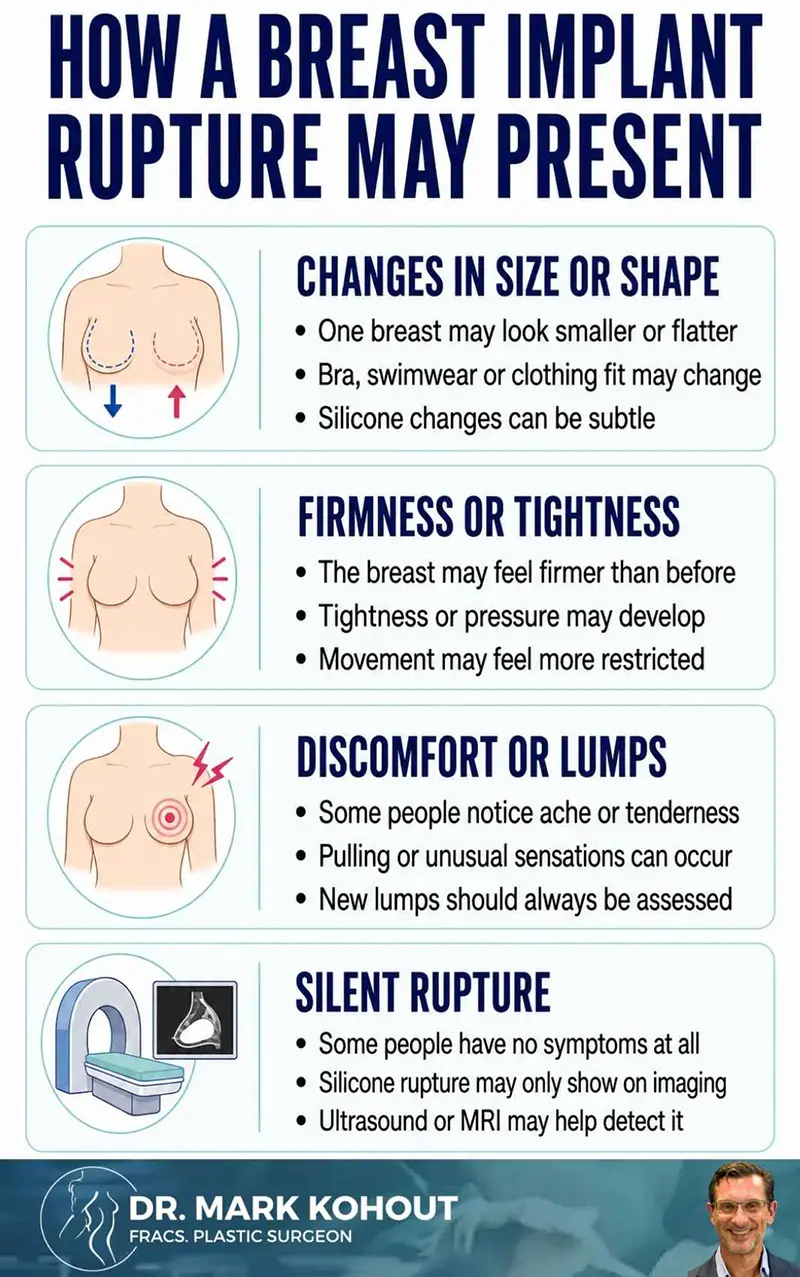
There is no single "typical" presentation. Some people wake up one day and clearly see that one breast is smaller. Others notice a gradual change over months. Some feel a new tightness or irregularity. And some have no symptoms at all.
Common features that may raise the possibility of breast implant rupture include:
✓ Changes In Size
A saline rupture often leads to a noticeable loss of volume on the affected side. The breast may:
- Look flatter at the top
- Feel softer and less full
- Sit differently in bras, sports tops or swimwear
Patients sometimes describe suddenly needing to tighten one bra strap more than the other or noticing that one cup is no longer filled.
With silicone implants, changes in volume can be subtle or absent. Some people still notice that one breast appears slightly smaller or less projected, but this is not universal.
✓ Changes In Shape Or Contour
The overall shape of the breast may shift. Patients might observe:
- A change in the upper pole curve
- A slight flattening on one side
- A more irregular or uneven contour in certain angles or positions
These differences often show up in fitted clothing or when looking at photos taken months or years apart.
✓ Firmness Or Tightness
If silicone leaks beyond the shell and the body responds by increasing scarring, the breast can feel:
- Firmer than it used to
- Less mobile when moved or pressed
- Tighter, as if there is more pressure inside
This can occur with or without rupture, so it is not a definitive sign on its own, but it is a common reason for people to seek review.
✓ Discomfort Or Unusual Sensations
Not all ruptures cause pain. When discomfort does occur, it might be:
- A constant dull ache
- Intermittent sharp or pulling sensations
- Tenderness when lying on the breast or during impact activities
Some patients describe more of a “strange awareness” of one breast rather than pain as such. The pattern and severity of symptoms is highly variable.
✓ Lumps Or Irregularities
New irregularities may be felt:
- Around the implant
- In the lower outer part of the breast
- In the underarm region where lymph nodes are located
These lumps may relate to silicone deposits, reactive lymph nodes or other breast tissue changes. Any new lump should be properly assessed, as it may or may not be linked to the implant.
✓ Silent Rupture
A particularly important concept is silent rupture. With silicone implants, it is possible for the shell to fail without the person feeling or seeing any change. The first indication may be an ultrasound or MRI report that notes abnormalities in the implant shell or gel. This is why surveillance imaging may be discussed in some cases, especially when implants have been in place for many years. The decision about when and how often to image is individual and can be guided by a doctor familiar with implant care.
Symptoms That Need Prompt Attention
Most concerns about implants can be explored in a routine appointment. However, some symptoms should lead to prompt medical review. These include:
- Sudden, pronounced swelling of one breast
- Redness and warmth over the breast combined with fever or feeling generally unwell
- A new, firm mass in the breast or underarm
- Rapid change in breast size with significant pain or severe tightness
These features may suggest:
- Infection around the implant
- Bleeding or a sizeable fluid collection
- Very rarely, conditions such as BIA ALCL
While these problems are not common, they are important to recognise. Patients in this situation are advised to contact their GP, emergency department or treating surgeon without delay. In Sydney, Dr Kohout often works closely with local GPs and hospital teams when his patients require urgent investigations or treatment.
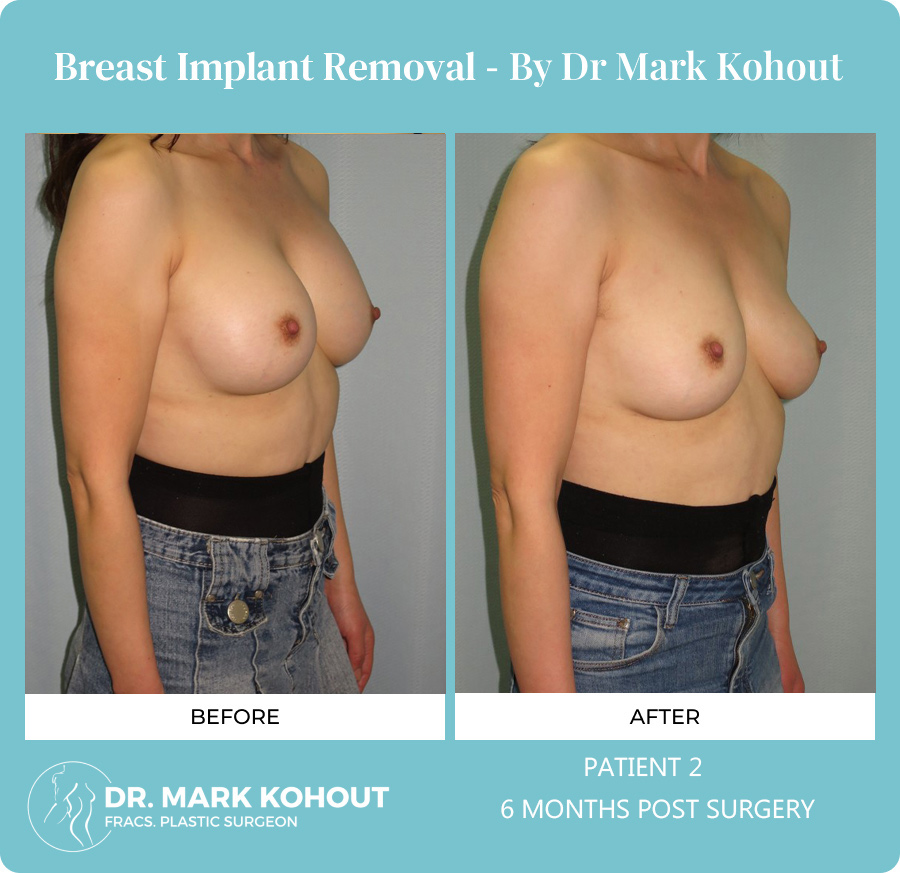
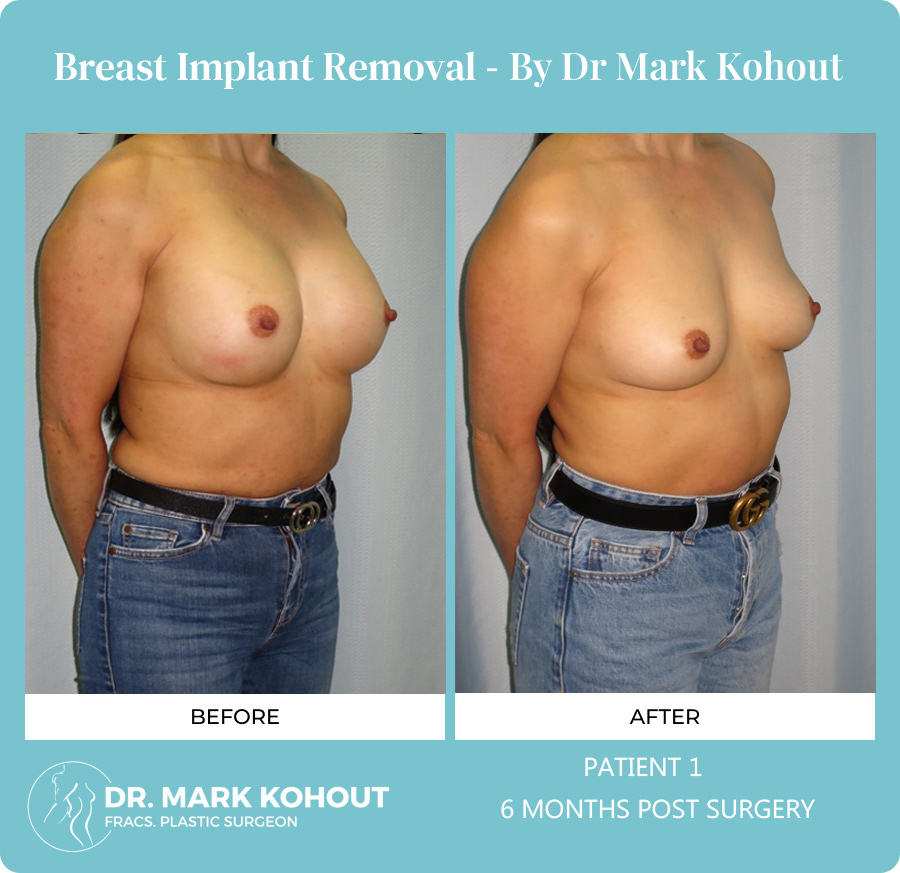
Breast Implant Removal Before and After Images
How a Possible Breast Implant Rupture Is Assessed
When someone visits Dr Kohout’s Sydney clinic concerned about breast implant rupture, assessment usually follows a structured pattern that combines listening, examination and imaging.
✓ History
The consultation begins with a detailed conversation. Dr Kohout typically asks about:
- The date and location of the original surgery
- Whether the implants are thought to be saline or silicone
- Any existing implant cards or operation notes
- Past complications such as infection, seroma or capsular contracture
- Trauma to the chest, such as car accidents or sports injuries
- General health, medications and family history of breast conditions
Even when written records are missing, this discussion often reveals important clues about the likely type and age of the implants.
✓ Examination
A careful physical examination follows. This includes:
- Observing breast shape and symmetry from several angles, both sitting and lying
- Assessing the position of the nipples, scars and skin quality
- Gently palpating the implants and surrounding tissue to gauge firmness, movement and tenderness
- Checking the underarm regions for enlarged lymph nodes
This hands on assessment helps guide which imaging tests are most appropriate and how urgently they are needed.
✓ Imaging
Imaging is central in evaluating a suspected breast implant rupture. Common investigations include:
- Ultrasound – Often used as a first step, ultrasound can detect fluid around the implant, changes in the shell, and abnormalities in nearby lymph nodes. It is non invasive and widely available.
- MRI – MRI provides detailed images of the implant and surrounding tissues and is particularly useful for detecting silicone ruptures. It can show characteristic patterns that radiologists recognise as signs of intra- or extracapsular rupture.
- Breast screening imaging – For individuals in the recommended age groups for breast cancer screening, mammography and related imaging remain important. Techniques are used to move the implant so that as much breast tissue as possible can be visualised.
Dr Kohout liaises with radiology services across Sydney to facilitate imaging that reflects both implant questions and general breast health needs. Once reports return, he explains the findings in clear language, often sketching or using models to show what is happening inside the breast.
When Rupture Is Confirmed: Planning Management
If the assessment supports a diagnosis of breast implant rupture, the next step is a structured discussion about management. Often more than one path is reasonable. The most appropriate option depends on:
- The type of implant and pattern of rupture
- The condition of the capsule and soft tissues
- The patient’s general health and medical history
- Their wishes about implant size, position and whether to keep implants at all
Options may include:
- Removal of the implant without replacement
- Removal with placement of a new implant
- Capsule removal or modification, sometimes combined with breast reshaping techniques
Removal Without Replacement
Some patients choose to have their ruptured implants removed and not replaced. Reasons can include:
- A wish to simplify future breast care
- Concerns about long term implant issues in general
- A change in personal preferences since the original surgery
When this path is considered, Dr Kohout explains how the breasts are likely to look after removal. The final appearance depends on:
- How much natural breast tissue is present
- How stretched the skin has become over time
- The size and position of the implants that were removed
- Whether one or both implants are removed
The focus of this discussion is on realistic possibilities rather than guarantees. Diagrams and examples can help patients picture the range of expected changes.
Removal With Replacement
Other patients feel that implants still suit their body and lifestyle. For them, removal of the ruptured device and placement of a new implant is often discussed. This stage can be used to re-evaluate:
- Implant volume
- Shape or profile
- Position in relation to the muscle
For example, some individuals decide to move from a very full look to a more moderate volume. Others consider a different position if their tissue characteristics have changed. Dr Kohout explains how each option interacts with existing anatomy and what trade-offs may be involved.
Capsule And Tissue Considerations
The capsule around the implant is frequently part of the surgical plan. After rupture, particularly of silicone devices, the capsule can become thick or irregular, and may contain silicone material. Surgery may involve:
- Partial or total capsulectomy (removal of part or all of the capsule)
- Irrigation of the pocket around the implant
- Sampling tissue or fluid for pathology where clinically indicated
The extent of capsule work is tailored carefully to each case and is discussed in detail as part of pre operative planning. As with any operation, there are potential risks, including bleeding, infection, changes in sensation, scarring and the possibility that further procedures may be needed over time. Dr Kohout’s role is to lay out these details clearly so that patients can weigh benefits and risks in an informed way.
Recovery and Follow Up After Surgery for Breast Implant Rupture
Recovery following surgery for breast implant rupture varies from one person to another. The pace and pattern depend on:
- How complex the operation was
- Whether both breasts were operated on
- The extent of capsule work and tissue adjustment
- The individual’s general health and healing capacity
In the first days and weeks after surgery, many patients notice:
- Discomfort or a feeling of tightness in the chest, especially with movement
- Swelling and bruising that gradually improve
- Temporary adjustments in sleep position and activity to protect the surgical area
Dressings are used to support clean wound healing. Support garments are often recommended for a period to provide comfort and help maintain gentle compression.
During this time, patients are usually advised to:
- Avoid lifting heavy objects
- Postpone strenuous exercise and high impact activities
- Limit overhead arm movements according to specific instructions
As healing progresses, activity levels are increased step by step. Return to work will depend on the nature of the job and the extent of surgery. Many people can resume less physical roles sooner than manual or high demand work, but this is individual and is best discussed directly with the surgeon.
Follow up appointments with Dr Kohout are an important part of care. These visits allow him to:
- Check incisions and wound healing
- Review any pathology reports
- Assess implant position and shape, where new implants have been placed
- Answer questions as the chest settles and the final appearance becomes clearer over time
Longer term, some patients choose periodic reviews and, in some cases, imaging to monitor their new implants. Regular breast awareness remains important, and any new changes or lumps should be evaluated promptly.
When Imaging Is Reassuring but Symptoms Remain
Not every person with breast symptoms has a breast implant rupture. There are times when ultrasound and MRI look reassuring, yet the patient continues to experience discomfort or notice changes.
Symptoms in this situation may relate to:
- Capsular contracture without rupture
- Hormonal fluctuations affecting breast tissue
- Muscular or postural strain in the chest, neck or shoulders
- Other non implant related breast conditions
In these circumstances, Dr Mark Kohout often works closely with the patient’s GP and other health professionals. This may involve:
- Exploring musculoskeletal causes of pain
- Reviewing hormonal and metabolic factors
- Referral to physiotherapy, pain specialists or breast physicians if appropriate
Occasionally, repeat imaging is suggested later if symptoms evolve. A normal scan remains valuable information, but it does not mean concerns should be dismissed. Instead, it helps point the clinical team toward other potential explanations.
Breast Implant Rupture FAQs
Can a ruptured breast implant make me seriously ill straight away?
Most ruptures, especially of saline implants, do not cause a sudden severe illness, but they do require proper assessment and discussion of options. Silicone rupture can irritate local tissues over time, which is why imaging and review with a qualified practitioner are important.
If I do not know what type of implants I have, can they still be assessed safely?
Yes. Even without implant cards or operation notes, a combination of clinical examination and imaging can usually provide useful information about the type and condition of your implants. Additional details sometimes become available later from hospitals, previous surgeons or older imaging reports.
Can vigorous exercise or weight training cause a breast implant rupture?
Normal exercise programs are not usually a direct cause of rupture, but over many years repetitive stress and muscle activity contribute to overall wear of the implant shell. If you notice new pain, tightness or shape changes after a particular incident or training phase, it is sensible to have this assessed.
Will a ruptured implant always look obviously different in photos?
Not necessarily. Some ruptures, especially silent silicone ruptures, cause minimal visible change and are only detected on imaging, while others may alter breast volume or contour enough to be noticeable in fitted clothing or photographs over time.
Can I delay surgery if a rupture is found but I feel well?
In some situations, particularly with silent silicone rupture, surgery is not an emergency and can be planned thoughtfully after a full discussion of risks, benefits and alternatives. However, most surgeons recommend addressing confirmed rupture rather than leaving it indefinitely, especially if there is extracapsular silicone or significant capsular change.
Does flying or going to high altitude affect a ruptured implant?
Commercial flights and routine altitude changes do not usually cause sudden problems in an already ruptured implant. If you have significant symptoms such as pain, swelling or redness, it is better to seek assessment before travelling so that you understand your situation and any precautions that may be needed.
Is it possible to correct a ruptured implant and reduce the chance of future problems at the same time?
When surgery is performed, the plan often includes not only removing the ruptured implant but also addressing capsule issues, pocket position and implant selection to support more stable outcomes over time. Even so, no operation can remove all future risk, and ongoing monitoring is still important.
What if my imaging reports disagree about whether there is a rupture?
Occasionally ultrasound and MRI give different impressions, or reports are worded in cautious terms such as “suspicious for rupture”. In these cases, your surgeon will usually review the images alongside the clinical examination and may recommend repeat imaging, second radiology opinion or exploratory surgery depending on the overall picture.
Can I choose to remove both implants if only one is ruptured?
Yes, many patients decide to have both implants removed or replaced for the sake of symmetry and long term planning, even if only one side is confirmed to be ruptured. This is a personal decision that should be discussed with your surgeon, taking into account your goals, anatomy and the condition of both implants.
Is it safe to keep breastfeeding if I am worried about a possible rupture?
Breastfeeding with implants in place is usually considered acceptable, and a suspected rupture does not automatically mean you must stop. If you are breastfeeding and worried about implant integrity, it is important to discuss this with your GP or Plastic Surgeon so that imaging, timing and any surgical planning can be coordinated around your feeding needs.
Medical References
- Juanpere S, Pérez E, Huc O, Motos N, Pont J, Pedraza S. Imaging of breast implants: a pictorial review. Insights into Imaging. 2011;2(6):653–670. https://link.springer.com/article/10.1007/s13244-011-0122-3
- Hillard C, Fowler JD, Barta R, Cunningham B. Silicone breast implant rupture: a review. Gland Surgery. 2017;6(2):163–168. https://gs.amegroups.org/article/view/11926/html
- Rukanskienė D, Bytautaitė G, Česnauskaitė A, et al. The Value of Ultrasound in the Evaluation of the Integrity of Silicone Breast Implants. Medicina. 2021;57(5):440. https://www.mdpi.com/1648-9144/57/5/440
- Heliyon Imaging Group (Soerensen et al.). Ultrasound versus MRI for evaluation of silicone leakage from silicone breast implants. Heliyon. 2024;10:e09356. https://www.cell.com/heliyon/fulltext/S2405-8440(24)09356-3
Systemic Symptoms and Breast Implants
Some people with breast implants report more general symptoms such as fatigue, joint discomfort, brain fog or rashes. Many will encounter the term “breast implant illness“ in online communities and understandably wonder whether their implants play a role.
Current research is ongoing, and there is no single test that confirms or excludes this condition. When patients in Sydney see Dr Kohout with systemic symptoms as well as concerns about their implants or possible breast implant rupture, he encourages a broad and structured approach. This usually includes:
- Thorough assessment by their GP to explore other medical causes
- Appropriate investigations based on individual history and examination
- Clinical evaluation and imaging of the implants as part of the overall picture
For some individuals, implant removal is considered as one element of a wider health plan, after detailed discussion of uncertainties, possible benefits and risks. For others, the focus may remain on non implant factors, with careful monitoring over time. Decisions are made collaboratively, with an emphasis on realistic expectations and alignment with each person’s priorities.
How Dr Mark Kohout Supports Patients in Sydney
For anyone living with breast implants, especially as the years go by, questions about integrity, symptoms and long term care are natural. In his role as a Specialist Plastic Surgeon in Sydney, Dr Mark Kohout aims to offer a clear, calm framework for exploring those questions.
Patients attending his clinic can expect:
- Time to describe their history, symptoms and goals in detail
- A careful examination of their implants, breast tissue and surrounding structures
- Appropriate imaging, organised in collaboration with radiology providers
- A balanced explanation of findings and a range of management options
Many people find that when they understand their situation more clearly, they can participate more actively in decisions about their care. Whether the plan involves continued observation, further imaging, implant removal, or removal with replacement, Dr Kohout’s focus is on supporting patients to make informed choices that fit their health needs and personal circumstances.
Individuals who would like to discuss possible breast implant rupture or other implant related concerns can contact his Sydney practice to arrange a consultation. Bringing any available records such as implant cards, operation notes and previous imaging reports can be helpful, though it is not essential. A face to face consultation allows for a personalised assessment and a thoughtful discussion of the options and next steps.
Further Reading
- Read more about Breast Implants Sydney
- Read more about Breast Revision Sydney
- Read Dr Mark Kohout’s Blog on Recovery after Breast Implant Removal?
- Read Dr Mark Kohout’s Blog on Recovery After Breast Implant Removal: What to Expect and How to Navigate the Process
- Read Dr Mark Kohout’s Blog on FAQs about Breast Implant Removal
Related Blog Posts
Healing and Recovery After Breast Reduction…
Comprehensive Guide to Healing and Recovery After Breast Reduction Surgery Download Dr Mark Kohout’s Breast Reduction Surgery Guide Healing and Recovery After Breast Reduction: Timeline and Tips Breast reduction surgery,…

Breast Reduction Medicare Cover – Will…
Will Medicare Cover My Breast Reduction? Breast reduction, medically known as reduction mammoplasty, is a surgical procedure that removes excess breast tissue and skin to achieve a breast size more…
Reducing Back Pain with Breast Reduction…
The Connection between Back Pain and Overly Large Breasts For some women, overly large breasts can be a source of discomfort and pain, particularly in the back region. The weight of…
Experienced Plastic Surgeon
Dr. Mark Kohout
A qualified plastic surgeon who operates with care and integrity, based in central Sydney with over 20 years of experience in the cosmetic field. His extensive training and experience assures patients they are in highly trained surgical hands. Dr. Kohout is a dedicated, friendly professional who is committed to providing the high quality care, support and results, alongside his compassionate team.
Dr Mark Kohout (MED0001133000)
Specialist Plastic Surgeon
Specialist registration in Surgery – Plastic Surgery