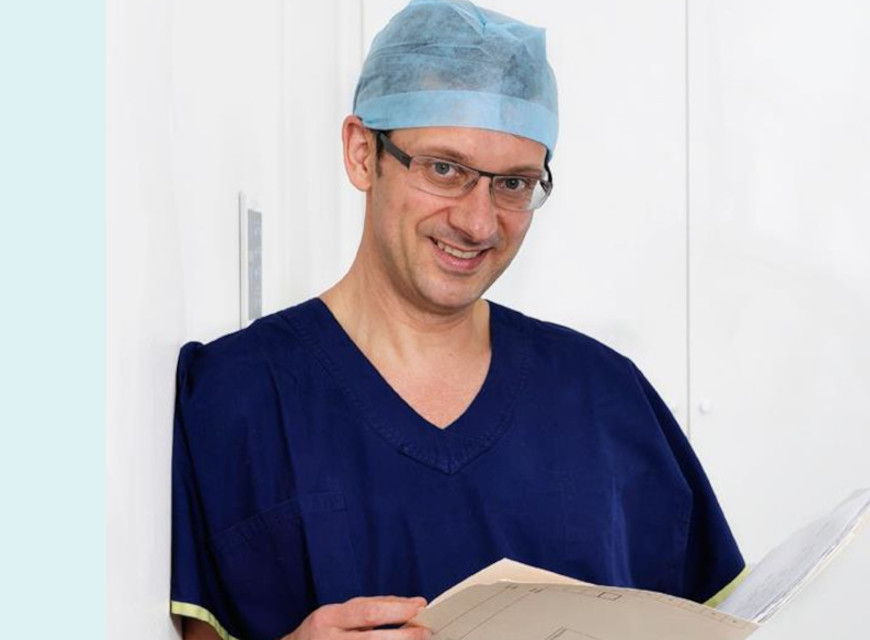


Dr Mark Kohout is a Specialist Plastic Surgeon based in Sydney, with specialist registration in Surgery – Plastic Surgery, more than 25 years of experience in cosmetic and reconstructive procedures, and medical registration number MED0001133000. Swelling and bruising after breast surgery are common temporary responses to tissue handling and healing, and they are usually managed with rest, prescribed medication, supportive garments and close adherence to postoperative instructions.
During breast surgery recovery, swelling may affect the breasts, chest wall or nearby tissues, while bruising may change colour and gradually fade over time. These changes are often expected, but sudden one-sided swelling, increasing pain, expanding bruising, fever, wound discharge or shortness of breath should be reported promptly to the treating surgical team.
This article explains what patients may expect after breast surgery, practical measures that may support recovery and symptoms that require medical review. Recovery varies, and Dr Mark Kohout will provide advice based on the procedure performed and each patient’s individual risk factors.
Why Swelling And Bruising Happen After Breast Surgery
Swelling and bruising occur because breast surgery disrupts small blood vessels and tissues, triggering the body’s inflammatory and repair responses. These changes are usually temporary and commonly become most noticeable during the first few days after surgery.
- Swelling often peaks within the first 72 hours.
- Bruising may appear red, purple or blue before changing to green, yellow or brown.
- The breasts may feel firm, tight or full while fluid collects in the tissues.
- Mild differences between the two sides can occur because healing and lymphatic drainage are not always identical.
- Bruising usually fades over several weeks as the body reabsorbs the trapped blood.
- The extent of swelling depends partly on the type and complexity of surgery performed.
These symptoms are commonly part of the expected healing process, although they should gradually improve rather than worsen. Understanding the usual pattern can help patients recognise when a change falls outside the anticipated recovery range.
Individual Factors That Influence Post-Surgical Bruising and Swelling
The amount of swelling and bruising after breast surgery varies because every patient heals differently. Age, health, medications, lifestyle and the extent of surgery can all affect the intensity and duration of postoperative changes.
- Older skin and blood vessels may bruise more visibly or recover more slowly.
- Fairer skin tones may make discolouration more noticeable.
- Diabetes, poor circulation and some autoimmune conditions can affect healing.
- Anticoagulants, antiplatelet medicines and certain supplements may increase bruising risk.
- Smoking and nicotine exposure reduce oxygen delivery to healing tissues.
- More extensive tissue repositioning or additional incisions can produce greater swelling.
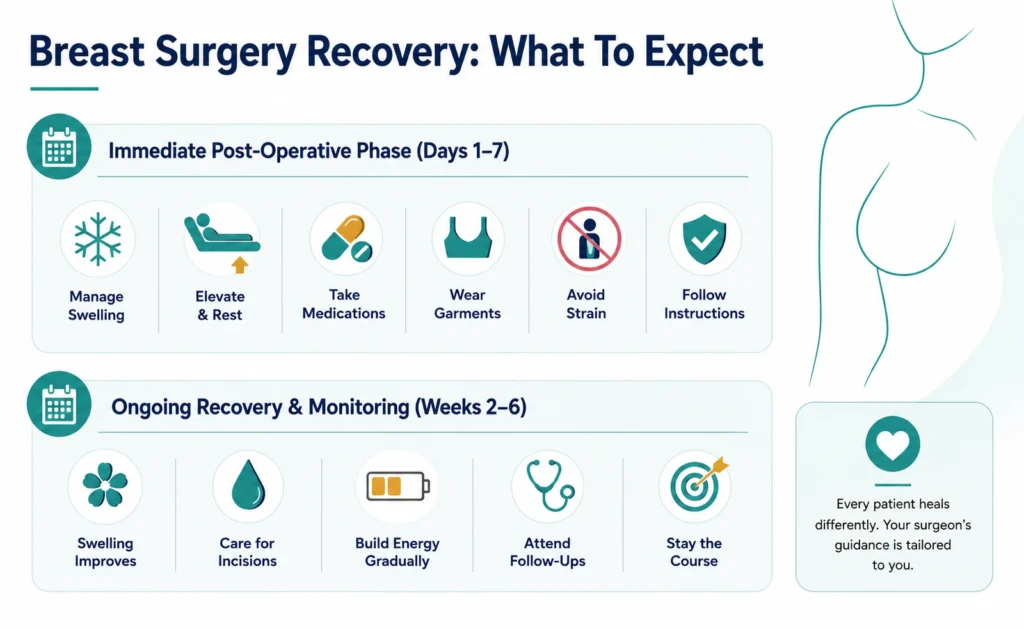
Immediate Post-Operative Phase (Days 1-7)
In the first week following breast surgery, patients typically experience visible changes and physical sensations that reflect the body’s response to surgical intervention. Swelling and bruising are often at their peak during this period, and the breasts may feel firm or engorged. The chest area may also feel warm to the touch, which is part of the inflammatory healing phase.
During this critical early period, post-operative care focuses on minimising discomfort and supporting the body’s initial healing processes. Cold compresses are commonly recommended to reduce inflammation and provide temporary relief. These should be used cautiously to avoid excessive cold exposure to sensitive skin. Elevating the upper body, including when sleeping, helps with fluid drainage and reduces the risk of fluid pooling around the surgical site.
Prescribed medications typically include pain relief, antibiotics, and anti-inflammatory agents. These should be taken as directed to manage symptoms effectively and prevent infection. Dr Kohout ensures his patients are provided with detailed instructions outlining when and how to take medications, as well as what to expect in the first few days.
Surgical garments are usually worn throughout this stage to provide consistent compression. They help shape the surgical area and offer necessary support while minimising excessive movement. Patients are also advised to avoid physical strain, including reaching overhead, lifting heavy objects, or engaging in any vigorous movement that may place pressure on healing tissue.
By following these strategies, many patients are able to experience a smoother early recovery. Dr Mark Kohout places particular emphasis on early-stage care in his Sydney clinic, viewing it as the foundation for optimal long-term results.
Ongoing Recovery And Monitoring (Weeks 2-6)
As the initial healing phase transitions into a more stabilised period, patients begin to notice significant improvements. Bruising becomes less prominent, changing colour and eventually disappearing. Swelling gradually subsides, although some residual puffiness may continue depending on individual factors and the extent of the surgery. This phase is characterised by a return to light daily activities, increased mobility, and a reduced need for pain medication.
Despite these improvements, the body is still actively healing beneath the surface. Incision sites require continued care to prevent irritation and infection. Patients are typically advised to keep incisions dry and avoid exposing them to direct sunlight. Moisturising products or silicone-based scar treatments may be introduced at this stage, following the surgeon’s approval.
Energy levels also begin to improve during this period, but it is important not to rush the recovery. Many patients report intermittent fatigue or tightness around the chest as tissue continues to adjust. Regular follow-up appointments with Dr Kohout ensure that healing is progressing as expected and that any concerns are addressed promptly. Monitoring includes checking for symmetry, incision healing, and overall breast shape.
By maintaining consistent communication and adhering to follow-up schedules, patients in Sydney under Dr Mark Kohout’s care receive proactive support that can make a measurable difference in comfort and outcome.
When To Seek Medical Review
It is essential for patients to distinguish between normal healing effects and signs that may indicate complications. While mild discomfort, swelling, and bruising are to be expected, certain symptoms should prompt immediate communication with the surgical team.
Sudden or asymmetric swelling that increases rapidly could suggest a hematoma, which may require surgical drainage. Increasing redness, warmth, and tenderness might indicate an infection, especially when accompanied by systemic symptoms such as fever or chills. Persistent or worsening pain that does not respond to medication could also be a sign of deeper tissue inflammation or pressure-related complications.
Discharge from the incision sites, particularly if foul-smelling or discoloured, should never be overlooked. Likewise, difficulty breathing or chest tightness, although rare, necessitates emergency evaluation to rule out cardiac or pulmonary complications.
Dr Mark Kohout maintains open channels of communication with his Sydney patients to ensure any concerning symptoms are identified early and managed appropriately. Patients are encouraged to trust their instincts and seek guidance when something feels unusual, rather than waiting for scheduled follow-ups.
Long-Term Considerations (Months 2-6)
In the months following breast surgery, healing shifts from visible changes to more subtle adjustments. The majority of swelling and discolouration resolves by the 6 to 12-week mark, and patients start to observe the final shape and position of the breasts as tissues settle.
Scarring continues to evolve during this phase, often becoming flatter and less pigmented. Patients may be advised to massage scar tissue gently or use specific creams to improve texture and appearance. Any tightness around the incision areas typically softens as healing progresses, although some firmness may persist longer in cases involving internal sutures or extensive tissue repositioning.
Nerve sensation in the nipple and surrounding tissue may be altered for several months. In most cases, this resolves naturally, but some degree of permanent change is possible. Dr Kohout discusses these possibilities in advance and provides reassurance and management options should changes persist.
Long-term follow-up appointments are vital to evaluate both functional recovery and aesthetic outcomes. These visits provide an opportunity to assess breast symmetry, volume distribution, and tissue elasticity. Dr Kohout encourages his Sydney patients to attend all scheduled reviews to ensure recovery is monitored thoroughly and adjustments are made when necessary.
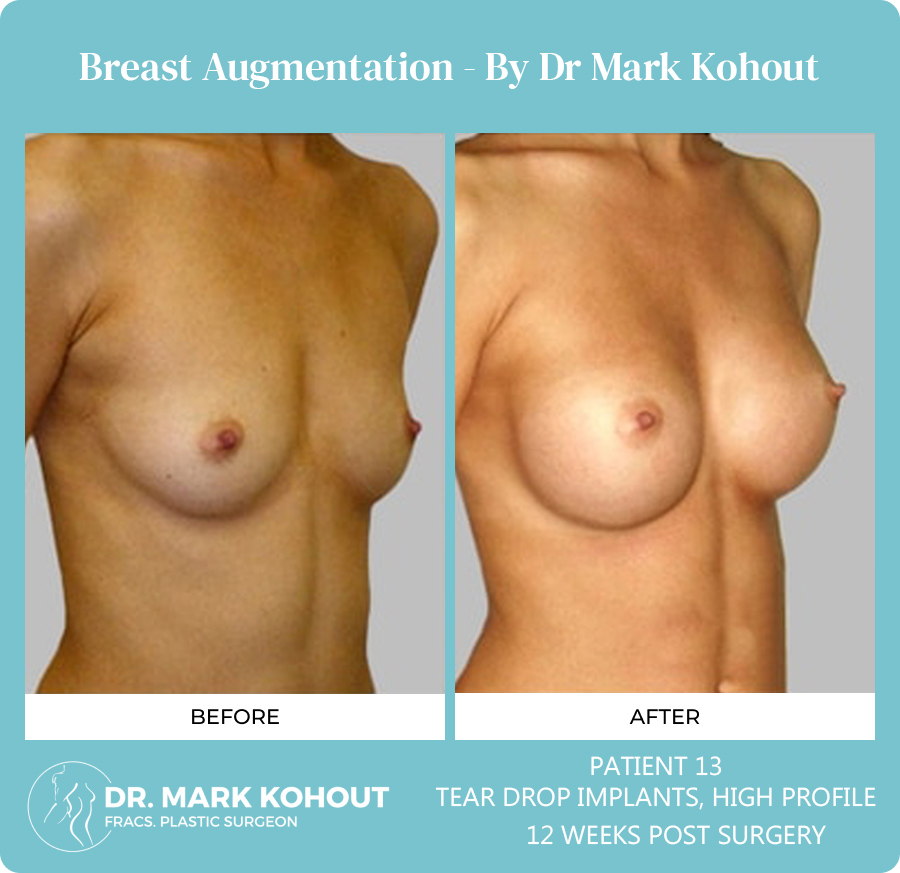
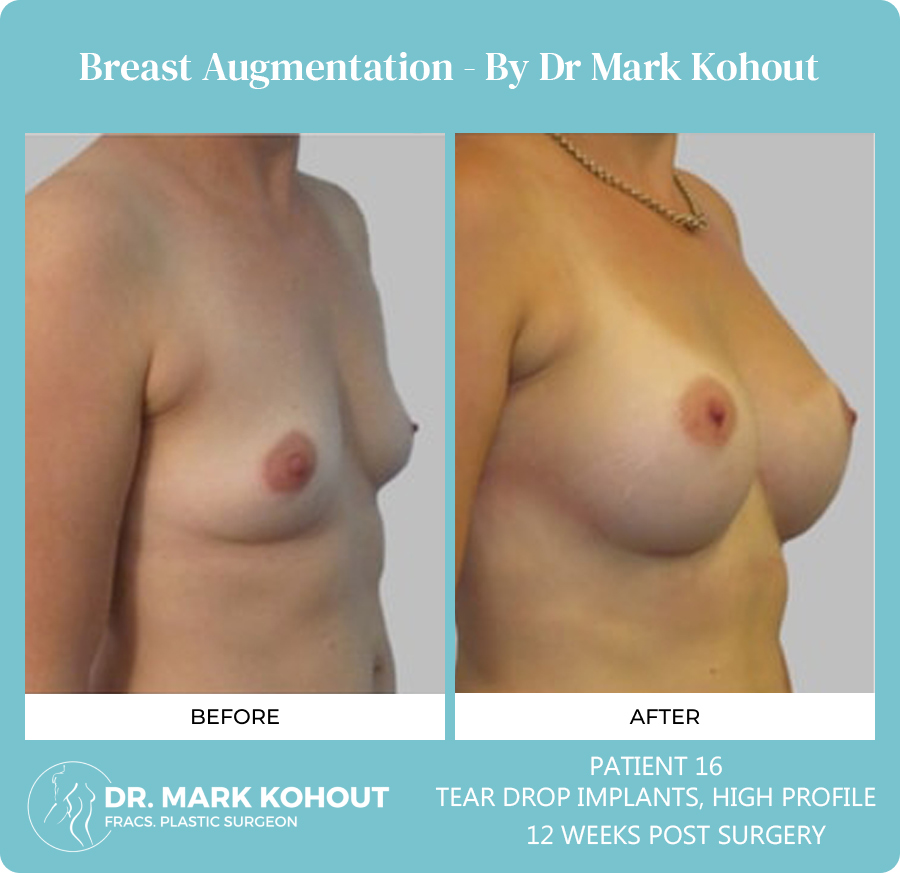
Breast Surgery Before and After Images
Practical Tips To Help Support Recovery
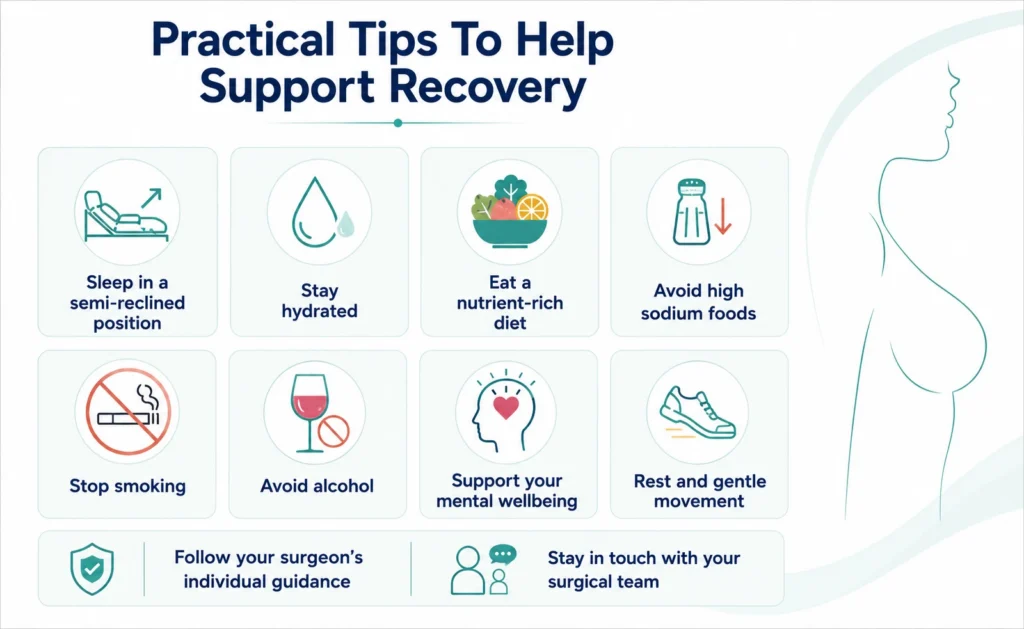
Recovery from breast surgery is not limited to physical healing – it also involves lifestyle modifications and mental preparation. Sleeping in a semi-reclined position not only reduces swelling but also promotes rest by limiting unnecessary movement. Proper sleep contributes to hormonal regulation and tissue regeneration.
Maintaining hydration and a nutrient-rich diet assists in collagen production and immune function. Nutritional support can be especially beneficial in cases where the body is managing both surgical recovery and general health concerns. Patients are advised to avoid foods high in sodium, which may contribute to fluid retention and prolong swelling.
Smoking cessation is strongly recommended before and after surgery. Not only does this enhance oxygenation and blood flow, but it also lowers the risk of surgical complications. Alcohol should be avoided during the initial weeks to prevent interactions with medications and to support liver function, which plays a role in metabolising anaesthetic agents and inflammation-related byproducts.
Psychological wellbeing also plays a role in the recovery experience. Patients are encouraged to be patient with the healing timeline and avoid comparing their progress to others. Rest, gentle movement, and positive reinforcement all contribute to a holistic recovery. In his Sydney practice, Dr Mark Kohout ensures his patients have access to guidance that addresses both physical and emotional aspects of their journey.
Personalised Care With Dr Mark Kohout, Plastic Surgeon, Sydney
Dr Mark Kohout is a Specialist Plastic Surgeon practicing in Sydney, offering comprehensive care before, during, and after breast surgery. His approach involves detailed consultation, individualised surgical planning, and a structured post-operative pathway designed around the unique needs of each patient.
Unlike practices where care is divided among multiple providers, Dr Kohout manages every stage of the process personally. This approach ensures continuity, accountability, and the ability to respond quickly to changes in the patient’s condition. It also enables a tailored approach that considers not only surgical technique but also lifestyle, healing history, and long-term goals.
Patients benefit from education, regular check-ins, and timely intervention where needed. Dr Kohout’s philosophy centres on empowering his patients through transparency, expertise, and consistency. In a city as diverse as Sydney, this level of personalised care fosters trust and enhances surgical outcomes across a broad demographic.
FAQs About Swelling And Bruising After Breast Surgery
Can swelling look different between the two breasts, and is that normal?
Yes, it is relatively common for swelling to appear uneven between the breasts in the days and weeks following surgery. This asymmetry often reflects natural variations in lymphatic drainage or slight differences in surgical handling. However, if the swelling increases rapidly or is accompanied by pain or warmth, it is important to consult your surgical team.
Is it possible to still have swelling two months after surgery?
Yes, some degree of mild swelling can persist for several weeks or even months, particularly after more complex procedures. This is part of the normal tissue remodelling process. In most cases, the remaining swelling is subtle and often more noticeable in the evenings or after physical activity.
Why does bruising change colour during recovery?
Bruising progresses through a series of colour changes as the body breaks down and reabsorbs the blood beneath the skin. What starts as dark red or purple may shift to green, yellow, or brown over time. This progression is expected and typically resolves without intervention.
Are there ways to prepare for surgery that may reduce bruising?
Yes, avoiding certain medications and supplements that affect blood clotting, such as aspirin, fish oil, or vitamin E, can help reduce the risk of bruising. This should only be done under the direction of your surgeon. Smoking cessation and maintaining good hydration may also positively influence recovery.
Can bruising occur in areas beyond the breasts?
In some cases, bruising may extend to adjacent areas such as the upper abdomen or underarms. This occurs as blood travels beneath the skin due to gravity and natural tissue planes. While unexpected, this is typically harmless and resolves on its own.
Is it safe to apply creams or arnica to bruised areas after surgery?
Topical treatments should only be used if approved by your surgeon. While some patients inquire about arnica or vitamin K creams, the surgical team may advise against their use in the immediate post-operative period to avoid irritation or interactions with healing tissues.
What should I do if bruising seems to be worsening after the first week?
If bruising becomes darker, more extensive, or painful after the initial recovery phase, it is important to notify your surgeon. While delayed bruising can occur, worsening symptoms could indicate a hematoma or other issue requiring medical attention.
Medical References
- Expanded Approaches for Mastopexy in Aesthetic and Reconstructive Breast Surgery – https://pubmed.ncbi.nlm.nih.gov/39874100/pubmed.ncbi.nlm.nih
- Evaluating Patient-reported Outcomes after Bilateral Reduction Mammoplasty – https://journals.lww.com/prsgo/fulltext/2024/06000/evaluating_patient_reported_outcomes_after.69.aspxjournals.lww
- Patient-Surgeon Satisfaction Discrepancy following Breast Reduction Surgery: A 10-year Analysis of Aesthetic Outcomes and Quality of Life – https://pubmed.ncbi.nlm.nih.gov/40256347/pubmed.ncbi.nlm.nih
- Patient-Reported Outcomes After Reduction Mammoplasty Using BREAST-Q: A Systematic Review and Meta-Analysis – https://pubmed.ncbi.nlm.nih.gov/36411260/pubmed.ncbi.nlm.nih
- Augmentation Mastopexy: A Personalized Technique on 200 Consecutive Patients – https://link.springer.com/article/10.1007/s00266-025-05287-9
Supporting Your Breast Surgery Journey
Navigating post-operative effects like swelling and bruising is an integral part of the breast surgery experience. While these symptoms are normal and typically resolve with time, proper management can help improve comfort and recovery. The early weeks of healing lay the foundation for long-term results, making adherence to guidance essential.
Dr Mark Kohout and his team in Sydney provide structured care designed to guide patients through each stage of the healing process. With thoughtful preparation, ongoing monitoring, and evidence-based strategies, patients are well-positioned to make informed decisions and feel supported at every step. Empowerment through knowledge and access to expert care is the cornerstone of a well-managed surgical journey.
For more information about breast surgery recovery and what to expect, visit the Recovery after Plastic Surgery resource page.
Take our Plastic Surgery Quiz to find out if you’d be a good candidate and if you are ready for cosmetic surgery.
Further Reading
- Read Dr Kohout’s Procedure on Breast Reduction Sydney
- Read Dr Kohout’s Procedure on Mastopexy – Breast Lift Sydney
- Read Dr Kohout’s Blog about Recovery After Breast Augmentation Surgery
- Read Dr Kohout’s Blog about Recovery after Breast Implants Surgery
- Read Dr Kohout’s Blog about Recovery After Breast Reduction
Related Blog Posts
Managing Swelling and Bruising after Breast…
Dr Mark Kohout is a Specialist Plastic Surgeon based in Sydney, with specialist registration in Surgery – Plastic Surgery, more than 25 years of experience in cosmetic and reconstructive procedures,…
How to Check Breast Implants: Signs,…
Many people with breast implants carry the same quiet questions for years: How can they tell if their implants are still alright What should they actually be checking at home…
Breast Implant Rupture Sydney: Understanding Signs,…
Breast implants have been a part of many people’s lives for a long time. They may have been placed in early adulthood, after pregnancy, or as part of breast reconstruction.…
Experienced Plastic Surgeon
Dr. Mark Kohout
A qualified plastic surgeon who operates with care and integrity, based in central Sydney with over 20 years of experience in the cosmetic field. His extensive training and experience assures patients they are in highly trained surgical hands. Dr. Kohout is a dedicated, friendly professional who is committed to providing the high quality care, support and results, alongside his compassionate team.
Dr Mark Kohout (MED0001133000)
Specialist Plastic Surgeon
Specialist registration in Surgery – Plastic Surgery