

Dr Mark Kohout

Exercise After Brachioplasty: Returning to Activity After Arm Lift Surgery

doctor working
Home » Blog » Exercise After Brachioplasty: Returning to Activity After Arm Lift Surgery
Exercise After Brachioplasty Surgery Sydney A Safe Return-To-Activity Guide by Dr Mark Kohout

Table of Contents

Exercise After Brachioplasty Surgery Sydney A Safe Return-To-Activity Guide banner by Dr Mark Kohout

Dr Mark Kohout FRACS is a Specialist Plastic Surgeon based in Broadway, Sydney, with experience in body contouring procedures including brachioplasty. Exercise after brachioplasty is usually resumed gradually, starting with gentle movement and progressing only when the surgical team confirms that activity is appropriate for the patient’s recovery stage.

Many patients want to know when they can return to walking, gym training, upper-body exercise and normal arm movement after brachioplasty. The challenge is that feeling ready to move does not always mean the arm tissues, incision areas and deeper support layers are ready for lifting, stretching or resistance training. A gradual return to activity can make recovery feel more organised while keeping the focus on safety.

This article provides general information for patients planning their return to exercise after brachioplasty surgery. It does not replace personalised post-operative instructions from Dr Kohout’s practice, because activity advice may vary depending on incision placement, swelling, tenderness, garment use, wound healing, arm movement and individual recovery progress.

Why A Graded Return To Exercise Matters​

Dr Mark Kohout FRACS and his team at the Sydney practice provide recovery instructions based on the patient’s procedure and healing progress. A graded return to exercise matters because brachioplasty involves arm incision areas that may be affected by lifting, reaching, pulling, pushing and upper-body loading during early recovery.

A gradual approach may help patients avoid doing too much too soon by considering:

  • Arm elevation, stretching or reaching that may place tension on healing tissues
  • Pushing, pulling or resistance movements that involve the upper arms
  • Swelling, tightness or tenderness that may increase after activity
  • Incision areas that may feel sensitive with movement, friction or garment pressure
  • Household tasks that may require more arm strength than expected
  • Differences between procedures, recovery plans and patient activity levels

Patients should avoid using comfort alone as the only guide for returning to exercise. Even if energy levels improve, incision areas and deeper tissues may still need time and clinical clearance before more demanding activity is appropriate.

Why A Graded Return To Exercise Matters​ by Dr Mark Kohout | Exercise after brachioplasty

Early Recovery: What To Avoid​

Early recovery after brachioplasty is usually focused on protecting incision areas, managing comfort and following the specific instructions provided by the care team. Patients should avoid activities that place unnecessary strain, stretch or pressure on the upper arms until they have been advised that these movements are suitable.

Activities to avoid early on may include:

  • Heavy lifting, carrying or straining with the arms
  • Overhead reaching, stretching or repetitive arm elevation
  • Pushing or pulling movements, including some household chores
  • Upper-body resistance training, weights, push-ups or planks
  • High-impact exercise that increases arm movement or body strain
  • Any activity that increases pain, swelling, tightness, pulling or throbbing

This does not mean patients need to remain completely inactive unless advised for a specific medical reason. Gentle movement, such as short walks, may be recommended during recovery, but the type and timing of activity should follow Dr Kohout’s post-operative instructions.

Gradual Return To Walking, Cardio And Upper-Body Training​

Returning to walking, cardio and upper-body training after brachioplasty should be gradual and guided by the surgical team. The aim is to reintroduce activity in stages, rather than returning directly to pre-surgery workouts or gym intensity.

A staged return may involve:

  • Starting with short, gentle walks if this has been recommended
  • Progressing to low-impact cardio before higher-intensity exercise
  • Keeping early activity sessions shorter and lighter than usual
  • Reintroducing arm movement gradually and within the advised range
  • Waiting for clearance before upper-body weights, push-ups, planks or resistance work
  • Scaling back if swelling, tightness, pulling, pain or throbbing increases

Upper-body training can involve more tension through the arms than patients expect, especially during pushing, pulling, bracing or overhead movements. Activities such as swimming, Pilates, boxing, gym classes and resistance training should be discussed with Dr Kohout’s team before being resumed.

Signs You Need To Scale Back​

Patients should scale back activity if exercise causes symptoms to increase or recovery feels less settled afterward. A temporary reduction in activity can help patients avoid pushing beyond what is appropriate for their current recovery stage.

Signs that activity may be too much include:

  • Increased swelling around the upper arms or incision areas
  • New or worsening pain during or after activity
  • Tightness, pulling, throbbing or pressure along the arm
  • Wound irritation, bleeding or unusual drainage
  • Feeling unusually fatigued, dizzy or unwell
  • Chest pain, shortness of breath, fainting or heavy bleeding

These signs should not be used as a self-diagnosis checklist. Patients should contact Dr Kohout’s Sydney practice if symptoms feel concerning, and urgent symptoms such as chest pain, breathing difficulty, fainting or heavy bleeding require immediate medical attention.

Discuss Your Exercise Plan With Dr Kohout’s Team​

If you are planning your return to exercise after brachioplasty, ask Dr Mark Kohout FRACS and his team at the Sydney practice about your specific routine. Your return-to-activity plan should reflect your procedure, incision placement, swelling, garment instructions, work demands and fitness goals.

Patients can ask when walking, cardio, stretching, resistance training, swimming, Pilates or gym classes may be appropriate. Clear guidance can make the return to activity feel more structured while keeping the focus on safe recovery.

FAQs About Exercise After Brachioplasty​

When can I start walking after brachioplasty?Gentle walking may be recommended early in recovery, depending on the patient’s procedure and post-operative instructions. Patients should keep movement light and follow Dr Kohout’s guidance rather than treating walking as exercise too soon.
When can I go back to the gym after brachioplasty?Gym timing varies depending on incision healing, swelling, tenderness, garment use and the type of training planned. Patients should wait for clearance from Dr Kohout’s team before returning to cardio, weights, upper-body training or gym classes.
Can I lift weights after brachioplasty surgery?Weight training places load through the arms and may create tension around healing incision areas. Patients should not restart weights until the surgical team confirms that resistance training is appropriate for their recovery stage.
When can I do push-ups or planks after brachioplasty?Push-ups and planks can place strain through the upper arms, shoulders, chest and incision areas. These exercises should be avoided until Dr Kohout’s team advises that bracing and upper-body loading are suitable.
Can I do lower-body exercise while my arms are healing?Some lower-body exercises still involve bracing, gripping, balancing, carrying weights or using the arms for support. Patients should ask Dr Kohout’s team which movements are suitable before returning to structured training.
Is stretching safe after brachioplasty?Stretching may place tension on healing arm tissues, especially with overhead reaching or wide arm movements. Patients should follow their personalised range-of-motion instructions and avoid stretching beyond what has been advised.
Can exercise make swelling worse after brachioplasty?Exercise can sometimes make swelling, tightness, pulling or throbbing more noticeable during recovery. If symptoms increase during or after activity, patients should scale back and contact the clinic if the changes feel unusual or do not settle.
When can I swim after brachioplasty?Swimming involves arm movement, shoulder rotation and exposure of healing incision areas to water. Patients should wait until Dr Kohout’s team confirms that the incisions are healed enough and that swimming is appropriate.
What household chores should I avoid after brachioplasty?Household tasks such as vacuuming, hanging laundry, lifting groceries, carrying children, pushing heavy doors or repetitive reaching may strain the arms during early recovery. Patients should arrange help where needed and follow the activity limits provided by the surgical team.
What should I do if I feel pulling or pain during exercise?Pulling or pain during exercise is a sign to stop and reassess the activity. If pain worsens, persists or occurs with swelling, wound changes, bleeding, fever or feeling unwell, patients should contact Dr Kohout’s Broadway Sydney practice.
Medical References
Download Dr Mark Kohout’s Excess Skin Surgery Guide

Further Reading

Related Blog Posts

FAQs About Arm Lift Surgery (Brachioplasty)

FAQs About Arm Lift Surgery (Brachioplasty)

Considering arm lift surgery? In this detailed guide, Dr Mark Kohout, a Plastic Surgeon based in Sydney, Australia, answers common questions about Arm Lift Surgery – Brachioplasty. Designed for patients…
Will Medicare Cover My Brachioplasty / Arm Lift Surgery?

Will Medicare Cover My Brachioplasty /…

Brachioplasty, commonly known as an arm lift, is a surgical procedure that removes excess skin and fat from the upper arms. While often associated with aesthetic improvement, many individuals pursue…
What is Invisible Armlift?

What is Invisible Armlift?

An “Invisible” armlift is a cosmetic surgical procedure designed to alter the appearance of the upper arms by removing excess skin and fat. Invisible is actually a misnomer as it…
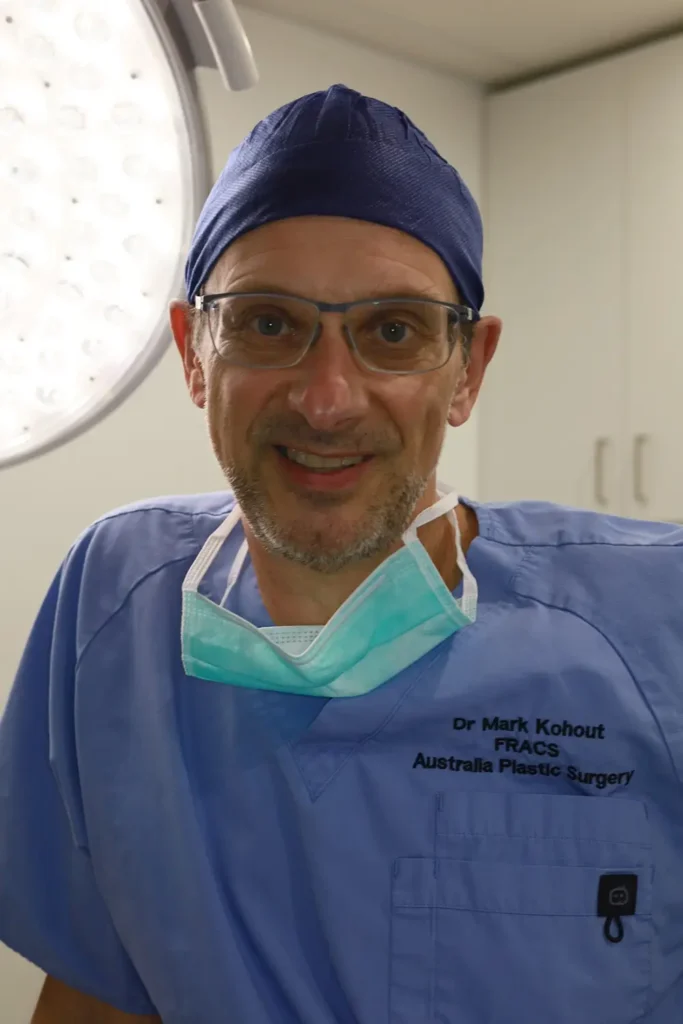
Dr Mark Kohout

Experienced Plastic Surgeon

Dr. Mark Kohout

A qualified plastic surgeon who operates with care and integrity, based in central Sydney with over 25 years of experience in the cosmetic field. His extensive training and experience assures patients they are in well trained surgical hands. Dr. Kohout is a dedicated, friendly professional who is committed to providing the high quality care, support and results, alongside his compassionate team.

Dr Mark Kohout (MED0001133000)
Specialist Plastic Surgeon
Specialist registration in Surgery – Plastic Surgery

This website contains imagery which is only suitable for audiences 18+. All surgery contains risks, read more here.

X

Get Your Excess Skin Guide

Get Your Facial Aesthetic

Get Your Breast Implant Removal

Get Your Female Genital Surgery Guide

Get Your Gynaecomastia Guide

Get Your Liposuction Guide

Get Your Abdominoplasty Guide

Get Your Cost of Surgery Guide

Get Your Breast Implant Replace Guide

Get Your Breast Reduction Guide

Get Your Breast Augmentation Guide

Make an Enquiry