

Many people considering a breast lift (mastopexy) want to know when they can resume exercise. Dr Mark Kohout, Specialist Plastic Surgeon in Sydney, explains that recovery after mastopexy is a staged process guided by individual healing, the surgical technique used, and the advice provided during follow-up appointments.
A breast lift involves removing excess skin, reshaping the underlying breast tissue, and repositioning the nipple-areola complex to address breast position and firmness. Protecting surgical results requires a carefully managed return to activity to avoid stress on healing tissues. Each stage of recovery brings different physical capabilities, and pacing these changes can help support long-term results and comfort.
Understanding Breast Lift / Mastopexy Surgery
Mastopexy is a surgical procedure designed to elevate and reshape the breasts by removing excess skin and tightening supportive tissue. It can be performed with or without implants, depending on a patient’s goals. Variations in incision placement and technique can influence recovery time and activity restrictions, as the healing demands differ with each method. For example, an anchor-shaped incision may require more time to settle due to its longer incision lines, while a periareolar incision may heal more quickly but still requires careful activity management. Understanding your unique surgical plan and its implications is an important step in determining your safe return to exercise.

Why Exercise Timelines Matter
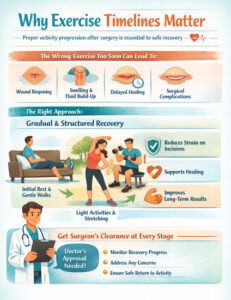
Physical activity supports cardiovascular health, circulation, and overall wellbeing, but after surgery, the wrong type or intensity of exercise can lead to complications such as wound reopening, swelling, delayed healing, or changes to the surgical result. Restoring activity too quickly may also place unnecessary tension on incision sites, leading to discomfort or stretching of the scar. Structured, staged reintroduction of exercise allows the body to heal while gradually restoring strength and endurance. This progression supports better movement, comfort, and long-term protection of the surgical work. Obtaining clearance from your surgeon at each stage ensures your recovery remains on track and that any signs of strain are addressed promptly.
✓ Immediate Post-Surgery Period (Days 1-14)
During the first two weeks, rest is the main priority, balanced with short, slow walks to maintain circulation and reduce the risk of blood clots. Activities should remain light and manageable, avoiding any lifting heavier than a small handbag or grocery bag. Sudden movements or lifting the arms above shoulder height should be avoided to prevent strain on healing incisions. Wearing your prescribed post-surgical supportive bra at all times helps minimise breast movement and promotes proper positioning during the early healing phase. In Sydney, many patients find that gentle indoor walking or peaceful neighbourhood strolls provide the right amount of activity without overexertion. Any redness, heat, fluid discharge, or swelling beyond the expected should prompt a review with your surgical team.
✓ Early Recovery Phase (Weeks 2-4)
As your healing progresses, you may begin to extend the duration of walking while keeping a comfortable pace. At this stage, light household tasks may be reintroduced, but any activity involving lifting, pushing, or reaching overhead should be postponed. Chest, shoulder, and arm exercises remain restricted to avoid pressure on the surgical site. Supporting your recovery with proper hydration, balanced nutrition, and rest is essential. Sleeping in a slightly elevated position can reduce swelling and pressure in the chest area. Wearing your garment as advised continues to provide support and protection to the healing tissues.
✓ Intermediate Recovery Phase (Weeks 4-6)
With your surgeon’s approval, you may begin incorporating light cardiovascular exercises such as stationary cycling, gentle treadmill walking, or the elliptical trainer at a low resistance. Lower-body resistance work, like bodyweight squats or light leg presses, can be started as long as they do not involve engaging the chest or upper back muscles significantly. Paying attention to your posture and breathing during activity helps avoid unintentional strain on the breast area. Wearing a high-quality sports bra continues to be important during this stage to reduce movement and support comfort.
✓ Transition To Full Exercise (After ~6 Weeks)
At around six weeks, many patients are cleared to start gradually reintroducing upper-body strength training, swimming, and higher-intensity exercise. This stage is about careful progression – starting with light weights or reduced resistance and slowly building intensity. Activities such as running, HIIT classes, or contact sports should be reintroduced gradually, with close monitoring for any signs of discomfort, swelling, or incision changes. Even with full clearance, a supportive sports bra is recommended during all exercise to maintain stability and reduce strain.
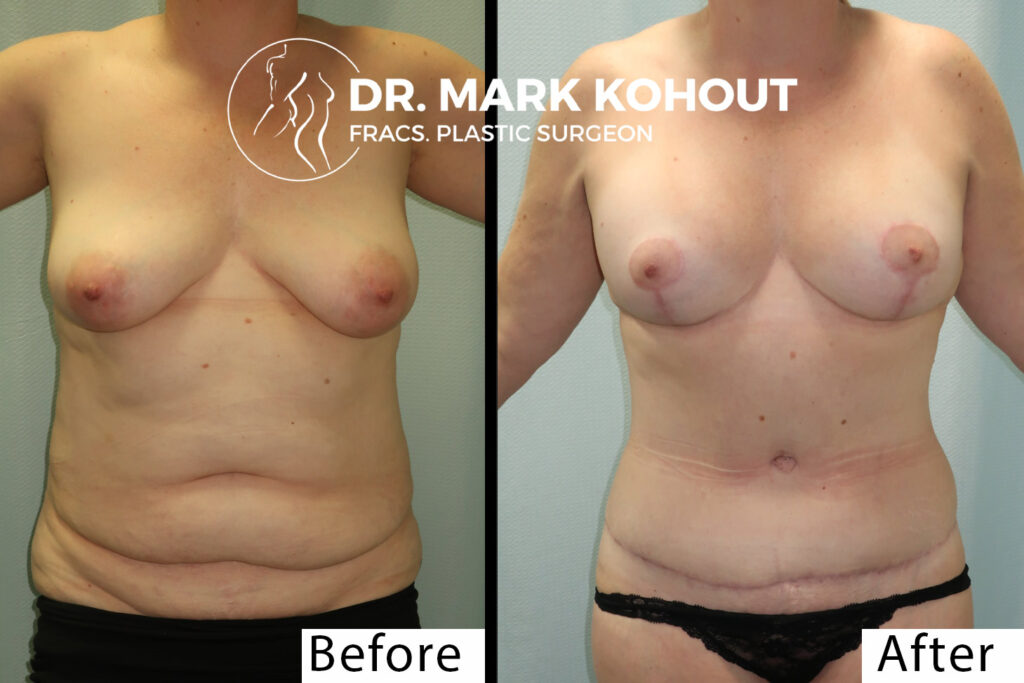
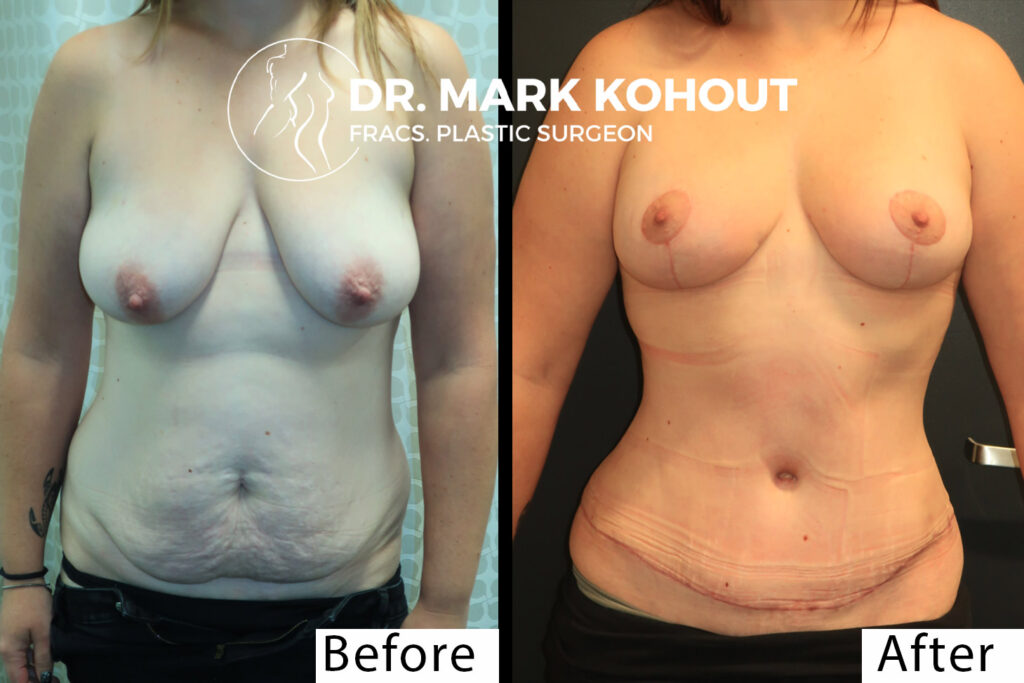
Breast Lift Surgery Before and After Images
Long-Term Activity Tips
Once healing is complete, ongoing support for the breasts during activity is important for comfort and to protect the results of your mastopexy. High-impact sports require firm, supportive garments to reduce motion. A balanced exercise program including cardiovascular fitness, strength training, and flexibility work will help maintain overall health. For those in Sydney, outdoor options like the Bondi to Coogee walk, Centennial Park cycling loops, or gentle beach activities can be excellent choices, provided you adjust the pace and intensity to suit your comfort and fitness level.
Safety Considerations
No two recoveries are the same. Factors such as age, overall health, surgical technique, and individual healing speed can all influence your return to exercise. It is important not to compare your progress directly with others, even if they had a similar procedure. Avoid increasing activity levels without your surgeon’s advice, as doing so may lead to setbacks, discomfort, or other complications that could prolong your recovery.
The Role Of Your Plastic Surgeon
Dr Mark Kohout, practising in Sydney, provides ongoing follow-up care to ensure that your activity progression is safe and appropriate for your stage of recovery. These appointments offer an opportunity to address concerns, adapt your exercise plan, and ensure your healing is progressing well. Working closely with your surgeon helps protect both your health and the surgical outcome.
FAQs About Returning To Exercise After A Breast Lift (Mastopexy)
What types of everyday movements should be limited during the first month after surgery?
Movements that involve lifting arms overhead, reaching behind the back, or lifting heavy items can place strain on the healing breast tissue. Avoiding these actions helps protect the incisions and underlying structures during the critical early healing stage.
Is it possible to adapt pre-surgery fitness routines so they can be done safely during recovery?
Yes, many routines can be modified by removing upper-body exercises, lowering intensity, and focusing on controlled, low-impact lower-body or core movements. Always check with your surgeon before making changes.
How does the type of mastopexy incision influence the timing of upper-body exercise?
Incisions with longer or more complex patterns, such as anchor-shaped, may require more healing time before upper-body work begins. Shorter incisions may recover more quickly, but all should be assessed individually by the surgeon.
What signs during exercise suggest that activity should be stopped immediately?
Sharp pain, swelling, warmth at the surgical site, visible changes to the incision, or a feeling of pulling in the breast tissue are all signs that exercise should be paused and your surgeon contacted.
Are there specific sports or activities that tend to be more comfortable long-term after a breast lift?
Many patients find that low-impact activities such as walking, cycling, Pilates, and swimming (after clearance) remain comfortable over time. Proper support garments help improve comfort during higher-impact sports.
Can environmental factors, like Sydney’s warm weather, affect post-surgery exercise tolerance?
Yes, heat can increase swelling and perspiration, which may affect the surgical site. Exercising in cooler parts of the day and wearing breathable, supportive garments can help manage these effects.
How can supportive garments be selected and fitted for both recovery and long-term activity?
A well-fitted, non-underwire post-surgical bra is recommended during recovery. For long-term activity, high-support sports bras designed to limit breast motion are ideal. Your surgeon or a trained fitter can guide you to the best options.
Medical References
- Breast Lift with and without Implant: A Synopsis and Primer for the Contemporary Plastic Surgeon https://pmc.ncbi.nlm.nih.gov/articles/PMC7647657/
- Mastopexy and Mastopexy-Augmentation | Aesthetic Surgery Journal https://academic.oup.com/asj/article/38/4/374/4818256
- Mastopexy (Breast Lift) – StatPearls – NCBI Bookshelf https://www.ncbi.nlm.nih.gov/books/NBK610682/
- Mastopexy – an overview | ScienceDirect Topics https://www.sciencedirect.com/topics/medicine-and-dentistry/mastopexy
- Superior flap tuck in mastopexy—a novel technique to promote lift and projection https://abs.amegroups.org/article/view/5508/html
- MAMAS (mastopexy–augmentation made applicable and safer): A simple reproducible technique https://www.sciencedirect.com/science/article/pii/S2352587824000391
- Augmentation-Mastopexy: Analysis of 95 Consecutive Patients and New Surgical Technique https://pmc.ncbi.nlm.nih.gov/articles/PMC10179061/
Next Steps
If you live in Sydney or the surrounding area and are considering breast lift surgery – or if you have had a mastopexy and would like expert guidance on returning to exercise – contact Dr Mark Kohout’s clinic to arrange a consultation. Personalised advice will help you move forward with a recovery plan that supports your health, comfort, and long-term results.
Further Reading
- Read Dr Kohout’s Blog on Recovery After Breast Lift (Mastopexy)
- Read Dr Kohout’s Blog on Recovery After Breast Implant Removal With A Lift (Explant & Mastopexy)
- Read Dr Kohout’s Blog on Medicare for Breast Lift – Mastopexy
- Read Dr Kohout’s Blog on Return To Exercise After Breast Reduction
- Dr Mark Kohout’s Breast Procedures
Related Blog Posts
Recovery After Breast Lift Surgery (Mastopexy)
When planning for plastic surgery, it is important to consider not only the operation itself but also the recovery period that follows. A breast lift, or mastopexy, is a procedure…
Medicare for Breast Lift – Mastopexy
Immediate Post-Operative Period: First 24-48 Hours A breast lift, also known as mastopexy, is a surgical procedure designed to reshape and lift the breasts, also addressing the contour. While many…

Cost of Breast Lift Surgery in…
An In-Depth Look at the Cost of a Breast Lift in Sydney A breast lift, medically referred to as Mastopexy, is a surgical procedure designed to raise and reshape the breasts. Many individuals…
Experienced Plastic Surgeon
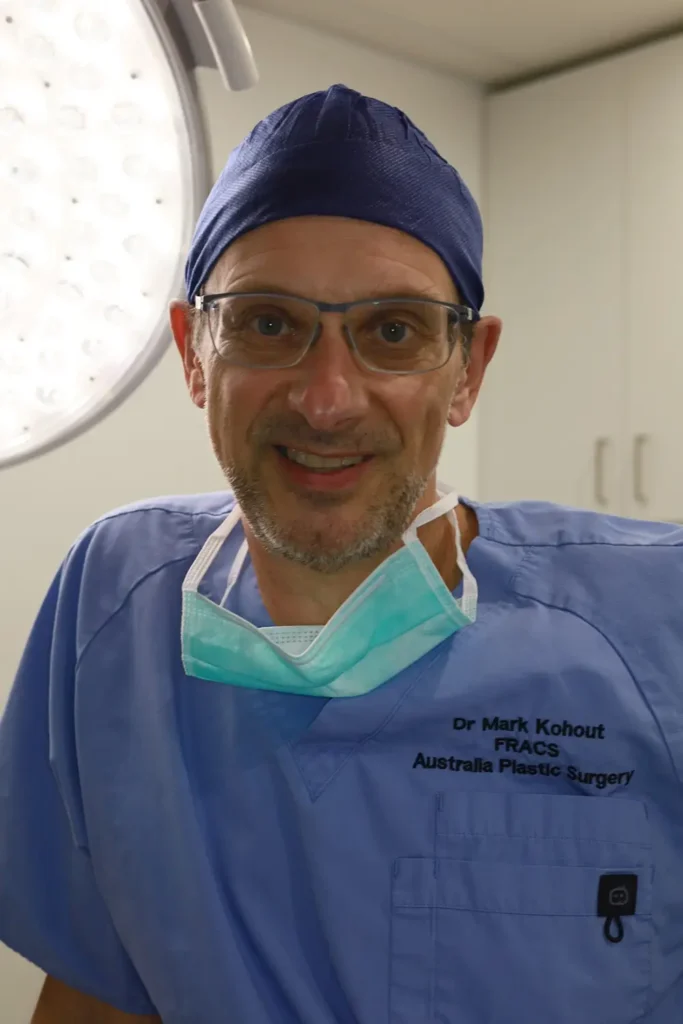
Dr. Mark Kohout
A qualified plastic surgeon who operates with care and integrity, based in central Sydney with over 20 years of experience in the cosmetic field. His extensive training and experience assures patients they are in highly trained surgical hands. Dr. Kohout is a dedicated, friendly professional who is committed to providing the high quality care, support and results, alongside his compassionate team.
Dr Mark Kohout (MED0001133000)
Specialist Plastic Surgeon
Specialist registration in Surgery – Plastic Surgery