


Brachioplasty, commonly known as an arm lift, is a surgical procedure that removes excess skin and fat from the upper arms. While often associated with aesthetic improvement, many individuals pursue this surgery for functional or medical concerns – such as skin irritation, hygiene issues, and physical discomfort.
One of the most frequently asked questions among patients is whether Medicare in Australia can cover all or part of the costs associated with brachioplasty. In this article, Dr Mark Kohout, a Specialist Plastic Surgeon in Sydney, outlines the important considerations around eligibility, documentation, costs, and the surgical process.
What Is Brachioplasty?
Brachioplasty is a reconstructive procedure that addresses the physical effects of excess skin and soft tissue on the upper arms. These changes typically follow:
- Significant weight loss through bariatric surgery or long-term lifestyle changes, which can leave behind large amounts of loose, hanging skin that does not retract naturally.
- Skin laxity due to the ageing process, where the skin loses elasticity over time, leading to drooping or sagging arms even without significant weight change.
- Genetic predisposition to upper arm fullness or redundant tissue, which may be resistant to diet and exercise and may contribute to self-consciousness or physical limitations.
Excess upper arm skin can lead to:
- Skin chafing and irritation, particularly in warm climates or during physical activity.
- Increased risk of fungal infections or dermatitis in the folds of hanging skin.
- Difficulty with personal hygiene, especially in elderly patients or those with mobility challenges.
- Reduced clothing options or discomfort wearing short sleeves, which can affect social and emotional well-being.
The procedure may be combined with liposuction to remove excess fat and optimise the contour of the upper arms.
Does Medicare Cover Plastic Surgery in Australia?
In Australia, Medicare supports procedures deemed medically necessary. Surgeries performed exclusively for cosmetic reasons are typically considered elective and are not subsidised.
Plastic surgery can fall into a grey area. Procedures like brachioplasty may be eligible for funding if they are performed to treat or prevent health issues rather than cosmetic appearance alone. Whether Medicare provides coverage depends on several key factors:
- Presence of functional symptoms, such as pain, reduced mobility, or hygiene issues caused by the redundant skin.
- Documented medical conditions, including skin infections, persistent irritation, or chronic inflammation.
- Demonstrated failure of conservative treatments, such as topical creams, physiotherapy, or lifestyle changes that have not resolved the symptoms.
Eligibility is assessed on a case-by-case basis and must meet specific clinical and Medicare Benefits Schedule (MBS) requirements.
When Can Brachioplasty Be Considered Medically Necessary?
Medicare may partially fund a brachioplasty when excess upper arm skin is shown to cause legitimate health concerns. The following conditions are usually required:
- Chronic skin issues: Such as recurrent rashes (intertrigo), bacterial or fungal infections, or dermatitis that persist despite appropriate treatment. These conditions may affect daily comfort and skin integrity.
- Physical limitations: Functional impairment due to the weight or bulk of excess skin. This may involve difficulty lifting the arms, restricted shoulder movement, or interference with physical activity and personal care.
- Psychological impact: Where the physical symptoms contribute to distress, anxiety, or avoidance behaviours – documented through clinical notes or psychological assessment.
- Stable, significant weight loss: Typically defined as a weight reduction of five or more BMI units that has remained stable for at least six months. This is to confirm the durability of the weight loss and need for permanent contour correction.
Supporting documentation should include medical photographs, clinical assessments, and a comprehensive treatment history from your GP or relevant specialist.
The Medicare Benefits Schedule (MBS) and Brachioplasty
The Medicare Benefits Schedule (MBS) is a list of services that are subsidised by the Australian Government. Brachioplasty may be included under specific item numbers associated with post-weight loss reconstructive procedures, such as:
- 30179: Lipectomy, other than lipectomy of the abdominal apron, excision of redundant skin and subcutaneous tissue, including direct closure of the wound, where the patient has lost a significant amount of weight and has maintained a stable weight for six months.
To be eligible under this MBS code, patients must:
- Demonstrate sustained weight loss of 5 or more BMI units, not due to pregnancy.
- Have symptoms that impact quality of life, including skin conditions or physical dysfunctions.
- Provide evidence that non-surgical options were trialled and found ineffective.
- Be referred by a registered medical practitioner, with supporting medical history and a recommendation from a Plastic Surgeon.
Dr Mark Kohout, Plastic Surgeon in Sydney, can assess your case and help determine if you meet the MBS criteria for funding.
What Medicare May Cover - and What It Doesn’t
Medicare may contribute to the cost of:
- Surgeon’s fees: Partial rebate based on MBS item number, although gaps may remain.
- Anaesthetist fees: Partial rebate if the surgery is eligible and performed in a recognised setting.
- Hospital charges: For procedures in public hospitals or approved private settings, where Medicare funding applies.
However, Medicare does not cover:
- Pre-operative consultations, unless bulk billed or part of a public clinic.
- Private hospital theatre or facility fees, unless coordinated with private insurance.
- Procedures performed purely for aesthetic reasons, even if requested by the patient.
- Adjunctive procedures, such as liposuction or scar revision, unless separately justified under MBS.
Patients should be prepared for gap payments, which vary by location, hospital type, and surgeon’s fees.
The Role of Private Health Insurance
Private health insurance may offer additional financial support for eligible procedures. Important factors to check include:
- Hospital policy type: Confirm whether your plan covers surgical reconstructions after weight loss. Lower-tier policies may exclude these benefits.
- Waiting periods: Typically 12 months for pre-existing conditions. If your weight loss or skin issues started before joining your policy, this may affect coverage.
- Gap cover and exclusions: Ask your insurer what percentage of surgeon and anaesthetist fees they will cover. Also check exclusions for cosmetic surgery clauses.
Dr Mark Kohout’s Sydney clinic may provide guidance and assist with pre-authorisation by your insurer, helping you navigate paperwork and item numbers.
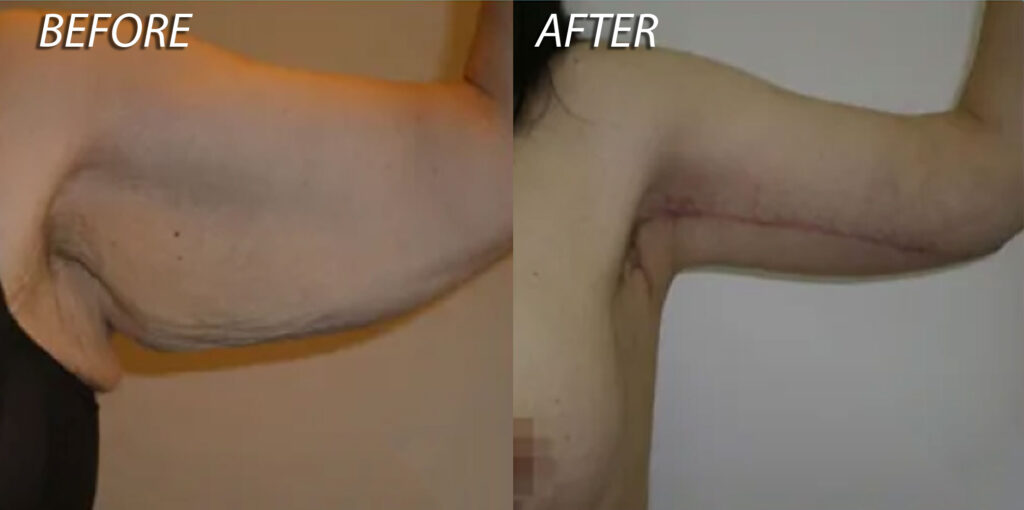
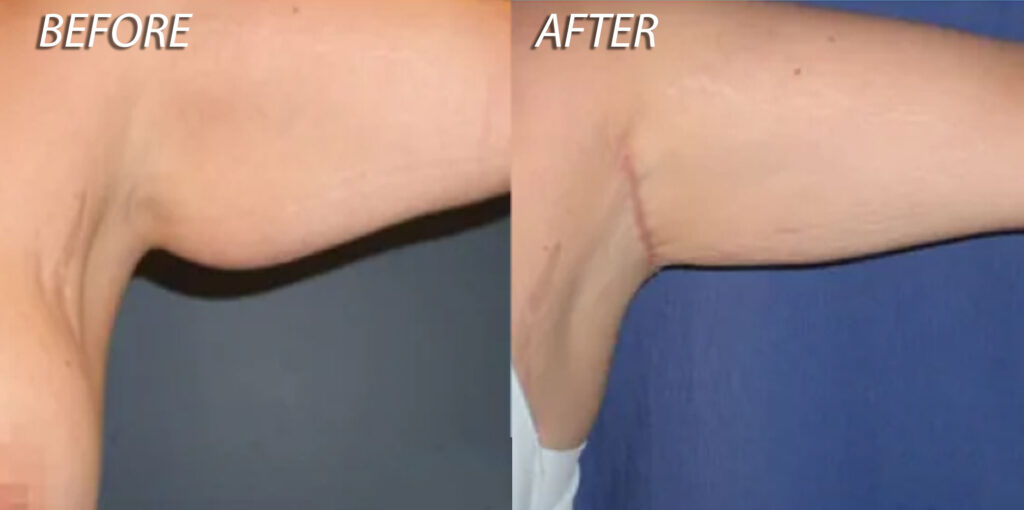
Arm Lift / Brachioplasty Before and After Images
Costs to Expect If You Pursue Brachioplasty
Even with Medicare or insurance assistance, there may be multiple costs to consider:
- Surgeon’s fee: Only partially rebated by Medicare. Ask for a detailed quote showing what is covered and what remains out-of-pocket.
- Anaesthetist fee: This varies depending on length and complexity of the procedure. Not all anaesthetists bulk bill.
- Hospital fees: Public hospitals may offer lower fees but have longer wait times. Private facilities allow more scheduling flexibility but usually involve higher charges.
- Post-operative care: Dressings, medications, compression garments, and follow-up appointments may involve additional expenses.
Dr Mark Kohout’s team gives all patients a transparent, itemised quote outlining expected costs, payment options, and timelines.
What to Expect: Procedure, Recovery & Risks
Brachioplasty surgery is performed under general anaesthetic and typically includes:
- Incision placement: Along the inner aspect of the upper arm, tailored to the extent of excess tissue.
- Tissue removal: Redundant skin and fat are removed through direct excision and/or liposuction.
- Contouring: The remaining tissue is tightened and reshaped, aiming for the desired definition.
- Wound closure: Sutures are placed internally and externally. In some cases, drains may be used temporarily.
- 1–2 weeks off work: Especially for physically demanding roles.
- Initial swelling and bruising: Peaks in the first few days, then gradually subsides.
- 4–6 weeks to resume exercise: Heavy lifting, upper body workouts, and raising arms overhead should be avoided during healing.
- Regular reviews: To monitor wound healing, assess scar formation, and manage complications if they arise.
Risks to Consider
All surgical procedures carry risks. With brachioplasty, specific concerns include:
- Bleeding or haematoma formation
- Wound breakdown or delayed healing, particularly in smokers or diabetic patients
- Infection requiring antibiotics or additional treatment
- Scar asymmetry or stretching due to skin tension
- Numbness or altered sensation in the upper arms
- Unsatisfactory cosmetic result, sometimes requiring revision surgery
Dr Mark Kohout discusses all potential risks and tailors the surgical approach to minimise complications while supporting long-term results.
FAQs About Medicare and Brachioplasty in Australia
Can Medicare cover brachioplasty if I have skin issues like rashes or infections?
Yes, if you experience chronic skin conditions such as rashes, infections, or dermatitis that do not improve with non-surgical treatments, Medicare may consider the procedure medically necessary. Your condition must be well-documented by your GP or specialist.
What medical documentation is required for Medicare to consider funding my arm lift?
To support a Medicare claim, you will typically need clinical photographs, a referral from a healthcare provider, documentation of weight loss (if applicable), and medical records showing failed conservative treatments and persistent symptoms.
Does my weight loss need to be recent for Medicare to fund brachioplasty?
No, but your weight loss must be substantial—at least five BMI points—and stable for a minimum of six months. Medicare requires evidence that the weight loss is long-term, not temporary or related to pregnancy.
Will Medicare support brachioplasty if I lost weight without surgery?
Yes, whether your weight loss was achieved through surgery or lifestyle changes, the key factors are the amount and stability of the weight lost and the impact of excess skin on your daily life.
Can my general practitioner start the Medicare application process for brachioplasty?
Your GP plays an important role by identifying medical concerns and referring you to a Specialist Plastic Surgeon. The final assessment and documentation for Medicare submission are typically coordinated by the specialist.
If I qualify for Medicare coverage, will my surgery be fully funded?
Medicare may contribute to part of the surgical costs if the procedure meets eligibility under an MBS item number. However, full funding is rare, and patients should expect some out-of-pocket expenses.
Is brachioplasty automatically covered if listed under the MBS?
No. Even if brachioplasty has an eligible MBS item number, individual circumstances must meet all outlined criteria. Approval depends on documented evidence and medical need—not just item listing.
Medical References
- Medicare Benefits Schedule. Australian Government Department of Health. https://www.mbsonline.gov.au/internet/mbsonline/publishing.nsf/Content/Home
- Health Economics. Wiley Online Library. https://onlinelibrary.wiley.com/journal/10991355 (This journal often publishes articles related to healthcare financing and policy, which can be relevant to understanding Medicare coverage.)
- Health Affairs. Project HOPE. https://www.healthaffairs.org/ (This journal frequently covers topics related to healthcare policy and financing, which can include discussions on Medicare coverage.)
- New England Journal of Medicine. Massachusetts Medical Society. https://www.nejm.org/ (While not specifically focused on Medicare, this journal often publishes articles on healthcare policy and financing.)
- Australian Health Review. CSIRO Publishing. https://www.publish.csiro.au/ahr (This journal covers various aspects of healthcare in Australia, including policy and financing.)
- Journal of Health Economics. Elsevier . https://www.journals.elsevier.com/journal-of-health-economics (This journal publishes articles on health economics, which can include discussions on healthcare financing and policy.)
- Medical Journal of Australia. Wiley Online Library. https://onlinelibrary.wiley.com/journal/1326943x
Why Consult Dr Mark Kohout – Specialist Plastic Surgeon, Sydney
Dr Mark Kohout is an experienced and compassionate Plastic Surgeon with over two decades of surgical experience. At his fully accredited clinic in Sydney, patients benefit from:
- Personalised treatment planning, including a comprehensive health evaluation
- Detailed explanation of the Medicare process, including item number qualification
- Evidence-based surgical techniques, prioritising both medical need and aesthetic outcome
- End-to-end care, from your first consultation through post-surgical reviews and beyond
Choosing a reputable Specialist Plastic Surgeon means your care meets national safety and quality standards.
Final Thoughts: Making an Informed Decision
If you are experiencing discomfort, functional limitations, or health concerns due to excess arm skin, brachioplasty may be a valid option. While Medicare may cover a portion of the costs under specific circumstances, patients should be fully informed and supported through the process.
A consultation with Dr Mark Kohout, Specialist Plastic Surgeon in Sydney, offers a valuable opportunity to assess your needs, understand Medicare eligibility, and plan your next steps with confidence.
To learn more or to schedule a consultation, visit the contact page.
Further Reading
- Read Dr Mark Kohout’s Blog on What is Invisible Armlift?
- Read Dr Mark Kohout’s Blog on Managing Arm Lift Scars: A Guide
- Read Dr Mark Kohout’s Blog on Recovery after Arm Lift Surgery (Brachioplasty)
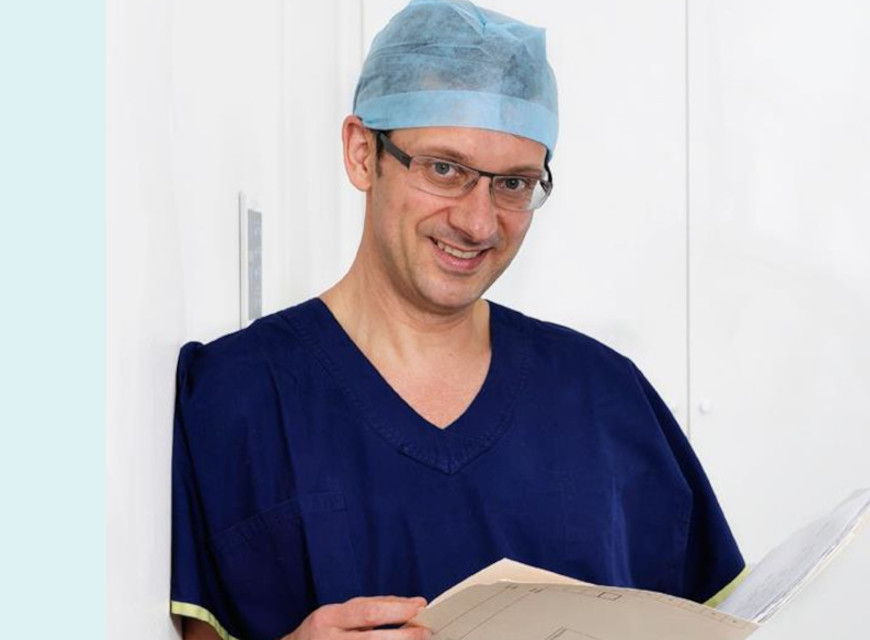
Experienced Plastic Surgeon
Dr. Mark Kohout

A qualified plastic surgeon who operates with care and integrity, based in central Sydney with over 20 years of experience in the cosmetic field. His extensive training and experience assures patients they are in highly trained surgical hands. Dr. Kohout is a dedicated, friendly professional who is committed to providing the high quality care, support and results, alongside his compassionate team.
Dr Mark Kohout (MED0001133000)
Specialist Plastic Surgeon
Specialist registration in Surgery – Plastic Surgery