

For patients researching body lift cost in Sydney, understanding what contributes to the overall fee is important because body lift surgery is individually planned rather than offered at a standard fixed price. The scope of surgery may vary considerably depending on the areas being treated, the amount and distribution of excess skin and tissue, previous surgery and scarring, general health, weight stability, anticipated operating time and hospital requirements. The total cost can therefore involve several components, including the Specialist Plastic Surgeon’s fee, anaesthetist and surgical assistant fees, hospital and operating theatre charges, surgical garments, preoperative investigations and postoperative care. As a general guide, Body Lift surgery in Sydney may start from approximately $30,000 and range to around $70,000, depending on individual circumstances. This is not a personalised quotation, and an individual cost estimate can only be provided after consultation and surgical planning.
A personalised quotation can only be prepared once the proposed procedure has been established through consultation and clinical assessment.
Dr Mark Kohout MBBS, FRACS Plast is a Specialist Plastic Surgeon in Sydney with more than 25 years of experience in aesthetic and reconstructive surgery, and body lift surgery forms part of his documented clinical services. During consultation, Dr Kohout assesses the patient’s anatomy, medical and surgical history, weight-loss history, functional concerns and the extent of surgery being considered before discussing the likely costs and treatment requirements. Body lift surgery performed solely for cosmetic reasons is generally self-funded; however, in selected cases involving documented functional concerns following significant weight loss, an applicable Medicare Benefits Schedule item and associated private health insurance benefits may be considered. Eligibility depends on the individual circumstances and current Medicare and insurer requirements and cannot be determined from a general online enquiry alone.
How Much Does a Body Lift Cost in Sydney?
There is no single body lift price that accurately applies to all patients.
The term “body lift” can refer to operations of different scope. One patient may require treatment focused on the lower abdomen and flanks, while another may be considering a circumferential procedure involving tissue around the abdomen, hips and lower back. Differences in anatomy, previous operations, scar position, tissue distribution and hospital requirements can all affect the final fee.
The proposed operation may also be planned as a standalone procedure or as one stage of a broader surgical plan. In some circumstances, separating procedures may be considered more clinically appropriate than performing several operations during one admission.
For these reasons, publishing one general body lift surgery cost may create an inaccurate expectation. A written quotation should be based on the operation discussed during consultation rather than a generic procedure label.
The quotation should identify the expected professional and facility fees, what is included, what is charged separately and how long the estimate remains valid.
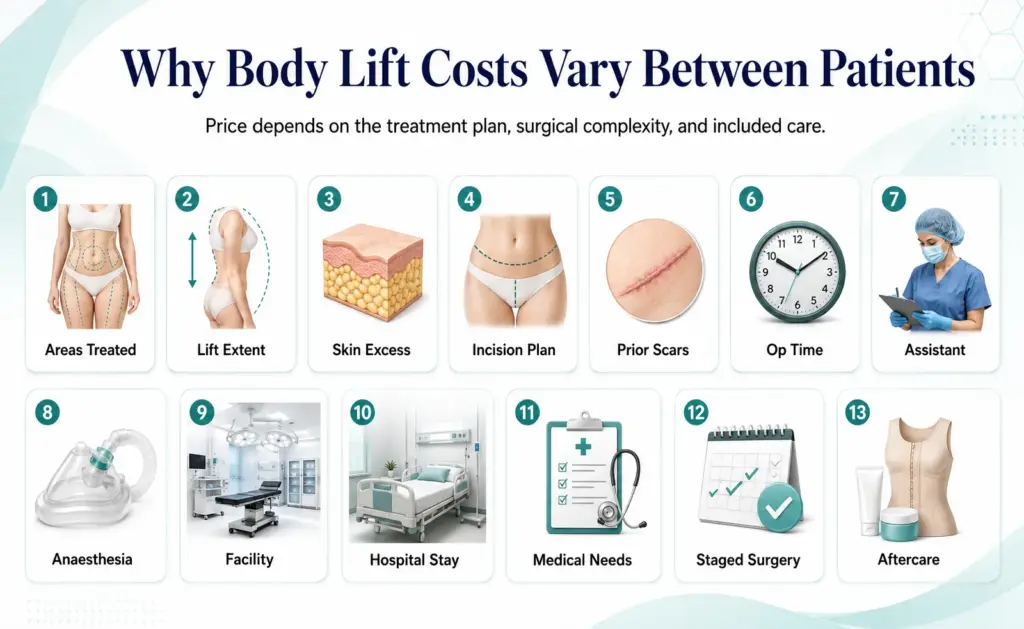
Why Body Lift Costs Vary Between Patients
Body lift fees are influenced by the extent and complexity of the proposed operation. Even patients with a similar history of weight change may require different surgical plans.
Factors that may affect the total body lift price include:
- The number and location of areas being treated
- Whether the operation is limited or circumferential
- The amount and distribution of excess skin and tissue
- The position and length of planned incisions
- Existing scars from previous operations
- The expected operating time
- The need for an assistant surgeon
- Anaesthetic requirements
- The hospital or operating facility used
- The expected length of hospital admission
- Medical conditions requiring additional assessment or monitoring
- Whether surgery is performed in one operation or divided into stages
- The tests, garments and postoperative care included in the quotation
A patient’s weight history may also be relevant. Body lift surgery is often considered after substantial weight change, but each patient’s circumstances differ. Weight stability, nutrition, smoking or nicotine exposure, medications, previous bariatric surgery and general health can influence surgical planning.
An online form, photograph or telephone discussion cannot provide all the clinical information needed to determine the extent of surgery. Examination is required to assess tissue distribution, existing scars, skin condition and whether the operation being researched is appropriate for the patient.
What Fees Are Included in Body Lift Surgery Cost?
A complete body lift cost may consist of several separate charges. Patients comparing quotations should determine whether the amount shown represents only the surgeon’s fee or the broader estimated cost of treatment.
Specialist Plastic Surgeon’s Fee
The surgeon’s fee reflects the proposed operation, its complexity and expected operating time. It may cover:
- Preoperative surgical planning
- Performance of the agreed operation
- Routine postoperative reviews specified in the quote
- Standard wound assessments arranged by the practice
The quotation should state what postoperative care is included and whether there are circumstances in which an additional consultation or treatment fee may apply.
Dr Mark Kohout’s fee can only be determined after the proposed body lift has been assessed and discussed. His current procedure information identifies body lift surgery as part of his documented scope of practice.
Surgical Assistant’s Fee
An accredited surgical assistant may be involved, depending on the operation and hospital arrangements. Assistant fees are commonly billed separately.
Patients should ask whether the estimated assistant fee appears in the main quotation or will be issued as a separate account.
Anaesthetist’s Fee
Body lift surgery is generally performed under general anaesthesia. The anaesthetist’s fee may vary according to:
- Expected operating time
- Medical history
- Required monitoring
- The anaesthetist’s billing arrangements
- Whether additional postoperative assessment is required
The anaesthetist may provide a separate estimate once the operation, hospital and expected duration have been confirmed.
Hospital and Operating Theatre Fees
Hospital charges may include:
- Operating theatre use
- Hospital accommodation
- Nursing care
- Standard medical supplies
- Equipment used during the admission
- Medications administered in hospital
- The planned duration of the admission
Facility fees can vary according to the hospital, operating time and number of nights required. An extended admission or additional monitoring may result in further charges.
Patients should confirm whether the hospital estimate includes all anticipated facility costs and whether an excess or co-payment applies under their private health insurance policy.
Surgical Garments and Dressings
The surgical plan may involve compression garments, dressings or wound-care supplies. These items may be included in the practice fee or charged separately.
The written quotation should clarify whether it includes:
- Initial compression garments
- Replacement garments
- Routine dressings
- Additional wound-care supplies
- Post-discharge nursing services, where applicable
Preoperative Tests and Medical Assessments
Some patients require investigations or medical review before surgery. These costs may not form part of the surgical quotation.
Possible additional services include:
- Blood tests
- Medical clearance
- GP appointments
- Specialist assessment
- Imaging where clinically indicated
- Nutritional assessment
- Prescribed medications
The investigations required depend on the patient’s health, medical history and the extent of the proposed operation.
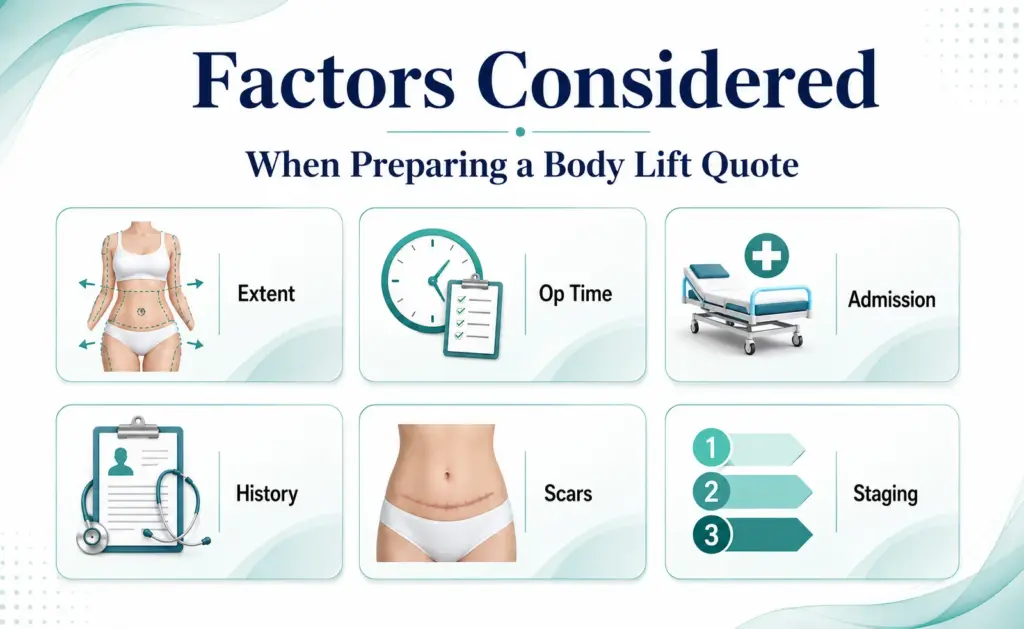
Factors Considered When Preparing a Body Lift Quote
A personal quotation is prepared only after the proposed procedure has been defined. The following factors may be considered during that process.
- Extent of Surgery – A procedure addressing a limited area may involve different operating and hospital requirements from a circumferential lower body lift. The cost must relate to the actual operative plan rather than the general name of the procedure.
- Operating Time – Professional and facility fees often relate partly to the expected length of surgery. A longer operation may increase surgeon, anaesthetist, assistant and theatre costs.
- Hospital Admission – The expected duration of admission affects hospital charges. The recommended stay depends on the extent of surgery, general health and postoperative monitoring requirements.
- Medical History – Relevant considerations can include cardiovascular or respiratory conditions, diabetes, anaemia, history of blood clots, previous bariatric surgery, current medications and smoking or nicotine use.
These issues may lead to further testing, specialist review or changes to the proposed treatment plan. - Previous Surgery and Existing Scars – Previous abdominal or body surgery may influence incision planning, tissue circulation and operative complexity. Existing scars must be examined before an appropriate plan and estimate can be prepared.
- Staged Surgery – Some patients enquire about combining a body lift with other procedures. Whether procedures can be performed together is a clinical decision rather than a pricing decision.
Where separate stages are advised, each operation should have its own written quotation, hospital estimate and recovery plan.
Is Body Lift Surgery Covered by Medicare?
Medicare does not provide benefits for surgery performed solely for cosmetic purposes.
Selected lipectomy procedures may qualify for an MBS item where the patient’s condition, functional concerns and proposed operation satisfy all parts of the current item description. The use of an MBS item depends on documented clinical circumstances and cannot be determined solely because a patient has lost weight or has been referred for surgery.
Current MBS guidance defines significant weight loss for specified lipectomy items as a reduction equivalent to at least five body mass index units. It also requires the patient’s weight to have remained stable for at least six months before the relevant operation. MBS guidance expressly states that benefits are unavailable for surgery performed for cosmetic purposes.
One current item relating to non-abdominal areas refers to removal of redundant skin and lipectomy for functional problems following the defined degree of significant weight loss, together with the required period of weight stability. The complete wording, exclusions and associated-item rules must be considered.
Depending on the item being assessed, relevant documentation may include:
- Weight history
- Evidence of weight stability
- Functional symptoms
- Examination findings
- Previous management
- Medical records
- A referral or supporting clinical information
Meeting one requirement does not establish eligibility by itself. The patient must satisfy the complete MBS description, and the proposed operation must correspond with the service described by that item.
A Medicare rebate is a contribution toward an eligible medical service. It does not represent the complete cost of surgery and may leave a substantial gap between the scheduled benefit and the practitioner’s fee.
Current item wording should always be checked at the time of assessment because MBS requirements and benefit amounts can change.
Can Private Health Insurance Contribute to Body Lift Fees?
Private health insurance may contribute in selected medically indicated cases when:
- An applicable MBS item number is used
- The patient meets the complete MBS criteria
- The policy includes the relevant hospital treatment category
- Required waiting periods have been served
- No applicable exclusion or restriction prevents payment
- The admission takes place at a facility recognised by the insurer
Depending on the policy, the insurer may contribute to eligible hospital accommodation, operating theatre costs and part of certain medical fees.
Patients may still need to pay:
- A hospital excess
- A policy co-payment
- The gap between the surgeon’s fee and available benefits
- An anaesthetist’s gap
- An assistant’s fee or gap
- Charges for non-covered items
- Costs associated with additional care
Holding private hospital insurance does not mean that a body lift will be covered. Policies differ in their inclusions, exclusions, restrictions and waiting periods.
After receiving information about any proposed MBS item, patients should contact their health fund and ask:
- Is this item included under my current policy?
- Have all waiting periods been served?
- Is the proposed hospital covered?
- What excess or co-payment will apply?
- Are there restrictions affecting the admission?
- What medical or hospital gaps should I expect?
- Can the benefit information be provided in writing?
The practice can provide relevant procedural information but cannot determine or guarantee the insurer’s payment decision.
What Is the Out-of-Pocket Cost?
The body lift out-of-pocket cost is the amount the patient is expected to pay after any confirmed Medicare and private health insurance benefits have been applied.
A simplified calculation is:
Estimated surgeon, assistant, anaesthetist and hospital fees, plus other applicable costs, minus confirmed Medicare and health-fund benefits, equals the estimated out-of-pocket cost.
The remaining amount may include:
- The surgeon’s fee gap
- The anaesthetist’s fee gap
- An assistant’s fee
- Hospital excesses or co-payments
- Garments and dressings
- Preoperative testing
- Prescribed medications
- Services excluded under the policy
- Further care outside the original quote
Where the operation is cosmetic and has no applicable MBS item, the patient will generally be responsible for the full cost of the surgeon, anaesthetist, hospital and associated services.
A written estimate can reduce uncertainty, but it cannot account for every possible unplanned service. Patients should ask how additional hospital care, investigations or treatment outside the original quotation would be billed.
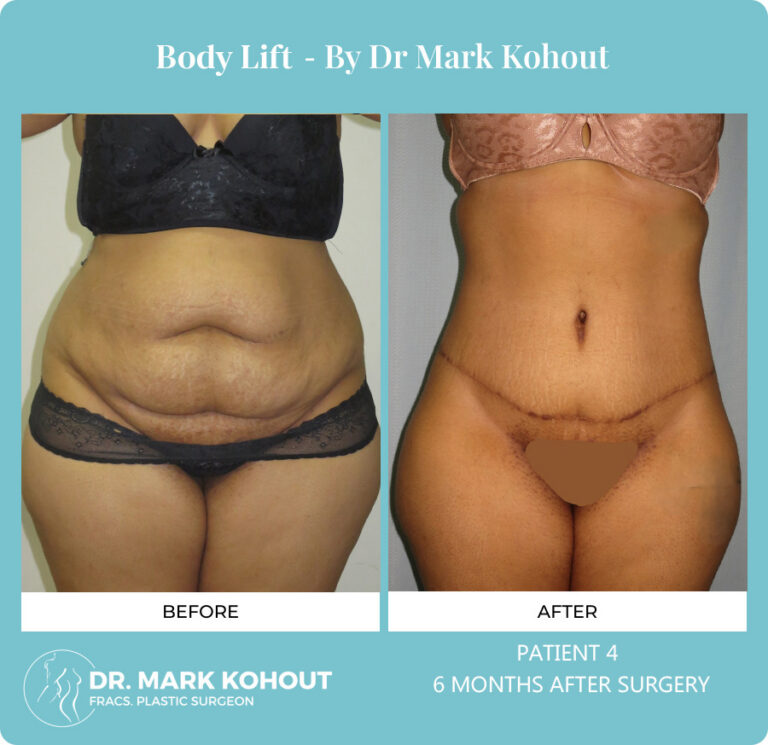
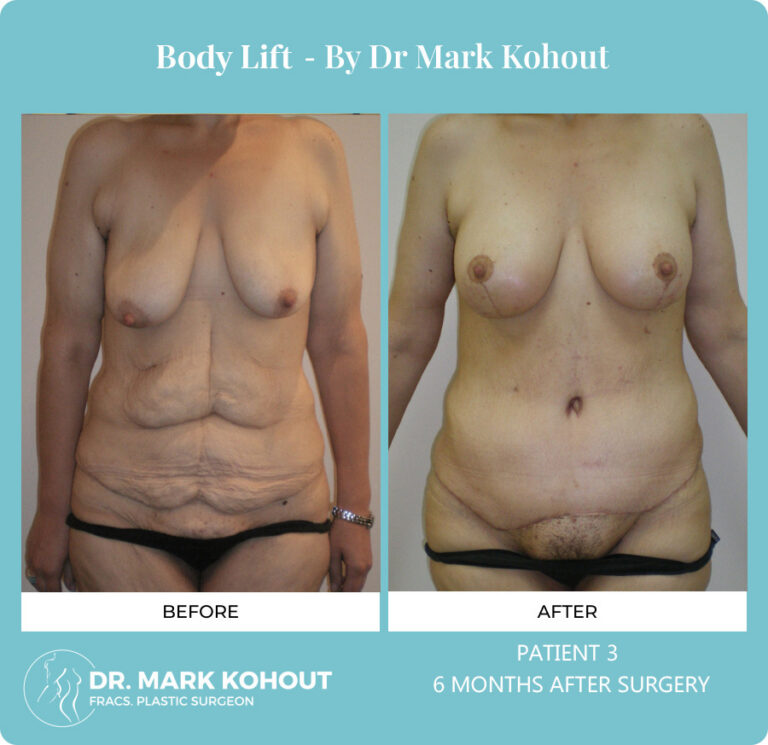
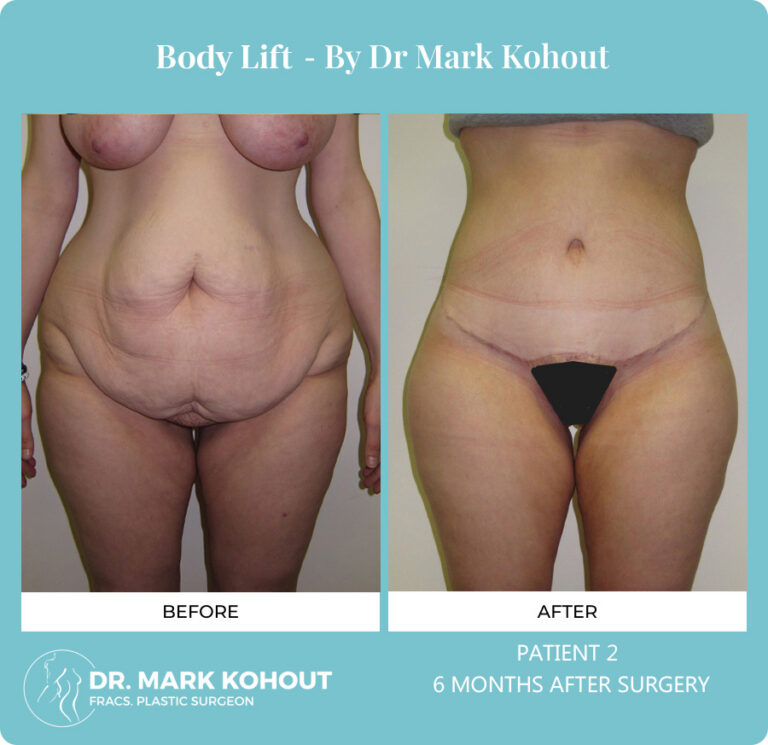
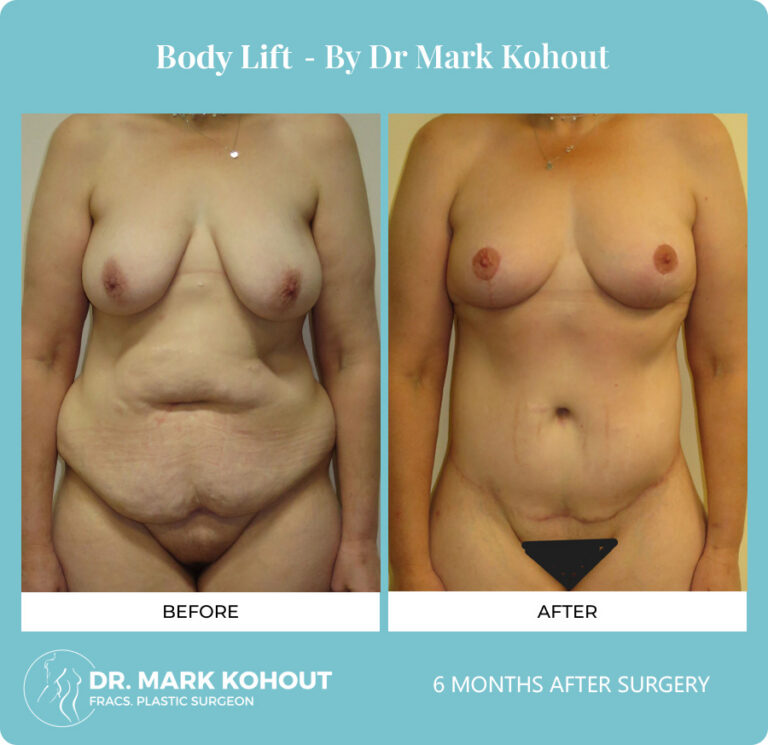
Before and After Photos of Body Lift Surgery
Before and after images may be available during consultation where appropriate. Images should be viewed as examples of individual patient cases, not as a prediction of your own outcome. They should not create an expectation that the same result can be achieved for another patient. Outcomes vary depending on anatomy, healing and surgical plan.
Disclaimer
Individual results vary due to personal health factors and genetics, and all surgical procedures carry inherent risks that should be discussed with a qualified health professional.
Why Is Consultation Required Before a Personal Quote?
A consultation is a clinical assessment, not merely a pricing appointment.
During the consultation, Dr Mark Kohout will need to consider the patient’s concerns, health, anatomy and treatment options before defining a proposed operation.
The assessment may include discussion of:
- The patient’s reasons for considering surgery
- Weight history and current weight stability
- Previous bariatric or body surgery
- Existing scars
- Current medical conditions
- Medications and supplements
- Smoking or nicotine exposure
- The distribution of excess skin and tissue
- Functional symptoms
- Alternative management options
- Material risks and limitations
- Expected recovery requirements
- Postoperative support
Not every patient who requests body lift surgery will necessarily be an appropriate candidate. A different procedure, staged approach, further medical assessment or a period of additional preparation may be discussed.
Once the proposed operation has been established, the patient can be given information about the likely surgeon’s fee and related charges. Anaesthetist and hospital estimates may be provided separately.
The written financial information should identify:
- The operation on which the quote is based
- The surgeon’s fee
- Any anticipated assistant fee
- Hospital and anaesthetist estimates or contact details
- Items included in routine postoperative care
- Potential separately billed costs
- The period for which the estimate remains valid
- Any relevant MBS item information, where applicable
Comparing Body Lift Prices in Sydney
Patients researching body lift prices should compare the full scope of each quotation rather than comparing headline figures alone.
Useful questions include:
- Is each quote based on the same operation?
- Which areas are included in the surgical plan?
- Does the estimate include the surgeon, assistant, anaesthetist and hospital?
- How many nights of hospital care are allowed for?
- Are garments and routine dressings included?
- Which postoperative appointments are included?
- Are preoperative tests billed separately?
- How long is the quotation valid?
- What happens if the operative plan changes?
- How are additional hospital costs handled?
- Who will perform the operation?
- What recognised specialist registration does the practitioner hold?
- At which facility will the operation take place?
- What postoperative contact arrangements are available?
- Has Medicare eligibility been assessed?
- Has the insurer confirmed benefits in writing?
Price does not establish the likely outcome of an operation. The practitioner’s recognised qualifications, proposed procedure, material risks, hospital arrangements, postoperative care and the patient’s individual health circumstances should also be considered.
Cosmetic and Medically Indicated Body Lift Surgery
The terms “body lift,” “lower body lift,” “circumferential body lift” and “belt lipectomy” may be used differently across websites and general discussions.
Medicare does not determine eligibility according to a website label. Assessment depends on the procedure performed and the precise wording of the applicable MBS item.
A body lift may also contain several operative components. One component may potentially correspond with an MBS item while another may not. This must be assessed individually.
Where surgery is undertaken only to alter appearance, the costs are generally self-funded. Where documented functional problems and the proposed operation satisfy a current MBS item description, a Medicare rebate and related private hospital benefits may be available.
Neither prior weight-loss surgery nor a substantial reduction in weight automatically establishes eligibility.
Paying for Body Lift Surgery
Before proceeding, patients should consider the complete estimated cost as well as possible expenses associated with time away from work, travel, support at home, medications and unplanned care.
Some patients consider third-party finance or apply for early release of superannuation. These options involve separate eligibility criteria, legal terms and financial consequences.
Approval is not guaranteed by the treating practitioner. Accessing retirement savings can affect long-term finances, and commercial credit products may involve interest, fees and repayment obligations.
Patients considering either option should review the relevant government or provider requirements and seek independent financial advice where appropriate. Payment arrangements should not replace clinical consideration of whether surgery is suitable.

Body Lift Cost FAQs
How much does a body lift cost in Sydney?
Body lift cost in Sydney varies between patients because the procedure is planned according to individual anatomy, the areas being treated, operating time, hospital requirements and anaesthetic needs. A personalised written quotation can only be provided after consultation and clinical assessment.What fees are included in the total body lift price?
The total body lift price may include the Specialist Plastic Surgeon’s fee, surgical assistant fees, anaesthetist fees, hospital and operating theatre charges, surgical garments, dressings, preoperative tests and postoperative appointments. Patients should request a written breakdown showing what is included and which costs are billed separately.Is body lift surgery covered by Medicare?
Medicare does not provide benefits for body lift surgery performed solely for cosmetic reasons. In selected medically indicated cases, an applicable Medicare Benefits Schedule item may be considered where all current clinical criteria are met. Eligibility must be assessed individually and cannot be guaranteed before consultation.Can private health insurance contribute to body lift costs?
Private health insurance may contribute to eligible hospital and medical costs when an applicable Medicare item number is used and the patient’s policy provides the required level of cover. Waiting periods, exclusions, restrictions, excesses and gap payments may apply. Patients should confirm their benefits directly with their insurer.What is the out-of-pocket cost for body lift surgery?
The out-of-pocket cost is the amount remaining after any applicable Medicare rebate and confirmed private health insurance benefits have been deducted from the total fees. It may include surgeon, anaesthetist and assistant gaps, hospital excesses, garments, medications, investigations and services not covered by the patient’s policy.Can I receive an exact body lift price before consultation?
An exact body lift price cannot be provided without a clinical assessment. The consultation allows the surgeon to assess the amount and distribution of excess skin and tissue, previous scars, medical history, weight stability and the extent of surgery that may be appropriate. These factors determine the operative plan and associated fees.Can the final body lift cost change after I receive a quote?
A written quotation should outline the proposed procedure, expected fees, inclusions and validity period. The final cost may change if the surgical plan is revised, additional investigations are required, the hospital stay is extended or further care is needed outside the original quotation. Any known changes should be discussed before surgery where possible.Medical References
- Trends in Medicare Reimbursement for Body Contouring Procedures: 2009–2018 – Plastic and Reconstructive Surgery – Global Open. https://journals.lww.com/prsgo/fulltext/2021/02001/15__trends_in_medicare_reimbursement_for_body.16.aspx
- 2022 Plastic Surgery Statistics – Average Surgeon Fees – American Society of Plastic Surgeons. https://www.plasticsurgery.org/documents/news/Statistics/2022/cosmetic-procedures-average-cost-2022.pdf
- What Are the Average Costs for Plastic Surgery Procedures? – The Aesthetic Society. https://www.theaestheticsociety.org/patient-resources/cost/average-plastic-surgery-costs
- A Comprehensive Review of Surgical Body Contouring – Plastic and Reconstructive Surgery. https://pmc.ncbi.nlm.nih.gov/articles/PMC12375336/
- Optimizing Costs in Plastic Surgery: A Systematic Review – Jefferson Department of Surgery Faculty Publications. https://jdc.jefferson.edu/cgi/viewcontent.cgi?article=1392&context=surgeryfp
- Safety and Outcomes in Plastic Surgery Medical Tourism – Plastic and Reconstructive Surgery. https://pmc.ncbi.nlm.nih.gov/articles/PMC12466894/
- A Regional Analysis of Medicare Reimbursement Rates for Plastic Surgery – American Association of Plastic Surgeons. https://meeting.aaps1921.org/program/2025/32.cgi
Body Lift Consultation in Glebe, Sydney
Dr Mark Kohout MBBS, FRACS Plast is a Specialist Plastic Surgeon with more than 25 years of experience in aesthetic and reconstructive surgery, and body lift surgery forms part of his documented clinical services. Consultations are available at Australia Plastic Surgery, Suite 2, 37 Bay St, Glebe, Sydney NSW 2037, where patients can discuss the proposed procedure, medical history, material risks, alternatives, expected recovery and likely fee components.
As costs vary between patients, a personalised written quotation can only be provided after clinical assessment, and Medicare or private health insurance eligibility cannot be confirmed through a general website enquiry. Patients may find it helpful to bring a referral, relevant medical records, a current medication list, weight history and private health insurance details to their appointment. To receive information tailored to your circumstances, arrange a consultation with Dr Mark Kohout at Australia Plastic Surgery in Glebe.
Take our Plastic Surgery Quiz to find out if you’d be a good candidate and if you are ready for cosmetic surgery.
Further Reading
- View Body Lift Surgery Gallery
- Read more about Body Procedures
- Read more about Abdominoplasty / Tummy Tuck Sydney
- Read more about Liposuction Sydney
- Read more about Costs and Finance Page
- Read more about Using Your Superannuation to Pay for Surgery
- Read more about Risks and Complications of Plastic Surgery
Welcome to the Practice of
Dr. Mark Kohout
With over 25 years of experience and Harvard training, Dr. Mark Kohout offers experienced plastic and reconstructive surgery at his Sydney and Orange clinics. His patient-first approach focuses on delivering safe, natural results tailored to your unique goals.
What's Next?
Whether you are ready for a professional evaluation or just have a quick question, we’ve made it easy to connect with our team. Choose the option that best fits your needs below.
Book your Consultation
Take the first step toward your goals by filling out the brief form below. This information helps us understand your specific needs so we can make the most of our time together during your session. Once you submit your details, a member of our team will review your request and reach out shortly to confirm your appointment.
Patient Photo Assessment
Sending photos for a patient photo assessment can help you and your plastic surgeon prepare for your consultation. By reviewing clear, accurate photos, Dr Kohout can provide preliminary patient photo assessment like insights, assess your needs, and determine the right approach for your procedure.
Tips for Uploading Photos
ASK A FRIEND
Friend takes photo
GOOD LIGHTING
Plain wall, bright light
ALL ANGLES
Front / sides/ 45°
CLEAR & SHARP
No portrait mode
SEND ORIGINALS
No edits or compression

Experienced Plastic Surgeon
Dr. Mark Kohout

A qualified plastic surgeon who operates with care and integrity, based in central Sydney with over 20 years of experience in the cosmetic field. His extensive training and experience assures patients they are in highly trained surgical hands. Dr. Kohout is a dedicated, friendly professional who is committed to providing the high quality care, support and results, alongside his compassionate team.
Dr Mark Kohout (MED0001133000)
Specialist Plastic Surgeon
Specialist registration in Surgery – Plastic Surgery

25
Years of Experience
Years of Delivering Exceptional Cosmetic Care.

10000+
Surgical Procedures
Procedures performed by our qualified surgeons.

15+
Available Treatments
Cosmetic treatment options tailored to your needs.
Our Trusted
Accreditations





Dr Mark Kohout is a qualified plastic surgeon based in central Sydney, with over 20 years of experience in the field of cosmetic and reconstructive surgery. He draws on extensive surgical training and clinical experience to tailor care to the individual needs and goals of each patient.
Dr Kohout is known for his thoughtful, patient-centred approach, guiding individuals through each stage of their surgical journey — from initial consultation to post-operative care. Working alongside a compassionate and professional team, he is committed to providing high standards of care in a supportive and respectful environment.
Explore
Locations
- Suite 2, 37 Bay St, Glebe, Sydney, NSW 2037
- Level 5, 1521 Forest Rd, Orange NSW 2800
©2024 All Rights Reserved