

Recovery after body lift surgery is an important part of the decision-making process. The areas treated, extent of surgery, anaesthetic requirements, medical history, mobility, work demands and individual healing capacity can all affect post-operative care. For this reason, body lift recovery varies between patients, and general online timelines should not be treated as personalised medical advice.
Dr Mark Kohout MBBS (Syd), FRACS (Plast), Specialist Plastic Surgeon, provides recovery guidance after consultation, clinical assessment and development of an individual surgical plan. This page explains common recovery considerations, including swelling, wound care, drains, activity restrictions, return to work and follow-up appointments. No recovery timeframe or surgical result can be guaranteed, and patients should follow the advice provided by their treating surgical team.
Why Does Body Lift Recovery Vary?
Body lift recovery is influenced by both the operation performed and the health characteristics of the individual patient.
The term “body lift” can describe several surgical approaches. A lower body lift may involve the abdomen, hips, lower back and buttock region. Another operation may involve fewer areas or use different incision patterns. Some patients may also undergo abdominal muscle repair, liposuction or another procedure as part of the same surgical plan.
Factors that may affect recovery include:
- The number and location of areas treated
- The amount of skin and tissue removed
- The length and position of incisions
- Whether surgery extends around the torso
- Whether muscle repair or liposuction is included
- Operating time and anaesthetic requirements
- Previous abdominal or body surgery
- Primary or revision surgery
- Age, general health and mobility
- Smoking or vaping history
- Diabetes or other medical conditions
- Medications and supplements
- Nutrition and weight stability
- Skin quality and tissue characteristics
- Individual wound-healing capacity
- Work, caregiving and household demands
- Adherence to post-operative instructions
Some patients may require a longer recovery period or additional treatment because of the extent of surgery, wound healing or other clinical factors. An individual assessment is required before more specific recovery information can be provided.

What Happens Immediately After Body Lift Surgery?
After surgery, patients are transferred to a monitored recovery area while the effects of anaesthesia wear off. Nursing and anaesthetic staff may assess breathing, circulation, blood pressure, discomfort, nausea, dressings and wound sites.
Drains may be present depending on the operation. These are used in selected cases to remove fluid from the surgical area. Dressings, surgical tapes or a compression garment may also be applied.
The duration of observation depends on the extent of surgery, anaesthetic, medical history and early post-operative findings. Some patients may require an overnight or longer hospital stay. The appropriate arrangement can only be determined from the surgical plan and clinical progress.
Before discharge, patients may receive:
- Written recovery instructions
- Medication directions
- Wound and drain-care information
- Activity and movement precautions
- Details of follow-up appointments
- Contact information for post-operative concerns
- Instructions about symptoms requiring urgent medical care
A responsible adult may need to collect the patient and remain available after discharge. Patients should not travel home alone unless the treating team has confirmed that this is appropriate.
Common Experiences During Body Lift Recovery
Patients may experience several temporary physical changes after body lift surgery. Their severity, location and duration differ between individuals.
Common recovery experiences can include:
- Swelling
- Bruising
- Tenderness or discomfort
- Tightness around incision sites
- Fatigue
- Reduced mobility
- Temporary difficulty standing fully upright
- Numbness, tingling or altered sensitivity
- A pulling sensation with movement
- Fluid drainage around drain sites
- Changes in posture or sleeping position
Swelling may involve the abdomen, hips, lower back, thighs or other treated regions. It may fluctuate and can become more noticeable after activity. Bruising may also change colour as it resolves.
Temporary numbness or sensitivity can occur because skin and underlying tissues have been repositioned. Sensory changes may take time to settle, and some changes may persist.
Patients should not assume that every symptom is part of routine recovery. Increasing pain, sudden swelling, worsening redness, wound discharge or other unexpected changes should be discussed with the treating team.
General Body Lift Recovery Timeline
Any body lift recovery timeline should be considered general only. Dr Kohout will provide instructions based on the procedure performed, health factors, healing progress and clinical findings at review appointments.
The First 24–48 Hours
During the early recovery period, patients may require assistance with getting out of bed, walking, meals, medication and personal care.
Movement may initially feel restricted because of swelling, dressings and tension around the incisions. The surgical team may advise a particular posture or sleeping position to reduce strain on the treated area.
Patients should take prescribed medication according to the supplied directions. Medication doses should not be altered without medical advice.
Short periods of medically advised movement may be recommended to reduce prolonged immobility. However, movement instructions depend on the procedure, and patients should avoid lifting, stretching or placing tension on the incisions.
The First Week
Swelling, bruising, tightness and fatigue may remain noticeable during the first week. Dressings, tapes, drains or compression garments may still be required.
Patients may need help with:
- Preparing meals
- Household duties
- Childcare or pet care
- Transport
- Showering or personal care
- Attending appointments
Strenuous activity, lifting and excessive bending should be avoided until the surgeon advises otherwise. Patients should follow their individual hygiene and wound-care instructions rather than general online recommendations.
A review appointment may be arranged to assess wounds, dressings, drains, swelling and general progress.
Two to Six Weeks
Some patients may gradually resume selected daily activities during this stage, provided their treating team considers it appropriate.
Swelling, tightness, fatigue and sensory changes may still be present. The timing of drain removal, dressing changes or garment use varies between patients.
Return to work depends on the operation and occupational demands. Desk-based duties may require different planning from work involving lifting, bending, driving, prolonged standing or manual handling.
Exercise should not resume according to an online timetable. Walking, lifting, gym activity and other forms of exercise should be progressed only after clinical review.
Longer-Term Recovery
Longer-term body lift recovery may involve ongoing changes in swelling, sensation and scar appearance.
Scars can remain pink, red, firm, raised or uneven for a period before they mature. Their final appearance varies, and scars remain permanent.
Residual swelling and altered sensation may also continue. Some patients require additional appointments, wound care, scar management or other treatment.
No particular week or month can be described as the point at which every patient has fully recovered.
Pain Management and Medication
Discomfort after body lift surgery varies between patients. Medication recommendations depend on the operation, medical history, allergies and other medicines being taken.
Patients may receive instructions regarding:
- Prescribed pain medication
- Antibiotics, when prescribed
- Medication for nausea
- Medication related to blood-clot prevention
- Medicines or supplements that should be avoided
- Timing and dosage requirements
Only approved medication should be taken during recovery. Patients should discuss non-prescription medicines, herbal preparations and supplements with the treating team before using them.
Some medicines can cause drowsiness, nausea, constipation or other side effects. Patients should not drive, operate machinery or make important decisions while affected by anaesthesia or sedating medication.
Pain that is increasing, severe or not responding to the recommended medication should be reported. Patients should not increase their dose unless instructed to do so by an appropriate medical practitioner.
Drains, Wound Care and Dressings
Wound-care requirements depend on the location and length of the body lift incisions.
Some patients may have drains after surgery. Where drains are used, instructions may include how to support them, measure output and identify changes that require review.
Patients may be advised to:
- Keep dressings clean and dry
- Avoid removing tapes without instruction
- Wash their hands before wound or drain care
- Record drain output
- Avoid applying unapproved creams or products
- Follow specific showering instructions
- Wear a prescribed garment as directed
- Attend appointments for wound and drain assessment
Patients should contact the clinic about increasing redness, heat, swelling, bleeding, unpleasant odour, wound separation or discharge.
Delayed wound healing can occur after body lift surgery. In some cases, additional dressings, clinical reviews, antibiotics, drainage or another procedure may be required.
Scar Management After a Body Lift
Body lift surgery involves permanent scars. Their length and location depend on the areas treated and the operative plan.
During early healing, scars may appear pink, red, raised, firm or uneven. Their colour and texture may change over many months.
Scar appearance is influenced by factors including:
- Genetics
- Skin characteristics
- Incision location
- Tension across the wound
- Smoking or vaping
- Infection
- Delayed wound healing
- Sun exposure
- Individual scar formation
Silicone products, tapes, massage or other scar-care measures should be used only when recommended by the treating surgeon. These measures may not be suitable until the incision has healed sufficiently.
Sun protection may be advised because ultraviolet exposure can affect the colour of a healing scar.
Scar appearance cannot be predicted or guaranteed. Prominent, widened, raised or uneven scars may develop, and additional management may be considered in selected cases.

Swelling, Bruising and Sensation Changes
Swelling and bruising may occur after body lift surgery. The degree and duration vary according to the procedure and the individual patient.
Swelling may fluctuate with movement, posture, time of day and activity. Bruising may change colour before it resolves.
Patients may also experience numbness, tingling, sensitivity or tightness around the treated areas. These symptoms can change as healing progresses. Some sensory changes may continue over a longer period or may not resolve completely.
Sudden, severe, one-sided or rapidly increasing swelling should be assessed. Patients should also seek advice if swelling occurs with worsening pain, redness, shortness of breath, chest discomfort or calf symptoms.
Compression Garments
A compression garment may be recommended after some body lift procedures. The type of garment and duration of use depend on the treated areas and surgical plan.
Patients should follow instructions about:
- When to wear the garment
- When it may be removed
- Washing and garment hygiene
- Checking the skin
- Managing seams or areas of pressure
- Replacing or adjusting the garment
A garment should not cause marked pain, numbness, breathing restriction or circulation concerns. Patients should contact the clinic if the garment rolls, cuts into the skin or places excessive pressure on an incision.
Compression garments do not prevent every complication and should not replace medical review.
Activity Restrictions After Body Lift Surgery
Activity advice depends on the extent of surgery, incision sites and healing progress.
Patients may initially be advised to rest while also undertaking short periods of movement. Prolonged immobility can contribute to blood-clot risk after surgery, so movement instructions should be followed carefully. Surgery and reduced mobility can increase the likelihood of venous blood clots, and an individual risk assessment may lead to additional preventive measures.
Restrictions may apply to:
- Heavy lifting
- Bending and twisting
- Household work
- Childcare
- Driving
- Gym activity
- Running
- Swimming
- Contact sport
- Sexual activity
- Sleeping position
Patients should not resume strenuous activity until they have been reviewed and advised that it is appropriate.
Doing too much before the tissues have healed may place tension on incisions or contribute to swelling, bleeding and wound concerns. At the same time, remaining still for extended periods may also carry risks. The treating team should provide an individual movement plan.
Returning to Work After a Body Lift
Return to work after body lift surgery varies between patients.
Important considerations include:
- The physical demands of the role
- Lifting or manual handling
- Prolonged sitting or standing
- Driving requirements
- Travel
- Ability to take breaks
- Ongoing use of drains or garments
- Medication effects
- Fatigue and mobility
- Follow-up appointments
- Access to modified duties
A person working at a desk may have different requirements from someone employed in construction, healthcare, hospitality, transport or another physically demanding occupation.
Patients should discuss their work duties before surgery and allow flexibility in case recovery takes longer than anticipated. A medical certificate or temporary modified duties may be appropriate in some circumstances.
Driving, Travel and Daily Activities
Patients should not drive while affected by anaesthesia, sedating medication, pain, restricted movement or any condition that prevents them from controlling a vehicle.
Before returning to driving, a patient may need to be able to:
- Enter and exit the vehicle without significant restriction
- Sit with the seatbelt positioned appropriately
- Turn to check traffic
- Operate the pedals
- Perform emergency braking
- React without medication-related impairment
Patients should also consider insurance requirements and seek advice from their insurer where necessary.
Long-distance travel may require additional planning because of prolonged sitting, reduced mobility and access to follow-up care. Patients travelling to Sydney from another area may need accommodation, transport assistance and a plan for post-operative reviews.
Follow-Up Appointments
Follow-up appointments form part of body lift aftercare. They allow the surgical team to assess healing and update recovery instructions.
Reviews may include:
- Examination of incision sites
- Assessment of swelling and bruising
- Checking drain output
- Dressing changes
- Removal or review of drains, tapes or sutures
- Medication review
- Discussion of pain or other symptoms
- Updated activity guidance
- Scar-care advice
- Assessment for complications
The number and timing of appointments vary. Additional reviews may be required if healing concerns develop.
Patients should attend scheduled appointments even when they feel their recovery is progressing as expected.
Possible Risks and Complications During Recovery
All surgery carries risks. Complications can occur even when the operation and post-operative care are appropriately planned.
Risks associated with body lift surgery may include:
- Bleeding or haematoma
- Infection
- Delayed wound healing
- Wound separation
- Fluid collection or seroma
- Skin or tissue loss
- Persistent swelling
- Pain
- Changes in sensation
- Prominent or widened scars
- Asymmetry
- Contour irregularities
- Blood clots
- Pulmonary embolism
- Anaesthetic complications
- Unsatisfactory outcome
- Need for further treatment
- Revision surgery
Patients should seek prompt medical advice for increasing pain, significant swelling, fever, bleeding, wound discharge, worsening redness or another symptom that causes concern.
Chest pain, difficulty breathing, coughing blood, fainting, calf pain or marked one-sided leg swelling can be associated with a blood clot or pulmonary embolism and require urgent assessment. Healthdirect advises calling Triple Zero (000) for symptoms suggesting a pulmonary embolism.
The surgical team will provide contact instructions and explain when to contact the clinic, attend an emergency department or call emergency services.
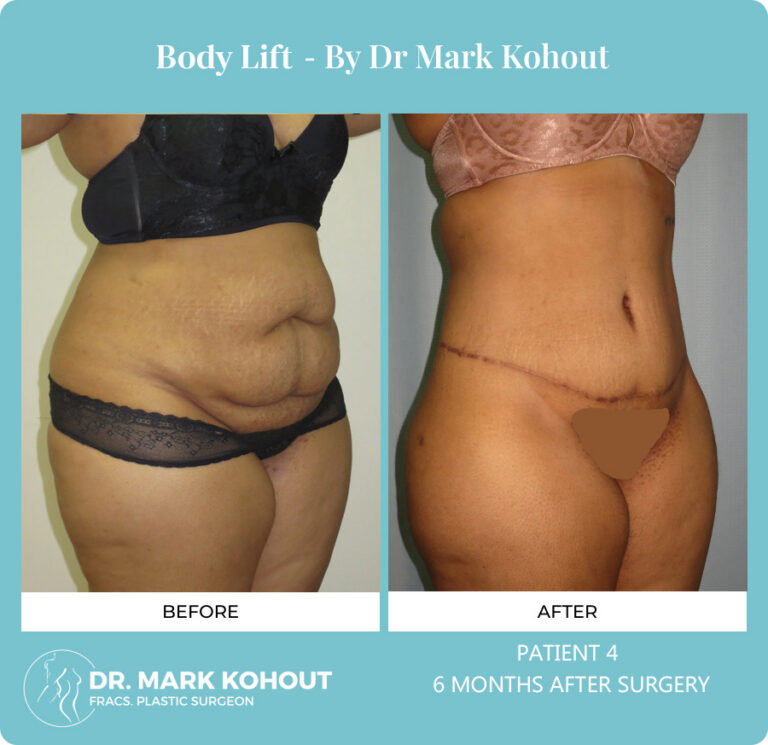
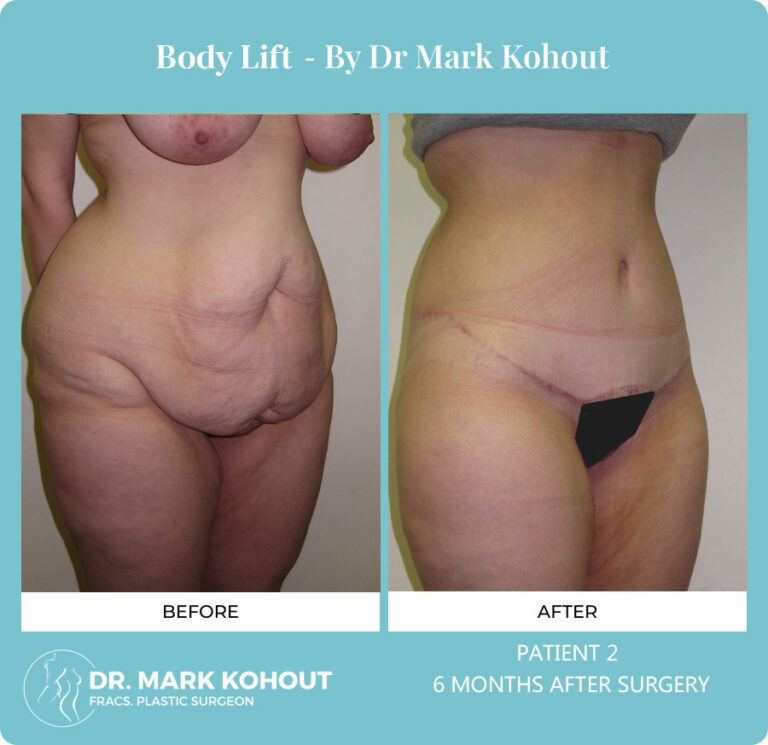
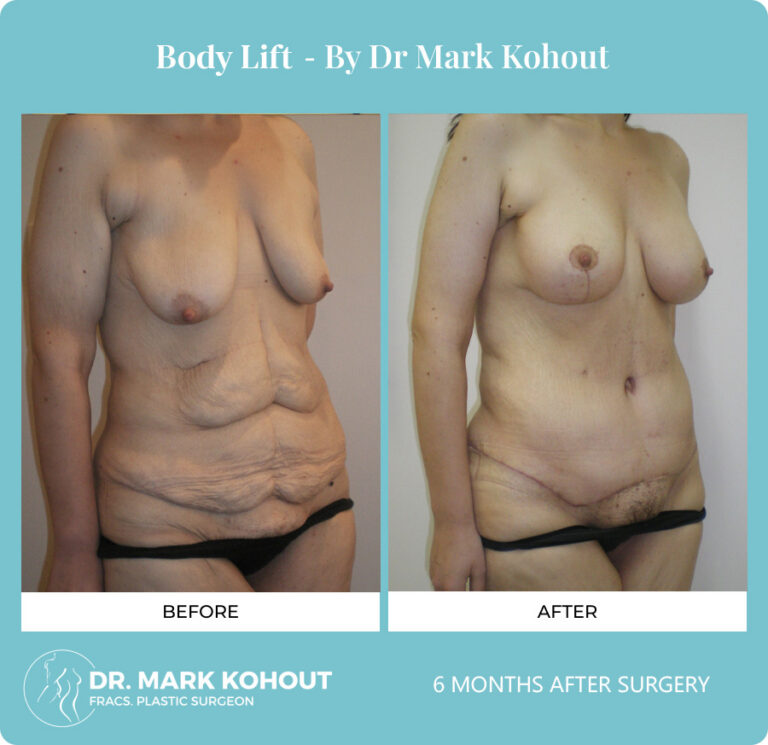
Before and After Photos of Body Lift Surgery
Before and after images may be available during consultation where appropriate. Images should be viewed as examples of individual patient cases, not as a prediction of your own outcome.
Any images used should be presented with consent and appropriate context. They should not create an expectation that the same result can be achieved for another patient. Outcomes vary depending on anatomy, healing and surgical plan.
Key points:
- Images show individual patient examples.
- Outcomes vary between patients.
- Photos do not guarantee a similar outcome.
- Context and timing after surgery matter.
Disclaimer
Individual results vary due to personal health factors and genetics, and all surgical procedures carry inherent risks that should be discussed with a qualified health professional.
Preparing for Body Lift Recovery
Planning before surgery may help patients follow post-operative instructions and attend required appointments.
Preparations may include:
- Arranging transport home
- Organising an adult support person
- Preparing meals
- Placing frequently used items within reach
- Arranging help with children or pets
- Planning leave from work
- Discussing modified duties
- Preparing a suitable sleeping area
- Obtaining prescribed garments or supplies
- Reviewing medicines and supplements
- Following smoking or vaping instructions
- Completing requested tests
- Planning accommodation if travelling
- Saving relevant clinic and emergency contacts
Patients should read their written instructions and ask questions before surgery. Preparation does not guarantee a particular recovery course or prevent every complication.
Recovery After Significant Weight Loss
Some people consider body lift surgery after substantial weight change. Their assessment may include discussion of weight stability, previous bariatric surgery, nutrition, mobility and the number of areas being considered.
Nutritional deficiencies, anaemia, medical conditions or previous surgery may influence operative planning and wound healing.
Where several areas are involved, the surgeon may discuss whether procedures should be performed together or in stages. Recovery requirements depend on the final surgical plan.
Medicare or private health insurance may apply in limited circumstances where relevant criteria are met. Eligibility should be checked directly, and coverage should not be assumed.
Why Online Recovery Timelines Can Be Misleading
Online body lift recovery times do not account for every clinical variable.
Two patients using the same procedure name may have operations involving different:
- Incision lengths
- Anatomical areas
- Amounts of tissue removal
- Muscle repair requirements
- Anaesthetic plans
- Hospital arrangements
- Additional procedures
- Medical conditions
- Occupational demands
Social media accounts may show only selected stages and may not include wound concerns, complications or longer-term healing.
Online information should therefore be treated as general education rather than personalised medical advice.
Questions to Ask About Body Lift Recovery
Before deciding whether to proceed, patients may wish to ask:
- Which areas would my operation involve?
- Would the incision extend around my torso?
- Might I require a hospital stay?
- Could drains or a compression garment be used?
- What wound-care instructions may apply?
- How might my medical history affect recovery?
- How much time away from work should I plan?
- What lifting restrictions may be required?
- When might driving be considered?
- What symptoms require urgent advice?
- How many follow-up appointments may be needed?
- What are the main risks?
- Could further treatment or revision surgery be required?

FAQs About Body Lift Recovery
How long does body lift recovery take?
Body lift recovery time varies between patients. It can be influenced by the areas treated, extent of surgery, anaesthetic requirements, medical history, work demands and individual healing progress. Dr Kohout can provide more specific guidance after consultation, assessment and development of a surgical plan.When can I return to work after body lift surgery?
Return to work depends on the procedure performed, the patient’s recovery progress and the physical requirements of their role. Desk-based work may require different planning from work involving lifting, bending, driving, prolonged standing or manual handling.Will I experience swelling and bruising after a body lift?
Swelling and bruising may occur after body lift surgery. Their degree, location and duration vary between patients. Sudden, worsening, one-sided or unusual swelling should be reported to the treating team.Will I need drains or a compression garment?
Drains or a compression garment may be used depending on the operation and Dr Kohout’s clinical assessment. Patients will receive instructions about drain monitoring, garment use and when these may be reviewed or removed.When can I drive after body lift surgery?
Patients should not drive while affected by anaesthesia, sedating medication, pain or restricted movement. Driving should resume only when the patient can safely control a vehicle and has received appropriate medical advice.When can I return to exercise or lifting?
Exercise and lifting restrictions depend on the surgical plan and healing progress. Patients should not resume strenuous activity or heavy lifting until they have been reviewed and advised that it is appropriate.What should I do if I am concerned during recovery?
Patients should contact the clinic or seek urgent medical care in accordance with their post-operative instructions. Increasing pain, significant swelling, bleeding, fever, wound discharge, chest pain, shortness of breath, calf pain or other concerning symptoms require medical assessment.Medical References
- An Enhanced Recovery After Surgery (ERAS) Protocol for Outpatient BodyLift Surgery. https://journals.sagepub.com/doi/full/10.1177/0748806819898990
- Drainless Lower Body Lift With Large-Volume Liposuction and… https://academic.oup.com/asjopenforum/article/doi/10.1093/asjof/ojaf095/8213805
- Complications and quality of life after bodylift: About 143 patients. https://pubmed.ncbi.nlm.nih.gov/36028411/
- Patient satisfaction, body image, and quality of life after lower body lift: a prospective pre- and postoperative long-term survey. https://www.sciencedirect.com/science/article/pii/S1550728917300242
- Complications in post-bariatric body contouring surgery using a practical treatment regime to optimise the nutritional state. https://www.sciencedirect.com/science/article/pii/S2352587822000511
- Prospective study on complications following a lower body lift after massive weight loss. https://www.sciencedirect.com/science/article/abs/pii/S1748681512005426
Discuss Body Lift Recovery With Dr Mark Kohout
Planning for body lift surgery involves more than choosing a date. A consultation with Dr Mark Kohout MBBS (Syd), FRACS (Plast), Specialist Plastic Surgeon, provides an opportunity to discuss the proposed procedure, individual health factors, likely post-operative requirements, risks, alternatives and practical recovery considerations.
To receive recovery information based on your circumstances, schedule a consultation with Dr Kohout at Australia Plastic Surgery, Suite 2, 37 Bay Street, Glebe, Sydney NSW 2037. Personalised advice can only be provided after consultation and assessment, and no recovery timeframe or surgical result can be guaranteed.
Take our Plastic Surgery Quiz to find out if you’d be a good candidate and if you are ready for cosmetic surgery.
Further Reading
- View Body Lift Surgery Gallery
- Read more about Abdominoplasty / Tummy Tuck Sydney
- Read more about Liposuction Sydney
- Read more about Buttock Reshaping Surgery in Sydney
- Read Patient Resources about How to Stop Smoking Before Surgery
- Read Patient Resources about Medications to Avoid Prior to Surgery
Welcome to the Practice of
Dr. Mark Kohout
With over 25 years of experience and Harvard training, Dr. Mark Kohout offers experienced plastic and reconstructive surgery at his Sydney and Orange clinics. His patient-first approach focuses on delivering safe, natural results tailored to your unique goals.
What's Next?
Whether you are ready for a professional evaluation or just have a quick question, we’ve made it easy to connect with our team. Choose the option that best fits your needs below.
Book your Consultation
Take the first step toward your goals by filling out the brief form below. This information helps us understand your specific needs so we can make the most of our time together during your session. Once you submit your details, a member of our team will review your request and reach out shortly to confirm your appointment.
Patient Photo Assessment
Sending photos for a patient photo assessment can help you and your plastic surgeon prepare for your consultation. By reviewing clear, accurate photos, Dr Kohout can provide preliminary patient photo assessment like insights, assess your needs, and determine the right approach for your procedure.
Tips for Uploading Photos
ASK A FRIEND
Friend takes photo
GOOD LIGHTING
Plain wall, bright light
ALL ANGLES
Front / sides/ 45°
CLEAR & SHARP
No portrait mode
SEND ORIGINALS
No edits or compression
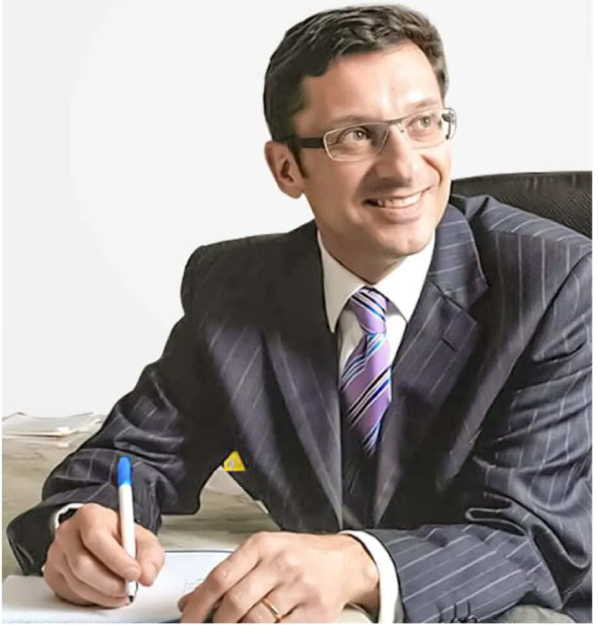
Experienced Plastic Surgeon
Dr. Mark Kohout

A qualified plastic surgeon who operates with care and integrity, based in central Sydney with over 20 years of experience in the cosmetic field. His extensive training and experience assures patients they are in highly trained surgical hands. Dr. Kohout is a dedicated, friendly professional who is committed to providing the high quality care, support and results, alongside his compassionate team.
Dr Mark Kohout (MED0001133000)
Specialist Plastic Surgeon
Specialist registration in Surgery – Plastic Surgery

25
Years of Experience
Years of Delivering Exceptional Cosmetic Care.

10000+
Surgical Procedures
Procedures performed by our qualified surgeons.

15+
Available Treatments
Cosmetic treatment options tailored to your needs.
Our Trusted
Accreditations





Dr Mark Kohout is a qualified plastic surgeon based in central Sydney, with over 20 years of experience in the field of cosmetic and reconstructive surgery. He draws on extensive surgical training and clinical experience to tailor care to the individual needs and goals of each patient.
Dr Kohout is known for his thoughtful, patient-centred approach, guiding individuals through each stage of their surgical journey — from initial consultation to post-operative care. Working alongside a compassionate and professional team, he is committed to providing high standards of care in a supportive and respectful environment.
Explore
Locations
- Suite 2, 37 Bay St, Glebe, Sydney, NSW 2037
- Level 5, 1521 Forest Rd, Orange NSW 2800
©2024 All Rights Reserved