
Dr Mark Kohout is a Specialist Plastic Surgeon based in Sydney who performs a range of body procedures for people after significant weight loss, including surgery to reposition and reshape the buttocks. His consultations focus on understanding your weight-loss history, medical background and areas of concern so any surgical plan can be tailored to your individual situation.
Buttock repositioning and reshaping after weight loss is a type of body shaping procedure that aims to address loose skin, altered buttock position and changes in body proportions following major weight change. The operation may involve removing excess skin, adjusting underlying tissues and repositioning the buttocks in relation to the waist, hips and thighs.
Like all major surgeries, this procedure involves visible scars, potential risks and a recovery period that requires planning. These FAQs provide general information only and are not a substitute for a personal consultation, but they may help you understand the topics commonly discussed with Dr Kohout.
Suitability and Safety - Key Questions
What is buttock repositioning and reshaping after weight loss?
This procedure involves removing excess skin and repositioning the buttock tissues to change the contour after significant weight loss. It is often one part of a broader post-weight-loss body contouring plan and is individualised to each patient.
Who might consider this type of buttock surgery?
People who have lost a large amount of weight and are left with loose skin or downward displacement of the buttocks may consider this operation. It is generally considered for individuals whose weight has been stable for some time and who are in suitable general health.
Do I need to be at a stable weight before surgery?
Yes, being at or close to a stable, maintainable weight is important before body contouring surgery. Significant weight changes after the procedure can alter the appearance of the result and may affect the long-term outcome.
Is there an ideal weight or BMI for this procedure?
There is no single ideal BMI, but a moderate BMI and stable weight are usually associated with a lower risk profile. Assessment focuses on your overall health, skin quality and fat distribution rather than one number alone.
How do you determine if this operation is appropriate for me?
During consultation, Dr Kohout will take a medical history, examine the buttock and lower back region, and discuss your priorities and expectations. He will then advise whether this procedure, or another approach, is likely to be suitable for your circumstances.
Can I have this surgery if I have conditions like diabetes or heart disease?
Some people with well-managed medical conditions can still be considered for surgery, but they may require additional optimisation and planning. Dr Kohout may liaise with your GP or specialist and request further tests to help assess your individual risk.
Is there an age limit for buttock repositioning surgery?
There is no fixed age limit, but factors such as overall health, skin quality and healing capacity are important. Suitability is assessed on a case-by-case basis rather than age alone.
Can this procedure be combined with other body contouring surgeries?
In some situations, buttock repositioning can be combined with procedures involving the thighs, flanks or abdomen. Whether this is appropriate depends on your health, the expected duration of surgery and the recovery period you can realistically manage.
How is safety managed during and after surgery?
Safety planning includes thorough pre-operative assessment, choosing an appropriate hospital setting, and working with specialist anaesthetists. You will receive detailed post-operative instructions and structured follow-up to monitor healing and address any concerns.
Why is smoking a concern for this operation?
Smoking and vaping can reduce blood supply to tissues, impair wound healing and increase the risk of complications such as infection or skin loss. You will usually be advised to stop nicotine use well before surgery and during the early healing period.
Preparing for Buttock Repositioning Surgery
What happens at the first consultation with Dr Kohout?
The initial consultation focuses on your medical history, weight-loss journey and areas you would like to discuss. Dr Kohout will examine the buttocks and surrounding regions, explain possible surgical options and outline what is realistically achievable.
What tests or investigations might I need before surgery?
Pre-operative assessment may include blood tests, heart investigations and other tests depending on your age and health status. These investigations help your team plan anaesthesia and surgery as safely as possible.
Should I stop any medications, vitamins or supplements beforehand?
Some medications and supplements, particularly those affecting bleeding and clotting, may need to be paused or adjusted before surgery. Your full list will be reviewed, and you will receive specific written instructions, often in conjunction with your GP.
How far in advance do I need to stop smoking or vaping?
You will usually be advised to stop smoking or vaping several weeks before surgery and to remain nicotine-free during early recovery. This is to support better wound healing and reduce the risk of complications.
Do I need to arrange time off work and help at home?
Most people require time away from work and assistance with some daily activities in the early recovery period. Planning support at home in advance can help make the postoperative phase more manageable.
How should I prepare my home for after surgery?
It can be useful to set up a comfortable resting area, organise medications and dressings, and prepare meals or groceries ahead of time. Arranging help with tasks such as shopping, childcare or pet care can reduce physical strain in the first weeks.
What should I bring to hospital on the day of surgery?
You will usually need loose, comfortable clothing, any prescribed compression garments, your regular medications (as advised) and personal items. The hospital will provide a checklist and any specific instructions before admission.
Do I need to adjust my exercise routine before the operation?
Maintaining general fitness is helpful, but very strenuous exercise just before surgery may not be recommended. During consultation, you can discuss how to adjust your activity in the weeks leading up to your procedure.
How do you decide on the new buttock position and contour?
Planning is based on your anatomy, the pattern of skin excess, areas of tissue fullness and how the buttocks relate to your waist, hips and thighs. During consultation, the likely changes, position of scars and balance between reshaping and scarring are explained in detail.
What practical and financial arrangements should I consider before committing?
You should understand buttock reshaping cost and fees, whether there are any potential Medicare or health fund contributions, and additional costs such as garments or time off work. Taking time to review written information and ask questions can assist in making an informed decision.
Risks, Limitations and Expected Outcomes
What are the general risks of this operation?
All surgery carries risks such as bleeding, infection, blood clots, delayed wound healing and anaesthetic complications. These risks are discussed so you can weigh them against the potential benefits of the procedure.
What specific risks relate to buttock repositioning and reshaping?
Specific risks may include wound separation, fluid collections (seroma), contour irregularities, changes in sensation and prominent scars. In some cases, additional procedures may be required to address these concerns.
What kind of scars should I expect, and where will they be?
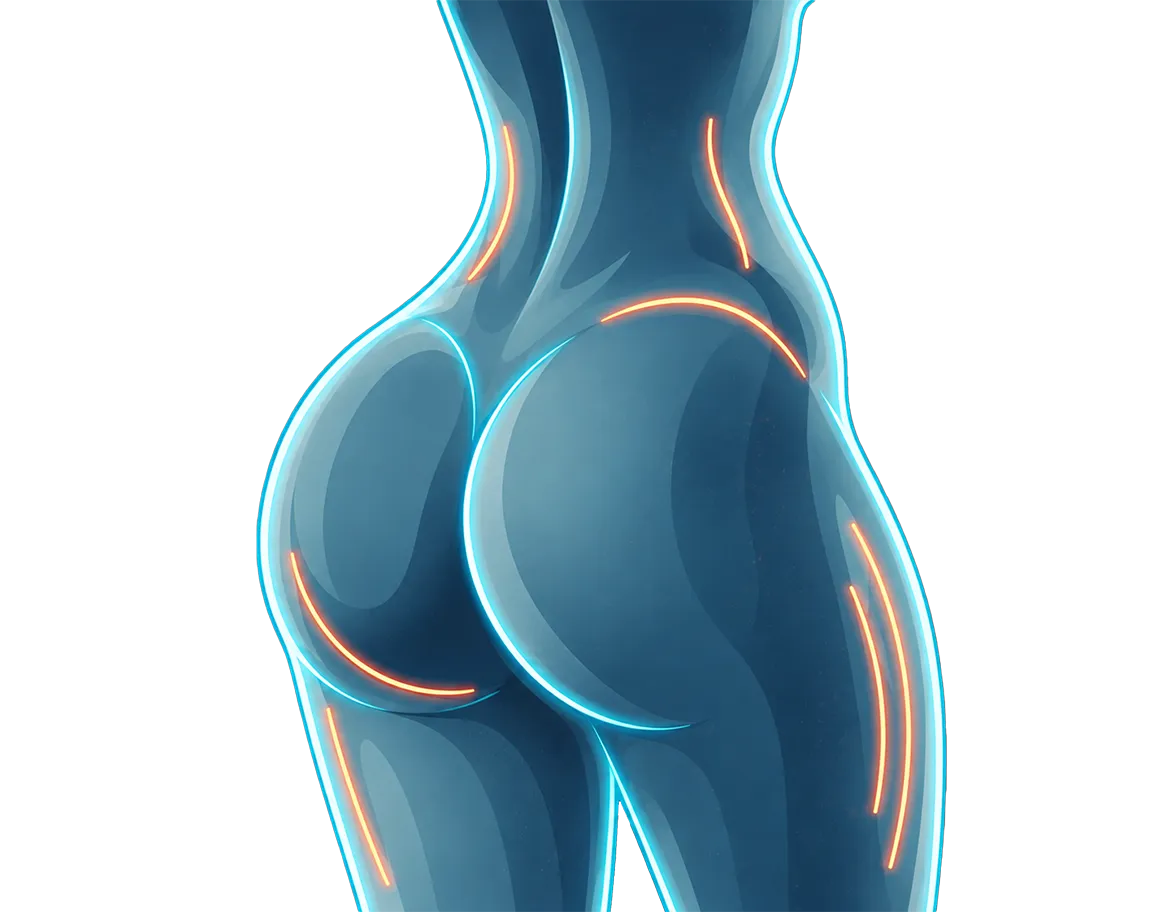
Scars are an unavoidable part of this operation and are commonly positioned across the upper buttock or lower back, sometimes extending around the hips. They usually change in appearance over time but remain visible to some degree.
Can the results change over time?
Yes, factors such as ageing, further weight change, pregnancy and lifestyle can all influence how the result appears in the longer term. Maintaining a relatively stable weight and following general health advice may help support the overall contour.
How long do results usually last?
Many people find that the removal of excess skin and repositioning of tissues has a lasting effect on their body shape. However, no result is permanent, and tissues can change with time and life events.
What happens if I am not satisfied with the outcome?
If you are concerned about your result, this can be discussed at follow-up appointments with Dr Kohout. In some situations, minor revision surgery or other measures may be considered after full healing and a detailed review of expectations.
How often do serious complications occur?
Serious complications such as significant infection, major bleeding or blood clots are uncommon but can occur with any major operation. Your individual risk is influenced by factors such as weight, smoking history, medical conditions and the length of surgery.
Can this surgery affect sitting, walking or exercise long term?
In the early weeks, sitting and some movements may feel restricted or uncomfortable as tissues settle and scars mature. Most patients gradually return to their usual activities, though a small number may experience ongoing tightness or altered sensation.
Will I lose sensation in the buttock area?
Temporary numbness or altered sensation around the scars and buttocks is common after surgery. Some feeling generally returns over several months, but there can be small areas of permanent change.
How realistic should my expectations be?
It is important to understand that surgery can alter contour and position but cannot create a specific body shape without limitations. Clear discussion with Dr Kohout about what is reasonably achievable in your case is a key part of planning.
What to Expect on the Day of Surgery
Is this operation performed under general anaesthetic?
Yes, buttock repositioning and reshaping after weight loss is usually carried out under a general anaesthetic. A specialist anaesthetist monitors you throughout the procedure and manages your airway, breathing and pain relief.How long does the surgery usually take?
The length of surgery varies depending on the extent of excess tissue and whether other areas are being treated at the same time. Many operations take several hours, and an approximate duration will be discussed with you beforehand.What surgical techniques might be used?
The procedure typically involves excision of excess skin, repositioning of underlying tissues and layered closure of the wounds to support the new contour. The precise technique is tailored to your anatomy and the pattern of skin and tissue excess.Where are the incisions placed?
Incisions are commonly positioned along the upper buttock or lower back crease and may extend partially around the hips. Placement is planned to allow access for reshaping while aiming to keep scars within areas usually covered by clothing.Will I need drains after surgery?
Temporary drains are often used to remove excess fluid and reduce the likelihood of fluid collections under the skin. They are generally removed within a few days, depending on the volume of drainage.How much discomfort should I expect afterwards?
You can expect soreness, tightness and some difficulty changing position in the early days after surgery. Pain-relief medication, careful positioning and gradual mobilisation are used to help manage these symptoms.How long will I stay in hospital?
Many people stay in hospital for one to several nights, depending on the extent of surgery and their general health. The expected length of stay will be discussed with you and may be adjusted according to your recovery.Who will be involved in my care during and after the operation?
Your care team usually includes Dr Kohout, a specialist anaesthetist, operating theatre staff and ward nurses with experience in post-operative care. After discharge, follow-up appointments with Dr Kohout and his team are scheduled to monitor your progress.What happens immediately after I wake up?
You will wake up in a recovery area where staff monitor your vital signs, comfort and dressings. Once you are stable, you will be transferred to the ward and provided with instructions on movement, breathing exercises and pain management.Will I need to wear a compression garment?
A compression garment is often recommended to support the operated area, limit swelling and help tissues settle. You will be advised when to start wearing it, how long to wear it each day and the expected duration of use.Recovery, Aftercare and Returning to Daily Activities
Recovery after buttock repositioning and reshaping is gradual and varies between individuals, depending on the extent of surgery and overall health. The early phase focuses on wound care, managing discomfort and gentle movement, followed by a staged return to work, exercise and usual daily activities. Follow-up visits with Dr Kohout are an important opportunity to review healing, adjust activity levels and raise any questions.
What can I expect in the first few days after surgery?
In the early period you may experience swelling, bruising, tightness and fatigue, and moving from lying to standing can be challenging. Nursing staff and written instructions will guide you on pain relief, mobilisation and wound care.
How should I sit and sleep after buttock repositioning surgery?
You may be advised to reduce direct pressure on the buttocks by using specific pillows and modifying your sitting and sleeping positions. These measures are usually most important in the first couple of weeks and then gradually relaxed as healing progresses.
How do I care for my wounds and dressings?
You will receive instructions regarding showering, dressing changes and signs of infection or wound problems to watch for. If you notice issues such as increasing redness, fluid discharge or odour, you should contact the practice promptly.
When can I return to desk-based work?
Many people return to light, desk-based duties after several weeks, depending on their comfort and ability to avoid prolonged sitting. The timing is individual and should be confirmed with Dr Kohout at follow-up.
When can I resume household tasks, lifting and bending?
Light household tasks can usually be introduced gradually, while heavy lifting, bending and straining need to be delayed. Your surgeon will provide guidance about what is appropriate at different stages of recovery.
When is it usually appropriate to drive again?
Driving is generally not advised until you can get in and out of the car comfortably, sit without significant pain and perform an emergency stop safely. This often takes at least a couple of weeks or more, and you should also check your insurer’s requirements.
When can I go back to exercise or sport?
Gentle walking is usually encouraged early, but more vigorous exercise and sport are delayed until the tissues have healed sufficiently. A gradual return over several weeks or months is common, with high-impact activities often postponed for longer.
How long will swelling and bruising last?
Swelling and bruising are typically most noticeable in the first two to three weeks and then slowly reduce over several months. Subtle changes in contour may continue as tissues soften and scars mature.
What follow-up care will I need?
You will have scheduled appointments with Dr Kohout and his team to review wound healing, scar development and overall recovery. These visits provide an opportunity to discuss any concerns and to plan longer-term care if needed.
When will I see the outcome of surgery?
Changes in contour are usually visible early on, but swelling, firmness and scar maturation mean the area continues to evolve. Many people find that the appearance settles over several months, with further gradual changes up to about a year.
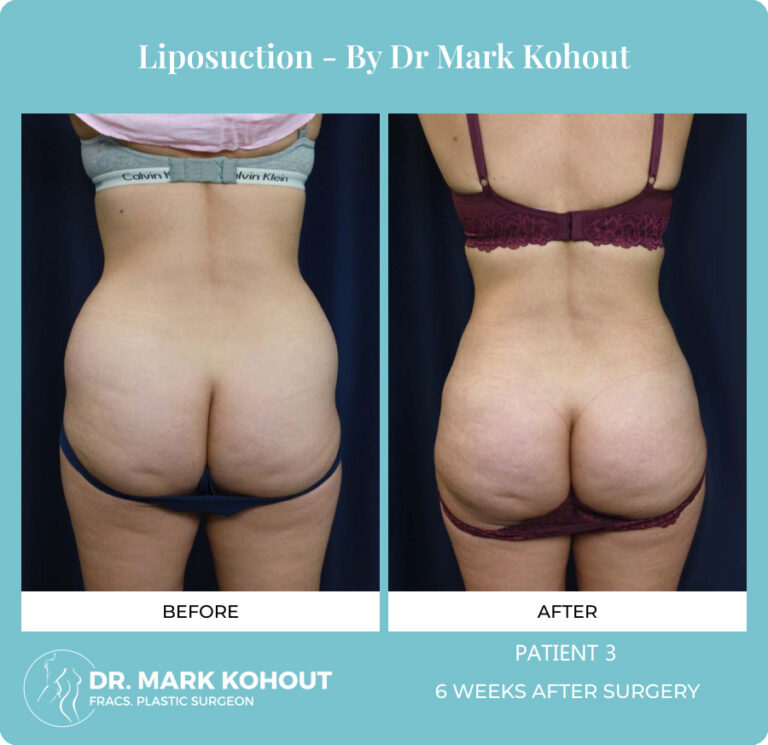
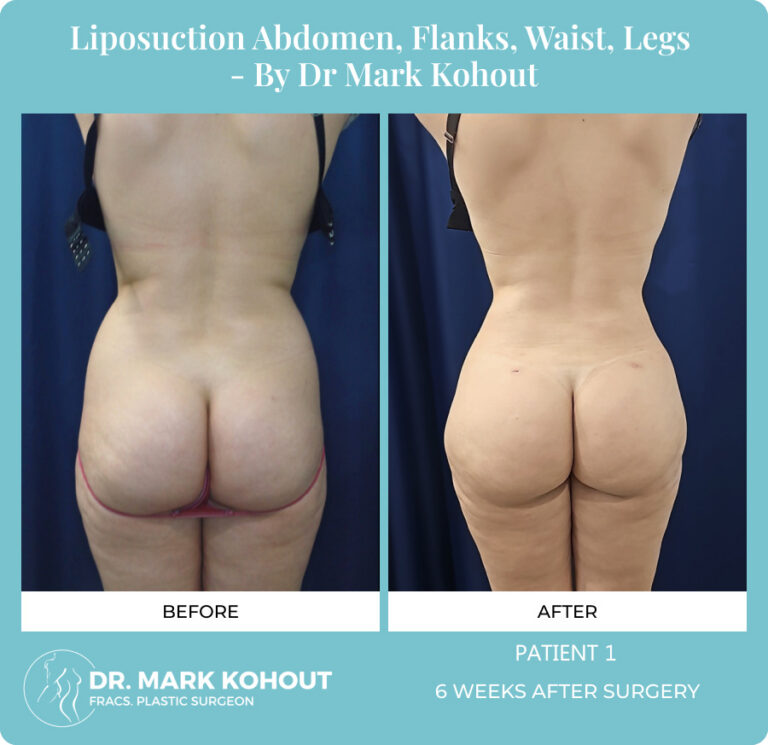
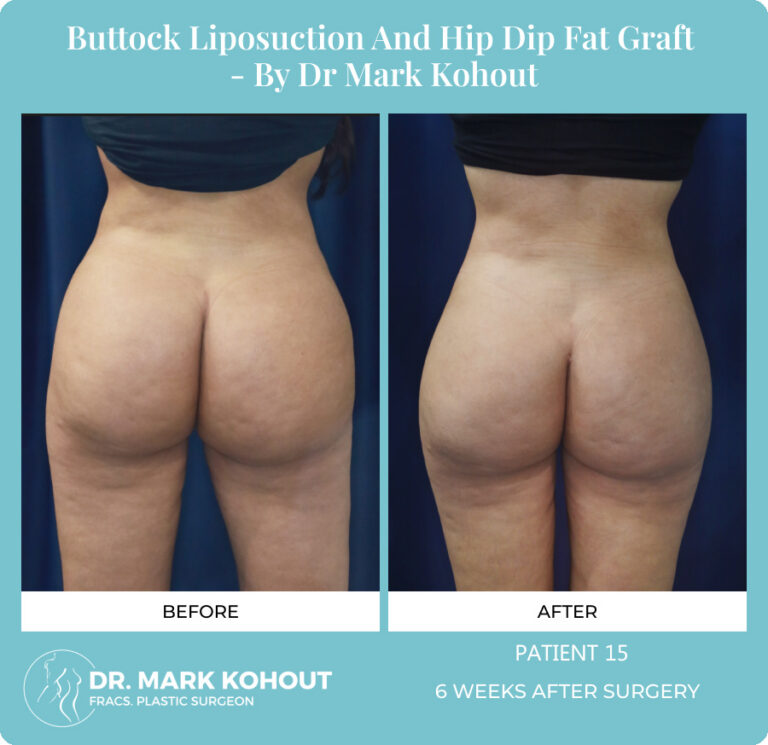
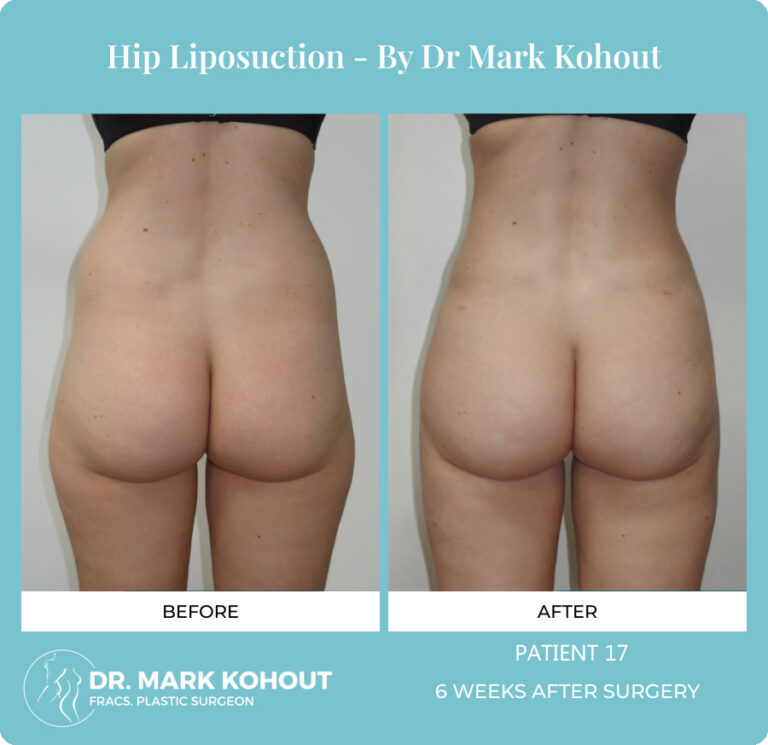
Before and After Photos of Buttock Liposuction
View examples of relevant body-contouring procedures performed by Dr Mark Kohout. Individual outcomes vary.
Disclaimer
Individual results vary due to personal health factors and genetics, and all surgical procedures carry inherent risks that should be discussed with a qualified health professional.
Considering Buttock Repositioning After Weight Loss - Next Steps
If you are thinking about buttock repositioning and reshaping after weight loss, a consultation with Dr Mark Kohout in Sydney is the next step. This appointment allows you to discuss your weight-loss history, medical background and areas of concern, and to receive information specific to your anatomy and general health.
Before your visit, it can be useful to prepare a list of questions, record your current medications and bring any relevant medical reports, including details of previous weight-loss surgery if applicable. Some patients also find it helpful to think about which changes are most important to them so these can be clearly discussed.
During your consultation, Dr Kohout will examine the buttock and surrounding areas, outline suitable surgical options (if any), and explain likely recovery, risks and limitations. You will have time to consider whether this procedure is appropriate for you or whether alternative approaches may be better aligned with your health and priorities.
If you decide to proceed, Dr Kohout’s team will provide written information about preparation, fees, any potential rebates, hospital arrangements and follow-up care. The overall aim is to support you in making a well-informed decision about surgery that fits with your medical needs, daily responsibilities and longer-term plans.
Take our Plastic Surgery Quiz to find out if you’d be a good candidate and if you are ready for cosmetic surgery.
Further Reading
- Exploring Options for Changing Buttock Shape Without Fat Transfer
- Read Dr Kohout’s Blog on Preparing For Buttock Reshaping Surgery: A Practical Pre-Op Checklist
- Read more about Thigh Lift Surgery Sydney
- Read more about Body Lift Sydney
- Read more about Buttock Implant Surgery in Sydney
Welcome to the Practice of
Dr. Mark Kohout
With over 25 years of experience and Harvard training, Dr. Mark Kohout offers experienced plastic and reconstructive surgery at his Sydney and Orange clinics. His patient-first approach focuses on delivering safe, natural results tailored to your unique goals.
What's Next?
Whether you are ready for a professional evaluation or just have a quick question, we’ve made it easy to connect with our team. Choose the option that best fits your needs below.
Book your Consultation
Take the first step toward your goals by filling out the brief form below. This information helps us understand your specific needs so we can make the most of our time together during your session. Once you submit your details, a member of our team will review your request and reach out shortly to confirm your appointment.
Patient Photo Assessment
Sending photos for a patient photo assessment can help you and your plastic surgeon prepare for your consultation. By reviewing clear, accurate photos, Dr Kohout can provide preliminary patient photo assessment like insights, assess your needs, and determine the right approach for your procedure.
Tips for Uploading Photos
ASK A FRIEND
Friend takes photo
GOOD LIGHTING
Plain wall, bright light
ALL ANGLES
Front / sides/ 45°
CLEAR & SHARP
No portrait mode
SEND ORIGINALS
No edits or compression
Experienced Plastic Surgeon
Dr. Mark Kohout

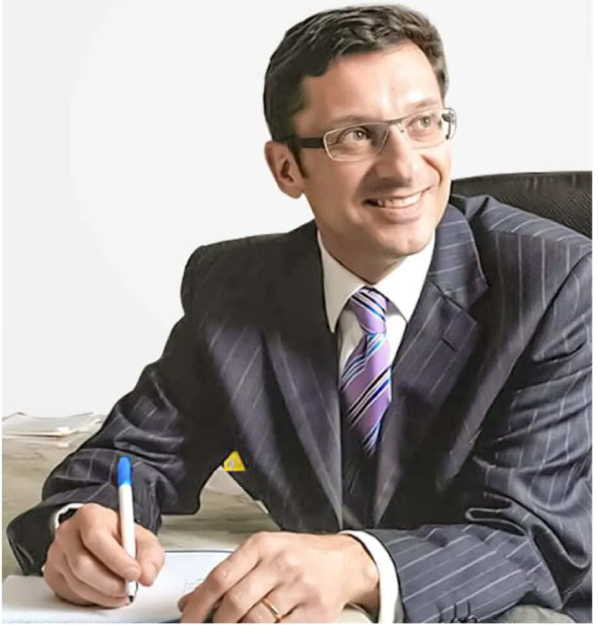
A qualified plastic surgeon who operates with care and integrity, based in central Sydney with over 20 years of experience in the cosmetic field. His extensive training and experience assures patients they are in highly trained surgical hands. Dr. Kohout is a dedicated, friendly professional who is committed to providing the high quality care, support and results, alongside his compassionate team.
Dr Mark Kohout (MED0001133000)
Specialist Plastic Surgeon
Specialist registration in Surgery – Plastic Surgery

25
Years of Experience
Years of Delivering Exceptional Cosmetic Care.

10000+
Surgical Procedures
Procedures performed by our qualified surgeons.

15+
Available Treatments
Cosmetic treatment options tailored to your needs.
Our Trusted
Accreditations





Dr Mark Kohout is a qualified plastic surgeon based in central Sydney, with over 20 years of experience in the field of cosmetic and reconstructive surgery. He draws on extensive surgical training and clinical experience to tailor care to the individual needs and goals of each patient.
Dr Kohout is known for his thoughtful, patient-centred approach, guiding individuals through each stage of their surgical journey — from initial consultation to post-operative care. Working alongside a compassionate and professional team, he is committed to providing high standards of care in a supportive and respectful environment.
Explore
Locations
- Suite 2, 37 Bay St, Glebe, Sydney, NSW 2037
- Level 5, 1521 Forest Rd, Orange NSW 2800
©2024 All Rights Reserved