

Thigh lift cost in Sydney can vary significantly because the operation is individually planned according to the extent and location of excess skin and tissue, the incision pattern required, operating time, anaesthesia, hospital arrangements and whether additional procedures such as liposuction are clinically appropriate. Dr Mark Kohout, MBBS, FRACS Plast, Specialist Plastic Surgeon in Sydney, assesses these factors during consultation before recommending a surgical approach. As a general guide, Thigh Lift surgery in Sydney may start from approximately $25,000 and range to around $46,000, depending on individual circumstances. This is not a personalised quotation, and an individual cost estimate can only be provided after consultation and surgical planning.
Given the number of factors that can influence the overall cost of thigh lift surgery, the figures above should be considered a general guide only. When comparing fees, it is important to understand what is included in each estimate, as hospital, anaesthesia and other associated costs may be structured differently.
Following a clinical assessment, Dr Kohout’s practice can provide a personalised written quote outlining the anticipated surgeon’s fee and other potential expenses, which may include anaesthetist and surgical assistant fees, hospital and theatre charges, compression garments, pathology and postoperative care. Most thigh lift procedures performed primarily for cosmetic reasons are self-funded; however, Medicare and private health insurance may contribute in selected medically indicated circumstances when current eligibility requirements are met.
Understanding these separate cost components, along with the factors that influence them, can help patients make an informed decision when considering thigh lift surgery in Sydney.
What Is a Thigh Lift?
A thigh lift, also known as thighplasty, is an operation that removes selected areas of excess skin and tissue from the thighs. It may be considered by people who have experienced substantial weight change or who have developed tissue laxity due to ageing, genetics or other individual factors.
The procedure may focus on the upper inner thighs, extend vertically along the inner thighs or involve a broader area. The appropriate surgical plan depends on where the excess tissue is located and how much tissue needs to be removed.
Possible incision patterns include:
- An incision placed near the groin crease
- A vertical incision extending along the inner thigh
- A combination of groin and vertical incisions
- A wider body-contouring approach where clinically appropriate
All thigh lift procedures produce permanent scars. Their position and length depend on the surgical technique required. Scar appearance, tissue healing and the final result vary from patient to patient.
Liposuction may sometimes be included where there are localised fat deposits and the skin has characteristics that make the combined approach clinically appropriate. Liposuction and thigh lift surgery perform different functions, and one is not automatically required with the other.
Dr Kohout’s current practice information includes thigh lift surgery among the body procedures offered through his Sydney practice.
How Much Does a Thigh Lift Cost in Sydney?
An exact thigh lift cost cannot be calculated from the procedure name alone. Two patients considering thigh lift surgery may require different incision patterns, different operating times and different levels of hospital care.
Some online prices are described as starting fees or surgeon-only fees. These figures may not include:
- Anaesthetist charges
- Hospital or operating theatre fees
- Surgical assistant fees
- Compression garments
- Prescribed medicines
- Pathology
- Medical tests
- Follow-up care
- Treatment of complications
- Additional procedures
This can make it difficult to compare one advertised thigh lift price with another.
Before relying on any published figure, patients should ask whether it represents:
- The surgeon’s fee only
- A starting estimate
- A complete estimate
- A day admission or overnight hospital stay
- A fee based on Medicare eligibility
- A fee based on private hospital insurance
- A unilateral or bilateral procedure
- A thigh lift alone or a thigh lift combined with liposuction
A written quote prepared after consultation should identify the expected charges and explain which amounts will be billed separately.
A general price given by phone, email or website form cannot account for all relevant clinical factors. Photographs may provide limited preliminary information, but they do not replace a physical examination, medical history or discussion of the proposed operation.
What Is Included in a Thigh Lift Quote?
A thigh lift quote may be made up of several components. These should be reviewed together when estimating the likely out-of-pocket cost.
Surgeon’s Fee
The surgeon’s fee relates to the operation planned for the individual patient. It may take into account:
- The extent of tissue removal
- The proposed incision pattern
- The expected operating time
- The technical requirements of the procedure
- Preoperative planning
- Routine postoperative care provided by the surgical practice
Patients should ask whether routine follow-up appointments are included and whether additional fees could apply for appointments outside the usual postoperative schedule.
The quote should also state whether the fee for a surgical assistant is included or billed separately.
Anaesthetist’s Fee
Thigh lift surgery is generally performed under general anaesthesia. The anaesthetist commonly provides a separate estimate or account.
Anaesthetic charges may depend on:
- The expected duration of the operation
- The patient’s medical history
- The anaesthetic plan
- Additional monitoring requirements
- The anaesthetist’s billing arrangements
Where Medicare or private health insurance applies, a benefit may be payable toward an eligible anaesthetic service. This does not necessarily cover the total fee, and an anaesthetic gap may remain.
Hospital and Operating Theatre Fees
Hospital costs can represent a substantial part of the total thigh lift price. Charges may include:
- Operating theatre use
- Nursing care
- Recovery room care
- Hospital accommodation
- Medical supplies
- Prescribed devices or consumables
- Meals during admission
- An overnight stay where required
The hospital fee may vary according to the selected facility, duration of surgery and length of admission.
Patients with eligible private hospital insurance may receive benefits toward some hospital expenses. Those without applicable cover will generally be responsible for the private hospital account.
Compression Garments and Dressings
A compression garment may be recommended following surgery. The quote should explain whether the initial garment is included or must be purchased separately.
Additional garments, wound dressings and scar-management products may involve separate costs. Recommendations will depend on the operation and the patient’s progress.
Medical Tests and Assessments
Some patients may require investigations or medical assessment before surgery. Possible costs include:
- Blood tests
- Electrocardiography
- Imaging
- GP assessment
- Specialist physician review
- Anaesthetic consultation
- Other tests based on medical history
These services may be provided outside the surgical practice and billed separately.
Prescribed Medicines and Pathology
Prescribed medicines following surgery may include pain relief, antibiotics or other medications considered appropriate for the patient.
Removed tissue may also be sent for pathology examination. Patients should ask whether pathology is included in the quote or billed by an external provider.
Postoperative Appointments
A quote should identify which routine postoperative appointments are included in the surgeon’s fee.
Further expenses may arise if a patient requires:
- Additional medical appointments
- Care from another health practitioner
- Unplanned hospital assessment
- Further investigations
- Additional wound care
- Treatment of a complication
- A further procedure
No quote can account with certainty for every possible medical event following surgery.
Why Thigh Lift Costs Vary Between Patients
Several factors influence the total cost of thigh lift surgery in Sydney.
✓ Amount and location of excess tissue
A patient with excess tissue limited to the upper inner thigh may require a different operation from someone with tissue extending further down the leg.
A longer incision generally involves a wider area of tissue removal and closure. This may affect the duration of surgery, anaesthetic time and hospital fees.
✓ Incision pattern
The incision pattern is selected after examining the location, extent and quality of the tissue. A groin-based incision, vertical incision or combined pattern will involve different surgical requirements.
The shortest incision is not automatically suitable for every patient. Choosing an incision solely to reduce scar length may limit the amount or location of tissue that can be addressed.
✓ Operating time
Hospital and anaesthetic charges are often influenced by the length of the operation. A procedure involving wider tissue removal or more complex closure may take longer than a more limited operation.
Operating time is estimated during surgical planning but can vary according to the circumstances encountered during the procedure.
✓ Liposuction
Liposuction may be considered alongside a thigh lift in selected cases. When included, it can affect:
- Operating time
- Anaesthetic time
- Equipment requirements
- Garment requirements
- The surgeon’s fee
- Hospital charges
Liposuction is not a substitute for removing substantial excess skin, and it is not included automatically in every thigh lift quote.
✓ Combined operations
Some patients ask about having a thigh lift performed with another body procedure. Combining operations can change the total fee, but it may also increase operating time, anaesthetic exposure and postoperative care requirements.
Whether combined surgery is appropriate depends on the patient’s health, the procedures being considered and the total anticipated duration of surgery. A decision should only be made after individual assessment.
✓ Hospital admission
Some patients may be suitable for a shorter admission, while others may require an overnight stay or further observation.
The admission plan may depend on:
- The extent of surgery
- Medical history
- Anaesthetic requirements
- Mobility after surgery
- Home support
- The distance from the hospital to the patient’s home
- The surgeon’s and anaesthetist’s clinical recommendations
A longer admission generally involves additional hospital fees.
✓ Individual medical factors
Health conditions, previous operations, medicines, nicotine use and other medical considerations may affect surgical planning.
Additional tests, consultations or monitoring may be recommended before proceeding. These requirements can alter the total cost.

Is a Thigh Lift Covered by Medicare?
Medicare benefits are not generally payable for surgery performed primarily for cosmetic reasons. A surgical procedure must meet the description and requirements of a current Medicare Benefits Schedule item before a Medicare benefit can be claimed.
In selected cases, removal of redundant non-abdominal skin following significant weight loss may satisfy an applicable MBS item. Current provisions may consider matters such as:
- Whether the tissue developed following significant weight loss
- The amount of weight lost
- Whether the patient’s weight has remained stable for the required period
- Whether the redundant tissue causes a documented functional problem
- The number and location of areas being treated
- Whether the procedure meets all other item restrictions
MBS requirements have changed over time. Previous lipectomy items were restructured in July 2023, including the introduction of provisions concerning removal of redundant non-abdominal skin for functional problems after significant weight loss.
Eligibility cannot be determined from general website information. It requires individual assessment, appropriate clinical records and consideration of the MBS wording in effect at the time of treatment.
A referral may also be required when Medicare-funded specialist services are being considered.
Dr Kohout can assess whether a patient’s circumstances appear consistent with a relevant Medicare item. However, a consultation does not guarantee eligibility, and the final responsibility for a Medicare claim remains subject to Medicare requirements.
A Medicare Item Does Not Mean There Will Be No Fee
When an MBS item applies, Medicare calculates its benefit using the government schedule fee. The surgeon, anaesthetist or other provider may charge more than that fee.
The difference may become the patient’s out-of-pocket cost.
Medicare eligibility also does not automatically mean that a private hospital account will be fully covered. Patients should obtain written information from their health fund before scheduling surgery.
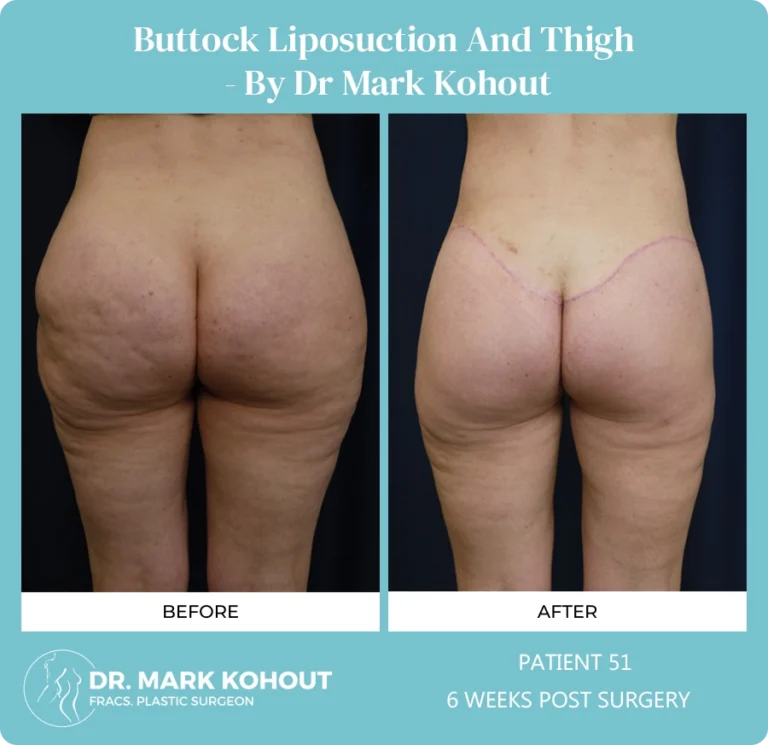
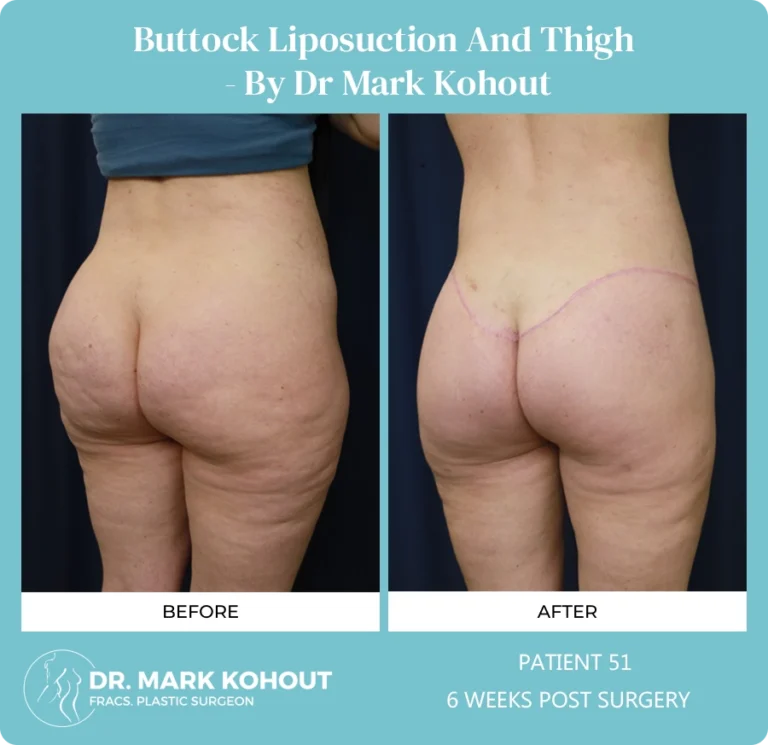
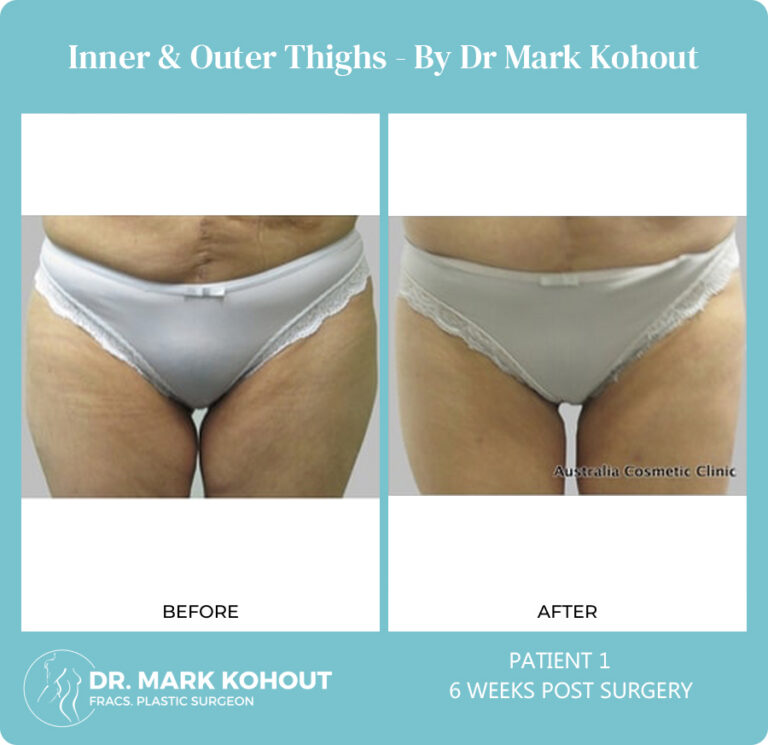
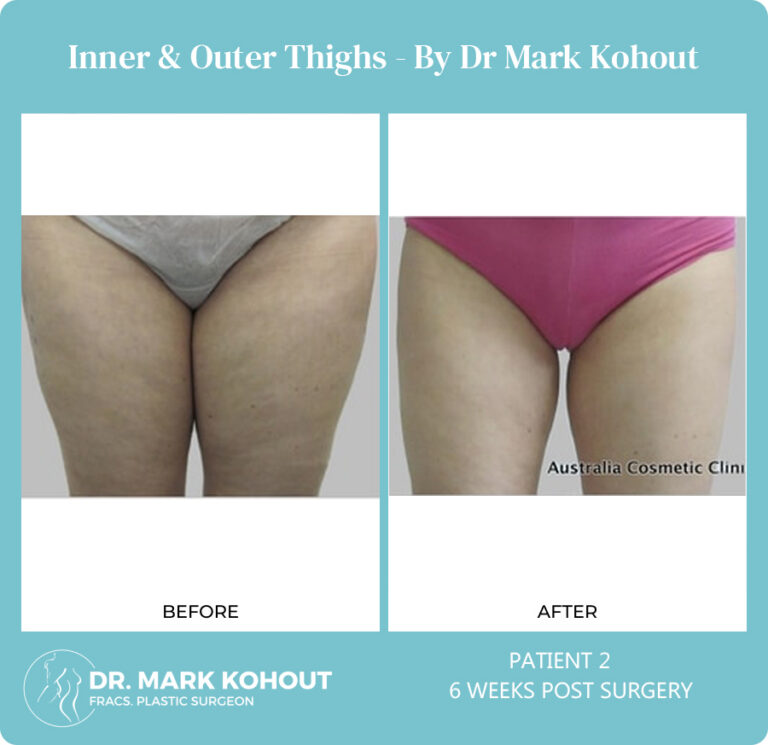
Before and After Photos of Thigh Lift Surgery
Before and after images may be available during consultation where appropriate. Images should be viewed as examples of individual patient cases, not as a prediction of your own outcome. They should not create an expectation that the same result can be achieved for another patient. Outcomes vary depending on anatomy, healing and surgical plan.
Key points:
- Images show individual patient examples.
- Outcomes vary between patients.
- Photos do not guarantee a similar outcome.
- Context and timing after surgery matter.
Disclaimer
Individual results vary due to personal health factors and genetics, and all surgical procedures carry inherent risks that should be discussed with a qualified health professional.
Can Private Health Insurance Cover Thigh Lift Surgery?
Private health insurance generally does not contribute to an operation performed solely for cosmetic reasons.
Hospital benefits may be available where:
- The procedure is associated with an eligible Medicare item
- The patient has an appropriate level of hospital cover
- The relevant clinical category is included in the policy
- Waiting periods have been served
- The insurer’s rules are satisfied
- The selected hospital has an appropriate arrangement with the fund
Medically necessary plastic and reconstructive procedures are recognised within Australian private health insurance clinical categories, but policy inclusions, exclusions and restrictions differ.
Patients should contact their insurer directly and provide the proposed MBS item number when available. Questions to ask include:
- Is the proposed procedure included under my policy?
- Have I completed the relevant waiting period?
- Does my policy contain restrictions or exclusions?
- Is the proposed hospital covered?
- What excess will I need to pay?
- Is there a hospital co-payment?
- Are prostheses, garments or other supplies excluded?
- Will there be surgeon or anaesthetist gaps?
- Is written pre-approval required?
The practice can provide relevant clinical and billing information, but it cannot guarantee how much an insurer will pay.
Even patients insured by the same fund may have different benefits because policy levels and joining dates vary.

Understanding Your Out-of-Pocket Cost
The out-of-pocket cost is the amount the patient remains responsible for after any applicable Medicare and private health insurance benefits have been deducted.
It may include:
- The initial consultation fee
- The surgeon’s fee or gap
- The surgical assistant’s fee or gap
- The anaesthetist’s fee or gap
- The hospital excess
- Hospital co-payments
- Services excluded from the insurance policy
- Compression garments
- Prescribed medicines
- Pathology
- Medical tests
- Travel and accommodation
- Support at home
- Time away from employment or caring duties
- Additional treatment where required
Patients travelling to Sydney from regional NSW or interstate should also consider accommodation, transport and the need to remain within an appropriate distance of medical care during the early postoperative period.
These indirect expenses are not usually part of a surgical quote.
Cosmetic and Medically Indicated Thigh Lift Fees
The way a thigh lift is classified can affect whether Medicare or private health insurance may contribute.
A patient’s preference does not determine the classification. It depends on the clinical circumstances, documentation and current funding requirements.
Why a Consultation Is Required Before Providing a Quote
A consultation allows Dr Kohout to determine what operation, if any, may be appropriate and what resources are likely to be required.
The assessment may include:
- The patient’s reasons for considering surgery
- The location and extent of excess tissue
- Skin and tissue characteristics
- Existing scars
- Weight history and stability
- General health
- Previous operations
- Current medicines and supplements
- Smoking or nicotine use
- Possible incision patterns
- Whether liposuction is being considered
- Anaesthetic requirements
- Hospital and admission planning
- Risks and possible complications
- Postoperative restrictions
- Potential Medicare criteria
Following assessment, the practice can prepare a written estimate based on the proposed procedure.
The consultation does not require the patient to book surgery. Patients should have the opportunity to consider the information provided, ask further questions and make an informed decision.
Australian cosmetic surgery requirements include specific professional standards and advertising guidance for registered medical practitioners. AHPRA and the Medical Board of Australia maintain dedicated guidance for cosmetic surgery services.
Questions to Ask When Comparing Thigh Lift Prices
When reviewing thigh lift fees, useful questions include:
- Is this an individual quote or a starting estimate?
- Does it include the surgeon’s fee?
- Is the surgical assistant billed separately?
- Does it include the anaesthetist?
- Are hospital and theatre charges included?
- Does the estimate allow for an overnight stay?
- Are garments and dressings included?
- Is pathology included?
- Which postoperative appointments are included?
- Does the estimate assume Medicare eligibility?
- Does it assume private health insurance benefits?
- What hospital excess or co-payment could apply?
- How long is the quote valid?
- What is the cancellation or postponement policy?
- What further fees may arise if additional treatment is required?
Cost is one part of the decision. Patients should also consider the practitioner’s recognised qualifications, registration, proposed hospital, informed consent process, follow-up arrangements and the risks associated with the operation.

FAQs About Thigh Lift Cost in Sydney
How much does a thigh lift cost in Sydney?
The cost of thigh lift surgery varies because the procedure is planned according to each patient’s anatomy, the amount and location of tissue being treated, the incision pattern, expected operating time and hospital requirements. A personalised written quote can only be provided after consultation and clinical assessment.
What fees are included in a thigh lift quote?
A thigh lift quote may include the surgeon’s fee, surgical assistant’s fee, anaesthetist’s fee, hospital or theatre charges, compression garments, pathology and routine postoperative appointments. Some providers bill these components separately, so patients should ask for an itemised estimate showing what is included and excluded.
Is thigh lift surgery covered by Medicare?
Medicare does not generally contribute to surgery performed solely for cosmetic reasons. A Medicare benefit may apply in selected medically indicated cases where the patient meets the requirements of a current Medicare Benefits Schedule item. Eligibility must be assessed individually and cannot be confirmed from general website information.
Can private health insurance contribute to thigh lift costs?
Private health insurance may contribute to eligible hospital costs when the procedure is associated with an applicable Medicare item and the patient has an appropriate level of hospital cover. Waiting periods, exclusions, restrictions, excesses and co-payments may apply. Patients should confirm their benefits directly with their insurer.
What is the likely out-of-pocket cost?
The out-of-pocket cost is the amount remaining after any applicable Medicare or private health insurance benefits have been deducted. It may include professional fee gaps, the hospital excess, garments, medicines, pathology, medical tests and other expenses associated with surgery and postoperative care.
Does the cost include liposuction?
Liposuction is not automatically included in every thigh lift procedure. It may be considered in selected cases where clinically appropriate. When liposuction forms part of the surgical plan, it may affect the surgeon’s fee, anaesthetic time, hospital charges and garment requirements. The written quote should state clearly whether it is included.
Why is a consultation required before receiving an exact price?
A consultation allows Dr Mark Kohout to assess the location and extent of excess tissue, discuss possible incision patterns, review the patient’s medical history and estimate the operating time and hospital requirements. This information is necessary before an individual surgical plan and accurate written quote can be prepared.
Medical References
- Thighplasty. https://pubmed.ncbi.nlm.nih.gov/37603627/
- Minimizing Thighplasty Complications: A Combined Approach of J Medial Pattern and Helium-Plasma Assisted Liposculpture. https://pubmed.ncbi.nlm.nih.gov/39808076/
- Thighs lift in the post-bariatric patient – A systematic review. https://www.sciencedirect.com/science/article/abs/pii/S1748681524005618
- A Comprehensive Review of Medial Thighplasty: The Role of Liposuction in Reducing Complications and Optimizing Patient Outcomes. https://pmc.ncbi.nlm.nih.gov/articles/PMC11989391/
- Surgical Technique and Comparison with the Inferior Body Lift. https://pubmed.ncbi.nlm.nih.gov/38652856/
- Thighplasty: improving aesthetics through revival of the medial, horizontal procedure: A safe and scar-saving option. https://www.sciencedirect.com/science/article/abs/pii/S1748681517304072
- Medial thighplasty: Current concepts and practices. https://www.sciencedirect.com/science/article/abs/pii/S0294126015001405
Discuss Thigh Lift Fees at an Individual Consultation
Understanding the full cost of thigh lift surgery involves more than comparing a single advertised price. An individual consultation provides an opportunity to discuss the proposed procedure, likely fee components, permanent scars, possible risks and whether Medicare or private health insurance may be relevant to your circumstances.
To receive a personalised assessment and written quote, arrange a consultation with Dr Mark Kohout, MBBS, FRACS Plast, Specialist Plastic Surgeon, at Australia Plastic Surgery, Suite 2, 37 Bay St, Glebe, Sydney NSW 2037.
Take our Plastic Surgery Quiz to find out if you’d be a good candidate and if you are ready for cosmetic surgery.
Further Reading
- View Body Lift Surgery Gallery
- Read more about Body Procedures
- Read more about Abdominoplasty / Tummy Tuck Sydney
- Read more about Liposuction Sydney
- Read more about Costs and Finance Page
Welcome to the Practice of
Dr. Mark Kohout
With over 25 years of experience and Harvard training, Dr. Mark Kohout offers experienced plastic and reconstructive surgery at his Sydney and Orange clinics. His patient-first approach focuses on delivering safe, natural results tailored to your unique goals.
What's Next?
Whether you are ready for a professional evaluation or just have a quick question, we’ve made it easy to connect with our team. Choose the option that best fits your needs below.
Book your Consultation
Take the first step toward your goals by filling out the brief form below. This information helps us understand your specific needs so we can make the most of our time together during your session. Once you submit your details, a member of our team will review your request and reach out shortly to confirm your appointment.
Patient Photo Assessment
Sending photos for a patient photo assessment can help you and your plastic surgeon prepare for your consultation. By reviewing clear, accurate photos, Dr Kohout can provide preliminary patient photo assessment like insights, assess your needs, and determine the right approach for your procedure.
Tips for Uploading Photos
ASK A FRIEND
Friend takes photo
GOOD LIGHTING
Plain wall, bright light
ALL ANGLES
Front / sides/ 45°
CLEAR & SHARP
No portrait mode
SEND ORIGINALS
No edits or compression

Experienced Plastic Surgeon
Dr. Mark Kohout

A qualified plastic surgeon who operates with care and integrity, based in central Sydney with over 20 years of experience in the cosmetic field. His extensive training and experience assures patients they are in highly trained surgical hands. Dr. Kohout is a dedicated, friendly professional who is committed to providing the high quality care, support and results, alongside his compassionate team.
Dr Mark Kohout (MED0001133000)
Specialist Plastic Surgeon
Specialist registration in Surgery – Plastic Surgery

25
Years of Experience
Years of Delivering Exceptional Cosmetic Care.

10000+
Surgical Procedures
Procedures performed by our qualified surgeons.

15+
Available Treatments
Cosmetic treatment options tailored to your needs.
Our Trusted
Accreditations





Dr Mark Kohout is a qualified plastic surgeon based in central Sydney, with over 20 years of experience in the field of cosmetic and reconstructive surgery. He draws on extensive surgical training and clinical experience to tailor care to the individual needs and goals of each patient.
Dr Kohout is known for his thoughtful, patient-centred approach, guiding individuals through each stage of their surgical journey — from initial consultation to post-operative care. Working alongside a compassionate and professional team, he is committed to providing high standards of care in a supportive and respectful environment.
Explore
Locations
- Suite 2, 37 Bay St, Glebe, Sydney, NSW 2037
- Level 5, 1521 Forest Rd, Orange NSW 2800
©2024 All Rights Reserved