Fleur-de-Lis Abdominoplasty Sydney

With Dr. Mark Kohout

Fleur-de-Lis Abdominoplasty Sydney Featured Image

Fleur-de-Lis abdominoplasty is an abdominal skin-reduction procedure that combines a horizontal excision across the lower abdomen with a vertical excision through the central abdomen. This approach may be considered when substantial skin and soft-tissue excess is present in both horizontal and vertical directions, particularly following major weight loss.

Dr Mark Kohout is a Specialist Plastic Surgeon practising in Sydney with more than 25 years of clinical experience. His current Excess Skin Reduction Guide specifically includes Fleur-de-Lis abdominoplasty as one of the surgical approaches that may be considered when a conventional abdominal procedure would not adequately address the distribution of redundant tissue.

What Does Fleur-de-Lis Abdominoplasty Mean?

Fleur-de-Lis abdominoplasty is an abdominal procedure that removes tissue through both horizontal and vertical excision patterns. The additional vertical component allows tissue excess across the width of the abdomen to be addressed more directly than with a horizontal incision alone.

The name refers to the shape created by the planned skin excision rather than to a separate anatomical structure. Published literature describes the technique particularly in patients following substantial weight loss, where abdominal tissue may remain loose in more than one direction.

The procedure generally includes:

  • A low horizontal abdominal incision
  • A vertical midline abdominal incision
  • Removal of selected redundant skin and fat
  • Repositioning of the remaining abdominal skin
What Does Fleur-de-Lis Abdominoplasty Mean Infographic by Dr Mark Kohout

Why Is a Vertical Incision Used?

The vertical incision allows the surgeon to remove side-to-side tissue excess that may remain after a conventional horizontal excision. This can be particularly relevant when the upper and central abdomen contain substantial horizontal laxity.

A standard horizontal abdominoplasty mainly removes tissue in a vertical direction by drawing the abdominal skin downward. In patients with marked transverse redundancy, that approach may leave residual central fullness or folds unless a vertical component or another extended technique is used.

The vertical component may help address:

  • Central abdominal tissue excess
  • Side-to-side laxity
  • Upper abdominal folds
  • Multiple skin rolls after major weight loss

Who Might Be Suitable for Fleur-de-Lis Abdominoplasty?

Fleur-de-Lis abdominoplasty is commonly considered for patients with substantial abdominal skin excess in more than one direction. It is particularly associated with body-contouring surgery after major weight loss.

Not every patient with abdominal skin laxity requires a vertical incision. Assessment focuses on how the skin and soft tissues are distributed, the position of existing scars, general health and whether another abdominal approach could address the same concerns with a different scar pattern.

Assessment may consider:

  • Previous substantial weight loss
  • Multiple abdominal skin folds
  • Upper and lower abdominal laxity
  • Side-to-side tissue excess
  • Previous abdominal operations

Is Fleur-de-Lis Abdominoplasty Only for People After Major Weight Loss?

Major weight loss is a common reason for considering Fleur-de-Lis abdominoplasty, but it is not the only factor that determines suitability. The operative decision depends primarily on the pattern and extent of abdominal tissue excess.

Large changes in body weight can leave skin laxity across both the vertical and horizontal dimensions of the abdomen. Published studies have found that patients with more extensive post-weight-loss abdominal deformity are more likely to undergo a Fleur-de-Lis pattern than patients with less extensive changes.

Other relevant factors include:

  • Skin elasticity
  • Previous pregnancies
  • Previous abdominal surgery
  • Weight stability
  • Overall medical condition

How Does Fleur-de-Lis Abdominoplasty Differ From Standard Abdominoplasty?

A standard abdominoplasty generally uses a horizontal lower-abdominal incision, while Fleur-de-Lis abdominoplasty adds a vertical midline incision. The additional incision allows tissue to be removed in another direction.

The trade-off is a longer and more visible scar pattern. Some patients may obtain adequate tissue reduction with a standard, extended or circumferential approach instead, which is why the procedure needs to be selected according to anatomy rather than the procedure name alone.

Key differences include:

  • Number and direction of incisions
  • Amount of tissue that can be removed centrally
  • Visibility of the final scar pattern
  • Extent of abdominal access

How Does It Differ From an Extended Abdominoplasty?

An extended abdominoplasty lengthens the horizontal incision towards the flanks, while Fleur-de-Lis surgery adds a vertical abdominal incision. These approaches address different patterns of tissue excess and may overlap in selected patients.

Some surgeons use extended or circumferential techniques to manage lateral and transverse laxity without adding a vertical midline scar. Published literature reflects differing surgical preferences, which reinforces the importance of individual assessment rather than assuming that one approach is universally preferable.

The choice may depend on:

  • Where the tissue excess is concentrated
  • Whether the flanks are involved
  • Scar preferences
  • Previous scars
  • Overall body-contouring plan
Fleur-de-Lis Abdominoplasty Sydney Featured Image

Where Are the Fleur-de-Lis Scars Located?

Fleur-de-Lis abdominoplasty generally creates both a low horizontal abdominal scar and a vertical scar through the central abdomen. A separate scar around the umbilicus may also be present when the umbilicus is repositioned.

The exact length and position depend on the amount of tissue removed and the surgical plan. The vertical scar is more difficult to conceal than a low horizontal scar, so patients need to consider whether they are comfortable accepting that permanent trade-off.

Scars may include:

  • A lower abdominal horizontal scar
  • A central vertical scar
  • A scar around the umbilicus
  • Extensions associated with broader tissue removal
Where Are the Fleur-de-Lis Scars Located Infographic by Dr Mark Kohout

What Happens to the Umbilicus During Surgery?

The umbilicus may need to be repositioned through the abdominal skin when substantial tissue is removed. Its blood supply and surrounding tissues must be carefully managed during surgery.

The precise technique varies according to the operation and previous abdominal surgery. Published descriptions of Fleur-de-Lis procedures emphasise preservation of adequate blood supply because several tissue planes and incision lines may meet near the central abdomen.

Planning may take account of:

  • Existing umbilical position
  • Previous abdominal scars
  • Tissue blood supply
  • Amount of skin being removed

Can Liposuction Be Performed With Fleur-de-Lis Abdominoplasty?

Liposuction may sometimes be incorporated into the surgical plan when selected fat deposits require treatment. Whether it is appropriate depends on tissue blood supply, skin characteristics and the extent of the planned excision.

Combining liposuction with a large skin-reduction procedure can alter the surgical risk profile. The decision should therefore be based on examination rather than assuming that liposuction is routinely required.

Possible considerations include:

  • Location of remaining fat
  • Skin thickness
  • Blood supply to skin flaps
  • Extent of the excision

What Happens During Fleur-de-Lis Abdominoplasty?

The procedure generally involves marking the planned horizontal and vertical excisions before redundant tissue is removed and the remaining abdominal skin is repositioned. The exact operative steps depend on the anatomy and whether abdominal wall repair or another procedure is included.

Dr Mark Kohout’s current practice guide identifies the horizontal and vertical incision pattern as the defining feature of Fleur-de-Lis abdominoplasty. The full operative plan is determined during consultation rather than from the procedure label alone.

Surgery may involve:

  • Preoperative skin markings
  • Horizontal and vertical tissue excision
  • Umbilical repositioning where required
  • Layered wound closure
  • Dressings and compression garments

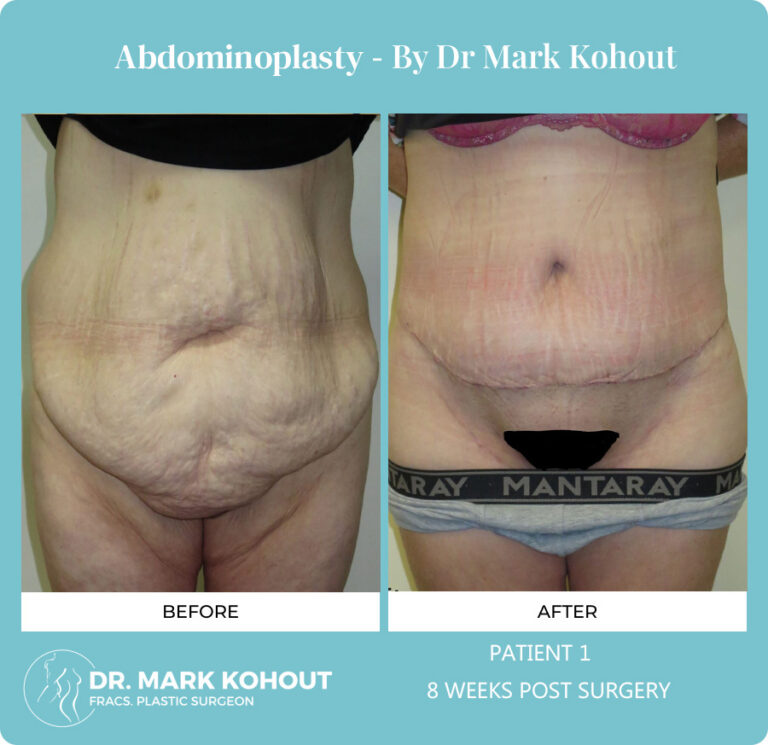
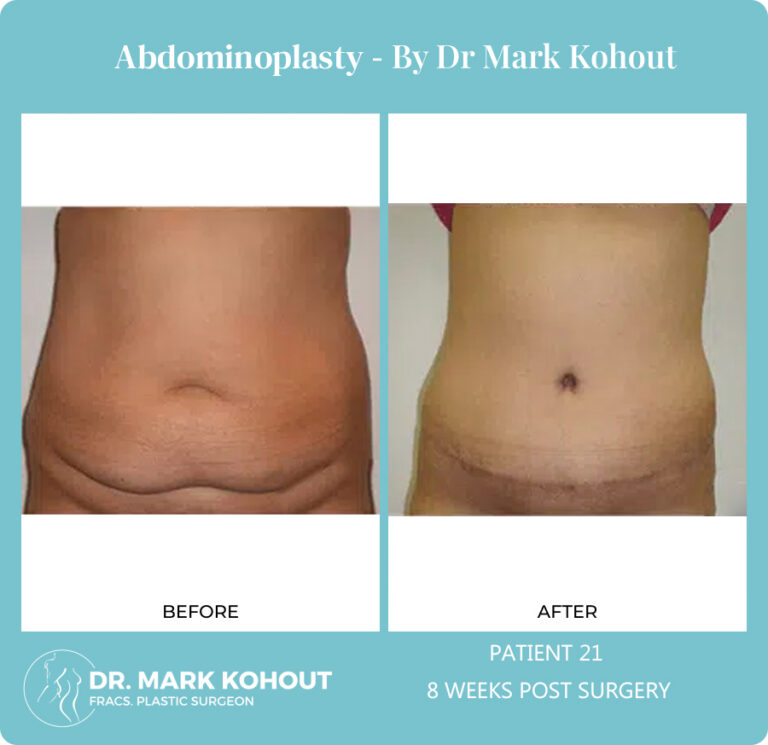
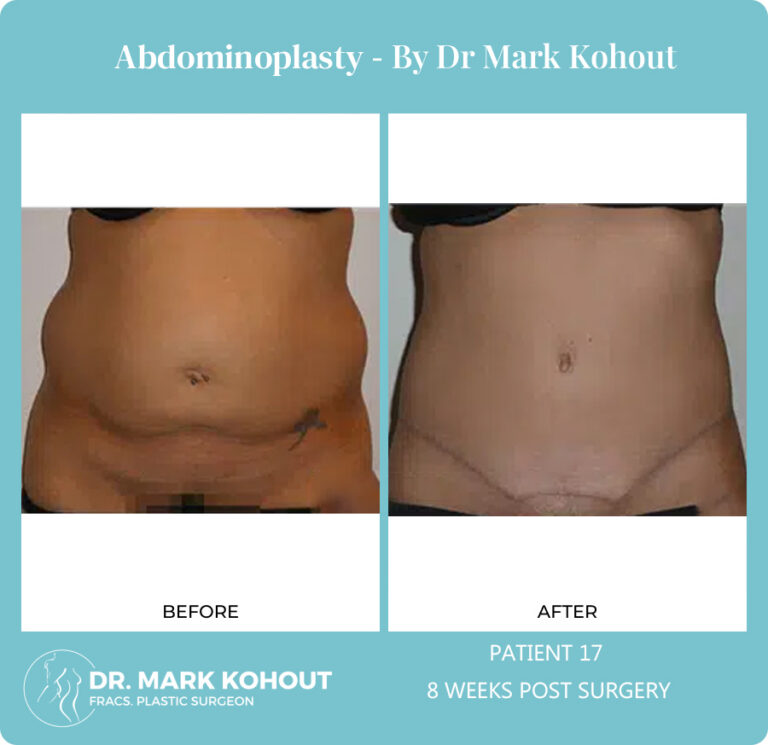
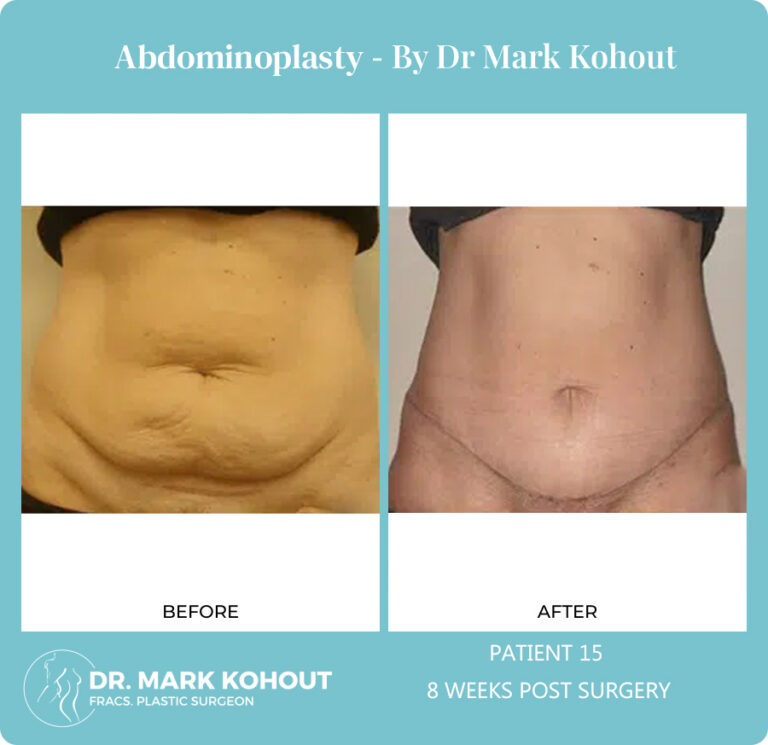
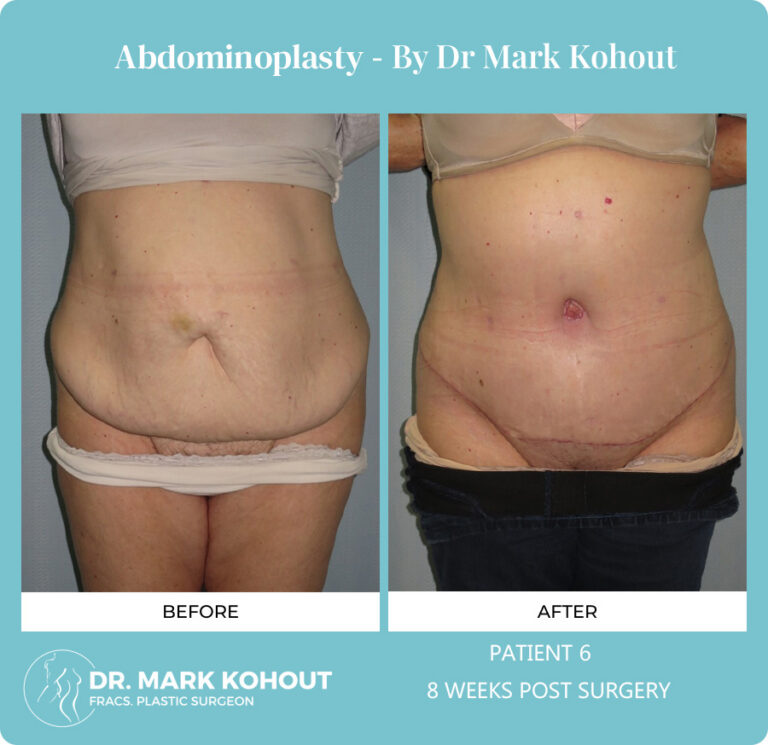
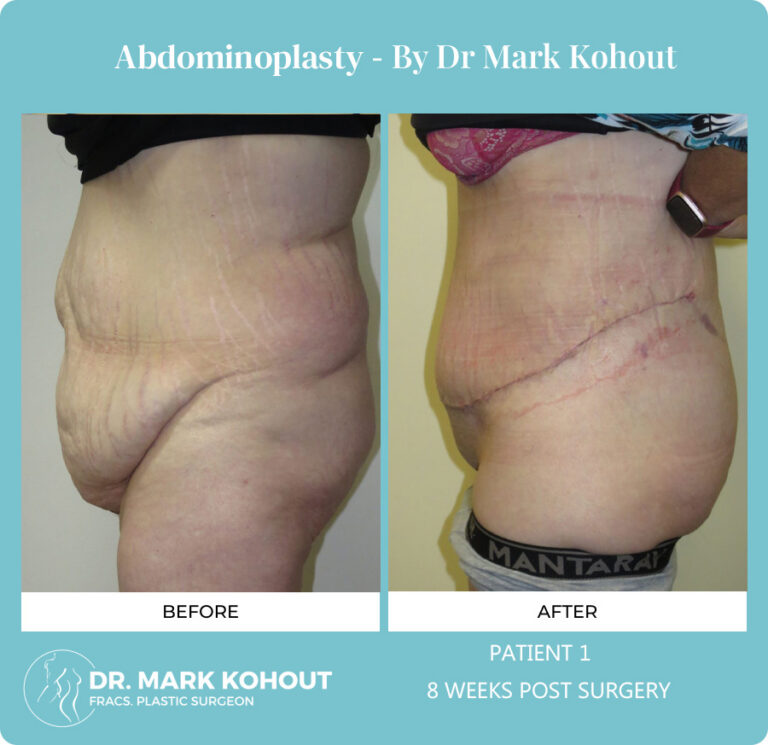
Before and After Photos of Abdominoplasty Surgery

View examples of individual abdominoplasty patient outcomes.

Disclaimer

Individual results vary due to personal health factors and genetics, and all surgical procedures carry inherent risks that should be discussed with a qualified health professional.

How Long Does Fleur-de-Lis Abdominoplasty Take?

Operating time varies according to the amount of tissue removed, abdominal wall work and whether other procedures are performed. A precise duration can only be estimated after the surgical plan has been established.

Fleur-de-Lis surgery is generally more extensive than a limited abdominal procedure because two excision directions are involved. Anaesthetic planning, medical history and any additional procedures also influence operative duration.

The length of surgery may depend on:

  • Extent of skin removal
  • Need for muscle repair
  • Previous abdominal surgery
  • Combined procedures

What Is Early Recovery Like?

Early recovery commonly involves swelling, bruising, tightness and restricted trunk movement. Patients usually need to modify walking, lifting and everyday activities while the incisions and deeper tissues heal.

The vertical and horizontal wounds create a broad healing area, and the point where the incisions meet may require particular observation. Recovery advice is individualised according to wound condition and overall medical progress.

Early recovery may involve:

  • A flexed walking posture
  • Compression garments
  • Temporary drains in some surgical plans
  • Assistance with household tasks
  • Regular postoperative reviews

When Can Patients Stand Fully Upright?

Patients may initially feel tight when standing because the abdominal skin has been repositioned. Upright posture generally returns progressively rather than being forced immediately after surgery.

The appropriate timing depends on wound tension, abdominal wall repair and individual comfort. Sudden stretching or forcing posture can place unnecessary tension across healing incisions.

Early posture guidance may include:

  • Short steps
  • Gradual straightening
  • Supported transitions
  • Avoidance of sudden extension

When Can Exercise Resume?

Exercise usually returns in stages after Fleur-de-Lis abdominoplasty, beginning with short walks before progressing to structured cardiovascular and resistance activity. More demanding abdominal and impact exercise generally returns later. For more detail, see our guide to exercise after abdominoplasty. 

A longer incision pattern and possible abdominal wall repair can influence activity restrictions. Exercise should therefore follow individual postoperative advice rather than a fixed internet timeline.

Activity progression may involve:

  • Short early walks
  • Longer level walking
  • Low-impact cardio later in recovery
  • Gradual resistance training
  • Later abdominal loading when cleared

When Can Patients Return to Work?

Return to work depends on the physical demands of the role as well as individual healing. Desk-based work and manual occupations usually require different recovery planning.

Prolonged sitting, commuting, lifting and standing all contribute to the physical workload. Patients should discuss actual job tasks rather than relying solely on an occupation title.

Work planning may consider:

  • Lifting requirements
  • Time spent standing
  • Commuting
  • Ability to modify duties
  • Access to rest periods

What Are the Main Risks of Fleur-de-Lis Abdominoplasty?

Fleur-de-Lis abdominoplasty carries general surgical risks and wound-related risks associated with a long, intersecting incision pattern. Complication rates vary according to patient factors, operative extent and surgical technique.

Published literature reports wound separation, delayed healing, infection, seroma, bleeding and thromboembolic complications among relevant concerns. Some studies report higher complication rates with vertical abdominoplasty in selected populations, while other centres report comparable outcomes, so individual risk assessment is essential.

Potential risks include:

  • Wound separation
  • Delayed healing
  • Infection
  • Seroma or fluid collection
  • Blood clots

Can Fleur-de-Lis Abdominoplasty Be Combined With Other Procedures?

Other body-contouring procedures may sometimes be performed at the same time, but combining operations increases surgical extent and may alter the risk profile. Staging procedures may therefore be considered in some patients.

Published post-weight-loss literature describes combinations with breast, arm, thigh and lower-body procedures, but combined surgery should not be assumed to be appropriate for everyone.

Planning may involve:

How Does Fleur-de-Lis Abdominoplasty Compare With a Body Lift?

Fleur-de-Lis abdominoplasty primarily addresses the abdomen, while a lower body lift extends treatment around the flanks and back. Some patients have tissue excess concentrated centrally, while others have circumferential changes requiring broader treatment.

The procedures can overlap conceptually but are not interchangeable. Examination determines whether the main concern is central abdominal laxity, circumferential tissue excess or a combination.

Differences may involve:

  • Surgical area
  • Scar length
  • Back and flank treatment
  • Position of tissue excess
  • Recovery demands

What Happens During a Consultation With Dr Mark Kohout?

Consultation allows Dr Mark Kohout to assess the distribution of abdominal skin excess and determine whether Fleur-de-Lis abdominoplasty or another body-contouring approach may be appropriate. Medical history, previous surgery and scar preferences are also reviewed.

The vertical scar is an important part of the decision and should be discussed openly before surgery. Patients should understand both what the additional incision may allow the surgeon to address and what permanent scarring it creates.

Consultation may include:

  • Examination of the abdomen
  • Review of weight history
  • Assessment of previous scars
  • Discussion of incision patterns
  • Review of risks and recovery

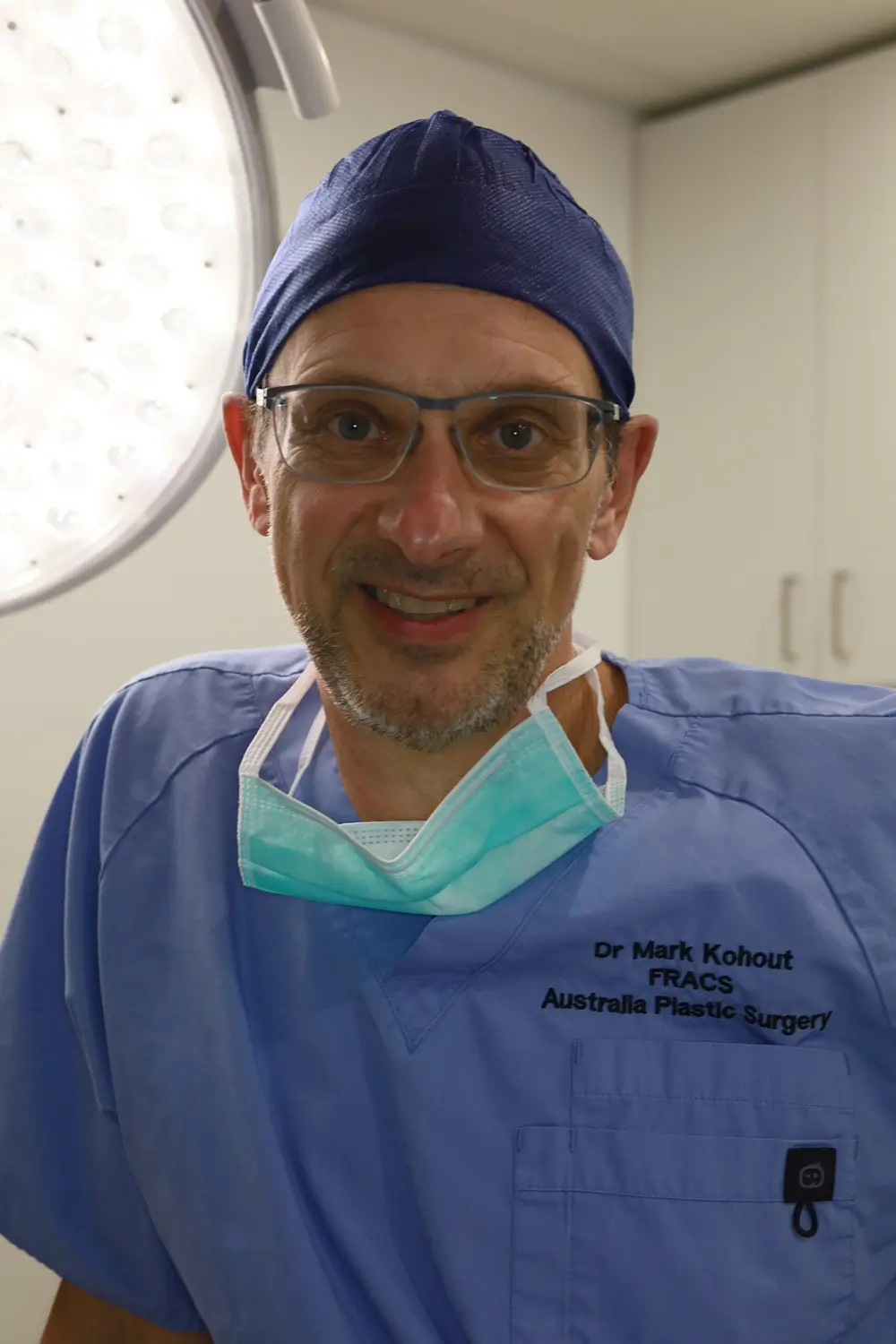
Dr Mark Kohout
Dr Mark Kohout Portrait Image

Fleur-de-Lis Abdominoplasty FAQs

Can a Fleur-de-Lis abdominoplasty affect how the belly button sits afterwards?It can, because the procedure may involve repositioning the abdominal skin around the umbilicus. The final position and surrounding scar pattern depend on the amount of tissue removed and the surgical plan.
Why might the vertical scar feel tighter than the horizontal scar?The vertical scar can be exposed to different patterns of tension when the torso bends, twists or stretches. It may therefore feel firmer or more noticeable during parts of recovery, especially while scar tissue is still maturing.
Can previous abdominal scars change the Fleur-de-Lis incision pattern?Yes, previous scars can influence blood supply, tissue mobility and where new incisions can be placed. Dr Mark Kohout considers existing surgical scars during planning because they may alter the operative approach.
Will sitting for long periods make the central scar feel more uncomfortable?Prolonged sitting can increase tightness, pressure or folding across the abdomen during early recovery. Regular position changes may be more comfortable once movement has been cleared by the surgical team.
Can the point where the vertical and horizontal scars meet heal differently from the rest?Yes, the junction can experience greater tension because several wound edges meet in the same area. For that reason, it is often monitored closely during postoperative reviews.
Can weight loss after surgery change how the vertical scar looks?Further substantial weight loss can alter the surrounding skin and soft tissues, which may change how the scar sits or how noticeable it appears. This is one reason weight stability is usually considered during surgical planning.
Does the vertical scar always extend all the way to the breastbone?No, its length depends on where the redundant tissue is located and how much needs to be removed. The proposed scar length should be discussed during consultation because it varies between patients.
Can clothing rub against the vertical scar during recovery?Yes, waistbands, seams and fitted garments can sometimes irritate healing scar tissue. Softer clothing and avoiding direct friction may be more comfortable while the incision is still settling.
Can asymmetry still be present after Fleur-de-Lis abdominoplasty?Yes, pre-existing asymmetry in the abdomen, ribs, hips or soft tissues can remain to some degree after surgery. Surgery can alter tissue distribution, but it cannot make both sides biologically identical.
Could a Fleur-de-Lis abdominoplasty make future abdominal surgery more complex?Potentially, because the procedure creates permanent scars and changes tissue planes within the abdomen. Any future surgeon should be told about the operation so previous incisions and altered blood supply can be considered.
Medical References

What Are the Next Steps for Someone Considering Fleur-de-Lis Abdominoplasty?

The next step is an individual consultation to determine whether the distribution of abdominal tissue warrants a Fleur-de-Lis pattern or another surgical approach. The decision should balance the amount and direction of tissue excess against the additional vertical scar and operative risks.

Dr Mark Kohout’s current Excess Skin Reduction Guide confirms that Fleur-de-Lis abdominoplasty forms part of his documented body-contouring practice. A consultation provides the setting to discuss weight history, abdominoplasty scar healing, alternatives, after abdominoplasty recovery and whether surgery is appropriate for the individual patient.

Patients can prepare by:

  • Bringing an up-to-date medication list
  • Providing relevant weight-loss history
  • Mentioning previous abdominal surgery
  • Writing down questions about scars
  • Planning time for recovery and follow-up
Explore Factors to Consider Before Cosmetic Surgery

Further Reading

Welcome to the Practice of
Dr. Mark Kohout

With over 25 years of experience and Harvard training, Dr. Mark Kohout offers experienced plastic and reconstructive surgery at his Sydney and Orange clinics. His patient-first approach focuses on delivering safe, natural results tailored to your unique goals.

What's Next?

Whether you are ready for a professional evaluation or just have a quick question, we’ve made it easy to connect with our team. Choose the option that best fits your needs below.

Book your Consultation

Take the first step toward your goals by filling out the brief form below. This information helps us understand your specific needs so we can make the most of our time together during your session. Once you submit your details, a member of our team will review your request and reach out shortly to confirm your appointment.

Patient Photo Assessment

Sending photos for a patient photo assessment can help you and your plastic surgeon prepare for your consultation. By reviewing clear, accurate photos, Dr Kohout can provide preliminary patient photo assessment like insights, assess your needs, and determine the right approach for your procedure.

Tips for Uploading Photos

ASK A FRIEND

Friend takes photo

GOOD LIGHTING

Plain wall, bright light

ALL ANGLES

Front / sides/ 45°

CLEAR & SHARP

No portrait mode

SEND ORIGINALS

No edits or compression

Dr. Mark Kohout Plastic Surgery in Sydney & Orange

Experienced Plastic Surgeon

Dr. Mark Kohout

A qualified plastic surgeon who operates with care and integrity, based in central Sydney with over 20 years of experience in the cosmetic field. His extensive training and experience assures patients they are in highly trained surgical hands. Dr. Kohout is a dedicated, friendly professional who is committed to providing the high quality care, support and results, alongside his compassionate team.

Dr Mark Kohout (MED0001133000)
Specialist Plastic Surgeon
Specialist registration in Surgery – Plastic Surgery

25

Years of Experience

Years of Delivering Exceptional Cosmetic Care.

10000+

Surgical Procedures

Procedures performed by our qualified surgeons.

15+

Available Treatments

Cosmetic treatment options tailored to your needs.

Our Trusted

Accreditations

fracs

Dr Mark Kohout is a qualified plastic surgeon based in central Sydney, with over 20 years of experience in the field of cosmetic and reconstructive surgery. He draws on extensive surgical training and clinical experience to tailor care to the individual needs and goals of each patient.

Dr Kohout is known for his thoughtful, patient-centred approach, guiding individuals through each stage of their surgical journey — from initial consultation to post-operative care. Working alongside a compassionate and professional team, he is committed to providing high standards of care in a supportive and respectful environment.

Locations

Opening Hours

Monday - Friday

8:30AM - 05:00PM

Saturday - Sunday

Closed

Disclaimer: Dr Mark Kohout (MED0001133000) a Registered Medical Practitioner, Specialist Plastic Surgeon. All surgical or invasive procedures carry risks and complications. We recommend seeking a second opinion from an appropriately qualified medical practitioner before proceeding with any surgery. Results depend on individual patient circumstances and can vary significantly. Results may also be impacted by a variety of factors including your lifestyle, weight, nutritional intake and overall health. Consult your Specialist Plastic Surgeon for details. This information is general in nature and is not intended to be medical advice nor does it constitute a doctor-patient relationship. Surgery risks and complications will be covered in detail during a consultation with your Surgeon. We recommend seeking a second opinion from an appropriately qualified medical practitioner before proceeding with surgery.

©2024  All Rights Reserved

This website contains imagery which is only suitable for audiences 18+. All surgery contains risks, read more here.

Close Welcome Bar

Get Your Buttock Lift & Implants Guide

Get Your Facial Aesthetic

Get Your Breast Implant Removal

Get Your Female Genital Surgery Guide

Get Your Excess Skin Guide

Get Your Gynaecomastia Guide

Get Your Liposuction Guide

Get Your Abdominoplasty Guide

Get Your Cost of Surgery Guide

Get Your Breast Implant Replace Guide

Get Your Breast Reduction Guide

Get Your Breast Augmentation Guide

Make an Enquiry