Breast Implants Sydney

With Dr. Mark Kohout

arm body

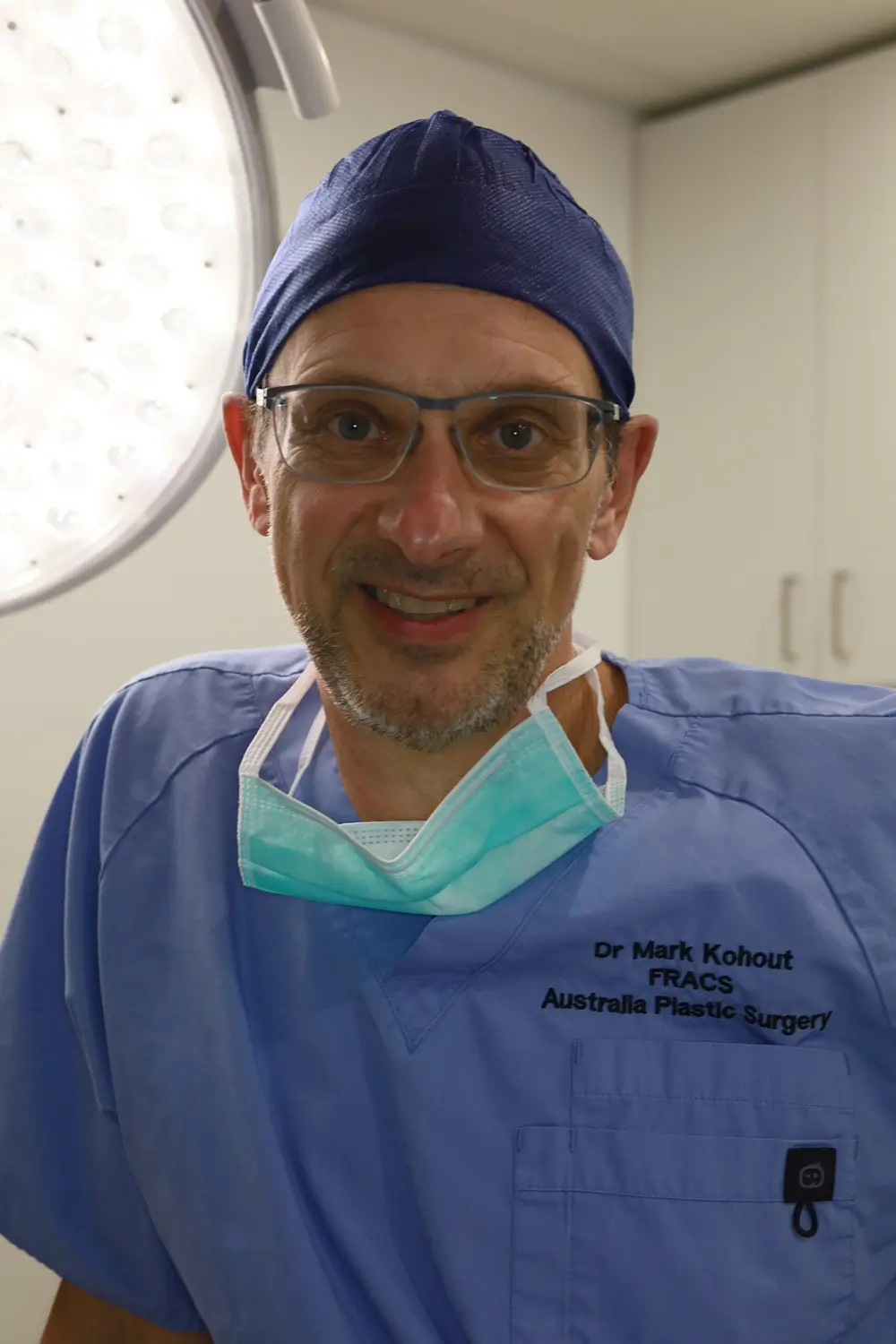
Breast implant surgery with Dr Mark Kohout is offered at his Sydney clinic, with additional consultations available in Orange for regional patients. Dr Kohout (MED0001133000) is a Specialist Plastic Surgeon with specialist registration in Surgery – Plastic Surgery and more than 25 years of experience in cosmetic and reconstructive surgery.

Dr Kohout works within accredited facilities, supported by a clinical team focused on structured pre-operative assessment, clearly explained risks and options, and planned follow-up care. Note that all surgical or invasive procedures carry risks and complications, and patients are encouraged to seek a second opinion from another appropriately qualified medical practitioner before proceeding.

What Are Breast Implants?

Breast implants are medical devices designed to increase or restore breast size and shape, consisting of a silicone shell filled with either silicone gel or sterile saline and placed under the breast tissue or chest muscle. They may be used for cosmetic augmentation, to help restore breast volume after mastectomy or trauma, or to address noticeable asymmetry between the breasts. Implants are available in a variety of sizes, shapes (round or anatomical/“teardrop”) and profiles, allowing the surgical plan to be tailored to the individual’s anatomy and goals.

The two main types of breast implant fill commonly used are:

  • Silicone gel implants – pre-filled with cohesive silicone gel that tends to keep its shape. Many surgeons consider these to have a relatively soft feel, and they are widely used in Australia.
  • Saline implants – inserted empty and filled with sterile saltwater in theatre. If they leak, the saline is absorbed by the body, but they may feel firmer and can have a higher risk of visible rippling in some patients.

Implants can be placed:

  • Under the breast tissue but above the pectoral muscle (subglandular)
  • Partially or fully under the pectoral muscle (submuscular/subpectoral)

The choice depends on breast tissue thickness, chest wall shape, lifestyle (for example, high-intensity sport or weight training), and the type of implant used.

Individual outcomes vary with factors such as skin quality, pre-existing breast shape, body weight, healing characteristics and lifestyle. Implants are not lifetime devices and need to be monitored and, at some stage, replaced or removed.

Who May Benefit

A clear understanding of personal goals and physical needs is important, and there are several broad reasons people may consider breast implants: increasing breast volume, adjusting symmetryand shape, or addressing breast contours after weight change or pregnancy.

Common situations include:

✓ Increasing breast volume

Some women seek an increase in breast size because their breasts have always been smaller than they would prefer, or because they feel their upper body does not match their lower body in terms of proportions. Others have noticed a reduction in volume over time, even without major weight change. Breast implants may be considered to increase volume in a way that can be planned to suit chest width, existing tissue and clothing preferences.

✓ Addressing asymmetry

Noticeable size or shape differences between the breasts are common. In some cases, this can be managed with external options such as supportive garments; in other situations, the difference is sufficient that surgery is considered. Implants can sometimes be used in different sizes or combined with breast lift or reduction techniques to reduce asymmetry, though complete symmetry is not achievable in every case.

✓ Replacing volume loss after life events

Pregnancy, breastfeeding, significant weight loss or hormonal changes can lead to changes in breast volume and shape. Where a person has lost breast fullness and would like to increase volume again, implants may be one of the options discussed, sometimes alongside or in combination with a breast lift.

Not everyone with these concerns will wish to have surgery, and not everyone who seeks surgery will be a suitable candidate. A consultation with a Specialist Plastic Surgeon allows for assessment of anatomy, health status and alternatives, including the option of not proceeding.

breast

Take our Plastic Surgery Quiz to find out if you’d be a good candidate and if you are ready for cosmetic surgery.​

You can use our plastic surgery quiz as a starting point. This kind of tool can help you reflect on:

  • Your main reasons for considering breast implants
  • How long you have been thinking about surgery
  • What you are hoping might change

However, a quiz cannot determine whether implant surgery is medically appropriate, cannot match you to a specific implant, and does not replace a detailed, face-to-face consultation and physical examination. Treatment decisions should only be made after discussion with an appropriately qualified medical practitioner who can review your medical history, examine your chest, and outline options, risks and limitations.

Am I a Candidate?

Four benchmarks are often considered when assessing suitability: size increase, replacement of volume loss, symmetry, and health. In practice, your surgeon will look at:

✓ Breast and chest characteristics

Your current breast size, shape, skin quality and nipple position all influence what can reasonably be achieved with implants. During examination, the surgeon will assess:

  • Breast width, height and projection
  • The thickness of the tissue covering the chest muscle
  • Skin elasticity and any stretch marks
  • Degree of droop (ptosis), which may mean that a lift is also discussed

These factors help determine suitable implant sizes, shapes and profiles, and whether implants alone or a combined procedure is likely to address your main concerns.

✓ General health

Breast implant surgery typically requires general anaesthesia in an accredited hospital or day surgery facility. Suitability, therefore, depends on overall health, including:

  • Heart and lung function
  • Blood pressure and diabetes control
  • Body mass index and weight stability
  • History of clotting or bleeding disorders
  • Smoking or nicotine use

You may be advised to stop smoking for a period before and after surgery, avoid certain medications or supplements that increase bleeding, and ensure any chronic conditions are optimally managed in conjunction with your GP or specialist. These measures are aimed at reducing the risk of complications such as infection, delayed wound healing and blood clots.

✓ Psychological readiness and expectations

It is important that expectations are realistic and that you understand both the possibilities and the limitations of surgery. Breast implants may increase volume and alter shape, but they:

  • Do not correct all types of asymmetry or chest wall differences
  • Do not last a lifetime; they require monitoring and may need replacement or removal in the future
  • Do not address every aspect of how a person feels about their body or life more broadly

Dr Kohout will discuss what changes are likely in your case, using diagrams or implant sizers, and will explain that no specific outcome can be guaranteed. Patients are encouraged to seek a second opinion before making a decision.

middle body

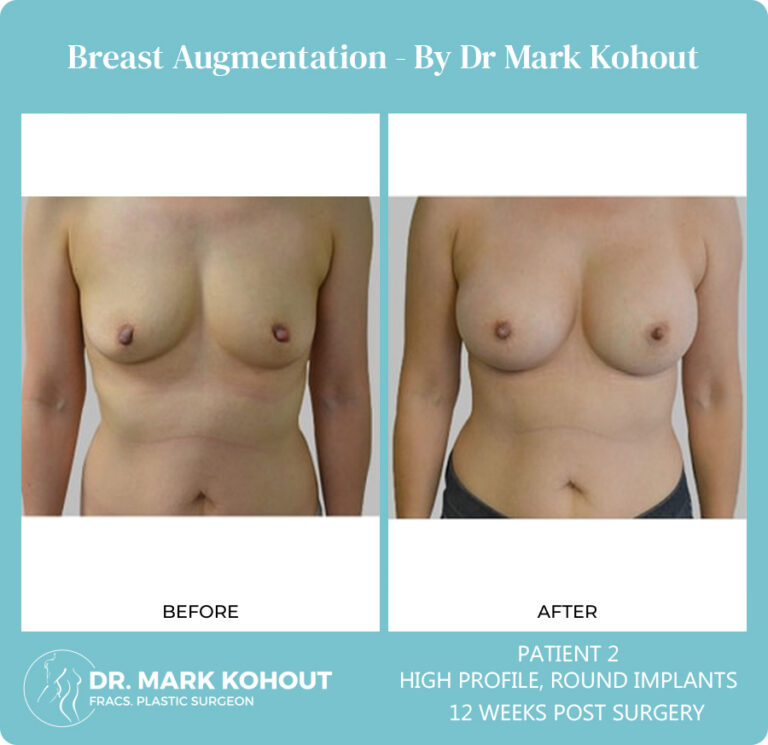
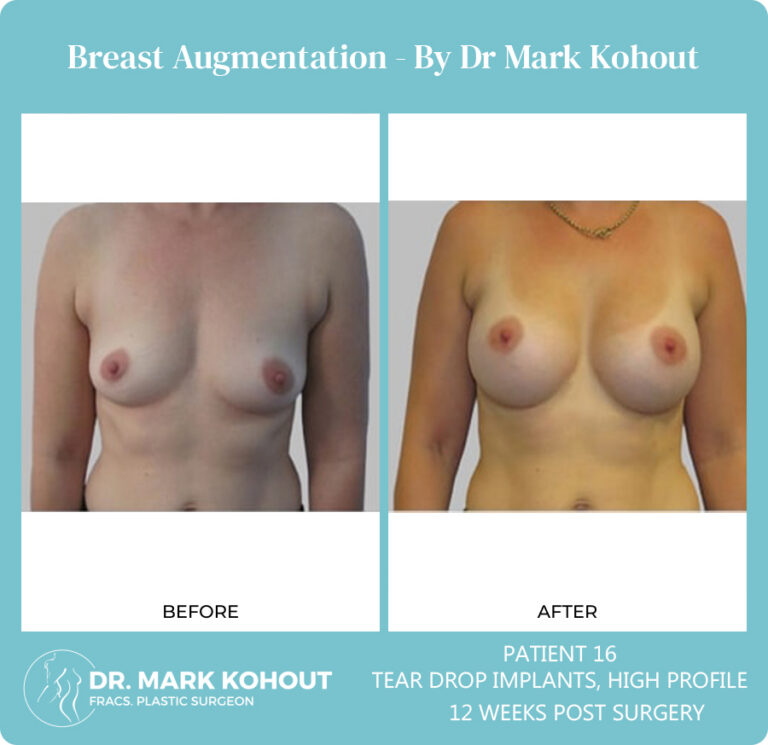
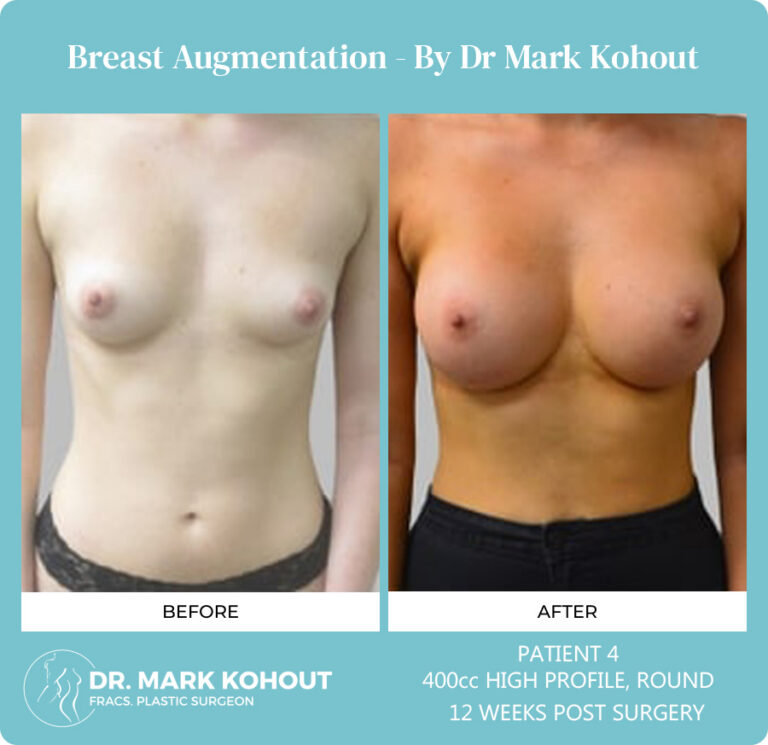
Before and After Photos of Breast Augmentation Surgery

See the difference it has made for our clients.

Disclaimer

Individual results vary due to personal health factors and genetics, and all surgical procedures carry inherent risks that should be discussed with a qualified health professional.

A before-and-after gallery may be helpful for understanding the types of changes that can occur following breast augmentation surgery. However, the images are indicative only, as each patient’s anatomy, surgical plan, healing response and outcome will differ.

It is important to remember that:

  • Every person’s starting breast shape, chest wall, skin quality and scarring tendency is different.
  • The degree of change reflects the specific surgical plan and implant choice for that individual.
  • Photographs are not a guarantee of what any one person will experience.

Individual results vary due to personal health factors and genetics, and all surgical procedures carry inherent risks. During a consultation, selected photos may be used to illustrate typical ranges of change, but they are not predictive modelling.

How Is the Procedure Performed?

The breast implant procedure can be outlined in three key stages: consultation, anaesthesia and incision, and placement of implants.

✓ Consultation

During the initial consultation, Dr Kohout will:

  • Take a detailed medical and medication history, including previous surgery, pregnancies, breastfeeding, and any breast disease
  • Examine your breasts and chest wall to assess tissue thickness, nipple position, skin quality and asymmetry
  • Discuss your goals, including preferred clothing styles, lifestyle and sports
  • Explain implant options (silicone vs saline, round vs anatomical, different profiles) and placement choices (above or below the muscle)

Imaging tools or sizers may be used to help illustrate possible size ranges, but these are guides rather than precise predictions. You will also receive information about risks, possible complications, recovery timeframes and the need for follow-up and long-term monitoring.

✓ Anaesthesia and incision

Breast implant surgery is usually performed under general anaesthesia. Once you are asleep and monitored by an anaesthetist, Dr Kohout makes incisions in commonly used locations such as:

  • The inframammary fold (the crease under the breast)
  • Around the lower edge of the areola (periareolar)

Each approach has advantages and potential drawbacks, including scar visibility, access for implant placement and implications for future breast revision surgery. Less commonly used approaches (such as axillary or umbilical) are not standard for all patients and may not be suitable for silicone gel implants.

✓ Placement of implants

Implants are inserted either above or below the chest muscle, then the incisions are closed with sutures and the patient is monitored in recovery. In more detail:

  • A “pocket” is created under the breast tissue and/or pectoral muscle to accommodate the implant.
  • The implant (silicone or saline) is placed into the pocket, with care taken to ensure the correct position relative to the nipple and chest wall.
  • Dr Kohout checks for symmetry and adjusts pocket dissection where needed.
  • The incisions are closed in layers, sometimes with dissolving sutures under the skin. A dressing is applied, and a support bra may be fitted.

In most cases, this is a day-surgery procedure, although some patients may stay overnight depending on health status, home support and the nature of the operation.

What Is the Recovery Like?

Breast implant surgery recovery involves several stages: swelling and discomfort, restricted physical activity for a period, and gradual return to usual activities over 4 – 6 weeks. Dr Kohout’s recovery-focused blogs add further detail.

✓ Early days (first week)

  • Swelling, tightness and discomfort across the chest are common, particularly in the first few days.
  • Oral pain-relief medication is usually prescribed.
  • You will normally wear a support bra or compression garment as directed to help support the implants and reduce swelling.

Most people are advised to avoid lifting, stretching overhead, or sudden arm movements, and to sleep on their back with the upper body slightly elevated for a time. Short walks are encouraged to assist circulation.

✓ Weeks one to three

  • Bruising and swelling generally begin to settle, though the breasts may feel firm or “high” while tissues adjust.
  • Many patients can return to light, desk-based work within 1–2 weeks, depending on pain levels, commute and job demands.
  • Strenuous upper-body activity, heavy lifting and impact exercise are typically restricted during this phase.

Follow-up appointments are used to monitor wound healing, check implant position and answer questions about scar care, bra choices and activity progression.

✓ Weeks four to six and beyond

  • Swelling continues to reduce, and the implants usually settle into a more stable position over several weeks to months.
  • Gentle lower-body exercise can often be increased gradually after clearance from Dr Kohout; upper-body resistance work is reintroduced in stages.
  • Some temporary alterations in nipple or breast sensation are common and may improve over time, although some changes can be longer-term.

Full recovery timelines vary between individuals. Dr Kohout and his team will provide personalised guidance based on how you are healing and the work or activities you plan to resume. Any sudden increase in pain, redness, discharge, fever, shortness of breath or leg swelling should prompt urgent medical review.

Dr Mark Kohout

What Are the Risks?

Breast implants carry several risks, including infection, scarring, implant rupture, capsular contracture (tightening of scar tissue around the implant), changes in nipple or breast sensation and the possibility of being dissatisfied with the result.

Broadly, potential risks and complications include (but are not limited to):

  • General surgical and anaesthetic risks – bleeding, infection, blood clots in the legs or lungs, reactions to anaesthetic drugs.
  • Haematoma or seroma – collections of blood or fluid around the implant that may require drainage.
  • Capsular contracture – tightening and thickening of the scar capsule around the implant, which can lead to firmness, discomfort or visible shape change; in some cases revision surgery is considered.
  • Implant rupture or leakage – saline implants deflate as saline is absorbed, while silicone gel implants may develop silent or asymptomatic rupture; imaging such as ultrasound or MRI may be recommended if rupture is suspected.
  • Changes in nipple or breast sensation – increased sensitivity, reduced feeling or numbness, which may be temporary or longer term.
  • Scarring – all incisions leave permanent scars; in some people they can become wide, raised or darker than surrounding skin.
  • Asymmetry or contour issues – differences between sides, visible rippling, or implant malposition (for example, implants sitting too low, too high, or towards the side); revision surgery may sometimes be discussed.

– BIA-ALCL (Breast Implant-Associated Anaplastic Large Cell Lymphoma)

There is a rare type of lymphoma, BIA-ALCL, which has been associated mainly with textured breast implants. It is a cancer of the immune system that arises in the fluid and scar tissue around an implant, rather than in the breast tissue itself. Current data suggest that the lifetime risk for people with textured implants is low but not zero.

Common symptoms include breast swelling, a new fluid collection around the implant, a lump, pain or changes in breast shape, often developing several years after implantation. Most cases are treated with surgery to remove the implant and capsule; some require additional therapies. If you have implants and develop any of these symptoms, you should seek medical assessment.

– Systemic symptoms and “breast implant illness”

Some women with implants report systemic symptoms such as fatigue, joint pain or cognitive difficulties, often referred to as “breast implant illness” (BII) or systemic symptoms associated with breast implants. At present, there is no single agreed diagnostic test or definition, and research is ongoing; some studies report improvement for many women after implant removal, while also noting that other medical or psychological conditions may be present.

Because of this uncertainty, assessment usually involves a thorough medical review to look for other explanations for symptoms as well as discussion of the potential role of implants. Any decision about implant removal or replacement is made on an individual basis after considering current evidence, potential benefits and the risks of additional surgery.

Your personal risk profile depends on your general health, type of implant, surgical plan, and adherence to post-operative instructions. These issues should be discussed in detail with your surgeon, and we recommend seeking a second opinion before proceeding.

What Are the Costs?

Costs vary and usually include the surgeon’s fee, hospital or day-surgery facility charges and anaesthesia costs, as well as pre-operative consultations, follow-up visits, and medications.

Typical components include:

  • Surgeon’s fee – for consultation, planning, performing the operation and scheduled post-operative care.
  • Anaesthetist’s fee – for administering and monitoring anaesthesia.
  • Facility fees – theatre time, nursing care, equipment and consumables.
  • Investigations – such as blood tests or imaging, when required.
  • Post-operative expenses – medications, support garments, dressings and any extra appointments beyond the usual schedule.

Breast implant surgery for cosmetic augmentation is generally not covered by Medicare or private health funds in Australia, although there may be exceptions where implants are part of reconstructive treatment (for example, after mastectomy) or correction of a severe asymmetry and strict criteria are met. Patients are encouraged to confirm any potential rebates directly with Medicare and their health fund using information from the consultation, as item numbers and policies can change.

Many clinics offer financing options, and Dr Kohout’s practice aims to provide flexible payment plans, arranged through appropriate channels, to help reduce financial pressure. A personalised quote is usually provided after a face-to-face assessment, once the surgical plan has been defined.

Dr Mark Kohout

Breast Implant FAQs

How long do breast implants last?

Breast implants are not considered lifetime devices. While some may remain in place for many years, others may require removal or replacement earlier due to rupture, capsular contracture, changes in position, or changes in your own breast tissue over time. Regular clinical review and imaging when indicated help monitor the implant condition.

Can I breastfeed after having implants?

Many women with implants can breastfeed, but this is not guaranteed. The ability to breastfeed depends on factors such as surgical technique, incision location and underlying glandular tissue function. If breastfeeding is important to you, this should be discussed before surgery so that incision and implant placement can be planned with this in mind, where possible.

Will implants affect breast cancer screening?

Breast implants can make mammograms more technically challenging, but specialised techniques (such as implant-displacement views) and, in some cases, ultrasound or MRI can be used to visualise breast tissue. It is important to tell the imaging centre that you have implants and to follow national breast-screening recommendations or any tailored plan your doctor suggests. Current evidence indicates that implants do not increase the risk of breast cancer, though they are associated with rare conditions such as BIA-ALCL as discussed above.

Will I still be able to feel my breasts and nipples?

Some change in sensation is common in the months after surgery, including numbness, reduced feeling or increased sensitivity. Sensation often improves gradually, but in some cases, altered feeling can be longer-term. Your individual risk depends on incision placement, implant size relative to your tissues and personal healing characteristics.

Do I need a GP referral?

A GP referral is now required for all plastic surgery appointments due to changes in AHPRA. IThe benefits of a referral means your surgeon receives relevant medical information, supports coordination with other specialists where needed (for example, if you have a history of breast disease or systemic illness) and is required if there is any possibility of Medicare involvement for reconstructive indications.

Welcome to the Practice

Dr Mark Kohout is a Specialist Plastic Surgeon with more than 25 years of experience, practising in central Sydney and in Orange, NSW. His practice information highlights:

  • Specialist registration in Surgery – Plastic Surgery (MED0001133000)
  • Training and experience in both cosmetic and reconstructive procedures
  • A patient-centred approach that emphasises clear explanations of procedures, risks and alternatives
  • Care delivered within accredited facilities, supported by a multidisciplinary team

Results vary between individuals, that lifestyle and health factors can influence outcomes. Seeking a second opinion from another appropriately qualified medical practitioner is recommended before proceeding.

Download
Breast Augmentation
Surgery Guide

Breast Augmentation Procedure Guide Card

What’s Next?

If you are considering breast implant surgery, the next step is usually a face-to-face consultation. This appointment allows a detailed review of your medical history, examination of your breasts and chest wall, discussion of non-surgical options and alternative procedures, explanation of implant choices, and a thorough outline of potential benefits, limitations, risks, recovery and costs in your individual circumstances.

Dr Kohout offers a patient photo-assessment option, which can help with preliminary planning, but any decision to proceed should only be made after in-person assessment. You are encouraged to involve your GP and, if you wish, seek a second opinion from another Specialist Plastic Surgeon before making a final decision. Whether you are ready for a professional evaluation or just have a quick question, we’ve made it easy to connect with our team. Choose the option that best fits your needs below.

Further Reading

Book your Consultation

Take the first step toward your goals by filling out the brief form below. This information helps us understand your specific needs so we can make the most of our time together during your session. Once you submit your details, a member of our team will review your request and reach out shortly to confirm your appointment.

Patient Photo Assessment

Sending photos for a patient photo assessment can help you and your plastic surgeon prepare for your consultation. By reviewing clear, accurate photos, Dr Kohout can provide preliminary patient photo assessment like insights, assess your needs, and determine the right approach for your procedure.

Tips for Uploading Photos

ASK A FRIEND

Friend takes photo

GOOD LIGHTING

Plain wall, bright light

ALL ANGLES

Front / sides/ 45°

CLEAR & SHARP

No portrait mode

SEND ORIGINALS

No edits or compression

Dr. Mark Kohout Plastic Surgery in Sydney & Orange

Experienced Plastic Surgeon

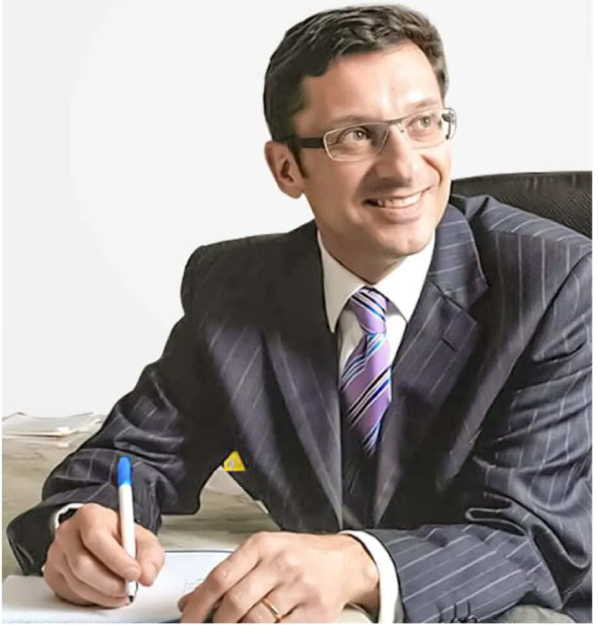
Dr. Mark Kohout

A qualified plastic surgeon who operates with care and integrity, based in central Sydney with over 20 years of experience in the cosmetic field. His extensive training and experience assures patients they are in highly trained surgical hands. Dr. Kohout is a dedicated, friendly professional who is committed to providing the high quality care, support and results, alongside his compassionate team.

Dr Mark Kohout (MED0001133000)
Specialist Plastic Surgeon
Specialist registration in Surgery – Plastic Surgery

25

Years of Experience

Years of Delivering Exceptional Cosmetic Care.

10000+

Surgical Procedures

Procedures performed by our qualified surgeons.

15+

Available Treatments

Cosmetic treatment options tailored to your needs.

Our Trusted

Accreditations

fracs

Dr Mark Kohout is a qualified plastic surgeon based in central Sydney, with over 20 years of experience in the field of cosmetic and reconstructive surgery. He draws on extensive surgical training and clinical experience to tailor care to the individual needs and goals of each patient.

Dr Kohout is known for his thoughtful, patient-centred approach, guiding individuals through each stage of their surgical journey — from initial consultation to post-operative care. Working alongside a compassionate and professional team, he is committed to providing high standards of care in a supportive and respectful environment.

Locations

Opening Hours

Monday - Friday

8:30AM - 05:00PM

Saturday - Sunday

Closed

Disclaimer: Dr Mark Kohout (MED0001133000) a Registered Medical Practitioner, Specialist Plastic Surgeon. All surgical or invasive procedures carry risks and complications. We recommend seeking a second opinion from an appropriately qualified medical practitioner before proceeding with any surgery. Results depend on individual patient circumstances and can vary significantly. Results may also be impacted by a variety of factors including your lifestyle, weight, nutritional intake and overall health. Consult your Specialist Plastic Surgeon for details. This information is general in nature and is not intended to be medical advice nor does it constitute a doctor-patient relationship. Surgery risks and complications will be covered in detail during a consultation with your Surgeon. We recommend seeking a second opinion from an appropriately qualified medical practitioner before proceeding with surgery.

©2024  All Rights Reserved

This website contains imagery which is only suitable for audiences 18+. All surgery contains risks, read more here.

X

Get Your Facial Aesthetic

Get Your Breast Implant Removal

Get Your Female Genital Surgery Guide

Get Your Excess Skin Guide

Get Your Gynaecomastia Guide

Get Your Liposuction Guide

Get Your Abdominoplasty Guide

Get Your Cost of Surgery Guide

Get Your Breast Implant Replace Guide

Get Your Breast Reduction Guide

Get Your Breast Augmentation Guide

Make an Enquiry