

Dr Mark Kohout

Managing Swelling and Bruising after Facelift

doctor working
Home » Blog » Managing Swelling and Bruising after Facelift
Managing Swelling and Bruising after Facelift by Dr Mark Kohout

Table of Contents

Managing Swelling and Bruising after Facelift banner by Dr Mark Kohout

Dr Mark Kohout is a Specialist Plastic Surgeon based in Sydney, with specialist registration in Surgery – Plastic Surgery, more than 25 years of experience in cosmetic and reconstructive procedures, and medical registration number MED0001133000. Swelling and bruising after facelift surgery are common temporary responses to tissue repositioning and healing, and they are usually managed through rest, head elevation, prescribed medication and careful adherence to postoperative instructions.

The amount and duration of swelling vary between patients. Surgical technique, the extent of tissue adjustment, medication use, skin characteristics, activity levels and individual healing response can all influence how facelift recovery progresses.

Although these changes are often expected, patients should understand which symptoms require medical review. Rapidly increasing one-sided swelling, worsening pain, expanding bruising, fever, wound discharge, breathing difficulty or an unexpected change in facial movement should be reported promptly to the treating surgical team.

This article explains what patients may expect from swelling and bruising after facelift surgery, practical measures that may support recovery and signs that should not be ignored. Recovery varies, and Dr Mark Kohout will provide advice based on the procedure performed and each patient’s individual risk factors.

Understanding the Healing Process After a Facelift

✓ What a Facelift Involves Surgically

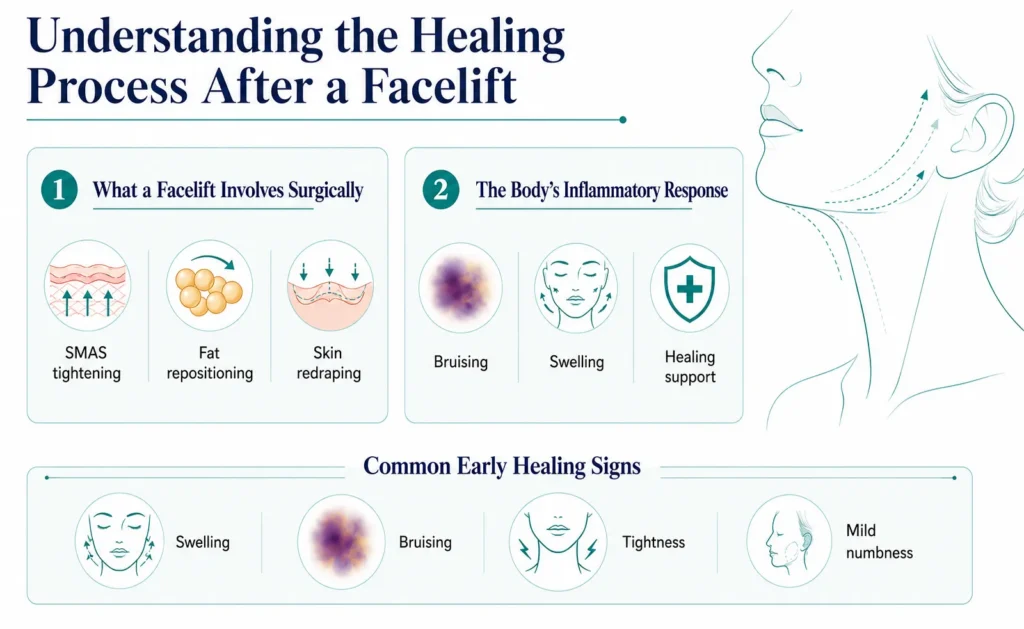
A facelift, medically known as rhytidectomy, is a face surgery procedure designed to reposition and tighten soft tissue of the face and neck. Dr Mark Kohout, Plastic Surgeon in Sydney, performs facelifts with attention to natural anatomical structures. By lifting deeper facial layers and re-draping the skin, the procedure aims to reduce the visible effects of skin laxity.

This often includes tightening the SMAS layer (superficial muscular aponeurotic system), repositioning fat pads, and trimming excess skin. The incisions are generally made around the ears and possibly under the chin. The procedure can be customised depending on the degree of correction needed, the patient’s facial anatomy, and the quality of their skin. While this allows for significant reshaping, it also results in predictable tissue trauma – leading to swelling and bruising. These are not complications, but rather normal biological responses to tissue manipulation and repair.

✓ The Body's Inflammatory Response

Bruising and swelling occur as part of the body’s natural healing mechanism. When tissues are disturbed during surgery, blood may leak from small vessels into surrounding tissue, leading to bruising. Simultaneously, the body sends fluid and immune cells to the area, resulting in swelling.

Swelling is the body’s way of creating an environment conducive to healing – bringing white blood cells and nutrients to the surgical site. Inflammation is essential to the healing cascade, though it can sometimes be misinterpreted as a sign of complications. The most commonly affected areas include the cheeks, jawline, and neck. The degree and duration of these symptoms vary between individuals, and while visible externally, these changes also reflect deeper tissue activity necessary for recovery. Patients may also notice a sensation of tightness or mild numbness during this period, which is generally temporary.

Understanding the Healing Process After a Facelift by Dr Mark Kohout

The Timeline of Swelling and Bruising After a Facelift

✓ Week-by-Week Guide to What to Expect

The first six weeks after a facelift usually involve a gradual reduction in bruising, swelling and facial tightness. The exact pace depends on the extent of surgery, health factors and how closely postoperative instructions are followed.

Days 1-3: Swelling, bruising, tightness and facial fullness are commonly most pronounced.
Days 4-7: Bruising may begin to change colour and swelling may slowly reduce.
Week 2: Many patients notice clearer improvement and feel more comfortable with light social contact.
Weeks 3-4: Residual puffiness or mild asymmetry may remain, particularly in the morning.
Weeks 5-6: Facial contours often become more settled, although deeper healing continues.
Beyond six weeks: Subtle swelling, firmness or altered sensation may continue to improve.

The visible recovery period is only one part of healing. Final tissue settling may take several months and should be reviewed over time.

✓ Individual Variability in Healing

Each person’s recovery differs based on factors such as age, skin quality, general health, and lifestyle. Pre-existing conditions like hypertension or a tendency to bruise easily can also influence recovery duration. Dr Mark Kohout emphasises tailored aftercare to support individual healing. Patients may heal faster or slower than others, and comparisons with others should be avoided.

Other variables that may affect healing include smoking history, nutritional status, and adherence to postoperative instructions. Patients who carefully follow guidelines generally observe smoother recovery phases. Healing is not linear, and minor setbacks such as increased swelling after physical exertion are not uncommon. Proper rest, follow-up visits, and open communication with the surgical team help ensure that each phase of recovery is appropriately supported.

Strategies That May Help Reduce Swelling and Bruising

✓ Early Measures (First 48 Hours)

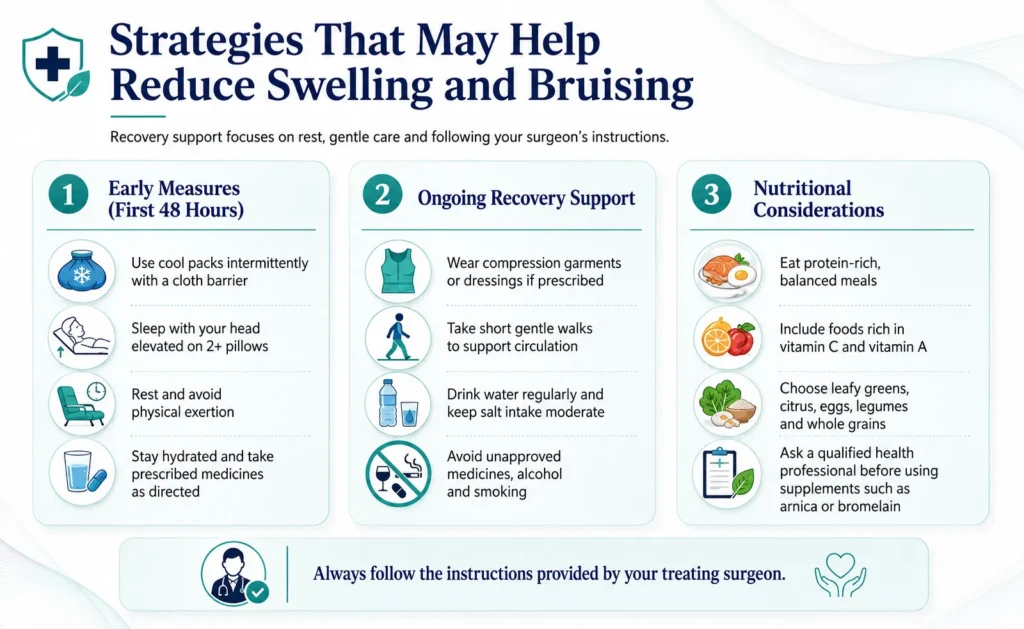
The first 48 hours after surgery are crucial for controlling swelling and bruising. During this time, applying cool packs intermittently can help manage the body’s inflammatory response. However, cold compresses should never be placed directly on the skin or surgical sites. Instead, a thin cloth or gauze barrier should be used to prevent irritation or cold injury.

Head elevation during rest and sleep further assists with fluid drainage and may prevent unnecessary pressure on the healing tissues. Patients are generally advised to sleep on their backs with two or more pillows supporting the head. Physical exertion should be strictly limited during this period, as even light activities can lead to increased blood pressure and a resurgence of bleeding or swelling.

Rest is not only physical but also mental. Reducing stress and allowing the body the conditions it needs to initiate repair plays a key role in recovery. Quiet time, hydration, and adherence to the prescribed medication schedule all contribute to a more comfortable experience.

✓ Ongoing Recovery Support

Beyond the initial 48 hours, swelling and bruising continue to subside. Patients are encouraged to gently resume daily activities as directed by their surgeon. The use of compression garments or dressings, when prescribed, provides light pressure to support healing tissues and may assist in contour retention.

Short, frequent walks around the home or neighbourhood may be recommended as part of a gradual return to exercise after plastic surgery to help promote circulation and reduce the risk of postoperative complications such as blood clots. Hydration remains essential during this time, and patients are encouraged to sip water regularly throughout the day. A low-sodium diet may help minimise water retention and associated puffiness.

Pain management may include prescription or over-the-counter medications. It is vital to avoid taking any medication not approved by the surgeon, as some can interfere with clotting and healing. Patients should also avoid alcohol and smoking, both of which can significantly delay healing and increase the risk of complications.

✓ Nutritional Considerations

A nutritious, well-balanced diet rich in vitamins and minerals plays an integral role in healing. Vitamin C is known to support collagen synthesis, which aids in skin repair. Vitamin A helps maintain the skin’s structural integrity, while protein provides the building blocks for tissue regeneration.

Including leafy greens, citrus fruits, lean meats, eggs, legumes, and whole grains can optimise recovery. Adequate caloric intake is also necessary during this time, as the body’s energy demands are increased during the healing process. Patients should avoid drastic dieting or fasting while healing.

Some individuals explore complementary supplements such as arnica montana or bromelain. While these may offer benefit for some, they should only be used under the supervision of a qualified health professional, as interactions with other medications are possible.

Strategies That May Help Reduce Swelling and Bruising by Dr Mark Kohout
Download Dr Mark Kohout’s Facial Aesthetics Guide

Medical Interventions That May Be Recommended

✓ Under Surgeon Supervision

In specific cases, Dr Mark Kohout may recommend medical therapies to help manage swelling and bruising. These are not routine for every patient but may be used selectively based on individual needs and medical suitability.

Tranexamic acid (TXA), an antifibrinolytic medication, may be administered pre- or post-operatively to help reduce the severity and duration of bruising. Similarly, corticosteroids such as dexamethasone may be used in low doses prior to surgery to help modulate the inflammatory response.

These options are employed with careful consideration of a patient’s medical history and the type of facelift performed. They are part of a broader strategy that balances effective results with safety and long-term tissue health.

✓ Importance of Personalised Postoperative Advice

Every patient’s recovery journey is unique. For this reason, Dr Mark Kohout provides personalised postoperative instructions tailored to each individual’s surgery and health profile. Patients receive detailed written guides and have access to support staff for questions or concerns.

Follow-up appointments serve multiple purposes: to assess healing, detect early signs of issues, provide reassurance, and refine care plans if necessary. Continued oversight ensures that subtle progressions or changes are documented and managed with precision.

Signs That Warrant Prompt Medical Review

Although swelling and bruising are normal, certain signs may indicate a complication that requires medical attention. These include a  sudden increase in swelling or pain, especially if it occurs on one side of the face, as this may suggest a hematoma. Redness, increasing warmth, or discharge from the incision sites may be indicators of infection.

If patients experience fever, chills, or a general feeling of being unwell, these could signal systemic infection and should be reported immediately. Asymmetry that worsens rather than improves should also be evaluated. Prompt communication with Dr Mark Kohout’s clinic in Sydney allows for early assessment and intervention, often preventing more significant issues from developing.

Addressing Patient Concerns: A Practical Overview

Will I be able to go out in public?

Understandably, many patients are concerned about their appearance in the early stages of recovery. By the end of the second week, most individuals feel confident enough to attend low-key social activities. Any residual bruising can often be camouflaged with makeup, if approved by the surgeon. However, full social reintegration is typically best delayed until the third or fourth week, depending on individual healing.

What can I do to help my recovery?

Adherence to postoperative instructions is the most effective way to support recovery. Patients can also prepare ahead of time by setting up a comfortable recovery area at home, arranging for support with daily activities, and ensuring all prescribed medications are on hand. Emotional preparedness is equally important, as recovery can be an emotional experience for some.

How long will I look swollen or bruised?

Visible signs of surgery typically improve dramatically within the first two to three weeks. However, subtle swelling and changes in tissue firmness may continue for up to three months or longer. It is important for patients to understand that final outcomes take time and that gradual improvements are a sign of proper healing. Dr Mark Kohout remains available throughout this period to provide reassurance and adjust care as necessary.

The Role of the Plastic Surgeon in Recovery Support

The postoperative journey is a crucial part of any surgical experience. As a Sydney-based Plastic Surgeon, Dr Mark Kohout is involved in every step – from initial consultation to final follow-up. His continued oversight ensures that healing is proceeding as expected and that patients have access to professional advice during each stage of recovery.

Patients benefit from a consistent standard of care, ongoing assessment of healing progress, and a collaborative relationship with the surgeon. This consistency helps to reduce anxiety and allows patients to focus on their recovery with confidence.

Making Informed Choices About Facelift Surgery in Sydney

Choosing to undergo facelift surgery is a significant decision. Patients should research thoroughly, ask informed questions, and consult with a qualified Plastic Surgeon who is registered in Australia. Reviewing practitioner credentials, understanding surgical plans, and discussing postoperative expectations are essential steps.

Dr Mark Kohout’s Sydney practice provides detailed information, visual guides, and consultation time to help patients feel well prepared. Through education and open dialogue, patients are empowered to make choices aligned with their aesthetic goals and health needs.

FAQs About Swelling And Bruising After A Facelift

Why does swelling sometimes appear worse in the morning?During sleep, the body is in a horizontal position, which can contribute to fluid accumulation in the facial tissues. This is especially common in the first few weeks after surgery. Elevating the head during rest can help mitigate this effect.
Can bruising from a facelift extend to areas not operated on?Yes, bruising can travel under the skin due to gravity, appearing in areas such as the lower neck or upper chest. This does not indicate a problem but is part of the normal healing process.
Is it normal to feel tightness or numbness in the skin?Tightness and numbness are common after facelift surgery and usually reflect temporary changes in nerve sensitivity and tissue tension. These sensations typically improve over several weeks to months.
Could certain foods or drinks make bruising worse?Some foods, especially those high in sodium or containing blood-thinning compounds (like ginger, garlic, or alcohol), may increase the risk of prolonged swelling or bruising. It’s advisable to follow dietary guidance provided postoperatively.
What role does hydration play in reducing swelling?Staying well-hydrated supports lymphatic function and circulation, both of which are essential for clearing fluids and promoting healing. Dehydration may contribute to delayed recovery or increased swelling.
How long after surgery should I expect the final facial contours to settle?Although initial healing occurs within weeks, it can take three to six months or longer for final contours to fully settle as deeper tissues recover and adapt. Patience is essential during this phase.
Are there any activities that can unintentionally worsen bruising or swelling?Strenuous exercise, bending over, heavy lifting, and sun exposure can all contribute to delayed resolution of swelling or worsening of bruising. Activities should be resumed gradually under guidance from the surgical team. Thorough preparation and realistic expectations enable patients to take an active role in their healing process and achieve long-term surgical outcomes in a responsible, informed manner.
Medical References

Summary: Supporting the Body Through the Healing Process

Swelling and bruising after a facelift are expected parts of recovery and reflect the body’s natural response to surgical treatment. With the right care, support, and understanding, most patients find these temporary changes manageable. Dr Mark Kohout’s approach as a Sydney-based Plastic Surgeon centres on education, clinical precision, and personalised care, helping each patient navigate their recovery safely and confidently. Thorough preparation and realistic expectations enable patients to take an active role in their healing process and achieve long-term surgical outcomes in a responsible, informed manner.

Take our Plastic Surgery Quiz to find out if you’d be a good candidate and if you are ready for cosmetic surgery.​

This plastic surgery quiz is intended as a general reflection tool to help you think about your goals, concerns and expectations. It does not diagnose conditions, determine whether facelift surgery is appropriate for you, or replace a detailed consultation and examination.

Your answers may highlight areas you want to discuss further, such as which facial changes concern you most, or how you feel about surgery in general, but any decision to proceed should only be made after a one-on-one assessment with a suitably qualified practitioner.

Further Reading


Related Blog Posts

Managing Swelling and Bruising after Facelift

Managing Swelling and Bruising after Facelift

Dr Mark Kohout is a Specialist Plastic Surgeon based in Sydney, with specialist registration in Surgery – Plastic Surgery, more than 25 years of experience in cosmetic and reconstructive procedures,…
Neck Lift Swelling And Bruising Sydney: What To Expect During Recovery

Neck Lift Swelling And Bruising Sydney:…

Many patients want to know what is normal after a neck lift, and Dr Mark Kohout FRACS, a Specialist Plastic Surgeon based in Sydney, offers professional advice, with his experience…

Recovery After Facelift Surgery In Sydney

Recovery After Facelift Surgery In Sydney

Facelift surgery, or rhytidectomy, is a procedure that addresses visible changes in the mid to lower face and the neck that develop gradually over time. For individuals considering this procedure,…

This website contains imagery which is only suitable for audiences 18+. All surgery contains risks, read more here.

X

Get Your Facial Aesthetic

Get Your Breast Implant Removal

Get Your Female Genital Surgery Guide

Get Your Excess Skin Guide

Get Your Gynaecomastia Guide

Get Your Liposuction Guide

Get Your Abdominoplasty Guide

Get Your Cost of Surgery Guide

Get Your Breast Implant Replace Guide

Get Your Breast Reduction Guide

Get Your Breast Augmentation Guide

Make an Enquiry