


Dr Mark Kohout

Return To Exercise After Breast Reduction

doctor working
Home » Blog » Return To Exercise After Breast Reduction
Return To Exercise After Breast Reduction by Dr Mark Kohout

Table of Contents

Return To Exercise After Breast Reduction by Dr Mark Kohout

Breast reduction surgery, also known as reduction mammoplasty, is a surgical procedure designed to reduce breast size by removing excess tissue, fat, and skin. Many people in Sydney choose this surgery to relieve physical discomfort such as neck, shoulder, and back strain that can come from having larger breasts. Once the initial recovery period begins, one of the most common questions patients ask is when and how they can return to exercise.


This comprehensive guide, informed by surgical principles, clinical experience, and current evidence, provides an in-depth, staged approach to resuming physical activity after breast reduction.

Download Dr Mark Kohout’s Breast Reduction Surgery Guide

Understanding Breast Reduction Surgery And Recovery​

✓ Overview Of Reduction Mammoplasty​

Reduction mammoplasty aims to achieve a breast size that is proportionate to the patient’s body frame, which may improve physical comfort and make daily activities easier. The procedure involves strategic incision placement, careful removal of excess breast tissue, and reshaping of the remaining tissue for a balanced appearance. Recovery from this procedure is as important as the surgery itself, and Dr Mark Kohout, Specialist Plastic Surgeon in Sydney, ensures that each patient receives guidance tailored to their individual needs, health status, and lifestyle.

✓ Why Exercise Recovery Matters​

A structured approach to exercise recovery helps protect healing incisions, reduces swelling, and promotes the gradual return of strength and mobility. In an active city like Sydney, where outdoor fitness and recreational activities are common, understanding when and how to safely resume movement can be vital for a successful recovery and long-term wellbeing.

Post-Operative Healing Phases​

Return To Exercise After Breast Reduction by Dr Mark Kohout

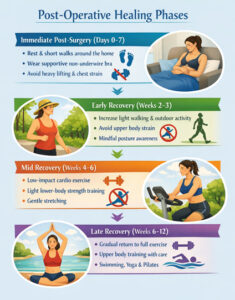
✓ Immediate Post-Surgery (Days 0-7)​

In the first week, the focus is on rest, short walks, and gentle movement around the home. Short walking sessions can help maintain circulation without placing unnecessary strain on healing tissue. Wearing a supportive, non-underwire bra at all times helps minimise movement and protect incision sites. Heavy lifting and any movements that engage the chest muscles should be avoided to prevent pulling on stitches.


✓ Early Recovery (Weeks 2-3)​

During this period, patients may feel stronger but must remain mindful of their healing process. Walking distances can be gradually increased, and light outdoor activity in safe environments can be introduced. It is still essential to avoid any form of exercise that causes the breasts to bounce or puts tension on the upper body. Posture awareness during daily activities helps prevent stress on healing areas.


✓ Mid Recovery (Weeks 4-6)​

By this stage, many patients can explore low-impact cardio such as stationary cycling or an elliptical machine. Lower-body resistance training may be introduced with minimal load, while upper-body movements should remain below shoulder height. This is also a time to reintroduce gentle flexibility exercises to maintain range of motion without causing strain.


✓ Late Recovery (Weeks 6-12)​

Patients often begin to return to their pre-surgery fitness routines in a gradual and measured way. Resistance training can be expanded to include the upper body, starting with lower weights and progressing slowly. Activities like swimming, yoga, and Pilates can be reintroduced when incisions are fully healed and only after clearance from the surgeon. Ongoing stretching and mobility work help restore flexibility.

Factors That Influence Return To Exercise​

✓ Individual Healing Rates​

Recovery timelines vary greatly from person to person. Skin quality, circulation, immune health, and the body’s natural healing response all affect the speed at which activity can be reintroduced.

✓ Surgical Technique Variables​

The location and length of incisions, the volume of tissue removed, and whether drains were used can all influence recovery duration and exercise readiness.

✓ Patient-Specific Considerations​

Existing health conditions, such as diabetes or a history of smoking, may slow recovery and require more cautious progression. Likewise, patients with higher baseline fitness may find they regain strength more quickly, though they must still follow surgical guidelines to avoid setbacks.

Protective Measures For Exercise After Breast Reduction​

✓ Choosing The Right Sports Bra​

Wearing an appropriate sports bra is critical to reducing strain and supporting healing tissue. A bra with a wide underband, adjustable straps, and breathable fabric is ideal. Underwires should be avoided until your surgeon confirms it is safe, as they can irritate or disrupt healing incisions.

✓ Monitoring For Warning Signs​

Patients should be attentive to any new or worsening symptoms during exercise. Signs such as redness, swelling, unusual discharge, or increased pain should prompt immediate contact with the surgical team to avoid complications.

✓ Safe Progression Principles​

Exercise intensity should be increased gradually, with close attention to form and comfort. Rushing back to high-intensity training can risk injury, swelling, or disruption to the surgical results.

The Role Of Professional Guidance​

✓ Surgeon-Led Timelines​

Your surgeon’s guidance is the most reliable source of information for determining safe progression. Regular check-ups allow the surgeon to assess incision healing, swelling, and overall readiness for the next exercise phase.

✓ Multidisciplinary Input​

For some patients, input from a physiotherapist or exercise physiologist can provide additional support, ensuring that exercise choices are tailored to their recovery and future fitness goals.

Life After Recovery​

✓ Long-Term Fitness With Reduced Breast Size​

Many patients report increased comfort during activities such as running, swimming, and yoga after breast reduction. The reduced weight and volume can make certain movements more accessible and enjoyable. However, supportive sports bras remain essential for maintaining breast health and comfort during impact activities.

✓ Preventing Setbacks​

Maintaining muscle strength, joint flexibility, and good posture are key to long-term results. Regular physical activity, paired with gradual progression and body awareness, helps preserve both health and surgical outcomes. Routine follow-up with your Plastic Surgeon can ensure any changes or concerns are addressed promptly.

FAQs About Returning To Exercise After Breast Reduction​

What types of exercise are least likely to strain healing incisions in the first month?

Gentle walking and light lower-body stretches are typically less likely to stress the chest area during early recovery, but your surgeon will confirm what is safe for you.

How can I tell if breast movement during activity is too much for my stage of recovery?

If you notice discomfort, pulling at the incision sites, or prolonged swelling after activity, the movement may be excessive and you should reduce intensity.

Are there specific stretching techniques that help without risking tension on the chest area?

Controlled, slow stretches that focus on the neck, back, and lower body can help maintain mobility while avoiding direct tension on the chest.

What environmental factors, such as heat or humidity, might affect exercise comfort after surgery in Sydney?

Hot or humid weather can increase swelling and discomfort, so exercising in cooler conditions or indoors can be beneficial during early stages.

Is there a recommended way to transition from indoor workouts to outdoor activities post-surgery?

Begin with short, low-intensity sessions outdoors and gradually increase time and intensity as your healing allows.

How do changes in posture after surgery impact the way I should perform certain exercises?

Improved posture can make some movements easier, but it may also require adjustments in form to maintain comfort and protect the surgical area.

Are there long-term exercise modifications that can help maintain surgical outcomes?

Choosing supportive sports bras, avoiding high-impact activities without adequate support, and maintaining balanced strength across the body can help protect your results.

Medical References

Key Takeaways​

Recovery after breast reduction is a carefully managed process that benefits from patience and adherence to professional advice. Beginning with gentle walking, progressing to light cardio, and eventually returning to full fitness routines, patients can resume their preferred activities in a safe, structured way. Proper breast support and awareness of individual healing patterns are essential in protecting both health and surgical results.


If you are considering breast reduction or need guidance on exercise after surgery, contact Dr Mark Kohout, Specialist Plastic Surgeon in Sydney, to arrange a consultation. A personalised recovery plan can help you resume the activities you enjoy while supporting optimal healing.


This information is general in nature and not a substitute for individual medical advice. Always follow your surgeon’s specific recommendations.

Further Reading

Related Blog Posts

Healing and Recovery After Breast Reduction Surgery

Healing and Recovery After Breast Reduction…

Comprehensive Guide to Healing and Recovery After Breast Reduction Surgery Download Dr Mark Kohout’s Breast Reduction Surgery Guide Healing and Recovery After Breast Reduction: Timeline and Tips Breast reduction surgery,…

Breast Reduction Medicare Cover – Will Medicare cover Mammoplasty?

Breast Reduction Medicare Cover – Will…

Will Medicare Cover My Breast Reduction? Breast reduction, medically known as reduction mammoplasty, is a surgical procedure that removes excess breast tissue and skin to achieve a breast size more…
Reducing Back Pain with Breast Reduction Surgery: Can Breast Reduction Surgery Help with Back Pain?

Reducing Back Pain with Breast Reduction…

The Connection between Back Pain and Overly Large Breasts For some women, overly large breasts can be a source of discomfort and pain, particularly in the back region. The weight of…
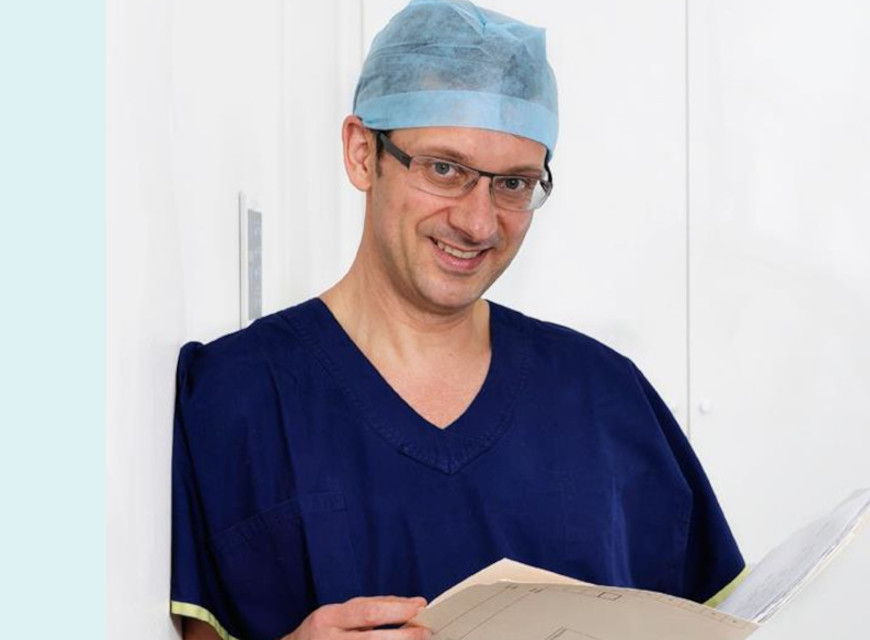
Experienced Plastic Surgeon

Dr. Mark Kohout

A qualified plastic surgeon who operates with care and integrity, based in central Sydney with over 20 years of experience in the cosmetic field. His extensive training and experience assures patients they are in highly trained surgical hands. Dr. Kohout is a dedicated, friendly professional who is committed to providing the high quality care, support and results, alongside his compassionate team.

Dr Mark Kohout (MED0001133000)
Specialist Plastic Surgeon
Specialist registration in Surgery – Plastic Surgery

This website contains imagery which is only suitable for audiences 18+. All surgery contains risks, read more here.

X

Get Your Breast Reduction Guide

Get Your Facial Aesthetic

Get Your Breast Implant Removal

Get Your Female Genital Surgery Guide

Get Your Excess Skin Guide

Get Your Gynaecomastia Guide

Get Your Liposuction Guide

Get Your Abdominoplasty Guide

Get Your Cost of Surgery Guide

Get Your Breast Implant Replace Guide

Get Your Breast Augmentation Guide

Make an Enquiry