
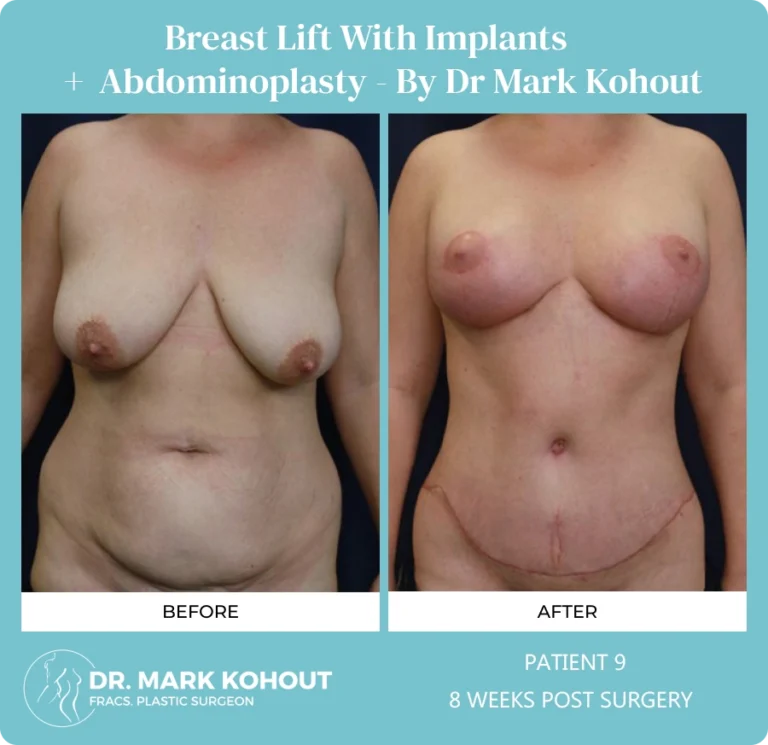
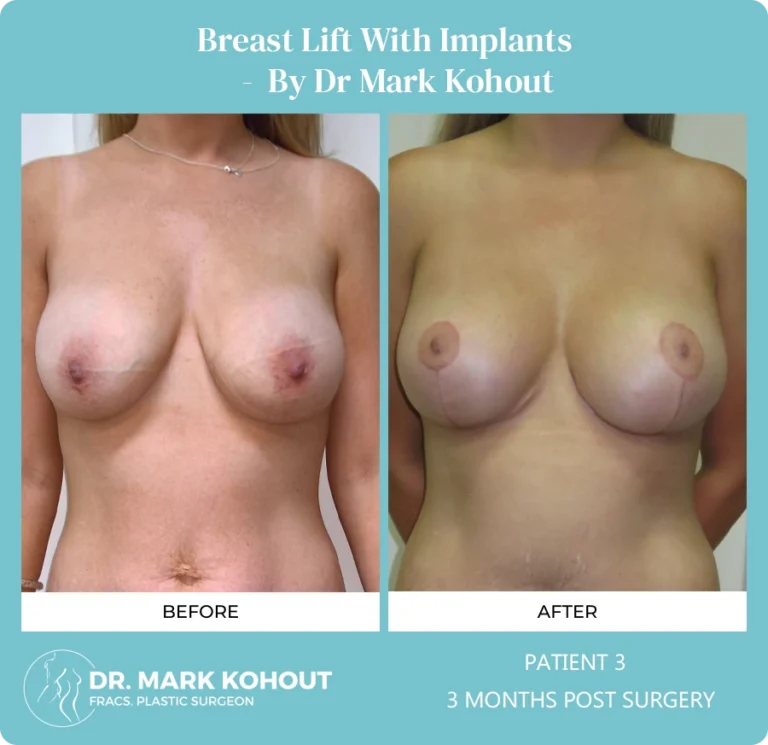
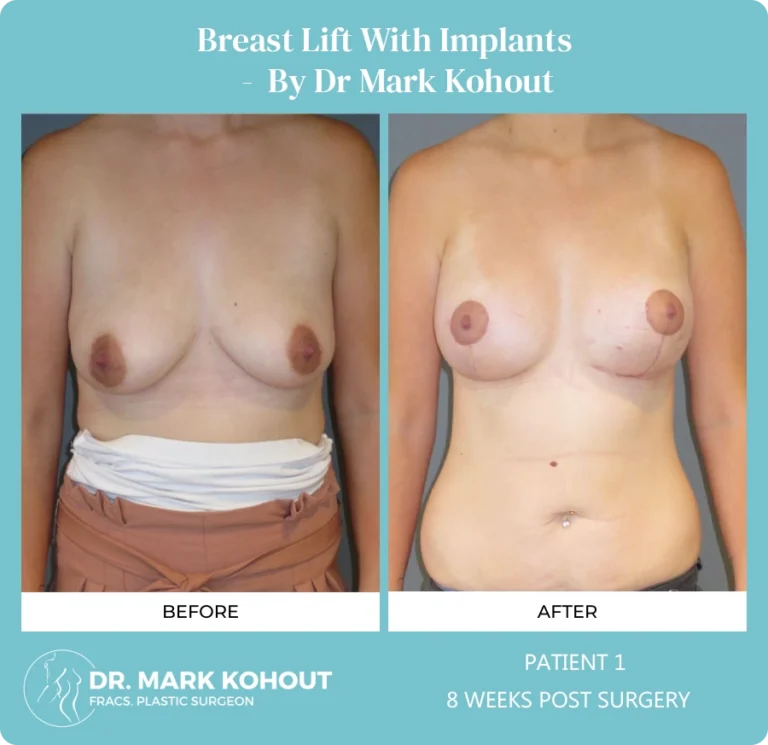
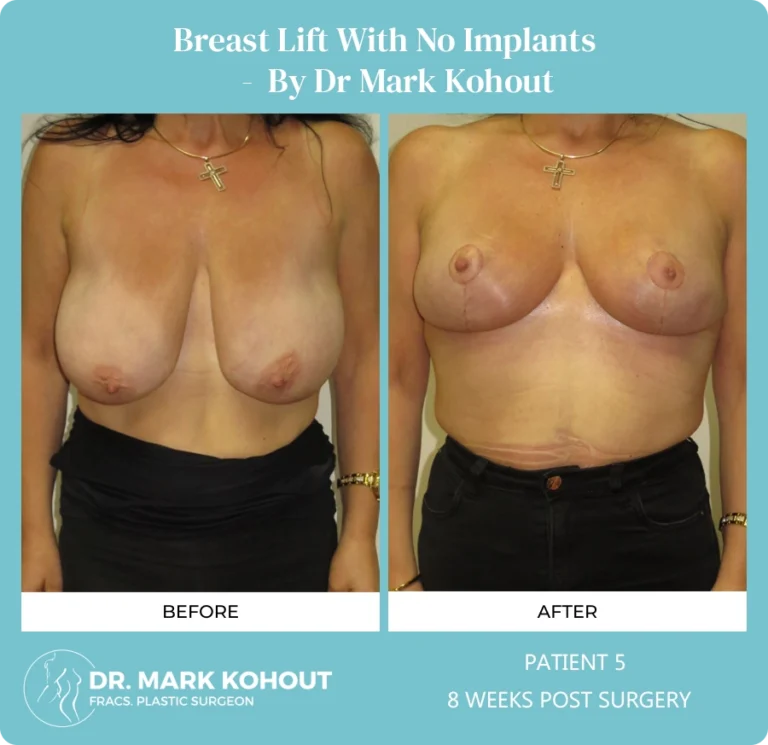
What Is the Recovery Like?
Recovery from breast lift surgery may involve several stages: swelling, bruising and discomfort for a few days; avoiding heavy lifting and strenuous activity for weeks; follow-up appointments; and final results developing over months as swelling decreases. Dr Kohout’s blog provides a more detailed week-by-week overview.
✓ Early days (first 3–7 days)
- Swelling, bruising and a sense of tightness across the chest are common
- Discomfort is usually managed with prescribed pain medication and supportive garments
- You will generally be encouraged to walk gently around the house but avoid lifting, stretching overhead or sudden arm movements
Dressings and the surgical bra help protect the incisions and support the breasts. You may need help at home with heavier chores or caring duties during this period.
✓ First two to three weeks
- Bruising starts to fade; swelling slowly begins to reduce, although it can remain noticeable for some time
- Stitches (if not dissolvable) are often removed within 1–2 weeks
- Many patients with desk-based roles return to work around 1–2 weeks after surgery, depending on how they feel and whether their workplace allows for appropriate movement restrictions
You will usually be advised to:
- Continue wearing a supportive, non-underwired bra
- Avoid heavy lifting, high-impact activity and upper-body strength training
- Sleep on your back or in a position that avoids pressure on the breasts
✓ Weeks four to eight and beyond
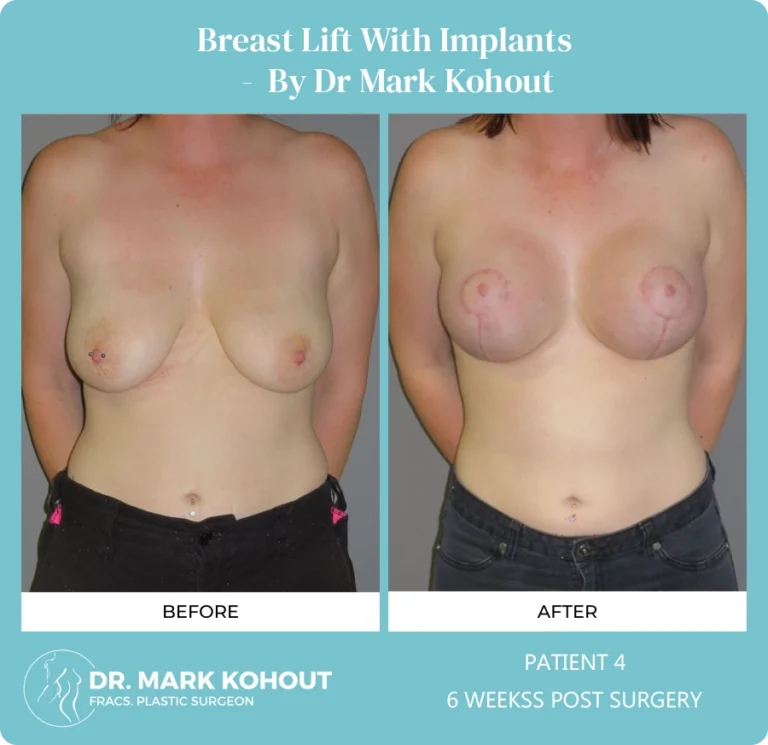
- Swelling gradually improves, though subtle changes can continue for several months
- Scars may initially appear firm and pink; over time, they often soften and fade, though they remain permanent
- More vigorous exercise and activities are generally reintroduced gradually, once your surgeon confirms that healing is sufficient
Nipple sensation can be temporarily altered (either reduced or more sensitive) and may take many months to stabilise. In some cases, changes in sensation can be long-term.
If at any stage you notice increasing pain, redness, discharge, fever, sudden swelling or other concerning symptoms, you should contact the clinic, your GP or seek urgent medical care.