
Exercise, work and everyday movement are important considerations for many people researching breast augmentation in Sydney. Walking, swimming, running, Pilates, yoga, gym training and social sport may all need to be modified temporarily while the incisions, implant pockets and surrounding tissues heal.
Dr Mark Kohout is a Specialist Plastic Surgeon in Sydney with more than 25 years of clinical experience. He provides individual activity guidance based on implant placement, the operation performed, wound healing, symptoms, general health and the physical demands of each patient’s work and exercise routine.
Why Does Exercise Need a Separate Plan After Breast Augmentation?​
Exercise increases movement, pressure and muscular loading around tissues that are still healing after breast augmentation. A staged return helps protect the incisions and implant pockets while allowing regular movement to resume progressively.
Breast augmentation commonly involves creating a pocket in front of or partly beneath the chest muscle and inserting an implant through an incision. Although bruising and surface wounds may settle relatively early, the deeper tissues continue to heal for longer.
Exercise can affect the surgical area by:
- Increasing heart rate and blood pressure
- Contracting the chest and shoulder muscles
- Producing repeated breast movement
- Placing tension on healing incisions
- Loading the implant pocket
How Can Breast Augmentation Affect Everyday Movement?​
Breast augmentation may temporarily affect reaching, lifting, pushing, pulling and movements involving the shoulders or chest. Activities that seem unrelated to exercise can still load the operated tissues.
The effect can be more noticeable when an implant is positioned partly beneath the pectoral muscle because this muscle contracts during many upper-body movements. Work duties, childcare, shopping and household tasks should therefore be considered alongside planned workouts.
Everyday movements that may need modification include:
- Reaching into high cupboards
- Opening heavy doors
- Carrying bags or laundry
- Lifting children or pets
- Pushing a vacuum or shopping trolley
Does Implant Placement Affect the Return to Exercise?​
Implant placement can influence which movements feel uncomfortable and how upper-body activity is progressed. Implants placed partly beneath the chest muscle may require particular care when chest exercises are reintroduced.
Pectoral contraction can move the tissues around a submuscular or dual-plane implant. Placement is only one factor, as implant dimensions, incision location, additional procedures and individual healing also affect the activity plan.
Planning may differ according to:
- Placement above or beneath the muscle
- Implant size and profile
- Incision position
- Existing chest-muscle activity
- Whether a breast lift was also performed
What Movement Is Usually Encouraged in the First Few Days?​
The first few days generally focus on rest, basic self-care and short periods of walking rather than formal exercise. Movement is kept controlled and within the instructions provided by the surgical team.
Patients are commonly assisted to sit, stand and walk shortly after surgery once medically appropriate. These activities help reduce prolonged immobility but should not be treated as a fitness session.
Early movement may include:
- Sitting up with assistance
- Walking briefly around the home
- Moving the ankles and legs while resting
- Standing for essential personal care
What Activity Is Usually Considered During Weeks One to Three?​
During the first three weeks, activity generally centres on progressively longer walks and light household tasks. Gym training, running and strong upper-body movements are usually still restricted unless the treating surgeon advises otherwise.
Several shorter walks may be better tolerated than one long outing. Flat, even surfaces reduce the need for sudden arm movements, strong balance reactions or increased effort.
Activities may include:
- Short indoor and outdoor walks
- Light meal preparation
- Brief passenger travel
- Desk-based tasks in short periods
Activities commonly deferred include:
- Heavy lifting
- Structured gym sessions
- Running or cycling
- Forceful pushing and pulling
When Can Low-Impact Cardio Be Considered?​
Low-impact cardiovascular exercise may be considered once wound healing and general recovery have been reviewed. The initial duration and resistance should be modest so the response of the breasts and chest can be monitored.
Walking is commonly increased before another form of cardio is introduced. A stationary bicycle may be considered when mounting the equipment, holding the handlebars and maintaining balance do not strain the chest.
Possible options include:
- Longer level walks
- Low-resistance stationary cycling
- Gentle treadmill walking
- Controlled lower-body movement
When Can Lower-Body Strength Training Resume?​
Selected lower-body exercises may return before heavy upper-body training when they can be performed without strong bracing, bouncing or gripping. Resistance and range of motion should be increased gradually.
Even leg exercises can load the chest when heavy weights are held or the upper body is braced forcefully. Body-weight or machine-based movements may therefore be modified during the initial return.
Early options may include:
- Sit-to-stand repetitions
- Partial squats
- Low step-ups
- Light leg-extension movements
- Controlled calf raises
When Can Upper-Body Training Resume?​
Upper-body resistance work is generally introduced after early wound healing and following medical clearance. Exercises that do not directly load the chest may return before pressing or weight-bearing movements.
Light weights and a limited range may be used initially, with attention to pulling, breast movement and next-day symptoms. Heavy overhead lifting can also affect the chest and shoulder region and should not be resumed solely because arm movement feels comfortable.
Initial exercises may include:
- Light biceps movements
- Supported triceps exercises
- Gentle shoulder mobility
- Low-resistance back exercises
When Can Chest Exercises Resume?​
Chest exercises such as push-ups, bench presses and dips are normally reintroduced cautiously because they contract the pectoral muscles around the implant pocket. The timing is particularly relevant for implants placed partly beneath the muscle.
A light load and limited range may be considered before heavier resistance. Exercise should be stopped when it causes unusual pain, increasing breast movement or persistent pulling around the incisions or implants.
Chest exercises requiring staged progression include:
- Push-ups
- Bench or chest presses
- Chest fly movements
- Dips
- Cable-cross exercises
When Can Running Resume After Breast Augmentation?​
Running usually returns later than walking because repeated impact produces more breast movement. A walk–jog progression may be considered after review when the wounds are closed and impact is comfortable with appropriate support.
Distance, pace and terrain should not all be increased at once. A high-support sports bra may reduce movement, but it does not replace tissue healing or medical clearance.
A staged return may involve:
- Brisk walking
- Short walk–jog intervals
- Level and predictable surfaces
- Gradual increases in running duration
When Can Swimming Resume?​
Swimming should not begin until the incisions are completely closed and the surgical team has confirmed that water immersion is appropriate. Entering a pool, ocean or spa with an incompletely healed wound may increase infection risk.
Pool swimming may be more predictable than ocean swimming because waves, currents and sudden movements add physical demand. Once approved, short relaxed sessions can precede stronger strokes and longer distances.
Swimming progression may include:
- Brief water walking
- Relaxed pool swimming
- Gradual increase in stroke effort
- Ocean swimming after further review
Is Ocean Swimming Different From Pool Swimming?​
Ocean swimming can require stronger shoulder movements and rapid responses to waves or currents. These demands may make it less suitable than calm pool swimming during the initial return to water.
Beach access can also involve carrying equipment, walking on uneven sand and managing changing conditions. These practical demands should be included when deciding whether the activity is appropriate.
Ocean-specific considerations include:
- Waves and currents
- Uneven entry and exit
- Cold-water response
- Carrying towels or equipment
- Distance from postoperative care
Why Is a Support Bra Important During Exercise?​
A properly fitted support bra can reduce breast movement during walking, running and other physical activity. The most appropriate level of support may differ between early recovery and later high-impact exercise.
The garment should not rub against the incisions, compress the breasts unevenly or create discomfort around the implant pocket. Dr Mark Kohout’s postoperative instructions and breast-augmentation recovery guidance include the use of supportive garments during healing.
A suitable bra should be assessed for:
- Firm but tolerable support
- Minimal incision friction
- Comfortable straps
- Breathable fabric
- Appropriate impact rating
Can a High-Impact Sports Bra Be Worn All Day?​
A high-impact sports bra may provide useful support during vigorous exercise but may feel excessively restrictive for continuous daily wear. The appropriate garment depends on healing, incision position and individual comfort.
Patients may use a softer postoperative or everyday support bra outside training and reserve firmer garments for impact activity. Any bra causing numbness, skin marks or incision irritation should be reviewed.
Possible concerns include:
- Excessive compression
- Strap pressure
- Heat and perspiration
- Rubbing beneath the breast
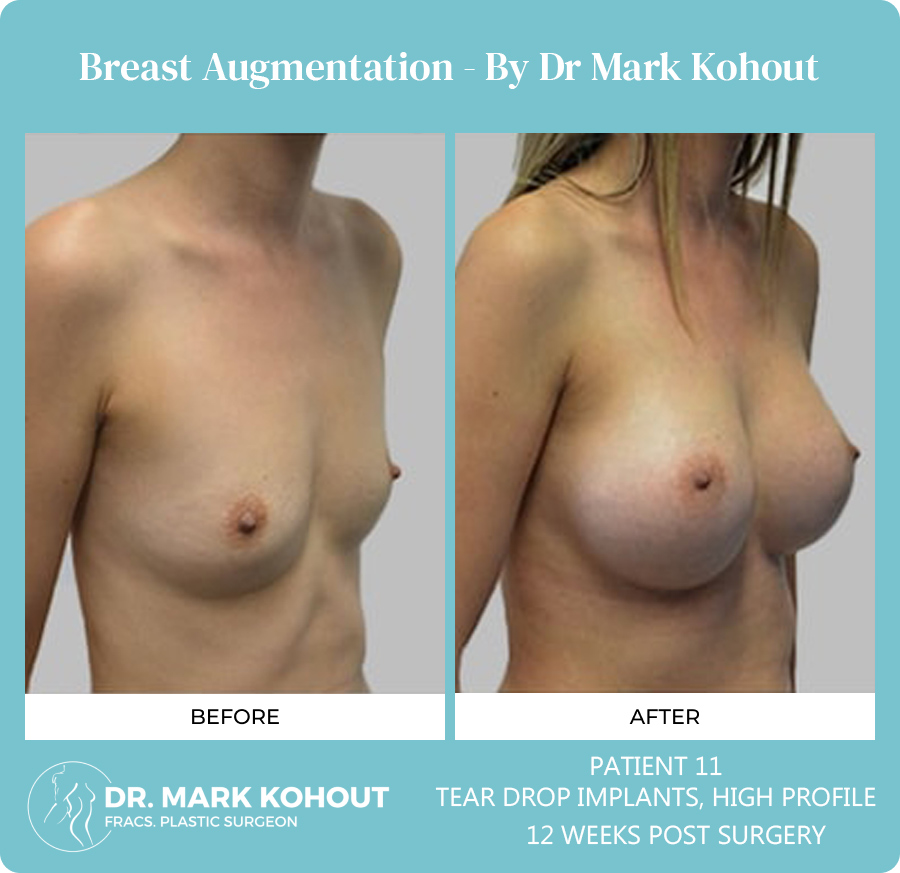
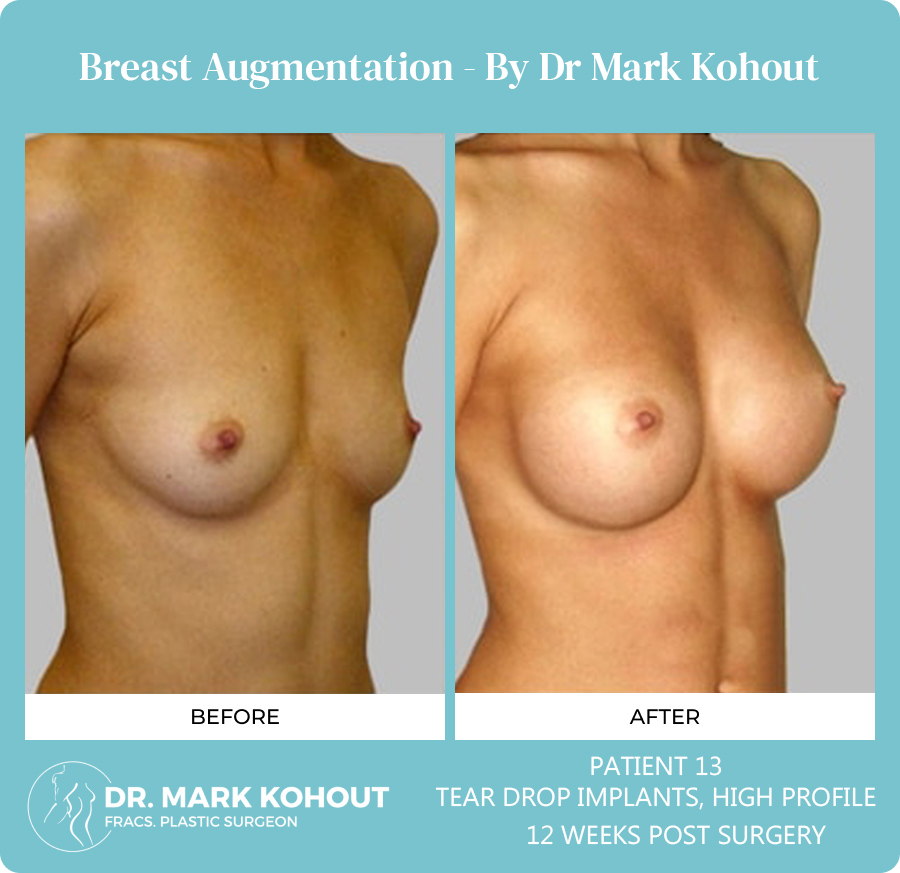
Breast Augmentation Before and After Images
Why Do Recovery Timelines Differ Between Patients?​
Patients recover at different rates because implant placement, additional procedures, general health and physical demands vary. A quicker reduction in discomfort does not necessarily mean the deeper tissues are ready for unrestricted training.
Preoperative fitness may help with general mobility, but highly active patients may also be tempted to progress too quickly. Clinical findings and the response to activity are more useful than comparisons with friends or online accounts.
Individual factors include:
- Implant and pocket characteristics
- Breast lift performed at the same time
- Diabetes or connective-tissue conditions
- Medicines affecting healing
- Work and caring responsibilities
Can Exercise Cause Breast Implants to Move?​
Implant position can be affected by several factors, including pocket dimensions, tissue characteristics, healing and trauma. Strong pectoral contraction may be relevant for patients with implants beneath the muscle, which is why chest loading is progressed carefully.
Exercise does not automatically cause displacement, but a new change in breast position or movement should be assessed. Patients should avoid assuming that visible asymmetry after training is simply muscular soreness.
Changes requiring review may include:
- A new difference in breast height
- Altered breast shape
- Unusual implant movement
- Persistent discomfort with muscle contraction
Can Weight Training Change Breast Appearance Over Time?​
Changes in chest-muscle size, body fat and posture can alter how the breasts and implants appear. The implant itself does not grow or shrink with training, but the tissues around it can change.
Substantial increases in pectoral muscle may be more noticeable when implants are placed beneath or partly beneath the muscle. Weight loss may reduce natural breast tissue and make implant borders more apparent.
Long-term influences include:
- Pectoral muscle development
- Loss or gain of body fat
- Postural changes
- Skin and tissue ageing
What Happens During Follow-Up with Dr Mark Kohout?​
Follow-up appointments allow Dr Mark Kohout to assess the incisions, swelling, breast position and implant-related concerns before activity is progressed. Recommendations may be changed according to examination findings and the patient’s symptoms.
Patients should describe the exact exercise rather than saying only that they have returned to the gym. Duration, resistance, impact and the response later that day all help guide advice.
Follow-up discussions may cover:
- Walking and cardiovascular exercise
- Work and lifting
- Swimming and running
- Upper-body training
- Upcoming events or travel
Exercise After Breast Augmentation FAQs​
Can I train for a fun run or half-marathon after breast augmentation?
Yes, many people return to distance running after healing. Training should restart gradually once the surgeon confirms it is safe.Can push-ups or bench press make my implants move?
Chest exercises can affect the pectoral muscles, particularly with implants placed under the muscle. They should be reintroduced slowly with surgical guidance.Is ocean swimming harder on implants than pool swimming?
Ocean swimming may involve stronger currents, waves and sudden movements. Once fully healed, both pool and ocean swimming may be possible.Can I carry a backpack or heavy shoulder bag soon after surgery?
Heavy bags can place pressure on the chest and shoulders. Lighter loads or wheeled bags may be more suitable during early recovery.When can I return to Pilates, yoga or reformer classes?
Movements such as planks and strong arm-supported poses are usually restricted at first. They can often be resumed gradually after clearance.Will a physical job change my exercise recovery timeline?
Yes. Jobs involving lifting, nursing or childcare may require a slower return than desk-based work.Can I wear a high-impact sports bra every day?
It may provide support but can feel too firm for daily wear. A softer fitted bra is often more comfortable outside exercise.Can weight training change how my implants look?
Changes in muscle size, body fat and posture can alter chest appearance over time. Gradual training and follow-up can help monitor these changes.Can I return to HIIT after breast augmentation?
HIIT may be resumed once healing is complete and the surgeon provides clearance. It should be reintroduced in stages with suitable support.Should I change how I warm up and cool down?
Extra attention to shoulder, back and chest mobility may improve comfort. A physiotherapist can suggest suitable long-term adjustments.Medical References
- Wolters Kluwer. (2022, January 10). Early exercise shows benefits for women after breast augmentation. Wolters Kluwer. https://www.wolterskluwer.com/en/news/early-exercise-shows-benefits-for-women-after-breast-augmentation
- Kang JJ, Lee H, Park BH, et al. Efficacy of a 4-week nurse-led exercise rehabilitation program in improving the quality of life in women receiving a post-mastectomy reconstruction using the Motiva Ergonomixâ„¢ Round SilkSurface. International Journal of Environmental Research and Public Health. 2023;20(1):16. Open access MDPI article: https://www.mdpi.com/1660-4601/20/1/16
How Should You Plan Surgery Around Exercise Goals?​
Patients should discuss upcoming races, sports seasons, holidays and fitness commitments before selecting a surgery date. This helps prevent a planned event from creating pressure to progress faster than healing allows.
Work, childcare and home responsibilities should be included because they contribute to total physical demand. Recovery planning may also involve pausing memberships or arranging alternative training.
Discuss plans involving:
- Fun runs or endurance events
- Team-sport seasons
- Hiking or active travel
- Fitness assessments
- Physically demanding work
What Should You Consider Before Breast Augmentation?​
The decision should include the temporary effect on exercise, work, lifting and caring responsibilities. Patients should also understand the surgical risks, implant-related complications and possibility of future procedures.
Breast augmentation carries recognised risks including bleeding, infection, wound-healing concerns, altered sensation, capsular contracture, implant rupture and revision surgery. Breast implants are medical devices and should not be regarded as lifetime devices.
Questions to consider include:
- Can I arrange enough time away from heavy activity?
- Who can help with lifting and household tasks?
- Am I prepared to pause impact and chest exercise?
- Do I understand the implant-related risks?
- Can I attend the required follow-up visits?
Take our Plastic Surgery Quiz to find out if you’d be a good candidate and if you are ready for cosmetic surgery.​
What Are the Next Steps for Planning Exercise After Breast Augmentation?​
People considering breast augmentation can arrange a consultation to discuss how surgery may affect their exercise, work and daily responsibilities. An individual assessment is required before a personal return-to-activity plan can be provided.
Dr Mark Kohout offers breast implant consultations in Sydney, with additional consultation availability listed in Orange. The appointment provides an opportunity to discuss implant placement, recovery, supportive garments and the staged return to walking, swimming, running and resistance training.
Further Reading
- Read more about Breast Implants / Breast Augmentation Procedure
- Read Dr Mark Kohout’s Blog on Breast Augmentation Recovery
- Read Dr Mark Kohout’s Blog on Breast Augmentation with Implants FAQs
- Read Dr Mark Kohout’s Blog on Capsular Contracture
- Read Dr Mark Kohout’s Blog on Breast Implant Rupture
- Read more about Breast Revision
- Read more about Breast Implant Gallery
Related Blog Posts
Return to Exercise After Body Lift
Returning to exercise after body lift surgery usually happens in stages, beginning with basic mobility and progressing towards walking, cardiovascular activity, resistance training and sport. The timing varies because a…
Return to Exercise After Breast Augmentation
Exercise, work and everyday movement are important considerations for many people researching breast augmentation in Sydney. Walking, swimming, running, Pilates, yoga, gym training and social sport may all need to…
Breast Lift Swelling And Bruising: What…
Dr Mark Kohout MBBS, FRACS (Plast) is a Specialist Plastic Surgeon in Sydney with more than 25 years of experience in plastic and reconstructive surgery. Breast lift swelling and bruising…
Experienced Plastic Surgeon
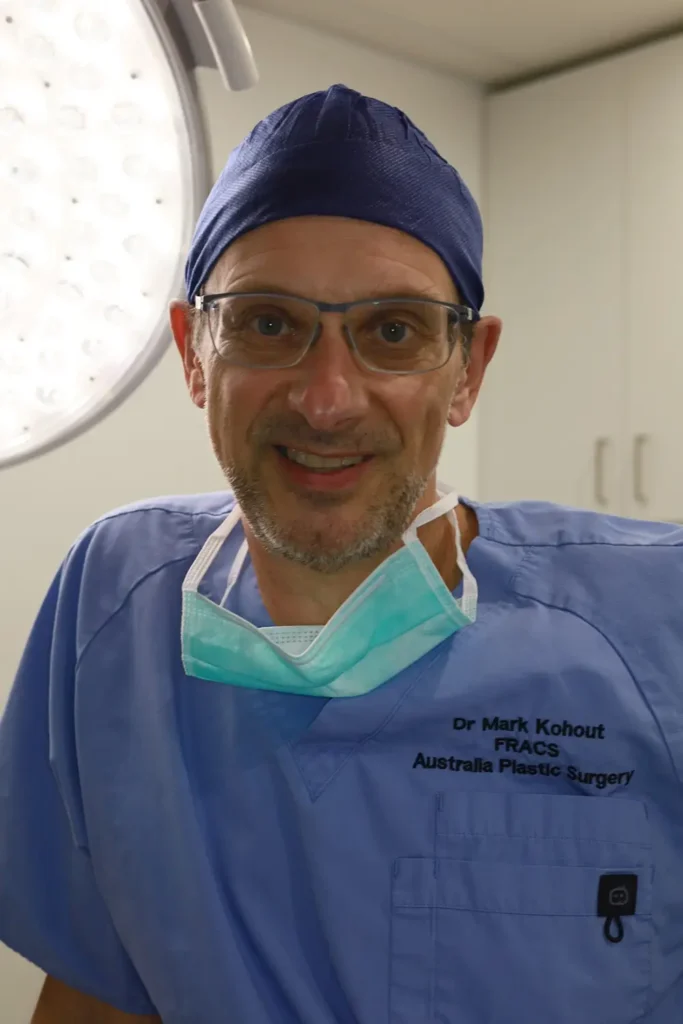
Dr. Mark Kohout
A qualified plastic surgeon who operates with care and integrity, based in central Sydney with over 20 years of experience in the cosmetic field. His extensive training and experience assures patients they are in well trained surgical hands. Dr. Kohout is a dedicated, friendly professional who is committed to providing the high quality care, support and results, alongside his compassionate team.
Dr Mark Kohout (MED0001133000)
Specialist Plastic Surgeon
Specialist registration in Surgery – Plastic Surgery