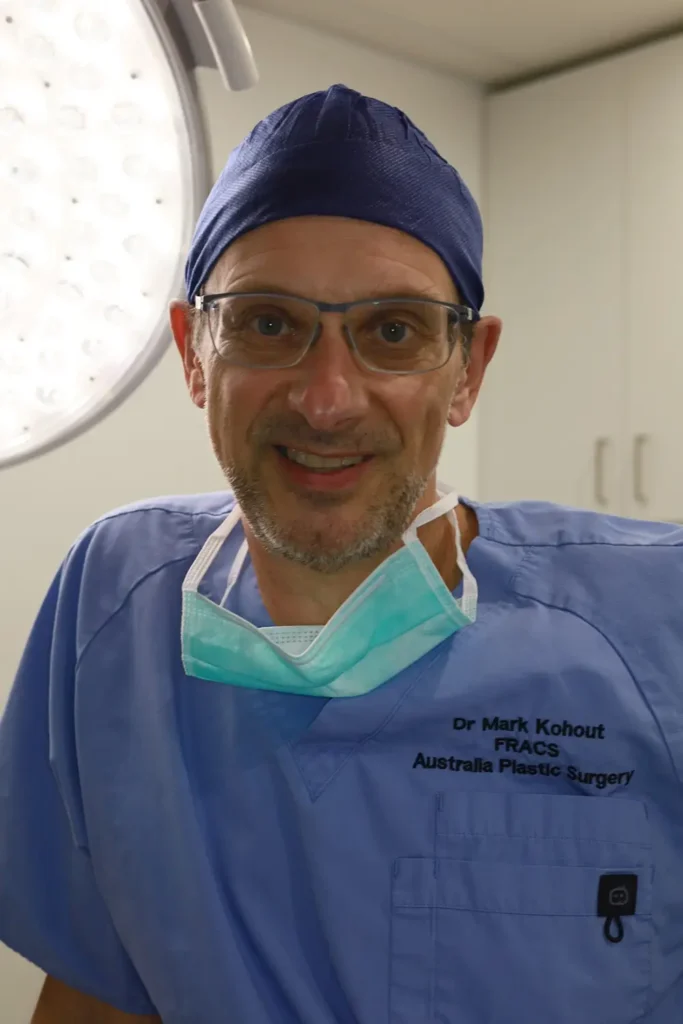
Dr Mark Kohout FRACS is a Specialist Plastic Surgeon based in Broadway, Sydney, with experience in body contouring procedures including brachioplasty. Brachioplasty swelling and bruising commonly improve gradually, but the timing and pattern vary depending on incision placement, garment instructions, arm movement and individual healing response.
Swelling and bruising after brachioplasty can feel unsettling because the upper arms may look, feel and move differently during early recovery. Patients often want to know what is common, how long these changes may last and when they should contact the clinic for advice. Understanding the usual recovery pattern can make the healing period feel more manageable, while still recognising that individual symptoms should be taken seriously.
This article provides general information for patients recovering from brachioplasty or researching what to expect after arm lift surgery. It does not replace personalised post-operative instructions from Dr Kohout’s practice, because swelling, bruising, tightness and comfort levels can vary depending on the extent of tissue removal, incision placement, medical history, garment use, arm movement and follow-up findings.
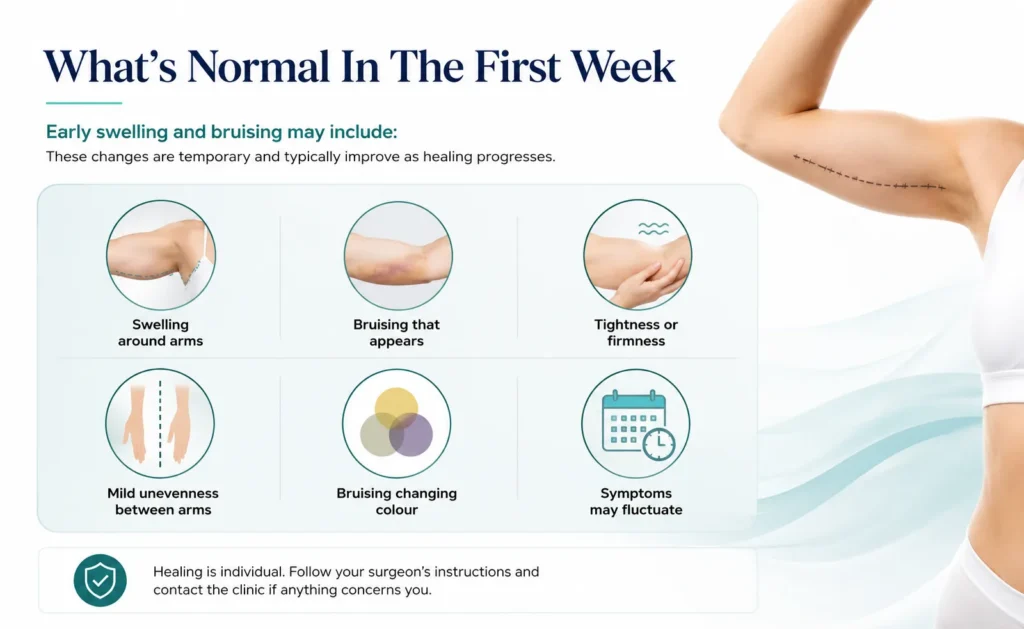
What’s Normal In The First Week​
Dr Mark Kohout FRACS and his team at the Sydney practice provide post-operative instructions based on the patient’s procedure and recovery plan. In the first week after brachioplasty, swelling and bruising commonly appear as the body begins healing from surgery.
Early swelling and bruising may include:
- Swelling around the upper arms, underarm area, elbow region or nearby tissues
- Bruising that becomes more visible before it begins to fade
- Tightness, firmness, tenderness or a heavy feeling around incision areas
- Mild unevenness between the left and right arms during early healing
- Bruising that changes colour as it starts to settle
- Symptoms that fluctuate with arm position, garment use, movement or daily activity
These early changes do not automatically mean something has gone wrong, especially when they match the recovery information provided by the surgical team. However, patients should contact Dr Kohout’s Sydney practice if swelling or bruising feels sudden, severe, increasingly painful or different from the instructions they were given.
How Long Swelling And Bruising Typically Last​
Visible bruising after brachioplasty often improves earlier than deeper swelling. Swelling, firmness and incision-area tightness may continue to fluctuate after bruising fades because deeper tissues and incision areas can take longer to settle.
Patients who want more information about incision healing can also read about brachioplasty scars and how they change during recovery.
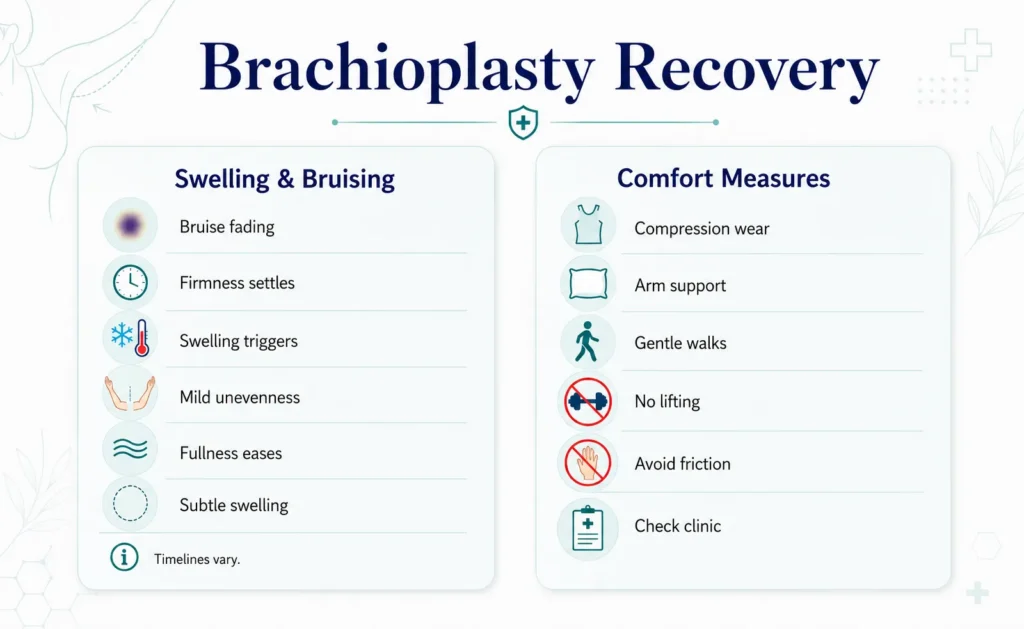
During recovery, patients may notice:
- Bruising that gradually changes from darker colours to lighter yellow, green or brown tones
- Visible bruising improving before firmness or tightness fully settles
- Swelling that feels more noticeable after arm movement, heat or longer periods upright
- Temporary unevenness while both arms heal at different speeds
- A feeling of fullness, pulling or pressure that slowly reduces over time
- Ongoing subtle swelling even after the early visible recovery period has passed
There is no single guaranteed timeline for swelling and bruising after brachioplasty, because recovery varies between patients. Incision placement, the extent of tissue removal, swelling tendency, bruising tendency, compression garment use, arm movement, activity level and follow-up care can all influence how recovery progresses.
General Comfort Measures During Recovery​
General comfort measures after brachioplasty should focus on following the post-operative instructions provided by the surgical team. The aim is to support rest, reduce unnecessary strain on the upper arms and avoid activities or products that may interfere with healing.
Comfort measures may include:
- Wearing compression garments only as directed by the surgical team
- Resting with the arms supported if this has been recommended
- Taking short, gentle walks if advised by the care team
- Avoiding heavy lifting, overhead reaching and repetitive arm movement early on – see our guide to exercise after brachioplasty
- Avoiding unnecessary stretching, friction or pressure around incision areas
- Checking with the clinic before using supplements, bruise creams, massage, lymphatic drainage, cold packs or home remedies
Patients should avoid assuming that a product, supplement, massage technique or home treatment will make swelling or bruising settle faster. Some products and therapies may not be suitable during early healing, so it is safer to ask Dr Kohout’s team before adding anything new to the recovery routine.
When Swelling Or Bruising Needs Medical Attention​
Most swelling and bruising after brachioplasty improves gradually, but some changes should be reviewed by the clinic. Patients should contact Dr Kohout’s Sydney practice if symptoms feel sudden, severe, worsening or different from the recovery instructions they were given.
Concerning changes may include:
- Sudden one-sided arm swelling or a new area of tightness
- Severe pain or pain that is becoming worse rather than settling
- Bruising that expands quickly or feels increasingly painful
- Redness, warmth, pus, odour, wound separation or unusual drainage
- Fever, chills or feeling increasingly unwell
- Chest pain, shortness of breath, fainting, heavy bleeding or other urgent symptoms
This list is general guidance and is not intended to help patients diagnose themselves at home. If symptoms feel concerning, patients should contact Dr Kohout’s team for advice, and urgent symptoms such as chest pain, breathing difficulty, fainting or heavy bleeding should be treated as medical emergencies.
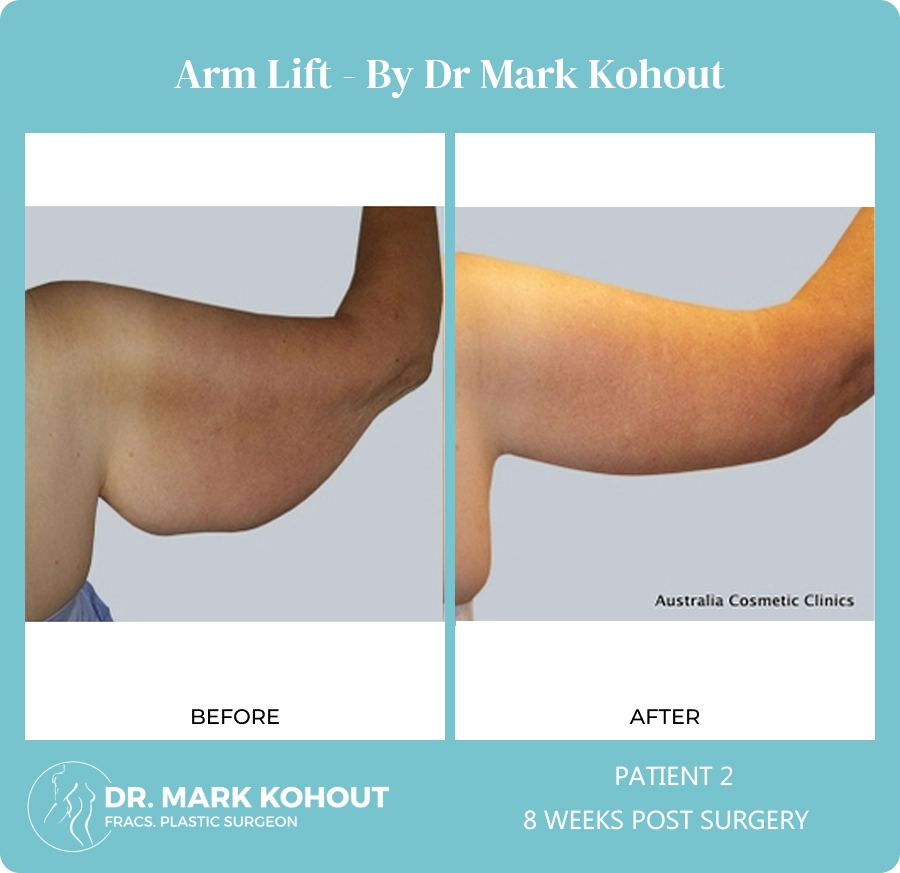
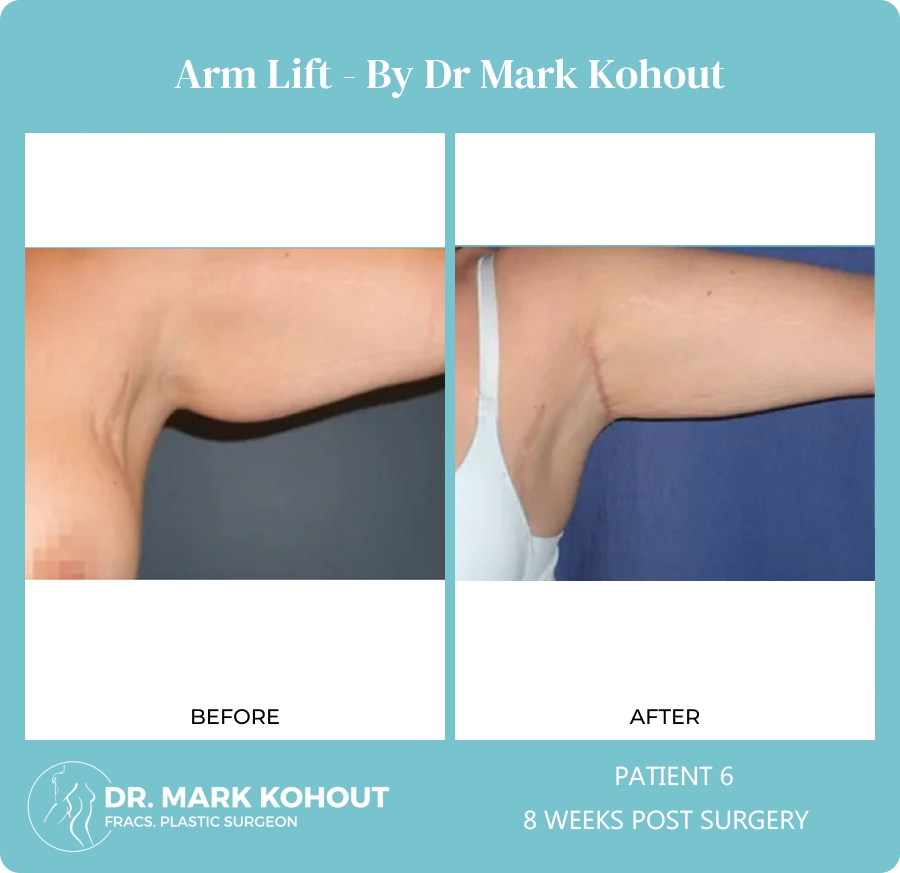
Brachioplasty Before and After Photos
Contact Dr Kohout’s Sydney Practice With Recovery Concerns​
If swelling or bruising after brachioplasty feels unusual, sudden, severe or different from the instructions you were given, contact Dr Mark Kohout FRACS and his team at the Sydney practice. Personalised recovery advice should be based on your procedure, symptoms, healing progress and follow-up plan.
Patients can also raise questions about compression garments, incision care, arm positioning, walking, showering, returning to work and exercise during follow-up. Clear guidance can help patients feel more informed while keeping recovery advice specific to their own surgical plan.
FAQs About Brachioplasty Swelling and Bruising​
Why does arm swelling feel worse after using my hands or arms?
Arm swelling can feel more noticeable after movement because gravity, muscle activity, garment pressure and fluid shifts may affect the upper arms during recovery. If swelling becomes sudden, severe, one-sided or painful, patients should contact Dr Kohout’s Sydney practice for advice.
Is it normal for one arm to look more swollen than the other after brachioplasty?
Mild uneven swelling can occur because each arm may heal at a different pace. Sudden one-sided swelling, increasing tightness, worsening pain or a marked change from the expected recovery pattern should be reviewed by the clinic.
Why does bruising after arm lift surgery move or change colour?
Bruising may change from darker purple or blue tones to green, yellow or brown as the body gradually breaks down blood pigments. Bruising can also appear to shift because of gravity, movement and fluid changes during recovery.
Can brachioplasty swelling make my arms look uneven at first?
Yes, early swelling can make the arms look uneven while tissues are healing and settling at different speeds. Patients should avoid judging their final arm contour too early, but new or worsening asymmetry with pain, tightness or wound changes should be checked.
Does compression garment pressure affect swelling and bruising after brachioplasty?
Compression garments can sometimes leave temporary marks or make swelling feel uneven, especially while the arms are tender. Patients should wear garments only as directed and contact Dr Kohout’s team if a garment causes rubbing, pressure pain, skin changes or concern around incision areas.
Why do my arms feel tight or firm after brachioplasty?
Firmness and tightness can occur while deeper tissues and incision areas are healing. If tightness becomes severe, painful, one-sided or associated with redness, heat, discharge or feeling unwell, patients should seek advice from the clinic.
Can lifting or reaching make swelling worse after brachioplasty?
Lifting, reaching and repetitive arm movement may make swelling, tightness or pulling more noticeable during recovery. Patients should follow the activity limits provided by Dr Kohout’s team and scale back if symptoms increase.
Should I use lymphatic drainage, cold packs or supplements for arm lift swelling?
Patients should ask Dr Kohout’s team before using lymphatic drainage, cold packs, supplements, bruise creams or home remedies. These should not be assumed to reduce swelling or bruising faster, and some may not be suitable during early healing.
When should brachioplasty bruising or swelling start to worry me?
Patients should seek advice if swelling or bruising is sudden, severe, worsening, one-sided or associated with increasing pain, wound changes, fever, chills or feeling unwell. Chest pain, shortness of breath, fainting, heavy bleeding or other urgent symptoms require immediate medical attention.
What should I ask at follow-up if swelling and bruising are still present?
Patients can ask whether their swelling pattern, bruising, tightness, garment fit and activity level are consistent with their stage of recovery. Follow-up appointments are also the right time to ask when to adjust garments, arm movement, showering, work tasks or return-to-exercise plans based on Dr Kohout’s instructions.
Medical References

- Upper Arm Lift (Brachioplasty) Recovery – The Aesthetic Society (US) – https://www.theaestheticsociety.org/procedures/body/upper-arm-lift/aftercare-recovery
- Complications in Brachioplasty – The Medical Journal of Plastic Surgery and Aesthetic Medicine – https://medicaljournalinternational.org/tmjpsam/article/view/295
- Complications associated with brachioplasty: a literature review – Acta Biomedica – https://pmc.ncbi.nlm.nih.gov/articles/PMC6166161/
- Incidence and Risk Factors of Major Complications in Brachioplasty: Analysis of 2,294 Patients – Aesthetic Surgery Journal – https://academic.oup.com/asj/article-abstract/36/7/792/2664540?login=false
Take our Plastic Surgery Quiz to find out if you’d be a good candidate and if you are ready for cosmetic surgery.​
Further Reading
- Read Dr Mark Kohout’s Blog on Recovery after Arm Lift Surgery (Brachioplasty)
- Read Dr Mark Kohout’s Blog on FAQs About Arm Lift Surgery (Brachioplasty)
- Read Dr Mark Kohout’s Blog on Managing Arm Lift Scars: A Guide
- Read more about Recovery after Plastic Surgery
- Read Dr Mark Kohout’s Blog on Returning To Exercise After Plastic Surgery
Related Blog Posts
Breast Lift Swelling And Bruising: What…
Dr Mark Kohout MBBS, FRACS (Plast) is a Specialist Plastic Surgeon in Sydney with more than 25 years of experience in plastic and reconstructive surgery. Breast lift swelling and bruising…
Breast Reduction Swelling And Bruising: What…
Dr Mark Kohout MBBS, FRACS (Plast) is a Specialist Plastic Surgeon in Sydney with more than 25 years of experience in plastic and reconstructive surgery. Breast reduction swelling and bruising…
Brachioplasty Swelling And Bruising: What To…
Dr Mark Kohout FRACS is a Specialist Plastic Surgeon based in Broadway, Sydney, with experience in body contouring procedures including brachioplasty. Brachioplasty swelling and bruising commonly improve gradually, but the…
Experienced Plastic Surgeon
Dr. Mark Kohout
A qualified plastic surgeon who operates with care and integrity, based in central Sydney with over 20 years of experience in the cosmetic field. His extensive training and experience assures patients they are in well trained surgical hands. Dr. Kohout is a dedicated, friendly professional who is committed to providing the high quality care, support and results, alongside his compassionate team.
Dr Mark Kohout (MED0001133000)
Specialist Plastic Surgeon
Specialist registration in Surgery – Plastic Surgery