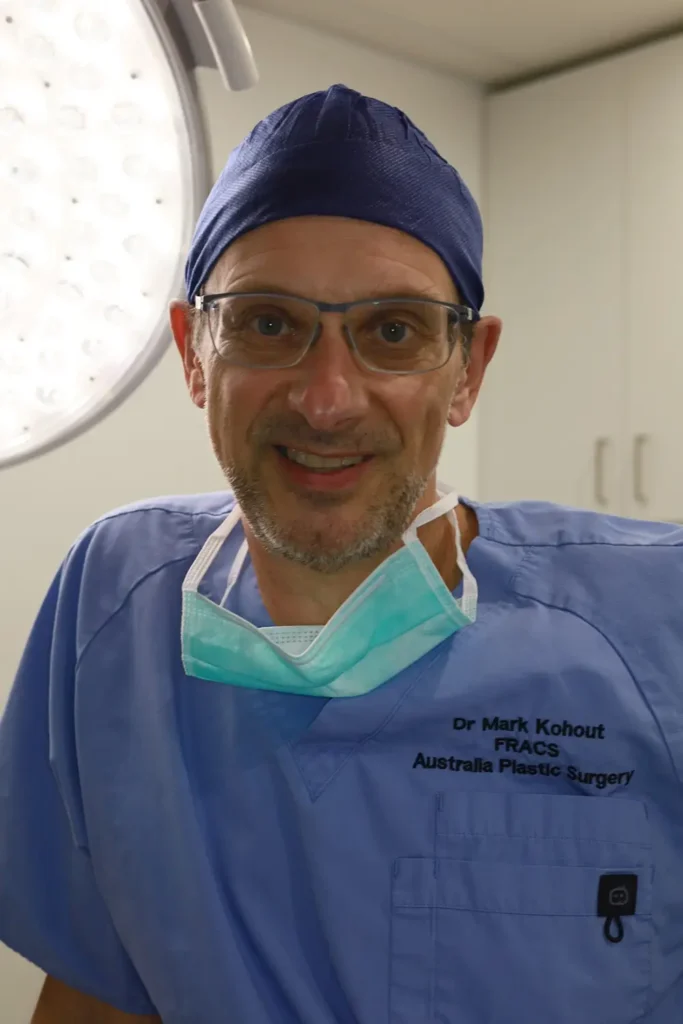
Dr Mark Kohout FRACS is a Specialist Plastic Surgeon based in Broadway, Sydney, with experience in body contouring procedures including liposuction. Liposuction scars vary depending on the treatment area, incision placement, skin type, healing response and aftercare, and they usually change gradually as the incision sites heal.
Scarring is a common concern for patients considering liposuction, even though liposuction incisions are usually smaller than those used in many other body contouring procedures. Many patients want to know where incision marks may appear, whether they may fade and what they can do to support healing after surgery. It is important to understand that any procedure involving incisions can leave scars, and scar appearance varies from person to person.
This article provides general information for patients who are considering liposuction or recovering after liposuction surgery. It does not replace personalised scar advice from Dr Kohout’s practice, because incision placement, wound healing and scar care instructions depend on the treatment area, surgical plan and individual recovery progress.
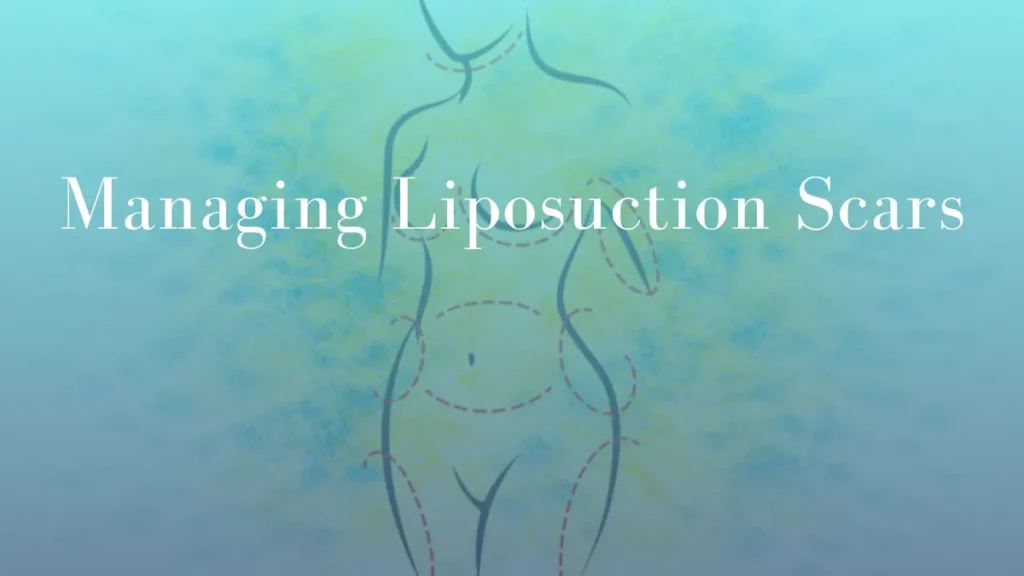
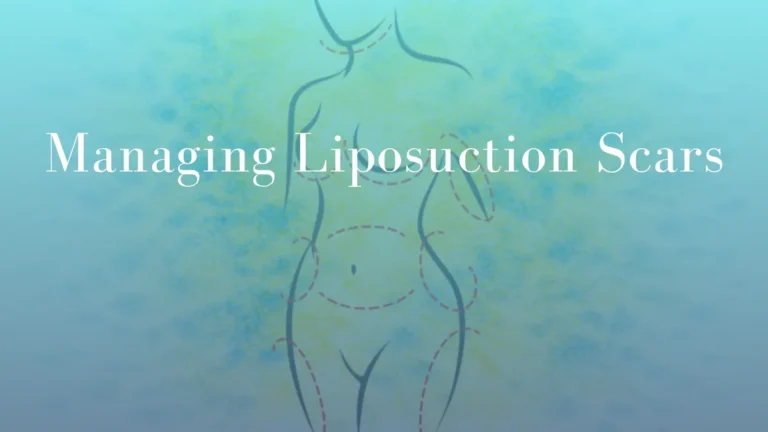
Where Liposuction Scars Typically Form
Dr Mark Kohout FRACS and his team in Sydney discuss incision placement as part of the planning process for liposuction. Liposuction usually involves small incisions that allow access for the cannula, but the number and position of incision sites depend on the treatment area and the surgical approach.
Liposuction incision sites may be influenced by:
- The area being treated, such as the abdomen, flanks, thighs, arms, chin or chest
- The amount of access needed to treat the area safely and evenly
- Natural creases, skin folds or less obvious areas where incisions may be placed
- Whether one area or multiple areas are being treated
- The patient’s body shape, skin quality and tissue distribution
- The need to balance scar placement with surgical access and safety
Surgeons aim to place incisions in less noticeable areas where appropriate, but scar position cannot be guaranteed to be invisible or completely hidden. Patients should ask during consultation where incision sites are likely to be placed for their specific treatment areas.
How Liposuction Scars Typically Change Over Time
Liposuction scars usually change as the incision sites heal and the surrounding tissues settle. Early incision marks may look more noticeable before they gradually soften or fade, although the degree of change differs between patients.
During healing, patients may notice:
- Pink, red, brown or darker marks at incision sites
- Firmness, tightness, itching or sensitivity around the scar
- Small raised or thickened areas during early healing
- Temporary numbness or altered sensation near the incision site
- Gradual softening of the scar as the tissues settle
- Ongoing changes in scar colour and texture over many months
There is no guaranteed timeframe for liposuction scars to fade, because scar maturation varies. Skin type, genetics, wound tension, sun exposure, smoking history, infection, movement, aftercare and individual healing response can all influence how visible scars remain.
General Scar Care After Liposuction
General scar care after liposuction should begin with the wound care instructions provided by the surgical team. Patients should avoid starting creams, oils, silicone products, massage or home remedies until Dr Kohout’s team has confirmed that the incision sites are ready.
Scar care after liposuction may include:
- Keeping dressings and incision areas managed as instructed
- Attending follow-up appointments so healing can be reviewed
- Avoiding unnecessary rubbing, friction or stretching around incision sites
- Wearing compression garments only as directed by the surgical team
- Protecting healing incision marks from sun exposure when uncovered
- Asking before applying scar creams, tapes, oils or topical products
No product can be relied on to remove a surgical scar completely, and patients should be cautious about claims that suggest otherwise. Scar care is usually about supporting the healing environment, monitoring incision changes and following personalised advice from the treating team.
When To Raise Scar Concerns With Your Surgeon
Individual scar healing varies after liposuction, so follow-up appointments are an important part of recovery. Patients should raise concerns with Dr Kohout’s Broadway Sydney practice if incision marks look or feel different from what they were told to expect.
Scar or wound concerns to discuss may include:
- Increasing redness, heat, tenderness or swelling around an incision site
- Discharge, bleeding, odour or wound separation
- A scar becoming increasingly raised, thickened or widened
- Darkening or colour changes that worry the patient
- Itching, sensitivity or tightness that is persistent or worsening
- Uncertainty about when to begin scar care products or massage
Patients should not wait until scars have fully matured before asking questions, especially if they are unsure whether healing is progressing as expected. Early review can help Dr Kohout’s team assess the incision area and advise whether any change in care is needed.
Discuss Liposuction Scars With Dr Kohout’s Sydney Practice
If you are concerned about liposuction scars, raise your questions with Dr Mark Kohout FRACS and his team at the Sydney practice. Your scar management plan should reflect your treatment areas, incision placement, skin type, healing progress and the instructions provided during follow-up.
Scars are part of any procedure that involves incisions, but realistic expectations and appropriate aftercare can help patients feel more informed during recovery. A consultation or follow-up appointment is the best place to discuss your individual incision sites, scar care instructions and any concerns about healing.
FAQs About Liposuction Scars
Why do liposuction scars sometimes look darker before they start to fade?
Liposuction incision marks may appear darker during healing because inflammation, bruising, pigmentation changes and normal scar maturation can affect the colour of the skin. This does not always mean there is a problem, but patients should ask Dr Kohout’s Broadway Sydney practice if a scar becomes increasingly red, painful, raised or associated with wound changes.
Can liposuction scars look different on the abdomen, thighs, arms or chin?
Yes, liposuction scars can look different depending on the treatment area, skin thickness, movement, friction, sun exposure and incision placement. Patients should ask where incision sites are likely to be placed for their specific areas, as abdominal, thigh, arm, chest and chin liposuction may involve different access points.
Why can a very small liposuction incision still leave a noticeable scar?
Even a small incision can leave a visible mark because scar appearance depends on individual healing, skin type, pigmentation, tension and aftercare. A smaller incision does not guarantee an invisible scar, although surgeons aim to place incision sites carefully where appropriate.
Are liposuction scars more noticeable if I have darker skin or pigmentation concerns?
Some patients with darker skin tones or a history of pigmentation changes may be more prone to darker or more noticeable scar marks. This varies between individuals, so scar expectations and aftercare should be discussed with Dr Kohout’s team before and after surgery.
Can friction from clothing or compression garments affect liposuction incision scars?
Friction around incision sites may irritate healing skin if garments or clothing rub against the area. Compression garments should be worn only as directed, and patients should contact the clinic if a garment causes rubbing, pressure marks, wound irritation or discomfort around incision sites.
Why is one liposuction scar healing faster than another scar from the same procedure?
Different incision sites can heal at different speeds because they may experience different levels of movement, tension, swelling, friction or pressure. Mild differences can occur during recovery, but increasing redness, discharge, pain, wound opening or unusual thickening should be reviewed.
Can sun exposure make liposuction scars stay darker for longer?
Sun exposure can contribute to pigmentation changes in healing scars when incision sites are uncovered. Patients should follow Dr Kohout’s scar care advice and protect healing incision marks from unnecessary sun exposure once the area is exposed.
Should I massage liposuction scars if they feel firm or raised?
Patients should not begin scar massage unless Dr Kohout’s team has confirmed that the incision sites are healed enough and that massage is appropriate. Starting massage too early or using the wrong technique may irritate healing tissue or interfere with wound care instructions.
Can scar creams, silicone gels or tapes remove liposuction incision marks completely?
No scar cream, silicone product or tape can be relied on to remove liposuction scars completely. Some scar management products may be discussed during follow-up, but they should only be used when the surgical team confirms the timing and suitability.
When should I be concerned that a liposuction scar is not healing normally?
Patients should contact Dr Kohout’s Sydney practice if an incision site develops increasing redness, heat, swelling, pain, discharge, bleeding, odour, wound separation or rapidly changing scar thickness. It is also appropriate to ask for review if a scar is becoming increasingly raised, widened, darkened or uncomfortable.
Medical References

- A journey through liposuction and liposculture: Review – Annals of Medicine and Surgery – https://www.sciencedirect.com/science/article/pii/S2049080117303916
- How to Treat Liposuction Scars – Healthline – https://www.healthline.com/health/cosmetic-surgery/liposuction-scars#summary
- Treatment of retracted, postsurgical scars and reduction of locoregional edema using a combined three-dimensional approach of liposuction lipofilling, dissecting cannulas, and suspension sutures – European Journal of Plastic Surgery – https://link.springer.com/article/10.1007/s00238-023-02093-x
- Scar Management in Cosmetic Surgery – The American Journal of Cosmetic Surgery – https://journals.sagepub.com/doi/abs/10.1177/07488068261426503
Take our Plastic Surgery Quiz to find out if you’d be a good candidate and if you are ready for cosmetic surgery.
Further Reading
- Read more about Body Procedures
- Read Dr Mark Kohout’s Blog on Costs of Liposuction in Sydney – Lipo Prices
- Read Dr Mark Kohout’s Blog on BodyTite: A Solution for Skin Laxity after Liposuction
- Read more about Preparing for Surgery
Related Blog Posts
Managing Buttock Reshaping Scars
Dr Mark Kohout FRACS is a Specialist Plastic Surgeon based in Broadway, Sydney, with experience in body contouring procedures including buttock reshaping surgery. Buttock reshaping scars vary depending on the…
Managing Facelift Scars: A Comprehensive Guide
Facelift surgery, also known as rhytidectomy, is a sought-after cosmetic procedure aimed at altering the face to manage the signs of ageing by tightening and smoothing the skin on the…
Managing Arm Lift Scars: A Guide
Arm lift surgery, also known as brachioplasty, is a procedure designed to remove excess skin and fat from the upper arms, resulting in a more defined and toned appearance. While this surgery…
Experienced Plastic Surgeon
Dr. Mark Kohout
A qualified plastic surgeon who operates with care and integrity, based in central Sydney with over 20 years of experience in the cosmetic field. His extensive training and experience assures patients they are in well trained surgical hands. Dr. Kohout is a dedicated, friendly professional who is committed to providing the high quality care, support and results, alongside his compassionate team.
Dr Mark Kohout (MED0001133000)
Specialist Plastic Surgeon
Specialist registration in Surgery – Plastic Surgery