



Scars are a permanent and expected consequence of neck lift surgery because the operation requires incisions to access and reposition the tissues. Their location, colour, texture and visibility change during healing, but no surgeon can promise that a scar will become unnoticeable.
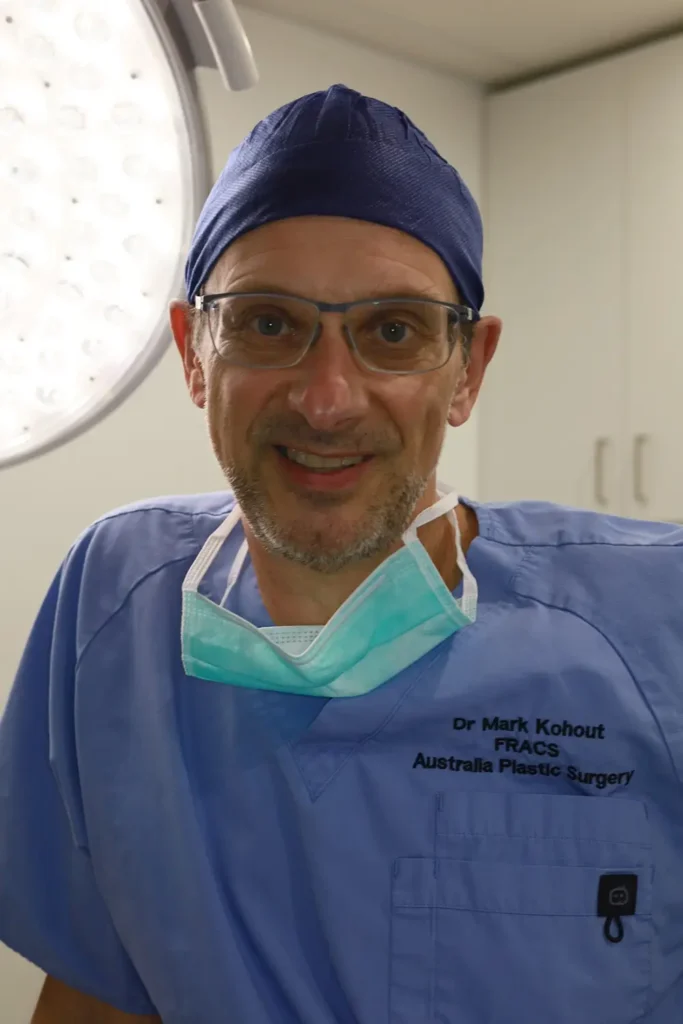
Dr Mark Kohout is a Specialist Plastic Surgeon based in Sydney with more than 25 years of clinical experience. During consultation, he explains the likely incision pattern, factors that may influence healing and the practical care that may support scar maturation after surgery.
Why Does Neck Lift Surgery Leave Scars?
A neck lift leaves scars because incisions are required to access the skin, fat and deeper supporting tissues. The body repairs each incision by producing collagen, which forms a permanent scar along the surgical line.
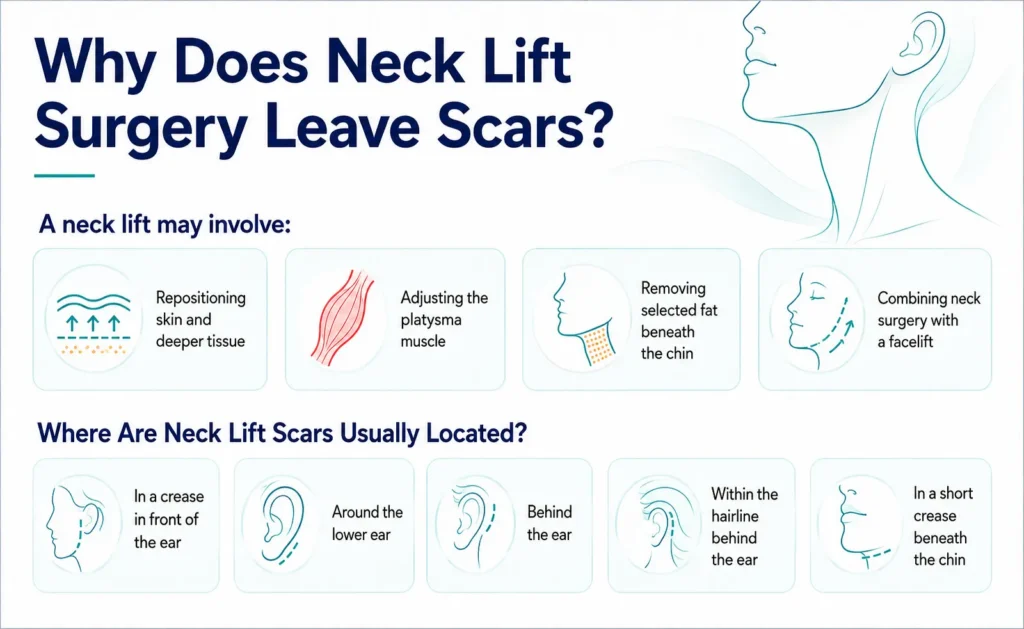
A neck lift may involve repositioning deeper tissues, adjusting the platysma muscle, removing selected fatty tissue or redraping the skin. The exact operation varies according to the patient’s anatomy and the changes being addressed.
A neck lift may involve:
- Repositioning skin and deeper tissue
- Adjusting the platysma muscle
- Removing selected fat beneath the chin
- Combining neck surgery with a facelift
Where Are Neck Lift Scars Usually Located?
Neck lift scars are commonly placed around the ears, behind the ears and, in some cases, beneath the chin. The incision pattern depends on the extent of surgery and the structures that need to be accessed.
Incisions are generally planned near existing creases, hairlines or anatomical borders. These locations may make a settled scar less conspicuous than an incision across a broad, flat area of skin, but some visibility will remain.
Common incision locations include:
- In a crease in front of the ear
- Around the lower ear
- Behind the ear
- Within the hairline behind the ear
- In a short crease beneath the chin
Will Every Patient Have the Same Neck Lift Incisions?
The incision pattern is tailored to the patient’s anatomy and the type of neck surgery being performed. A person requiring limited access beneath the chin may have a different pattern from someone undergoing a combined facelift and neck lift.
Dr Mark Kohout considers skin laxity, tissue position, jaw and chin structure, previous scars and whether another facial procedure is planned. The likely incision lines are discussed before surgery so the patient can consider their position and permanence.
Planning may be influenced by:
- The amount and location of loose skin
- Platysma muscle position
- Fat distribution beneath the chin
- Previous facial surgery
- Whether a facelift is performed at the same time
How Do Neck Lift Scars Heal?
Neck lift scars pass through inflammatory, tissue-building and remodelling phases. During these stages, their colour, firmness and texture may change rather than improve in a steady, predictable line.
The body initially closes the wound and creates new tissue before gradually reorganising its collagen. This process can continue for many months, and the rate of change varies between patients.
Scar healing generally includes:
- Early inflammation and swelling
- Formation of new collagen
- Strengthening of the wound
- Gradual collagen remodelling
What Do Neck Lift Scars Look Like During the First Few Weeks?
Fresh neck lift scars commonly appear pink, red or darker than the surrounding skin. They may also feel firm, look slightly raised or cause mild itching as the incision heals.
Swelling and bruising around the neck, jaw and ears can make the scars appear more noticeable during early neck lift recovery. Scars should not be judged at this stage because the tissues are still closing and the surrounding inflammation has not settled.
Early changes may include:
- Redness or pink colouring
- Mild firmness
- Slight elevation above the skin
- Itching or altered sensation
- Bruising near the incision
How Do Neck Lift Scars Change Over Several Months?
Neck lift scars often soften, flatten and lose some of their stronger colour as collagen reorganises. These changes are gradual, and the scars may remain visible in certain lighting or on close inspection.
Some scars become more noticeable several weeks after surgery before beginning to settle. This can occur because developing scar tissue has a greater blood supply and a firmer collagen structure than mature skin.
Over time, scars may:
- Become softer
- Flatten to some degree
- Change from red to a paler colour
- Feel less tight
- Remain different from the surrounding skin
How Long Do Neck Lift Scars Take to Settle?
Neck lift scars commonly continue changing for 12 months or longer. There is no single point at which every scar can be considered fully mature because healing differs between patients.
The most visible changes often occur during the first several months, followed by slower changes in colour and texture. Comparing photographs taken several months apart may provide a clearer indication of progress than checking the scar every day.
General stages may include:
- Wound closure during early recovery
- Greater redness during the first few months
- Gradual softening over several months
- Slower refinement after six months
Will Neck Lift Scars Disappear Completely?
Neck lift scars do not disappear completely because scar tissue permanently replaces the skin that was divided. They may become less noticeable as they mature, but their final appearance cannot be predicted precisely.
Visibility depends on the scar’s colour, width, texture and position, as well as the surrounding skin and lighting. Patients should decide whether they are comfortable accepting permanent scars before proceeding with surgery.
A mature scar may still be noticeable:
- At close range
- In strong or overhead lighting
- When the hair is pulled back
- When the skin is stretched
- When its colour differs from nearby skin
What Factors Influence How Neck Lift Scars Heal?
Scar healing is influenced by genetics, skin biology, health, medicines, nicotine exposure and tension on the wound. Surgical planning and postoperative care also contribute, but they cannot control every aspect of healing.
A history of raised or spreading scars can provide useful information about how a patient may heal. Dr Mark Kohout reviews scars from previous surgery, injury, vaccination or piercing during the preoperative assessment where appropriate.
Relevant factors include:
- Skin thickness and pigmentation
- Personal or family history of raised scars
- Blood circulation and general health
- Wound tension
- Previous surgery in the same area
Can Sun Exposure Affect Neck Lift Scars?
Ultraviolet exposure can contribute to prolonged redness or darker pigmentation in a healing scar. Scar protection is particularly relevant in Sydney and other parts of Australia where ultraviolet levels can be high.
Sunscreen should only be applied directly to an incision after the skin has closed and the surgical team has confirmed that it is appropriate. Hats, clothing and avoiding unnecessary exposure can provide additional protection.
Sun-care measures may include:
- Broad-spectrum sunscreen after wound closure
- Reapplication according to product instructions
- A wide-brimmed hat
- Clothing that covers the neck
- Avoiding prolonged direct exposure
How Should Neck Lift Incisions Be Cared for Initially?
Early incision care focuses on keeping the wounds protected and following the specific instructions provided by the surgical team. Patients should avoid unnecessary touching, unapproved products and activities that place tension on the healing skin.
Instructions may differ according to the dressings, tapes and surgical technique used. Patients should contact the clinic when they are uncertain rather than substituting generic online advice for their postoperative plan.
Early care may include:
- Keeping dressings clean and dry
- Following showering instructions
- Washing hands before touching nearby skin
- Avoiding picking at scabs
- Attending scheduled wound reviews
Can Silicone Gel or Silicone Sheets Help Neck Lift Scars?
Silicone gel and silicone sheets are commonly used in postoperative scar care after the skin has fully closed. They may help manage scar thickness, colour or hydration, but they do not remove the scar.
The appropriate product and length of use should be discussed with Dr Mark Kohout or the clinical team. Silicone should not be applied to an open, infected or incompletely healed incision.
Silicone care may involve:
- Waiting until the wound has closed
- Applying the product consistently
- Keeping the area clean
- Monitoring for skin irritation
How Can Activity Affect Neck Lift Scars?
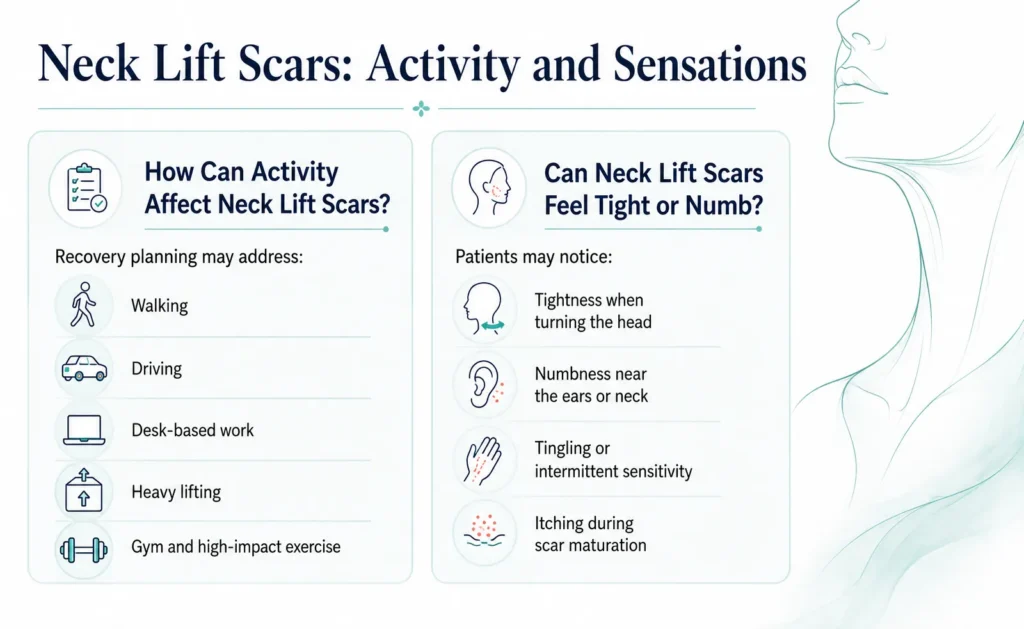
Heavy lifting, sudden neck movements and strenuous exercise may place tension on healing incisions. Activity is therefore reintroduced gradually according to wound healing, swelling and the procedure performed.
Light movement may be encouraged during recovery, but gym training, running and physically demanding work may need to be delayed. Dr Mark Kohout provides individual advice rather than applying one return date to every patient.
Recovery planning may address:
- Walking
- Driving
- Desk-based work
- Heavy lifting
- Gym and high-impact exercise
Can Neck Lift Scars Feel Tight or Numb?
Tightness, numbness, tingling or increased sensitivity can occur around neck lift scars during neck lift recovery. These sensations often change as swelling settles and small nerves recover, although some altered sensation may persist.
Scar tissue and repositioned deeper tissues may also create a feeling of restriction during early movement. Persistent or worsening symptoms should be discussed during follow-up rather than assumed to be part of normal healing.
Patients may notice:
- Tightness when turning the head
- Numbness near the ears or neck
- Tingling or intermittent sensitivity
- Itching during scar maturation
When Should I Contact the Clinic About a Neck Lift Scar?
Increasing redness, warmth, swelling, discharge or wound separation requires clinical review. Fever, feeling unwell or rapidly worsening pain should also be reported promptly.
Early assessment can determine whether the change reflects irritation, infection, fluid collection or another wound concern. Patients should not wait for a scheduled appointment when symptoms are worsening.
Contact the clinic for:
- Spreading or increasing redness
- Pus or an unpleasant odour
- Wound opening or persistent bleeding
- Increasing warmth or swelling
- Fever or general illness
What Is a Hypertrophic or Keloid Scar?
A hypertrophic scar is raised and thickened but generally remains within the original incision boundaries. A keloid extends beyond those boundaries and may continue growing after the wound has healed.
Not every firm or red scar in early recovery is abnormal because normal scars can remain active for several months. Diagnosis requires examination and consideration of the healing timeframe and previous scar history.
Features requiring assessment may include:
- Persistent raised texture
- Ongoing itch or discomfort
- Increasing scar width
- Growth beyond the incision
- Dark or persistent pigmentation
What Treatments May Be Considered for a Prominent Scar?
A scar that remains raised, symptomatic or strongly pigmented may be assessed for additional treatment. Options depend on the scar type, maturity, location and the patient’s skin characteristics.
Treatment cannot guarantee that the scar will become inconspicuous. Dr Mark Kohout may recommend continued observation, non-invasive management or referral for another treatment after examining the scar.
Options may include:
- Silicone products
- Steroid injections
- Laser or light-based treatment
- Scar taping
- Surgical revision in selected cases
What Happens During a Neck Lift Consultation with Dr Mark Kohout?
The consultation includes assessment of the face, jawline, neck tissues, skin and previous scars. It also provides time to discuss incision placement, expected scar changes, risks, recovery and alternatives to surgery.
Dr Mark Kohout reviews medical history, medications, nicotine exposure, previous operations and personal scar behaviour. Clinical photographs may be taken for planning and comparison with appropriate consent.
A consultation may include:
- Physical examination
- Review of previous scars
- Discussion of likely incision lines
- Explanation of scar-related risks
- Review of postoperative care
Neck Lift Scars FAQs
Will my neck lift scars look different if I already have facelift scars?
Dr Mark Kohout may place new incisions along or close to existing facelift scars where appropriate. However, each scar can heal differently, even in the same area.Can neck lift scars feel tight when I turn my head?
Tightness is common during the early stages of healing and usually improves as the tissues settle. Persistent tightness can be assessed during follow-up appointments.Can my hairstyle make neck lift scars more noticeable?
Yes. Hairstyles can either expose or cover scars near the ears and hairline. Dr Mark Kohout can explain the likely scar placement before surgery.Can exercise or an active job affect my scars?
Heavy lifting, straining and sudden movements can place tension on healing scars. Patients receive individual advice about when to safely return to work and exercise.Can weight changes affect neck lift scars?
Significant weight gain or loss can change the tissues surrounding the scars. The scars remain, but their position or visibility may appear different.Are neck lift scars more visible in certain lighting?
Strong lighting and close-up photography can make colour or texture differences more noticeable. Scars may be less apparent in softer, indirect light.What happens to the scars if I need future facial surgery?
Existing scars may be incorporated into future incision lines where possible. The approach depends on the procedure, skin condition and scar quality.Can neck lift scars feel numb or sensitive?
Numbness or increased sensitivity is common after surgery and often improves over time. In some cases, altered sensation may persist.Do neck lift scars age with the surrounding skin?
Yes. Scars generally age with the surrounding skin, although they may remain slightly different in colour or texture.Will tanning make neck lift scars more noticeable?
Tanning can increase the contrast between the scar and nearby skin. Ongoing sun protection can help reduce colour differences and protect the healing area.Medical References
- Monstrey S, Middelkoop E, Vranckx JJ, et al. Updated scar management practical guidelines: non-invasive and invasive measures. Journal of Plastic, Reconstructive & Aesthetic Surgery. 2014;67(8). https://www.sciencedirect.com/science/article/pii/S1748681514001739
- Shin J, Kim Y, Kim H, Park J, Yi H. Postoperative scar management. Kosin Medical Journal. 2025;40(2):96–105. https://www.kosinmedj.org/journal/view.php?number=1325
- Sangha MS, Deroide F, Meys R. Wound healing, scarring and management. Clinical and Experimental Dermatology. 2024;49(4):325–336. https://academic.oup.com/ced/article/49/4/325/7450282
How Should I Prepare for a Neck Lift Consultation?
Preparing a list of questions, medicines, health conditions and previous operations can make the consultation more useful. Patients should also mention any history of thick, spreading or slow-healing scars.
People may wish to consider how permanent scars could affect hairstyles, work, outdoor activity and personal preferences. This information helps place scar planning within the wider decision about surgery.
Bring information about:
- Current medicines and supplements
- Previous facial or neck surgery
- Relevant medical conditions
- Past wound or scar problems
- Questions about recovery and scar care
Considering Plastic Surgery?
What Are the Next Steps for Those Considering Neck Lift Surgery?
People considering a neck lift can arrange a consultation to discuss their anatomy, likely incision pattern and scar-related concerns. An individual assessment is required to determine whether neck lift surgery, another procedure or no surgery may be appropriate.
Dr Mark Kohout provides consultations in Sydney, with regional availability listed by his practice when sessions are offered. The appointment allows patients to review scars, risks, recovery and alternatives without committing to an operation.
- Arrange an individual consultation
- Discuss the neck changes being considered
- Ask where the scars may be placed
- Review surgery risks and postoperative care
- Allow time to consider the information
Further Reading
- Read Dr Mark Kohout’s Blog on Neck Lift Swelling And Bruising Sydney: What To Expect During Recovery
- Read Dr Mark Kohout’s Blog on Does Medicare Cover Neck Lift Surgery in Australia?
Related Blog Posts
Managing Swelling and Bruising after Facelift
Dr Mark Kohout is a Specialist Plastic Surgeon based in Sydney, with specialist registration in Surgery – Plastic Surgery, more than 25 years of experience in cosmetic and reconstructive procedures,…

Exercise After Neck Lift Surgery Sydney:…
Dr Mark Kohout FRACS is a Specialist Plastic Surgeon based in Broadway, Sydney, with experience in facial rejuvenation procedures including neck lift surgery. He understands that many active patients feel…
Recovery After Facelift Surgery: An In-Depth…
Undergoing facelift surgery is a significant decision that requires careful consideration. However, the journey doesn’t end when you leave the operating theatre. While the procedure aims to create a refreshed…
Experienced Plastic Surgeon
Dr. Mark Kohout
A qualified plastic surgeon who operates with care and integrity, based in central Sydney with over 20 years of experience in the cosmetic field. His extensive training and experience assures patients they are in well trained surgical hands. Dr. Kohout is a dedicated, friendly professional who is committed to providing the high quality care, support and results, alongside his compassionate team.
Dr Mark Kohout (MED0001133000)
Specialist Plastic Surgeon
Specialist registration in Surgery – Plastic Surgery