
Recovery following vaginoplasty is a vital phase that supports both physical healing and overall surgical outcomes. Dr Mark Kohout, a Specialist Plastic Surgeon based in Sydney, Australia, provides detailed guidance to help patients navigate this period with clarity.
Vaginoplasty is a surgical procedure involving the construction or reconstruction of the vaginal canal and external genitalia. Individuals may undergo vaginoplasty for gender-affirming reasons or for reconstructive purposes following injury or congenital differences. Recovery can vary significantly depending on individual health, surgical technique, and adherence to post-operative care instructions.
Understanding each phase of the recovery process allows patients to prepare mentally, emotionally, and physically. This article outlines realistic expectations while emphasising the importance of communication with your surgical team.
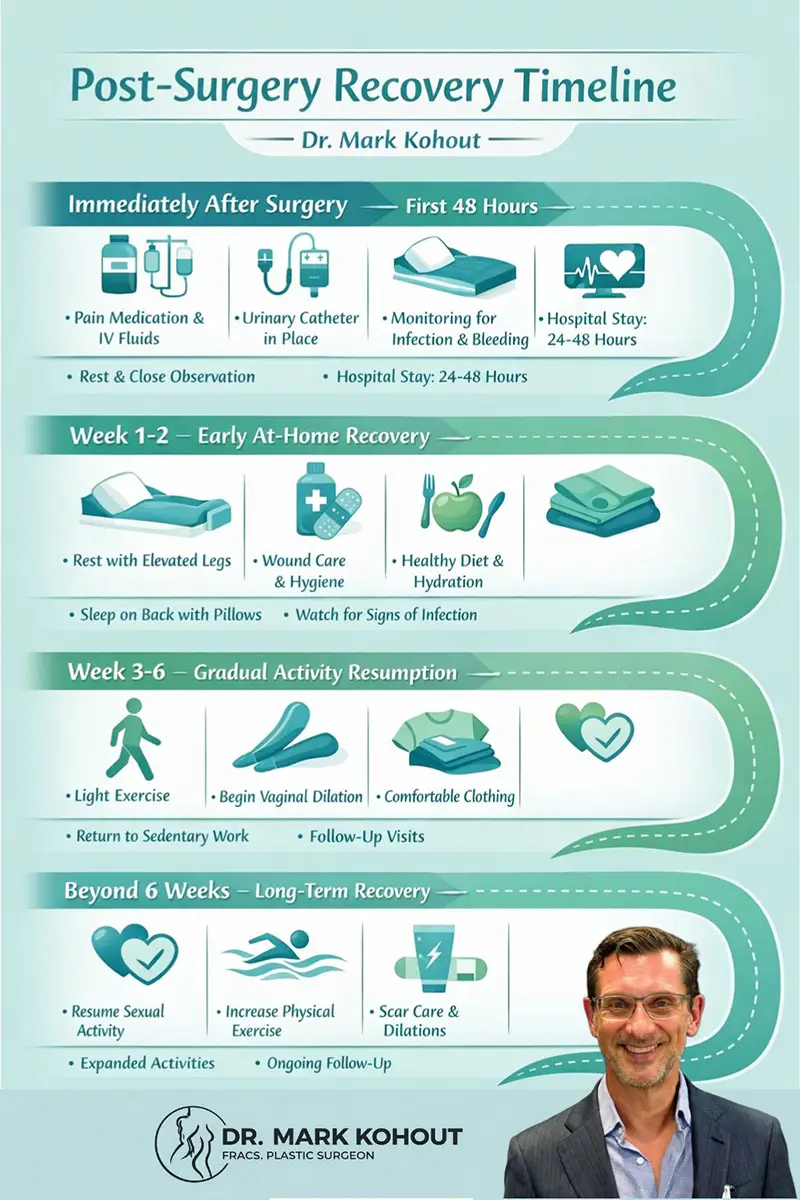
Immediately After Surgery: The First 48 Hours

In the immediate post-operative period, patients are cared for in a hospital or clinical setting under close supervision. During this time, pain is typically managed with prescription medications, which help alleviate discomfort during the critical early stages of healing. A urinary catheter is often used to assist with bladder function while the area remains swollen, preventing strain on the surgical site.
Medical staff closely monitor dressings and the surgical area for signs of infection, excessive bleeding, or other complications. Intravenous fluids and medications, such as antibiotics and blood thinners, are administered to reduce risks associated with surgery and prolonged immobility. Patients are encouraged to stay in bed and move minimally to allow the surgical site to stabilise.
Discharge typically occurs within 24 to 48 hours, depending on individual recovery and facility protocols. Dr Mark Kohout supports each patient leaving the clinic with detailed written aftercare instructions, emergency contacts, and a follow-up schedule to foster continuity of care in the comfort of their own home.
Patients should be aware that swelling and bruising usually develop quickly and can be most noticeable within the first forty-eight hours. The body naturally responds to surgery with inflammation, and while this can feel uncomfortable, it is a normal part of healing. Temporary numbness, tingling, or sensitivity in the treated areas may also occur and typically improves over time. Discomfort is expected but is generally well managed with medication prescribed by the surgeon. Most patients are encouraged to move around gently, even on the day of surgery, as light walking supports circulation and reduces the risk of blood clots.
Week 1 to 2: Early At-Home Recovery
The first two weeks at home are crucial for laying the foundation of a steady recovery. Patients are advised to maintain a low level of activity, prioritising rest while incorporating gentle movement to promote circulation. Wound care remains a primary focus. Cleaning the area with mild antiseptic and keeping it dry are key to preventing infection. Soaking the area or exposure to public water sources should be avoided.
During this period, it’s best to sleep on your back with knees slightly elevated, using pillows to maintain this position comfortably. This reduces strain on the surgical site and improves blood flow. Nutrition also plays a significant role in healing. A balanced diet rich in vitamins, protein, and fibre supports tissue regeneration and digestive regularity, particularly in the presence of medication-induced constipation.
Patients should remain vigilant for signs of infection, such as redness, fever, unusual discharge, or pain that worsens rather than improves. If these arise, prompt contact with Dr Mark Kohout’s Sydney clinic is encouraged. Follow-up appointments are usually scheduled within this window to confirm healing is progressing appropriately.
Week 3 to 6: Gradual Resumption of Daily Activities
As recovery progresses, most patients begin resuming light daily activities. By the third or fourth week, many can return to office-based or sedentary work. Those whose jobs involve physical labour may need a longer break. This period also marks the beginning of a vaginal dilation routine, which is critical for maintaining surgical results. Dr Mark Kohout provides personalised instructions to help patients perform dilation effectively and safely.
Low-impact activities such as walking are encouraged, while strenuous exercises like running, weightlifting, or abdominal workouts should still be avoided. Patients should wear breathable, loose-fitting clothing made from soft fabrics like cotton to reduce irritation and improve comfort.
Dr Kohout’s ongoing support during this stage includes assessing wound healing, refining dilation techniques, and ensuring that patients feel secure in progressing at their own pace. Adjustments to recovery plans are made based on each individual’s healing trajectory and feedback.
Long-Term Recovery: Beyond 6 Weeks
By six weeks, visible signs of healing have often improved, but the body continues to adapt and heal internally for several more months. It’s usually during this phase that patients may resume sexual activity, following clearance from their surgeon. As nerve endings regenerate, sensations may change, and open communication with partners can ease this transition.
Physical activity can also be expanded during this time. Many patients can gradually return to swimming, yoga, or low-intensity gym workouts between 10 and 12 weeks, though high-impact activities may need further delay depending on individual recovery.
Sensory changes, including numbness or tingling, are common but tend to diminish over time. Scar management strategies, such as massage or silicone-based treatments, may be recommended to improve tissue quality and flexibility. Long-term use of vaginal dilators remains important for most patients, with frequencies tailored to the patient’s anatomy and healing.
Patients under Dr Mark Kohout’s care benefit from structured, long-term follow-up that prioritises their wellbeing, monitors outcomes, and supports adjustments in care where necessary.
Key Considerations and Patient Support
While physical healing is central, recovery after vaginoplasty surgery also includes psychological and emotional components. Genital appearance and function can change over time, and patients are encouraged to express their expectations and concerns during pre-operative planning. Open, honest discussions with Dr Mark Kohout ensure alignment between surgical outcomes and personal goals.
Nerve healing can take months, and sexual sensation may return gradually. Psychological readiness plays a crucial role in how individuals adapt to changes. Access to counselling, peer support groups, and educational resources can be incredibly beneficial, especially during the early post-operative period.
Routine medical reviews remain essential to reinforce hygiene practices, adjust dilation routines, and address any late-arising issues. Dr Kohout’s practice in Sydney is grounded in transparency, patient-led care, and clinical integrity, helping individuals feel supported throughout their recovery journey.
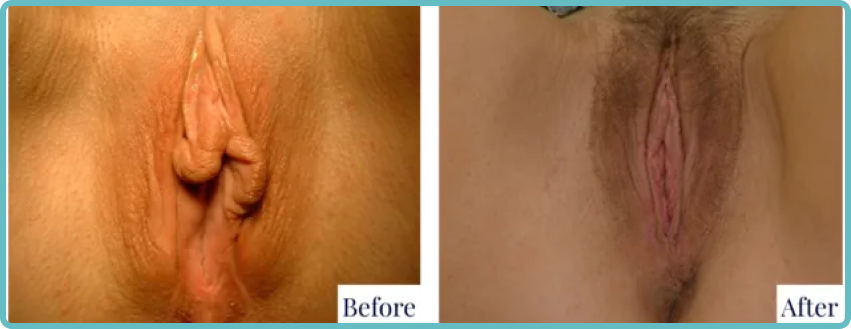
Labiaplasty Before and After Images
FAQs About Recovery After Vaginoplasty
Is it normal to feel emotionally overwhelmed during the first few weeks of recovery?
Yes, emotional fluctuations are common. The combination of physical healing, hormone changes (if applicable), and the psychological significance of the procedure can lead to moments of vulnerability. Patients are encouraged to seek support and use available mental health resources when needed.What should I do if I miss a dilation session?
Missing a single session may not have a significant effect, but consistent dilation is important. If a session is missed, resume the routine as soon as possible and consult Dr Mark Kohout if there are concerns about discomfort or narrowing.Can I travel during recovery?
Short trips may be possible after the first few weeks, but long-distance travel should be discussed with your surgeon. Consider your ability to manage hygiene, follow your dilation schedule, and attend follow-up appointments.How do I talk to my partner about intimacy after surgery?
Open and honest communication is vital. Discuss your healing timeline, potential changes in sensation, and any emotional considerations. Many patients find it helpful to approach this topic with sensitivity and patience.Will the shape or appearance of the surgical area change over time?
Yes, the surgical site continues to evolve for several months. Swelling subsides, tissues soften, and scars mature. Final appearance may not be fully realised until six months to a year post-surgery.Are there specific hygiene practices I should follow long-term?
Yes. Maintaining cleanliness, avoiding harsh products, and wearing breathable underwear are all part of long-term care. Dr Mark Kohout provides guidance specific to each patient’s anatomy and healing progress.What should I do if I feel uncertain about how my recovery is going?
Always reach out to your surgical team. No concern is too small. Early communication can help resolve issues quickly and provide reassurance, which is especially important during recovery.Medical References
- Vaginoplasty: Procedure Details, Risks, Benefits & Recovery – Cleveland Clinic – https://my.clevelandclinic.org/health/procedures/21572-vaginoplasty This resource outlines the vaginoplasty procedure, recovery expectations, potential complications, and the critical role of postoperative care including dilation and follow-up.
- https://pmc.ncbi.nlm.nih.gov/articles/PMC5732668/ This peer-reviewed article describes surgical techniques for vaginoplasty and perineoplasty, postoperative complications, and functional outcomes, focusing on anatomical restoration and sexual function.
- The Safe Practice of Female Genital Plastic Surgery – Plastic and Reconstructive Surgery Global Open (LWW) – https://journals.lww.com/prsgo/fulltext/2021/07000/the_safe_practice_of_female_genital_plastic.1.aspx
Final Notes: Staying Informed and Supported
Recovery after vaginoplasty is a journey that unfolds over weeks and months. It requires consistent self-care, informed choices, and a supportive healthcare team. Dr Mark Kohout, a Specialist Plastic Surgeon in Sydney, is committed to providing high-quality care from consultation through to long-term recovery.
Patients are advised to follow all aftercare protocols meticulously, attend all scheduled follow-ups, and communicate openly about any issues or uncertainties that arise. Emotional wellbeing is as important as physical healing, and time should be taken to rest, process, and adjust to the changes.
Each recovery experience is unique. With dedicated medical guidance, education, and personal commitment, patients can navigate this important phase of their journey confidently under the care of Dr Mark Kohout and his team in Sydney.
Patients who have questions about recovery after vaginoplasty are encouraged to schedule a consultation with Dr Mark Kohout.
Further Reading
- Read more about Labiaplasty
- Read more about Hymen Repair
- Read more about Dr. Mark Kohout’s Blog on Will Medicare Cover My Labiaplasty?
- Read more about Dr. Mark Kohout’s Blog on Return To Exercise After Labioplasty
Related Blog Posts
BodyTite: A Solution for Skin Laxity…
Have you ever considered liposuction, but worried about the potential for loose or sagging skin afterwards? Many patients express this concern, especially those who are a bit older, have gone through…

FAQs about Abdominoplasty (Tummy Tuck Surgery)…
Abdominoplasty, commonly referred to as a tummy tuck, is a surgical procedure to remove excess skin and fat from the abdomen and tighten the underlying muscles. When combined with BodyTite and Morpheus8, you can…
Recovery After Liposuction: What to Expect…
Liposuction is a popular cosmetic procedure aimed at removing excess fat deposits from specific areas of the body. While it’s a relatively safe surgery, the recovery process plays a crucial role…
Experienced Plastic Surgeon
Dr. Mark Kohout
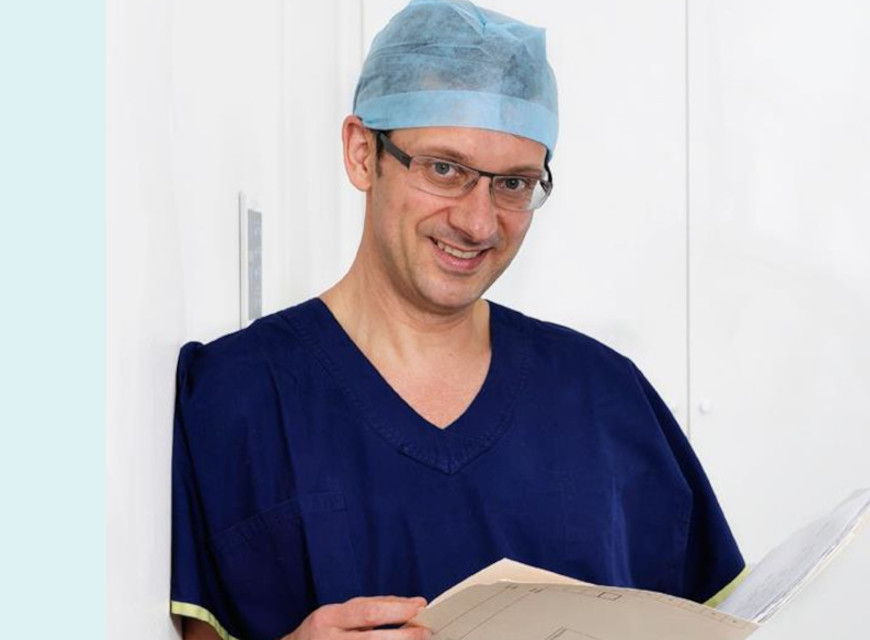
A qualified plastic surgeon who operates with care and integrity, based in central Sydney with over 20 years of experience in the cosmetic field. His extensive training and experience assures patients they are in highly trained surgical hands. Dr. Kohout is a dedicated, friendly professional who is committed to providing the high quality care, support and results, alongside his compassionate team.
Dr Mark Kohout (MED0001133000)
Specialist Plastic Surgeon
Specialist registration in Surgery – Plastic Surgery