


Dr Mark Kohout

Will Medicare cover Breast Implant Removal Surgery?

doctor working
Home » Blog » Will Medicare cover Breast Implant Removal Surgery?
Will Medicare cover Breast Implant Removal Surgery - Dr Mark Kohout Featured Image

Table of Contents

Breast implant removal is performed for a range of reasons. Some people wish to change their appearance, while others develop medical complications that affect comfort, breast shape, or general health. In Australia, this distinction is important because Medicare does not assist with procedures carried out purely for appearance, but may contribute when there is a recognised medical indication.


For patients of Dr Mark Kohout in Sydney, two Medicare Benefits Schedule (MBS) item numbers are central when implants are being removed and not replaced in the same operation:

  • 45548 – breast implant removal as a stand-alone procedure
  • 45551 – breast implant removal with removal of at least 50% of the capsule, with in-theatre photographs and the capsule sent for histopathology


This article explains how those item numbers work, what Medicare generally looks for, and how assessments, documentation and costs fit together. It is intended as general information only and does not replace personalised medical advice.

How Medicare Views Breast Implant Removal​

For breast implant removal on its own (with no new implants inserted at the same operation), Medicare currently provides support under item numbers 45548 and 45551. For these removal-only procedures, there is no separate list of criteria you must meet in order to claim; the key Medicare requirement is that the implants are removed and not replaced at the same time. When an appropriate item number is used, Medicare can contribute a rebate towards the surgeon’s fee and the anaesthetist’s fee. If you have private hospital insurance and your policy includes this category of cover, your fund may also contribute to hospital and theatre costs.


If implant removal is combined with insertion of new implants in the same operation, different Medicare item numbers and stricter rules apply, and many of these combined procedures do not attract a Medicare rebate.


During a consultation, Dr Kohout will review your history, examine you, and clarify whether your planned surgery involves implant removal only, or removal with replacement. He will then advise whether item 45548 or 45551 is likely to apply in your situation, or whether your procedure falls outside current Medicare arrangements. You can then provide these item numbers to your private health fund to confirm any hospital cover and likely out-of-pocket costs.

Download Dr Mark Kohout’s Breast Implant Removal Guide

Item 45548: Breast Implant Removal as a Stand-Alone Procedure​

Item 45548 applies when breast implants are removed without additional breast procedures being claimed at the same time.


In practical terms, this usually involves:

  • Surgical access through an appropriate incision
  • Removal of the implant from the breast pocket
  • Basic pocket management and closure
  • No claimable capsulectomy component
  • No insertion of a new implant under this item


It is important that 45548 is used as a stand-alone implant removal code. It is not intended to be combined with other breast operations under the same item. If, for example, a breast lift or reshaping is performed for appearance reasons at the same time, those components are generally regarded as cosmetic and do not attract a Medicare rebate, even if 45548 is used for the removal.


Examples where 45548 may be considered include:

  • Confirmed implant rupture where removal is required but formal capsulectomy is not necessary
  • Implant movement causing discomfort or noticeable distortion, without significant capsule disease
  • Chronic irritation or discomfort in the absence of a clear capsule pathology that warrants excision

Item 45551: Implant Removal With Partial Capsulectomy and Histopathology​

Item 45551 is used when implant removal is combined with removal of at least half of the surrounding capsule, and the capsule tissue is carefully documented and examined.


For this item to be valid:

  • At least 50% of the capsule around the implant must be excised
  • The removed capsule must be sent for histopathology
  • In-theatre photographs should be taken to document the capsule and extent of removal
  • No replacement implant can be inserted if this item is claimed


Partial capsulectomy is often considered when the capsule is:

  • Firm and tight, causing discomfort and visible distortion
  • Asymmetrical or irregular on examination or imaging
  • Suspicious for conditions such as BIA-ALCL or other pathology

In Dr Kohout’s practice, intra-operative photographs are taken in theatre to show the capsule and operative field. These images are stored as part of the medical record and may assist if Medicare or a private health insurer reviews the case. Histopathology reports confirming examination of the capsule are also retained.


The decision to use 45551 rather than 45548 depends on the clinical need for capsule removal, not simply patient preference. During your consultation, the reasons for choosing capsulectomy, and the extent of tissue removal recommended, will be discussed with you.

Medical Conditions That May Support Implant Removal​

Although every patient is assessed individually, there are common patterns in cases where implant removal is considered medically necessary.

✓ Implant rupture or leakage​

Over time, implants can fail. Saline implants may deflate, while silicone implants can develop silent or obvious rupture. Imaging, usually ultrasound or MRI, can confirm these changes. If rupture is associated with discomfort, shape change or inflammatory signs, removal is often advised.

✓ Capsular tightening with distortion​

Scar tissue around the implant can thicken and tighten to the point where the breast feels firm, distorted or uncomfortable. When this process interferes with breast shape or causes symptoms, removal of the implant, with or without capsulectomy, can be part of the management plan.

✓ Chronic infection or recurrent inflammation​

Infection in the pocket around an implant may present with redness, heat, swelling, discharge, fever or a combination of these. Acute infections are usually treated first with antibiotics and close monitoring. Where infection recurs or fails to settle, implant removal is often recommended to allow the area to clear.

✓ Implant movement with thinning of tissues​

Implants can migrate within the pocket, causing changes in position, upper breast hollowness, or lower pole fullness. In some cases, the overlying skin and tissues become thin, and the implant moves closer to the surface. When there is a risk of breakdown or exposure, removal, and sometimes capsulectomy, may be advised.

✓ BIA-ALCL and other pathologies​

Breast Implant–Associated Anaplastic Large Cell Lymphoma is an uncommon lymphoma linked with some textured implants. It may present with a late fluid collection around the implant, a lump, or persistent swelling. Management generally includes removal of the implant and capsule, with careful pathological assessment. In these cases, accurate documentation for item 45551 is especially important.

✓ Interference with screening or treatment​

In some patients, implants can limit the quality of mammography or affect planning for breast cancer treatment. If imaging centres consistently report difficulty in adequately assessing the breast due to implants, removal may be considered as part of overall cancer care.

✓ Systemic symptoms and BII-style presentations​

Some individuals report systemic symptoms they associate with their implants, commonly grouped under the term Breast Implant Illness (BII). At present, BII is not a separate Medicare category. However, if symptoms fit within an accepted diagnosis and a specialist team recommends implant removal as part of a broader plan, Medicare may be considered under existing criteria. Clear documentation from all treating practitioners is essential in such situations.

Assessment in Dr Kohout’s Sydney Clinic​

If you visit Dr Kohout to discuss implant removal and Medicare, the consultation is structured so that both clinical details and practical issues are addressed.


You can expect:

  • A discussion of your general health, medications, and prior operations
  • Questions about your initial breast surgery, including timing, reasons for surgery and implant type if known
  • A detailed review of any symptoms (pain, tightness, swelling, shape changes, systemic complaints), how long they have been present, and what makes them better or worse
  • Examination of the breasts and implants, including observation of symmetry, position, firmness and any visible skin changes
  • Consideration of ultrasound, MRI or other imaging to clarify implant integrity and capsule features
  • Review of any previous conservative measures such as antibiotics, physical therapy or observation


At the end of the assessment, Dr Kohout will outline:

  • Whether your presentation appears consistent with a medical complication
  • Whether implant removal is being recommended, and if so, whether capsule removal is also indicated
  • Which item number (45548 or 45551) appears most appropriate, or whether the procedure is unlikely to involve Medicare
  • How the surgical plan will affect possible rebates and health fund contributions


You will have time to ask questions and to consider the information before deciding how to proceed.

Role of Imaging and Pathology​

Imaging and pathology are not only diagnostic tools; they also provide objective evidence that supports Medicare eligibility.


Ultrasound is often used as an initial investigation. It can identify fluid around the implant, obvious ruptures, collections, or focal abnormalities. It is widely available and useful in guiding further management.


MRI is more sensitive for subtle implant ruptures and internal changes. It offers high-resolution images of both the implant shell and the surrounding tissues. MRI may be recommended when ultrasound findings are inconclusive or when symptoms persist despite unremarkable initial imaging.


Pathology plays a key role in 45551. When capsular tissue is removed, it is sent for histological examination, and the report is kept as part of the clinical record. In cases of suspected BIA-ALCL or other serious pathology, additional fluid and tissue tests, including immunohistochemistry, may be requested. These tests provide clarity about diagnosis and help guide further treatment.

Financial Considerations: Rebates, Gaps and Related Costs​

Even when an appropriate Medicare item number is used, rebates rarely cover all costs associated with implant removal. It is important to understand the likely financial components before committing to surgery.


Possible costs include:

  • The surgeon’s fee for the procedure
  • The anaesthetist’s fee
  • Hospital and operating theatre charges
  • Imaging (ultrasound, MRI) before and sometimes after surgery
  • Pathology fees for capsule examination and any additional tests
  • Follow-up consultations


If 45548 or 45551 applies, Medicare contributes a set rebate towards the surgeon’s fee and the anaesthetist’s fee. If you have private hospital insurance and your policy covers procedures performed for medical reasons, the fund may assist with hospital and theatre costs. Excess amounts and co-payments still apply.


Before surgery, Dr Kohout’s team will provide a written fee estimate. This outline will typically specify:

  • The planned procedure and item number(s)
  • The expected Medicare rebate
  • Any anticipated health fund contribution
  • The estimated out-of-pocket amount for you


This transparency allows you to weigh up both clinical and financial factors.

Public Hospital Care in Sydney​

Some patients with implant-related complications can be managed in the public system, particularly when the underlying condition is urgent or complex. Examples include:

  • Confirmed rupture with significant discomfort or marked shape change
  • Infection or implant exposure that requires prompt surgical management
  • Biopsy-proven BIA-ALCL or strong suspicion of this condition

Access to public hospital treatment usually involves a referral from a GP or another specialist to a breast or plastic surgery unit. The hospital will then triage referrals and assign priority based on clinical urgency. Waiting times can vary considerably.

Elective removal of implants purely for appearance reasons, or for mild symptoms without clear evidence of complication, is generally not offered in public hospitals. These cases are usually managed in private practice, sometimes with partial Medicare assistance if a medical indication is present.

When Medicare or Private Health May Not Apply​

There are situations where implant removal sits outside Medicare and health fund criteria.

These include:

  • Removal of intact implants where replacement implants are inserted
  • Combined procedures where medically indicated removal is accompanied by additional cosmetic procedures, such as reshaping for personal preference alone
  • Policies that exclude certain procedures or impose waiting periods or pre-existing condition rules that have not yet been met

In these scenarios, patients may choose to self-fund some or all of the treatment. Dr Kohout will still provide a thorough clinical assessment and explain the likely costs so that you can make an informed choice.

Self-Funding and Early Access to Superannuation​

For individuals who do not qualify for Medicare support or private health benefits, or who still face substantial gap payments, various strategies can be considered.

Some patients elect to fund the procedure from savings or to use structured payment plans. In more complex cases with documented medical need, early release of superannuation on compassionate grounds may be discussed.

Early access to superannuation is managed by the Australian Taxation Office and is subject to strict criteria. Applications generally require:

  • Clear evidence of a medical condition causing significant distress or pain
  • Detailed reports from medical practitioners, including a specialist
  • Confirmation that suitable treatment is either not available in the public system within a reasonable timeframe, or that waiting for a public option is not appropriate in the clinical context

Dr Kohout can provide clinical documentation where medical criteria are met, but he does not determine the outcome of ATO decisions and does not provide financial advice. Patients are encouraged to obtain independent financial guidance before deciding to access superannuation.

Your Consultation With Dr Mark Kohout: What to Expect​

A consultation for breast implant removal is structured to help you understand your options and to clarify how Medicare rules apply to your circumstances.


During your appointment, you can expect:

  • Review of your general health and breast surgery history
  • A detailed discussion of your symptoms, concerns and goals
  • Physical examination of your breasts and implants
  • Consideration of appropriate imaging if not already completed
  • Explanation of the relative benefits and limitations of implant removal alone versus removal with capsulectomy
  • Discussion of potential risks, likely recovery timeframe, and follow-up arrangements
  • A written estimate outlining item numbers, possible rebates and expected out-of-pocket costs


You are welcome to bring previous imaging, operative reports and a list of questions. Many people find it helpful to bring a family member or close friend for support and to help recall information later.

FAQs About Medicare and Breast Implant Removal​

Do I need a GP referral to claim Medicare for implant removal?Yes. A current referral from your GP (or another specialist) is required to access Medicare rebates for consultations and any procedure billed under item 45548 or 45551.
Will Medicare help if my implants were inserted overseas?Yes, in many cases. Medicare focuses on your current medical condition and the clinical indication for surgery, rather than where the original implants were placed. If you meet the clinical criteria for removal and an appropriate item number applies, a rebate may be available.
Are both implants removed if only one has a problem?Often both implants are removed in the same operation, particularly if they are of similar age and type. Leaving one implant in place may result in asymmetry or the need for another operation in the future. The plan is individualised and discussed with you.
Which imaging tests are most helpful for Medicare documentation?Ultrasound is commonly used as a first-line test. MRI provides more detailed information about implant integrity and subtle ruptures. The choice of imaging depends on your symptoms and previous findings; both can contribute valuable evidence for Medicare purposes.
Are photographs really necessary?Clinical photographs are an important part of the medical record. For item 45551, intra-operative photographs help demonstrate that significant capsule removal has been performed. Photographs are stored securely and used for clinical documentation and compliance.
Does Breast Implant Illness (BII) have its own Medicare item?No. BII is not currently recognised as a separate MBS category. However, if your symptoms fit within a recognised diagnosis and a specialist team supports implant removal as part of your management, existing item numbers may still be used, provided other criteria are met.
Medical References

Contacting Dr Mark Kohout’s Sydney Clinic​

If you are concerned about your breast implants and would like individual advice on whether Medicare item 45548 or 45551 may apply, you can contact Dr Mark Kohout’s practice in Sydney.


The clinic can:

  • Arrange an appointment time that suits your schedule
  • Advise what referral and previous records to bring
  • Provide general information about fees and possible rebates before you attend


During your consultation, you will receive a detailed clinical assessment, an explanation of your surgical options, and a written outline of the likely costs and Medicare implications. This information can assist you in deciding whether to proceed with breast implant removal and how best to plan for the medical and financial aspects of care.


If you are ready to take the next step, you can reach the practice by phone or via the contact details on drmarkkohout.com.au to arrange an appointment with Dr Kohout in Sydney.

Further Reading

Related Blog Posts

Breast Implant Myths and Misconceptions

Breast Implant Myths and Misconceptions

Breast augmentation is one of the most popular cosmetic surgeries in Sydney. Doing your Research is crucial before making a significant surgical decision. This article covers five popular misconceptions about this…
Choosing Breast Implants – A Guide

Choosing Breast Implants – A Guide

One of the most requested cosmetic procedures is breast implant surgery. Many women undergo this operation to reshape their bodies and achieve their sought appearance. Breast augmentation allows individuals to…

Breast Implants Revisions: Assessing the Need for Surgery

Breast Implants Revisions: Assessing the Need…

The demand for breast augmentation surgery has seen a consistent upward trend. While a majority of women express satisfaction with the results of their breast implants, some still find themselves unhappy…
Dr Mark Kohout

Experienced Plastic Surgeon

Dr. Mark Kohout

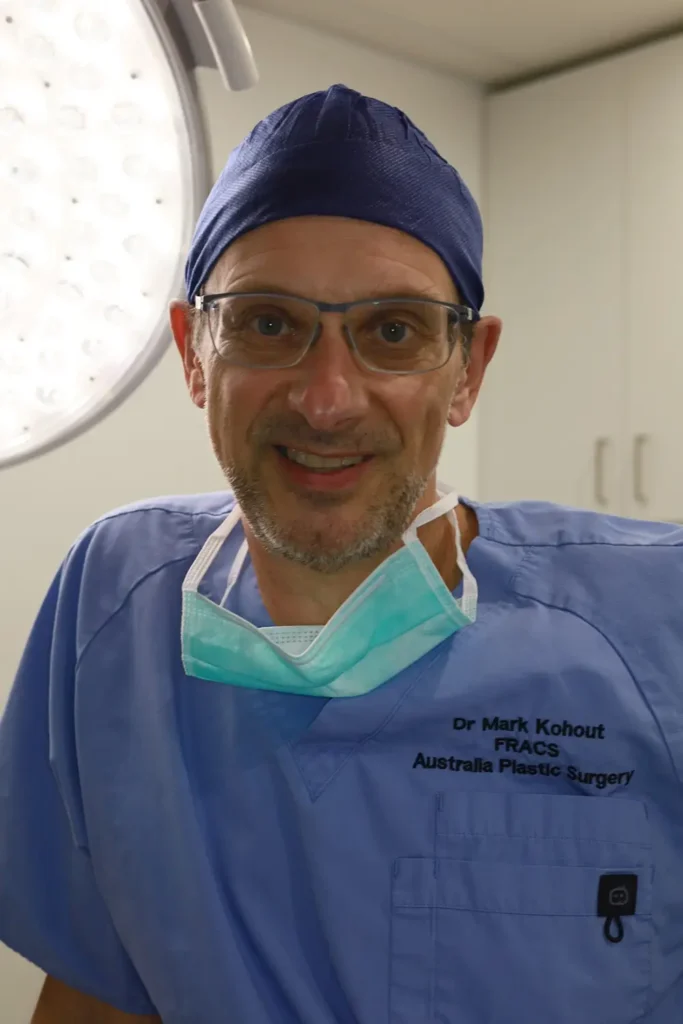
A qualified plastic surgeon who operates with care and integrity, based in central Sydney with over 20 years of experience in the cosmetic field. His extensive training and experience assures patients they are in highly trained surgical hands. Dr. Kohout is a dedicated, friendly professional who is committed to providing the high quality care, support and results, alongside his compassionate team.

Dr Mark Kohout (MED0001133000)
Specialist Plastic Surgeon
Specialist registration in Surgery – Plastic Surgery

This website contains imagery which is only suitable for audiences 18+. All surgery contains risks, read more here.

X

Get Your Breast Implant Removal

Get Your Facial Aesthetic

Get Your Female Genital Surgery Guide

Get Your Excess Skin Guide

Get Your Gynaecomastia Guide

Get Your Liposuction Guide

Get Your Abdominoplasty Guide

Get Your Cost of Surgery Guide

Get Your Breast Implant Replace Guide

Get Your Breast Reduction Guide

Get Your Breast Augmentation Guide

Make an Enquiry