


Dr Mark Kohout FRACS is a Specialist Plastic Surgeon based in Broadway, Sydney, with experience in body contouring procedures including buttock reshaping surgery. After buttock reshaping surgery, patients may be advised to avoid direct pressure on treated areas and use supportive positioning. Instructions vary according to the procedure, incision placement and individual recovery.
Sleeping after buttock reshaping surgery can feel awkward in the early recovery period because many patients need to avoid direct pressure on the treated area. Normal sleeping positions may feel uncomfortable, and getting in and out of bed can require more care than usual. Planning your sleep setup before surgery can make the first stage of recovery feel more organised.
This article provides general recovery information for patients who are preparing for or recovering from buttock reshaping surgery. It does not replace personalised instructions from Dr Kohout’s practice, because sleep position may depend on the procedure performed, incision placement, swelling, tenderness and the patient’s recovery progress.
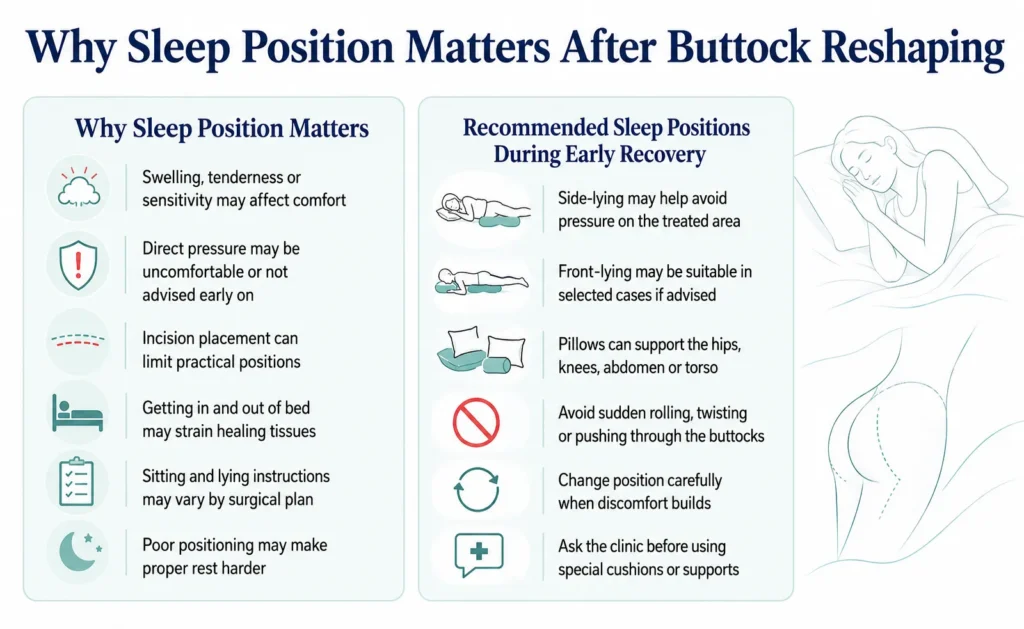
Why Sleep Position Matters After Buttock Reshaping
Sleep position matters after buttock reshaping because direct pressure on the treated area may increase discomfort during early recovery. Some patients may also have specific positioning instructions depending on the type of buttock reshaping surgery performed.
Sleep position may be important because:
- The buttock area may feel swollen, tender or sensitive after surgery
- Direct pressure may feel uncomfortable or may not be advised early on
- Incision placement can affect which positions are most practical
- Getting in and out of bed may place strain on healing tissues
- Sitting and lying instructions may differ depending on the surgical plan
- Poor positioning may make it harder to rest properly
Patients should avoid assuming that one sleeping position is suitable for every buttock reshaping procedure. Dr Kohout’s surgical team can explain which positions are appropriate based on the operation performed and the patient’s recovery needs.
Sleep Positions That May Be Discussed During Early Recovery
Recommended sleep positions after buttock reshaping vary depending on the procedure and the patient’s comfort. In general, patients are often advised to avoid positions that place direct pressure on the surgical area until their own surgical team has advised otherwise.
General positioning approaches may include:
- Side-lying if it avoids pressure on the treated buttock area
- Front-lying in selected cases if advised by the surgical team
- Using pillows to support the hips, knees, abdomen or torso
- Avoiding sudden rolling, twisting or pushing through the buttocks
- Changing position carefully when discomfort builds
- Asking the clinic before using special cushions or supports
No sleeping position can guarantee a pain-free recovery, and some disruption is common in the early days. Patients should follow Dr Kohout’s specific positioning instructions rather than relying only on general online advice.
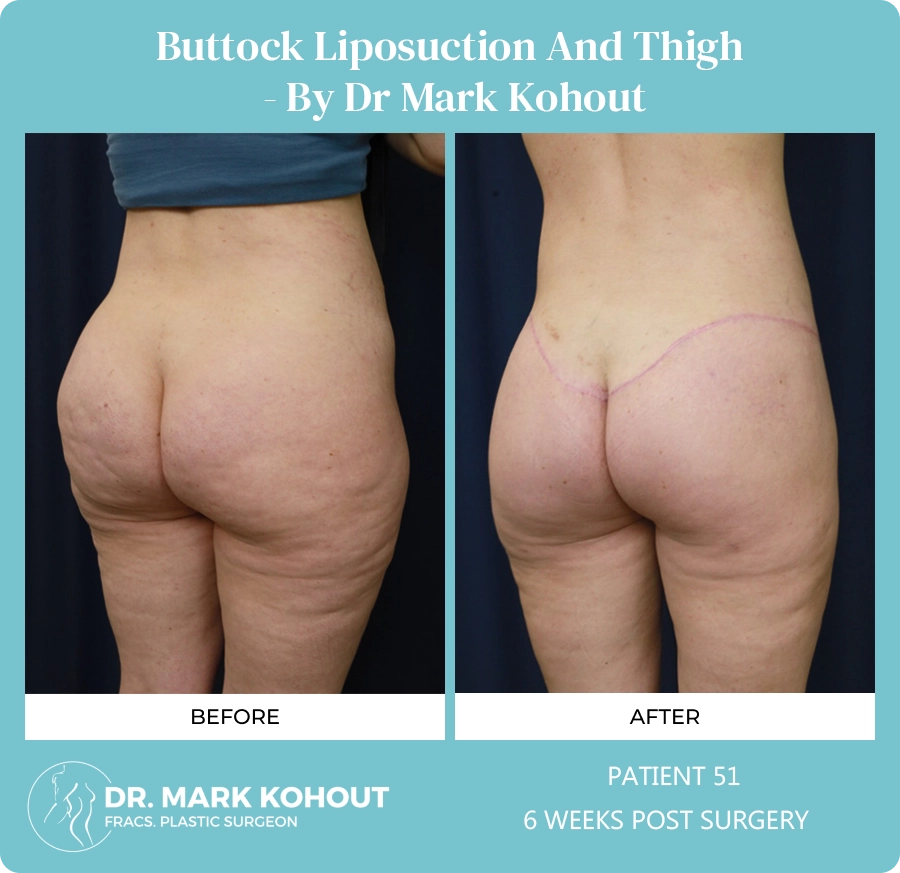
Buttock Liposuction Before and After Images
Products And Setup That May Help
A practical sleep setup can make early recovery after buttock reshaping feel more manageable. The goal is not to buy a specific product, but to create a resting position that supports the body and follows the instructions from Dr Kohout’s surgical team.
Helpful setup options may include:
- Supportive pillows to reduce rolling during sleep
- A body pillow to support side-lying positions
- A wedge pillow if torso or leg elevation is recommended
- Pressure-relief cushions if approved by the surgical team
- Loose bedding that is easy to adjust without twisting
- Bedside essentials such as water, phone, charger and medication instructions
Patients should avoid using any cushion, pillow or support that places pressure on the surgical area unless it has been approved for their recovery plan. A simple, safe setup that follows the clinic’s instructions is usually more useful than buying multiple products without guidance.
When Sleep Disruption Might Signal A Problem
Some sleep disruption is common after buttock reshaping because swelling, tenderness and positioning changes can make rest less comfortable. However, worsening symptoms that prevent any rest or feel different from the expected recovery pattern should be discussed with the clinic.
Patients should contact Dr Kohout’s Broadway Sydney practice if they notice:
- Pain that becomes worse rather than gradually settling
- Sudden swelling, increasing tightness or a new area of pressure
- Fever, chills or feeling increasingly unwell
- Redness, warmth, pus, odour or wound concerns
- New bleeding or unusual drainage
- Chest pain, shortness of breath, fainting or other urgent symptoms
This section is not intended to help patients diagnose themselves at home. If sleep disruption is linked with worsening pain, wound changes or concerning symptoms, it is safer to contact Dr Kohout’s team or seek urgent medical care depending on severity.
Ask Dr Kohout’s Broadway Sydney Practice About Sleep Position After Buttock Reshaping
If sleep positioning is a concern before or after buttock reshaping surgery, contact Dr Mark Kohout FRACS and his team at the Broadway, Sydney practice for personalised recovery advice. Your sleeping position should reflect the procedure performed, incision placement, discomfort level and recovery instructions from your surgical team.
Patients can ask about suitable sleep positions, cushions, sitting restrictions, garment use and what to do if discomfort is affecting rest. Clear guidance before surgery can make the early recovery period feel more organised and less uncertain.
FAQs About Sleeping After Buttock Reshaping
Is it normal to sleep poorly after buttock reshaping surgery?
Yes, sleep disruption is common in the early recovery period because swelling, tenderness and positioning restrictions can make normal sleep positions uncomfortable. If pain is worsening or preventing any rest, contact Dr Kohout’s Broadway Sydney practice for advice.
What is the best sleeping position after buttock reshaping?
The best sleeping position depends on the procedure performed, incision placement and the instructions from the surgical team. Some patients may be advised to use side-lying or front-lying positions to avoid direct pressure on the buttock area.
Can I sleep on my back after buttock reshaping?
Sleeping on the back may place pressure on the buttock area, so it may not be appropriate in the early recovery period for some procedures. Patients should follow Dr Kohout’s specific advice rather than assuming back sleeping is safe for their surgical plan.
Do I need a special pillow after buttock reshaping?
Some patients may benefit from supportive pillows, body pillows, wedge pillows or pressure-relief supports if these are appropriate for their recovery plan. It is best to ask Dr Kohout’s team before buying or using a special cushion.
How can I stop rolling onto my buttocks while sleeping?
Pillows placed around the body may help reduce rolling during sleep. Patients should choose a setup that feels stable and does not create pressure on the surgical area.
Why does sleeping feel harder in the first few nights?
The first few nights can feel difficult because the body is adjusting to swelling, tenderness, garments, positioning changes and reduced movement. Sleep often becomes easier as discomfort settles and patients become more confident with positioning.
Can I use a recliner after buttock reshaping surgery?
A recliner may or may not be suitable depending on whether it places pressure on the buttock area. Patients should ask Dr Kohout’s surgical team before using a recliner as part of their recovery setup.
When should I call the clinic about sleep-related discomfort?
Patients should contact the clinic if discomfort is worsening, preventing any rest or occurring with swelling, redness, wound drainage, fever or feeling unwell. Chest pain, shortness of breath, fainting or sudden severe symptoms require urgent medical attention.
Medical References
- Butt Lift – Aftercare & Recovery – The Aesthetic Society – https://www.theaestheticsociety.org/procedures/body/butt-lift/aftercare-recovery
- Can Improving Postoperative Sleep Speed Up Surgical Recovery? – Sleep Science – https://www.thieme-connect.com/products/ejournals/pdf/10.1055/s-0044-1785522.pdf
- Sleep assessment in patients after surgery: a systematic review – Biological Rhythm Research – https://www.tandfonline.com/doi/full/10.1080/09291016.2024.2387097
Take our Plastic Surgery Quiz to find out if you’d be a good candidate and if you are ready for cosmetic surgery.
Further Reading
- Read more about Buttock Implant Surgery in Sydney
- Read more about Liposuction Sydney
- Read more about Thigh Lift Surgery Sydney
- Read Dr Mark Kohout’s Blog on Exploring Options for Changing Buttock Shape Without Fat Transfer
- Read Dr Mark Kohout’s Blog on Preparing For Buttock Reshaping Surgery: A Practical Pre-Op Checklist
- Read Dr Mark Kohout’s Blog on Why Your Buttocks Look Flat Despite Exercise
Related Blog Posts
What Is Empty Buttock Syndrome? Causes,…
Volume changes in the buttocks are sometimes described as “Empty Buttock Syndrome,” a non-medical term used to explain a noticeable reduction in shape or projection following certain procedures or significant…
Gluteal Augmentation With Implants in Sydney:…
Interest in fuller, more projected buttock shapes has grown steadily, encouraged in part by social media and online imagery. Many people in Sydney arrive at a consultation with screenshots, mixed…

FAQs About Bodylift Surgery
Dr Mark Kohout, Plastic Surgeon in Sydney, brings over 25 years of experience in aesthetic and reconstructive surgery. His practice is known for its patient-focused approach and thorough consultation process.…
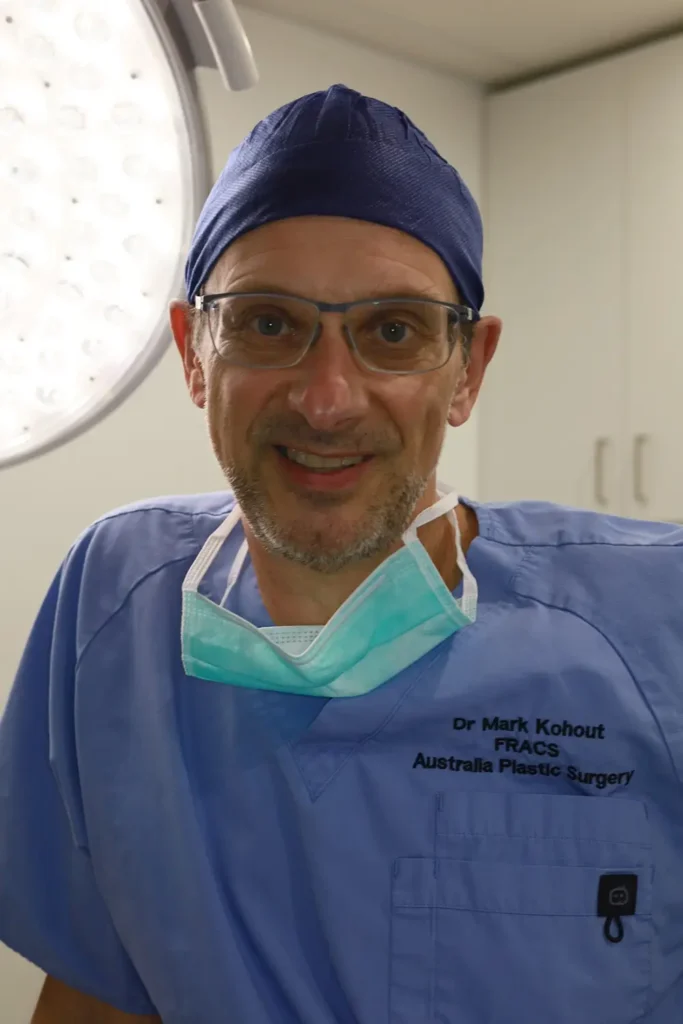
Experienced Plastic Surgeon
Dr. Mark Kohout
A qualified plastic surgeon who operates with care and integrity, based in central Sydney with over 20 years of experience in the cosmetic field. His extensive training and experience assures patients they are in well trained surgical hands. Dr. Kohout is a dedicated, friendly professional who is committed to providing the high quality care, support and results, alongside his compassionate team.
Dr Mark Kohout (MED0001133000)
Specialist Plastic Surgeon
Specialist registration in Surgery – Plastic Surgery