Buttock Implant Surgery in Sydney

With Dr. Mark Kohout

liposuction

Many people notice that their buttocks do not sit in the way they would prefer in clothing or when viewed from certain angles. Some feel this has been the case since adolescence, while others see changes over time with weight variation, pregnancy, ageing or changes in body composition, and begin to explore options to adjust this area.

Patients who consider buttock implant surgery are usually seeking clear, balanced information. They often want to understand what can realistically be changed, what the risks are, and what day-to-day life is like after surgery, rather than reading promises or marketing phrases.

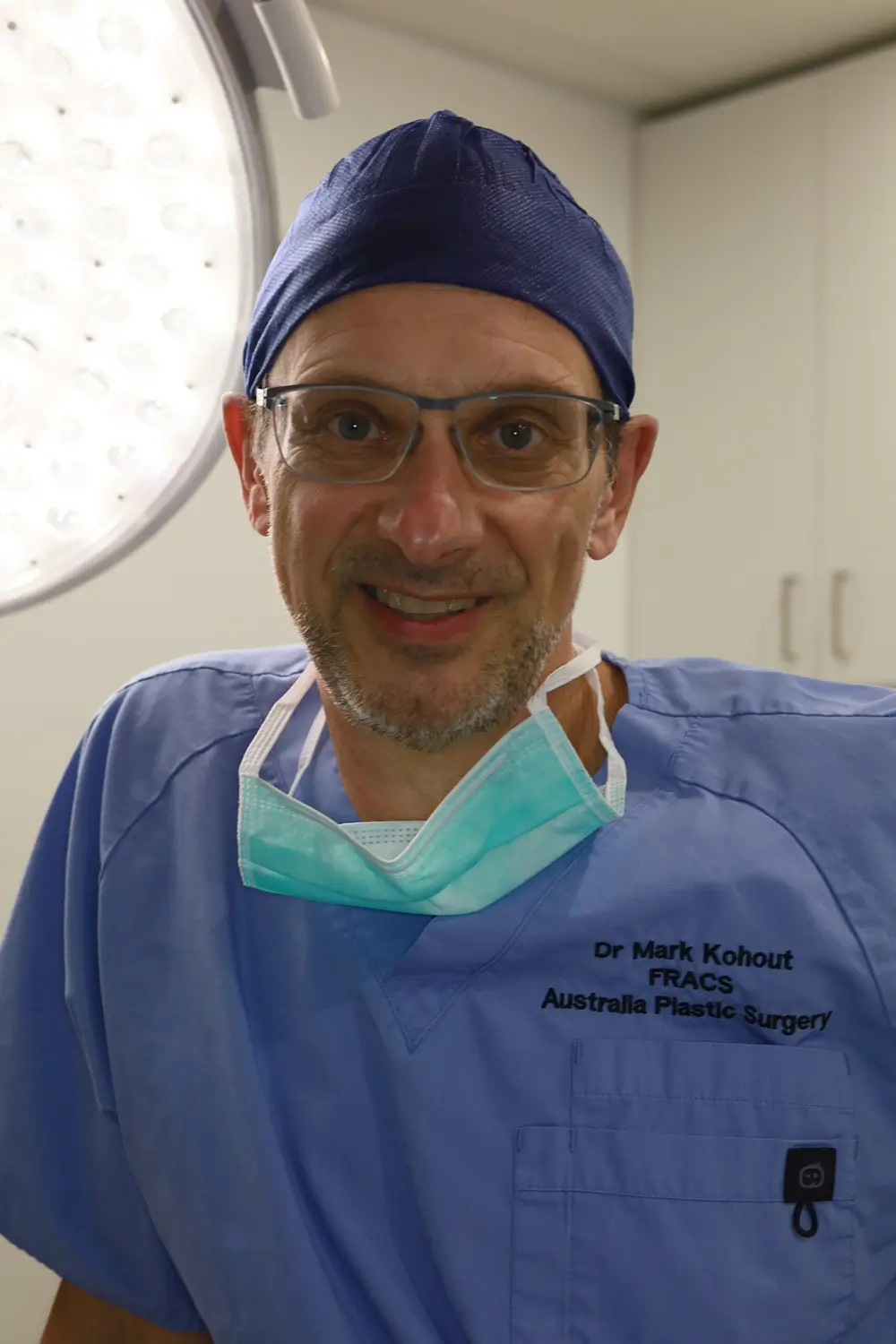
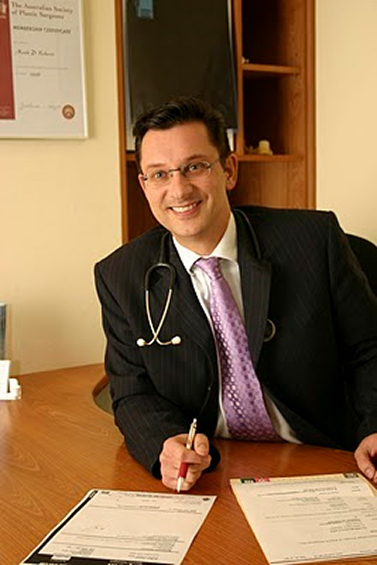
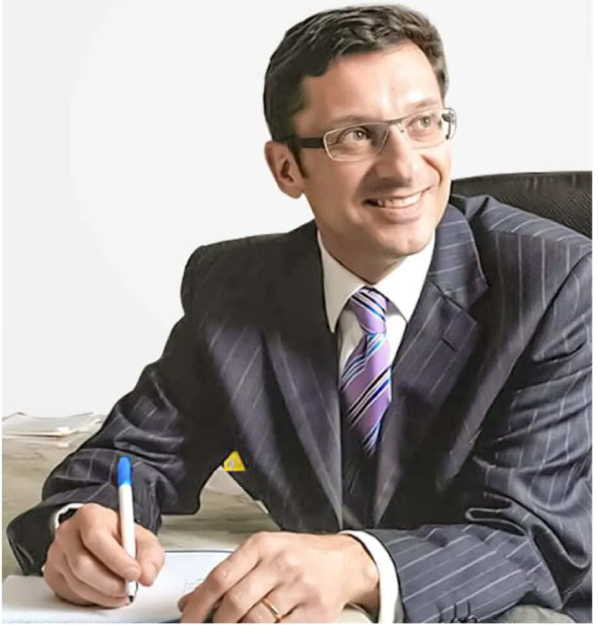
Dr Mark Kohout is a Specialist Plastic Surgeon practising in Sydney, with many years of clinical experience in cosmetic and reconstructive surgery. His approach is to provide detailed, patient-centred information so that individuals can make decisions that suit their health, anatomy, priorities and circumstances.

This page offers a comprehensive overview of buttock implant surgery in Sydney. It explains how the procedure is performed, who may consider it, what it can and cannot address, possible risks, the recovery process, long term considerations and costs. It is general information and does not replace a personalised consultation with Dr Kohout.

Buttock Implant Surgery in Sydney: Overview​

Buttock implant surgery, also known as gluteal augmentation with implants, uses semi-firm silicone implants to add volume and projection to the buttock region. These implants are slightly more solid than breast implants and are designed to maintain their shape under everyday forces such as sitting, walking and climbing stairs.

The operation is carried out in an accredited hospital under general anaesthetic. A specialist anaesthetist monitors the patient throughout. Before surgery, Dr Kohout places markings on the skin while the patient is standing so that the natural folds and outlines of the lower back and buttocks are visible. Once anaesthetised, the patient is positioned carefully on their stomach with padded supports to protect pressure areas.

Incisions are most commonly placed in the crease between the buttocks. Through these incisions, Dr Kohout creates a space within the gluteal muscle and places the implants into this space. The plan aims to add projection and volume in a way that suits the patient’s pelvic structure, tissue thickness and overall frame.

A key part of assessment is determining where volume change is required. Buttock implants are generally better suited to adding projection to the upper and central buttock. They do not reliably fill the lower buttock and are not designed to reposition a descended lower buttock fold.

The intention is to plan a measured change that fits with the patient’s existing proportions, rather than to follow trends or reproduce a particular image. Not everyone who is interested in fuller buttocks will be a suitable candidate for implants. General health, tissue characteristics, buttock length, lower buttock fold position, expectations and day-to-day lifestyle all play a role in deciding whether this procedure is appropriate.

Understanding Buttock Implant Surgery

The shape of the buttocks is influenced by the structure of the pelvic bones, the volume and position of the gluteal muscles, and the thickness and behaviour of the overlying fat and skin. Buttock implants add structure in the upper and central parts of this region, which can change how far the buttocks project from the pelvis when viewed from the back or side.

During consultation, Dr Kohout discusses what the patient has noticed and what they would like to adjust. They may describe limited projection in fitted clothing, reduced projection from the side, a clear difference in size between the two buttocks, or hollowing through the outer hip and upper buttock transition. He then examines the area while the patient is standing and sometimes sitting, to see how it appears in positions that reflect everyday life rather than only lying on an examination couch.

The vertical length of the buttock is also assessed. Patients with a vertically shorter buttock and no significant lower buttock ptosis may be better suited to implants, because the implant can add projection to the upper half of the buttock without relying on it to fill the lower pole. Where the buttock is elongated after weight loss, or where the lower buttock fold has descended, implants alone may not address the main anatomical concern.

Dr Kohout also reviews the patient’s medical history in detail, including previous operations, any tendency to bleed or bruise, past wound issues, medications, allergies and significant health conditions. The patient’s general health and ability to follow post-operative instructions are important in assessing whether this type of surgery is appropriate.

Buttock implants have specific capabilities and limits. They can increase volume and projection in a targeted region. They do not remove cellulite, do not address every small surface irregularity, and do not replace the impact of balanced eating patterns, movement and other lifestyle choices over time. Having a clear understanding of these limits supports realistic expectations.

Who May Consider Buttock Implants?

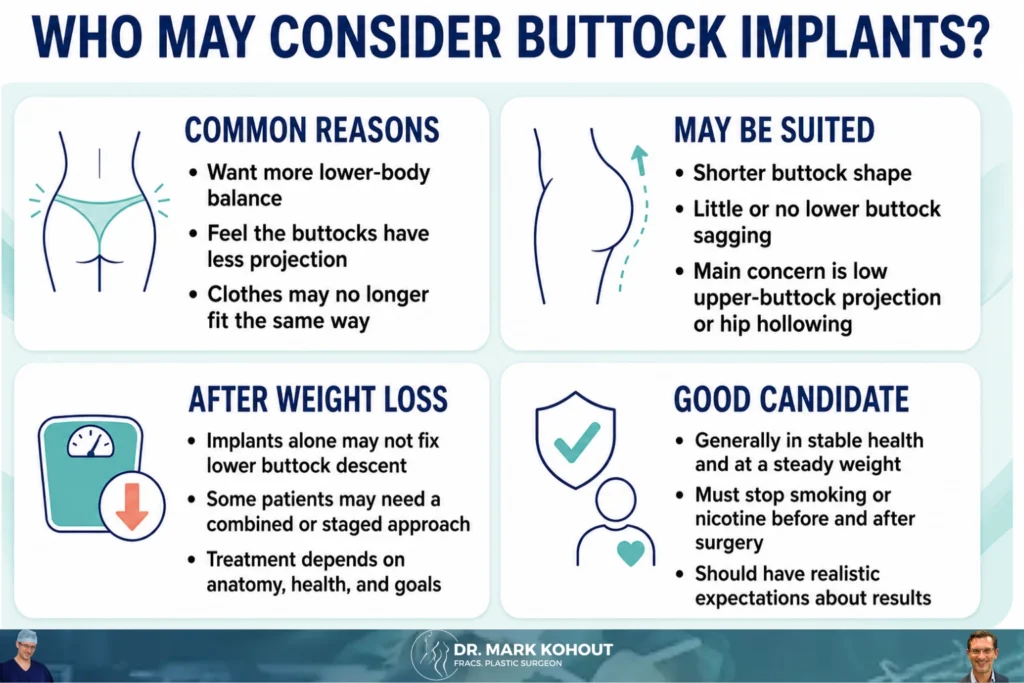
Who May Consider Buttock Implants by Dr Mark KohoutPeople who come to see Dr Kohout to discuss buttock implants represent a wide range of ages and body types. Some have always felt that the lower part of their body is less projected than their upper body. Others have noticed that skirts, jeans or fitted trousers no longer sit in a way that feels familiar and are seeking information about surgical options after trying non-surgical measures.


A patient who may be well suited to buttock implants often has a vertically shorter buttock, no significant lower buttock ptosis, and a main concern relating to limited upper buttock projection or hollowing through the outer hip and upper buttock transition. In this setting, implants may be used to add projection to the upper and central buttock region.


By contrast, patients who have undergone significant weight loss may have a different anatomical pattern. In some cases, the buttock may appear longer, with lower buttock descent and a lower buttock fold that has shifted downward. In this situation, buttock implants alone may not address the lower buttock region, because implants are not designed to fill or lift the lower pole.


For some post-weight loss patients, Dr Kohout may discuss a combined or staged approach. This may include buttock implants to address upper buttock projection and the outer hip transition, together with procedures that address lower buttock elongation, tissue descent and the position of the lower buttock fold. The exact plan depends on the patient’s anatomy, tissue characteristics, medical history and goals.


A potential candidate for buttock implants generally has stable general health, relatively steady weight, and no uncontrolled medical conditions that significantly increase surgical risk. Individuals who smoke or use nicotine products need to be prepared to stop for a period before and after surgery, as nicotine can affect blood supply and wound repair.


Understanding of the procedure and appropriate expectations are equally important. Buttock implants cannot produce an exact copy of any photograph and cannot assure particular emotional or social responses. If a patient’s aims involve very large changes or are strongly tied to expectations that surgery will influence many areas of life beyond appearance, Dr Kohout discusses this openly. In some situations, the most appropriate advice may be to delay or not proceed with surgery, or to seek further support before making a decision.

What Buttock Implant Surgery May Help Address

For suitable patients, buttock implant surgery is planned to change projection and fullness of the buttocks, particularly in the upper and central regions. This may contribute to a more defined curve in the upper buttocks when viewed from the side and may alter how certain garments sit around the hips and buttocks.

Buttock implants are most useful when the planned change relates to upper buttock projection rather than lower buttock descent.

They may also be considered when the patient has hollowing through the outer hip and upper buttock transition, provided their tissues and overall anatomy are suitable.

Some individuals report that, after surgery, their upper and lower body appear more in proportion when viewed from the front or side, as the added buttock projection is more in line with their shoulder or chest width. Others describe that a noticeable difference between the two buttocks is less obvious. These experiences vary between people and depend on starting anatomy, implant selection and healing.

In patients who have experienced major weight loss, the concern is often more complex. The upper buttock may have limited projection, while the lower buttock may be elongated or affected by tissue descent. In this setting, Dr Kohout may explain that implants can address one part of the anatomy but may need to be combined with lower buttock tissue reduction or fold repositioning procedures if the lower buttock region is also a concern.

During consultation, Dr Kohout may use diagrams and, where appropriate, selected clinical photographs to illustrate the range of changes that can occur in some cases. These are always presented as examples rather than predictions. Planning focuses on measured adjustments that are compatible with the patient’s tissues and frame, rather than large changes that may carry increased risk.

Important Limitations of Buttock Implants

Important Limitations of Buttocks Implants by Dr Mark Kohout

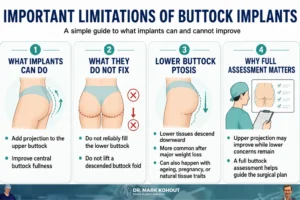
Buttock implants are not designed to address every concern involving the buttock region. Their main role is to add projection to the upper and central buttock. They do not reliably fill the lower buttock, and they do not reposition a descended buttock fold.


Lower buttock ptosis refers to downward descent of the lower buttock tissues, often with elongation of the lower buttock and a lower-positioned buttock fold. This pattern is seen more commonly after major weight loss, but it can also occur with ageing, pregnancy-related body changes or individual tissue characteristics.


When lower buttock ptosis is present, implant placement alone may create projection in the upper buttock while leaving the lower buttock concern largely unchanged. In some cases, this can make the difference between the upper and lower buttock more noticeable. Dr Kohout therefore assesses the entire buttock region, including upper projection, the outer hip transition, lower buttock fold position and tissue descent, before recommending a surgical plan.

Buttock Shaping After Weight Loss

After significant weight loss, the buttock region may need a different approach compared with a patient whose main concern is limited upper projection related to body habitus or proportion. The tissues may be thinner, the buttock may be vertically longer, and the lower buttock fold may sit lower than before.

In this situation, buttock implants may still have a role, particularly where there is limited projection in the upper half of the buttock or hollowing at the outer hip and upper buttock transition. However, implants do not fill the lower buttock and do not address lower buttock descent by themselves.

For some post-weight loss patients, Dr Kohout may discuss a combined approach. This may include buttock implants to add upper buttock projection, together with surgery to address lower buttock elongation, lower buttock tissue descent and the position of the buttock fold. The plan may be performed in one operation or staged over time, depending on patient safety, tissue characteristics, surgical complexity and recovery requirements.

This distinction is important because buttock implant surgery is not a single option for every buttock shape. Careful assessment helps identify whether implants alone are suitable, whether another procedure is more appropriate, or whether a combined plan should be considered.

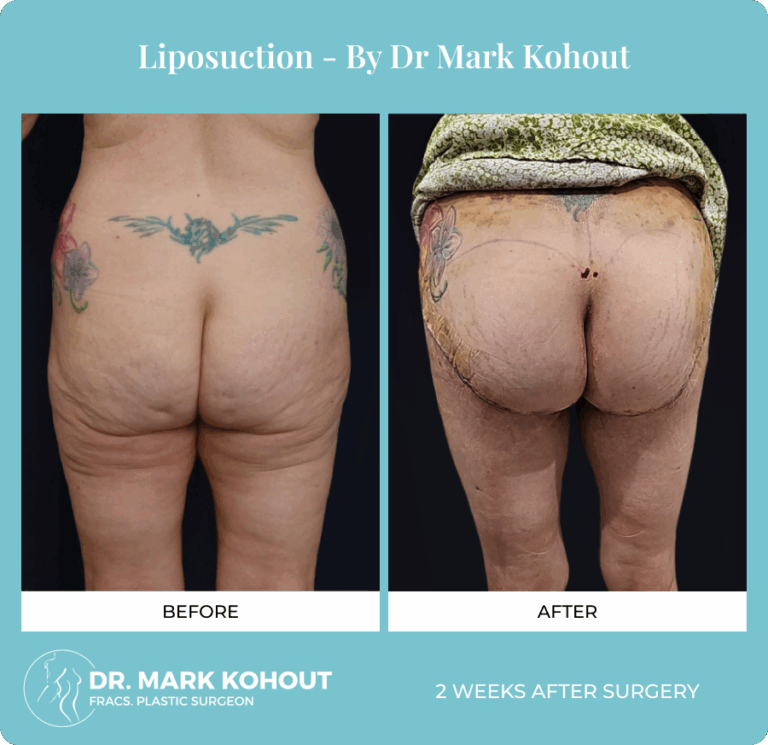
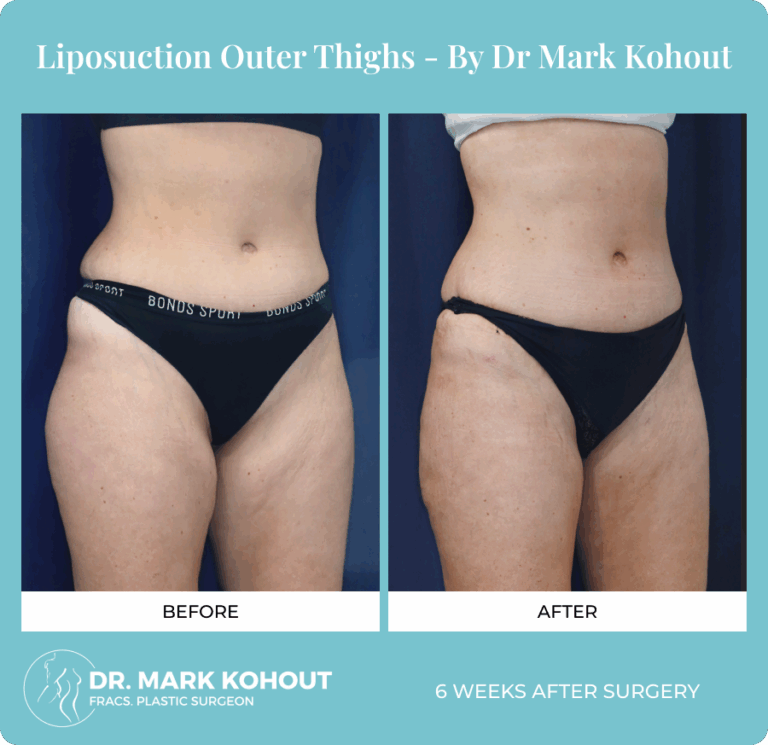
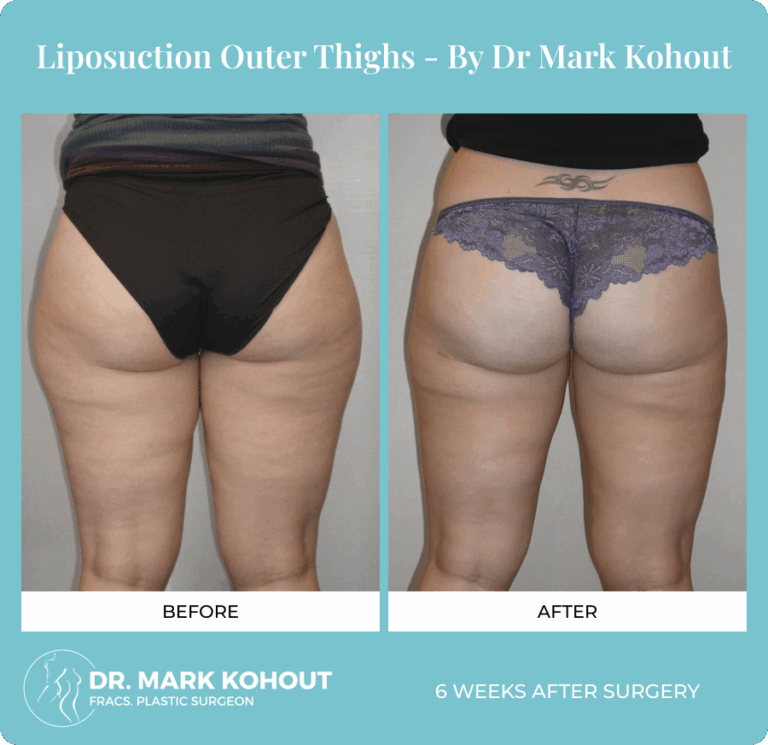
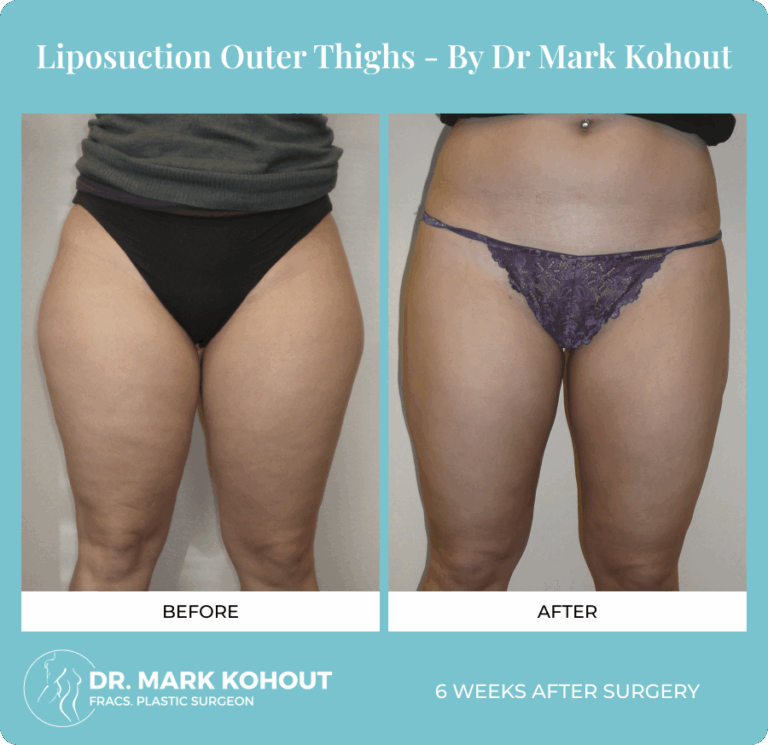
Before and After Photos of Liposuction Surgery

See the difference it has made for our clients.

Disclaimer

Individual results vary due to personal health factors and genetics, and all surgical procedures carry inherent risks that should be discussed with a qualified health professional.

About Before and After Images for Buttock Implants

Many patients are interested in before and after images when they first consider surgery. When used appropriately, photographs can help them understand typical incision locations, the style of change seen in some patients, and the time it can take for swelling and tissue settling to occur.


If photographs are used during consultation, this is done privately and respectfully. Only images for which the original patient has given written consent for this purpose are shown. Each set of photographs is clearly identified as representing one individual with a particular body type, implant choice and healing process.


Regulations in Australia require that images are not misleading and do not suggest a guaranteed outcome. For that reason, Dr Kohout explains that these pictures are educational and not a promise of any specific result. Patiens who prefer to rely on diagrams and discussion rather than photographs can choose that option instead.

What Happens During Buttock Implant Surgery

On the day of surgery, the patient meets the anaesthetist and theatre nursing team. The plan is reviewed, consent is confirmed and skin markings are checked while the patient is standing. These markings guide the position of incisions and implant spaces in relation to the patient’s anatomy.


Dr Kohout also checks the position of the lower buttock fold, the vertical length of the buttock and the region where projection is planned. This is particularly important because buttock implants are intended to add volume to the upper and central buttock rather than the lower pole.


Once in the operating theatre, the anaesthetist administers the general anaesthetic and remains with the patient throughout. The patient is positioned carefully on the stomach, with padded supports under the chest, pelvis and legs. The buttock area is cleaned with antiseptic solution and covered with sterile drapes.


Dr Kohout then makes the planned incision, usually in the midline cleft between the buttocks or in a fold at the upper part of the buttock region. Through this opening, he creates a space in which the implant will sit. In many cases, this space is within the gluteal muscle, to provide tissue coverage around the implant.


The size and shape of this space are matched to the selected implant. Measurements and visual checks help guide symmetry between sides. When the pocket is ready, the implant is introduced using a sterile technique. Its position is assessed from several angles and adjusted if needed. The process is then repeated on the other side.


In some situations, small drains are placed to remove blood and fluid from the area in the early phase of healing. The tissues are closed in layers with sutures, and the skin is closed with fine stitches. A dressing is applied, and a supportive garment is often used to assist with early swelling and comfort.


After the procedure, the patient is moved to the recovery area where nurses and the anaesthetist monitor breathing, circulation and comfort. Once stable, the patient either transfers to a ward bed for an overnight stay or, in selected cases, goes home later the same day with a responsible adult, depending on the plan and their progress.

Dr Mark Kohout

Risks and Possible Complications of Buttock Implants

All operations carry risk. Buttock implant surgery has general risks that apply to many procedures and risks that are more specific to the implants and the buttock region. Understanding these is an important part of deciding whether to proceed.

General risks include bleeding, infection, reactions to anaesthetic medicines and blood clots in the legs or lungs. These events can occur even in people who are otherwise well and undergoing planned surgery. Hospitals and surgical teams use measures such as appropriate clot prevention, careful monitoring and early movement to reduce these risks, although they cannot be removed completely.

Local risks around the buttock region include collections of blood, known as haematoma, and fluid, known as seroma. Other local risks include delayed wound healing and wound breakdown, particularly where there is significant tension on the incision or ongoing pressure from sitting or lying. Because the buttocks are involved in many common positions, the way the patient sits, stands and lies after surgery forms an important part of recovery.

Implant-related risks include capsular contracture, where scar tissue around the implant becomes firm and can change the feel or appearance of the area. The implants may move within the pocket or displace, which can affect symmetry or shape. Over time, implant wear or failure can occur and may require removal or replacement. In patients with thinner tissues, the edges of the implant may be felt or seen.

There are also planning-related limitations that need to be understood. If implants are placed in a patient with significant lower buttock ptosis, the lower buttock descent may remain noticeable after surgery. In some patients, further surgery may be discussed to address the lower buttock fold or tissue descent, either at the same time or as a separate procedure.

Changes in skin sensation over the buttocks can occur, including numbness or altered feeling. These changes may improve over time but can occasionally be longer term. Ongoing discomfort is also possible for some individuals.

Infections involving the implant can be significant and may require additional procedures, including possible implant removal. Further surgery can also be necessary to manage fluid collections, wound problems or changes in implant position.

During consultation, Dr Kohout discusses these risks in the context of the patient’s own health and anatomy and provides written information for review at home. Patients are encouraged to ask questions and to take time before deciding whether the procedure is suitable for them.

After Buttock Implant Surgery: Recovery and Follow Up Care

Recovery after buttock implant surgery occurs in stages. In the hours after the operation, the patient is cared for in the recovery unit and then in a ward bed or day surgery setting. It is common to feel tired and to experience a sense of tension and discomfort in the buttock region. Pain relief is prescribed and adjusted as needed.

In the early days, patients are usually advised to spend much of their time lying on their side or stomach to reduce direct pressure on the implants and incisions. Short, slow walks are encouraged soon after surgery to support circulation, within the limits of comfort and safety. Other movements are introduced gradually.

During the first two weeks, bruising and swelling are often at their peak and then begin to settle. Many people find that routine tasks such as getting in and out of bed, dressing and using the bathroom take more time and planning. Practical support at home can be very helpful during this period.

Returning to desk-based work usually requires at least two to three weeks away, and sometimes longer, depending on how much sitting is involved and on individual recovery. Work that involves lifting, repetitive bending or long periods of driving generally needs a longer break. More demanding exercise, running and heavy lower body training are avoided for several weeks and are reintroduced gradually according to the patient’s progress and the surgical plan.

Follow up visits with Dr Kohout are scheduled before the patient leaves hospital or day surgery. At these appointments, he checks the incisions, monitors swelling and bruising, removes any non-dissolving sutures and discusses activity levels, garment use and wound care. These visits provide an opportunity to ask questions and to confirm that recovery is progressing as anticipated.

The appearance of the buttocks changes over time. In the early period, the area may look higher, firmer and more prominent than expected. As swelling decreases and the tissues settle around the implants, the shape usually becomes more stable and more in line with the patient’s frame. Scars also change progressively, often appearing red or more noticeable before they gradually soften and fade over several months.

Long Term Considerations and Ongoing Care

Buttock implants are designed to be durable but are not considered devices that will remain unchanged for life. Over time, the body and the implants interact. Ageing, changes in weight, pregnancy, shifts in activity levels and other life events can all influence the tissues around the implants.


Long term care involves remaining aware of any new symptoms or changes, such as new pain, swelling, firmness, noticeable change in shape or skin changes. If these occur, assessment is advisable. In some situations, imaging such as ultrasound or MRI may be recommended to examine the implants and surrounding tissues.


There is a real possibility that further surgery will be required at some point in the future. This may involve removing or replacing implants, adjusting the space around them or treating capsular contracture. It is important for patients to consider and accept this possibility when deciding whether to proceed with buttock implant surgery.


Ongoing review with Dr Kohout supports monitoring over time. Patients who move away from Sydney are encouraged to ensure that another appropriately qualified practitioner is aware of their surgical history and can review them if needed.

lower body

Fees and Costs for Buttock Implant Surgery in New South Wales

The overall cost of buttock implant surgery in Sydney consists of several parts. These typically include the surgeon’s fee, the anaesthetist’s fee, hospital or day surgery fees, the cost of the implants and any required post-operative garments or dressings. If an overnight stay is required, this adds to the facility charges.


In most situations, buttock implant surgery is classified as cosmetic. When there is no Medicare item number, there is usually no rebate from Medicare and private health insurers generally do not contribute to the main costs. In some specific circumstances with a reconstructive component, a Medicare item number may apply, but this is less common and depends on current Medicare rules.


During consultation, Dr Kohout’s staff provide a written quote tailored to the planned operation. This document outlines the expected fees for each component and clarifies what is included. It also explains potential additional costs if further surgery is required, for example to address complications. Patients are encouraged to review this information carefully, discuss it with trusted people if they wish and ask questions so that they feel clear about financial aspects before making a decision.


Cost is one consideration among many. It is also important to take into account the surgeon’s training and qualifications, the standard of the hospital or day surgery facility, the involvement of a specialist anaesthetist and the level of follow up care and accessibility of the team.

Dr Mark Kohout

Buttock Implant Surgery FAQs

Can buttock implants change how clothing fits around the waistband or lower back?

Many patients notice that fitted garments sit differently after surgery, especially around the back of the hips and waistband. The exact change depends on the person’s starting shape and implant choice, so this is discussed individually during consultation.

Is it possible to feel the implants when sitting on a firm bench or stadium seat for a long time?

Some people describe a different awareness of the buttock area when sitting on harder surfaces for extended periods, particularly in the first months after surgery. Over time, many patients adjust by changing posture, using cushions or taking regular breaks from prolonged sitting.

Will buttock implants affect stretching, yoga or Pilates movements?

After healing has progressed and the surgeon has cleared the patient for activity, many patients return to stretching and low-impact exercise, although some positions may feel different through the buttock area. It can be helpful to reintroduce movements gradually and to tell instructors about the implants so exercises can be modified if needed.

Can a patient feel changes in temperature, such as heat or cold, differently over the implants?

Some individuals report altered temperature sensation or areas that feel slightly different to touch over the buttock region. These changes can stabilise over time but may remain noticeable in certain conditions, such as cold weather or when sitting on cool surfaces.

Do buttock implants interfere with imaging tests like MRI or CT scans?

Buttock implants can appear on scans, but radiology teams are accustomed to assessing patients with different types of implants. It is important that patients tell the radiographer or doctor about their implants so the images can be interpreted accurately and positioning can be adjusted if required.

Can a fall onto the buttocks damage the implants?

A significant fall or direct blow to the buttock region may affect the tissues and, in some cases, the implants. If a patient experiences trauma to the area with ongoing pain, swelling or visible change in shape, assessment by a doctor or by Dr Kohout is recommended.

Is massage of the buttock area recommended after implants?

In the early recovery period, direct pressure or deep massage over the implants is generally avoided. Any massage or bodywork involving the buttocks should be discussed with the surgeon first so that timing and technique can be considered in relation to healing.

Can patients sit cross-legged on the floor after buttock implant surgery?

In the early phase, positions that place extra stretch or pressure on the buttock region are usually limited. Once healing has progressed, many patients return to sitting on the floor, although they may choose cushions or altered leg positions for comfort.

Will other people be able to tell that someone has buttock implants just by touch?

In some patients, especially those with thinner tissues, the area can feel firmer or more structured to the touch in the upper buttock region. How noticeable this is depends on implant size, placement, tissue thickness and individual healing.

Can long-distance flights be taken after buttock implant surgery, and are there special precautions?

After the initial recovery period, patients can usually travel, including on longer flights, once cleared by their surgeon. Extra care with movement, stretching, fluid intake and seating choices is often suggested to support circulation and comfort during travel.

Are buttock implants suitable for lower buttock ptosis?

Buttock implants are generally designed to add projection to the upper and central buttock rather than the lower buttock. If lower buttock ptosis is present, Dr Kohout may discuss other options to address lower buttock descent or fold position.

Why does Dr Kohout assess the vertical length of the buttock before recommending implants?

A vertically shorter buttock without significant lower buttock ptosis may be more suitable for implants, because the implant can sit in the upper and central region without relying on it to fill the lower pole. A longer buttock shape, particularly after weight loss, may require a different or combined approach.

Can buttock implants address hollowing at the outer hip transition?

In selected patients, buttock implants may contribute to a change in the upper buttock and outer hip transition. The degree of change depends on anatomy, tissue thickness, implant selection and whether other procedures are required.

Why might weight loss patients need more than implants alone?

After significant weight loss, the buttock may have both limited upper projection and lower buttock tissue descent. Implants may address the upper region, but lower buttock elongation or fold position may require separate surgical planning.

Can buttock implants fill the lower buttock?

Buttock implants are not designed to fill the lower buttock. Their role is usually to add projection to the upper and central buttock, so lower buttock concerns need to be assessed separately.

Medical References

Planning and Preparing for Buttock Implant Surgery

For patients who decide to proceed with buttock implant surgery, preparation is a shared process. At the pre-operative appointment, Dr Kohout confirms the medical history, reviews any tests and clarifies details such as medications, allergies and previous anaesthetic experiences. Where required, he may liaise with the patient’s general practitioner or other treating specialists to support planning.


Patients receive written instructions about medicines and supplements that may need to be reduced or stopped before surgery, such as certain blood-thinning agents or herbal products. Smoking and nicotine use, alcohol intake, eating patterns, movement and rest are also discussed, as these factors influence healing.


Practical arrangements at home are an important part of planning. Patients may need to organise time away from work, arrange help for children or dependants, and seek support with tasks such as shopping, preparing meals and household activities. Setting up a comfortable area at home, with pillows to assist positioning, easy access to prescribed medicines, water and essential items can make the first couple of weeks easier to manage.


During this stage, expectations are revisited and any remaining questions are addressed. The goal is for patients to feel informed about what the procedure involves, what it can and cannot address, the risks and possible complications, and the stages of recovery before they decide whether to sign consent and proceed.

Considering Buttock Implants in Sydney

Choosing buttock implant surgery is a significant personal decision with both short term and long term aspects. In his Sydney practice, Dr Mark Kohout aims to help patients explore whether this option fits their priorities, rather than encouraging surgery at all costs.

A face to face consultation allows assessment of anatomy, discussion of medical history and lifestyle, and development of a plan that focuses on safety and practical needs if the patient decides to go ahead. Patients are welcome to bring written questions, return for further appointments or seek a second opinion.

All surgery carries risks and no specific result can be guaranteed. By taking time to consider the information, asking questions and reflecting on their own goals, patients can decide whether buttock implant surgery is appropriate for them. For those who choose to proceed, Dr Kohout and his team are available to support them through preparation, surgery and follow up care.

Take our Plastic Surgery Quiz to find out if you’d be a good candidate and if you are ready for cosmetic surgery.​

Further Reading

Welcome to the Practice of
Dr. Mark Kohout

With over 25 years of experience and Harvard training, Dr. Mark Kohout offers experienced plastic and reconstructive surgery at his Sydney and Orange clinics. His patient-first approach focuses on delivering safe, natural results tailored to your unique goals.

What's Next?

Whether you are ready for a professional evaluation or just have a quick question, we’ve made it easy to connect with our team. Choose the option that best fits your needs below.

Book your Consultation

Take the first step toward your goals by filling out the brief form below. This information helps us understand your specific needs so we can make the most of our time together during your session. Once you submit your details, a member of our team will review your request and reach out shortly to confirm your appointment.

Patient Photo Assessment

Sending photos for a patient photo assessment can help you and your plastic surgeon prepare for your consultation. By reviewing clear, accurate photos, Dr Kohout can provide preliminary patient photo assessment like insights, assess your needs, and determine the right approach for your procedure.

Tips for Uploading Photos

ASK A FRIEND

Friend takes photo

GOOD LIGHTING

Plain wall, bright light

ALL ANGLES

Front / sides/ 45°

CLEAR & SHARP

No portrait mode

SEND ORIGINALS

No edits or compression

Dr. Mark Kohout Plastic Surgery in Sydney & Orange

Experienced Plastic Surgeon

Dr. Mark Kohout

A qualified plastic surgeon who operates with care and integrity, based in central Sydney with over 20 years of experience in the cosmetic field. His extensive training and experience assures patients they are in highly trained surgical hands. Dr. Kohout is a dedicated, friendly professional who is committed to providing the high quality care, support and results, alongside his compassionate team.

Dr Mark Kohout (MED0001133000)
Specialist Plastic Surgeon
Specialist registration in Surgery – Plastic Surgery

25

Years of Experience

Years of Delivering Exceptional Cosmetic Care.

10000+

Surgical Procedures

Procedures performed by our qualified surgeons.

15+

Available Treatments

Cosmetic treatment options tailored to your needs.

Our Trusted

Accreditations

fracs

Dr Mark Kohout is a qualified plastic surgeon based in central Sydney, with over 20 years of experience in the field of cosmetic and reconstructive surgery. He draws on extensive surgical training and clinical experience to tailor care to the individual needs and goals of each patient.

Dr Kohout is known for his thoughtful, patient-centred approach, guiding individuals through each stage of their surgical journey — from initial consultation to post-operative care. Working alongside a compassionate and professional team, he is committed to providing high standards of care in a supportive and respectful environment.

Locations

Opening Hours

Monday - Friday

8:30AM - 05:00PM

Saturday - Sunday

Closed

Disclaimer: Dr Mark Kohout (MED0001133000) a Registered Medical Practitioner, Specialist Plastic Surgeon. All surgical or invasive procedures carry risks and complications. We recommend seeking a second opinion from an appropriately qualified medical practitioner before proceeding with any surgery. Results depend on individual patient circumstances and can vary significantly. Results may also be impacted by a variety of factors including your lifestyle, weight, nutritional intake and overall health. Consult your Specialist Plastic Surgeon for details. This information is general in nature and is not intended to be medical advice nor does it constitute a doctor-patient relationship. Surgery risks and complications will be covered in detail during a consultation with your Surgeon. We recommend seeking a second opinion from an appropriately qualified medical practitioner before proceeding with surgery.

©2024  All Rights Reserved

This website contains imagery which is only suitable for audiences 18+. All surgery contains risks, read more here.

X

Get Your Facial Aesthetic

Get Your Breast Implant Removal

Get Your Female Genital Surgery Guide

Get Your Excess Skin Guide

Get Your Gynaecomastia Guide

Get Your Liposuction Guide

Get Your Abdominoplasty Guide

Get Your Cost of Surgery Guide

Get Your Breast Implant Replace Guide

Get Your Breast Reduction Guide

Get Your Breast Augmentation Guide

Make an Enquiry