

Dr Mark Kohout FRACS is a Specialist Plastic Surgeon based in Broadway, Sydney, with experience in body contouring procedures including buttock reshaping surgery. Exercise after buttock reshaping is usually resumed gradually, starting with gentle movement and progressing only when the surgical team confirms that activity is appropriate for the patient’s recovery stage.
Many fitness-oriented patients want to know when they can return to walking, gym training, lower-body workouts and glute-focused exercise after buttock reshaping. The challenge is that feeling ready to move does not always mean the surgical area is ready for pressure, impact or heavy training. A gradual return can make the recovery process feel more organised and less uncertain.
This article provides general information for patients planning their return to exercise after buttock reshaping surgery. It does not replace personalised post-operative instructions from Dr Kohout’s practice, because activity advice may vary depending on the procedure performed, swelling, tenderness, incision placement, sitting restrictions and individual healing progress.
Why A Graded Return To Exercise Matters
Dr Mark Kohout FRACS and his team at the Broadway Sydney practice provide recovery instructions based on the patient’s procedure and healing progress. A graded return to exercise matters because buttock reshaping may involve tissues that are sensitive to pressure, impact, swelling and lower-body movement during early recovery.
A gradual approach may help patients avoid doing too much too soon by considering:
- Direct pressure on the buttocks during sitting, stretching or floor exercises
- Impact from running, jumping, skipping or high-intensity training
- Lower-body loading from squats, lunges, hip thrusts or leg presses
- Swelling or tightness that may increase after activity
- Incision areas that may feel sensitive with movement or friction
- Differences between procedures, recovery plans and patient fitness levels
Patients should avoid using their pre-surgery fitness level as the only guide for returning to training. Even if energy levels improve, the treated area may still need time and clinical clearance before more demanding activity is appropriate.
Early Recovery: What To Avoid
Early recovery after buttock reshaping is usually focused on protecting the surgical area, managing comfort and following the specific instructions provided by the care team. Patients should avoid activities that place direct pressure, strain or impact on the buttock area until they have been advised that these movements are suitable.
Activities to avoid early on may include:
- Sitting directly on the buttocks for long periods if restricted
- Running, jumping, skipping or other high-impact exercise
- Heavy lifting, straining or breath-holding during movement
- Squats, lunges, hip thrusts or glute-focused gym exercises
- Floor-based exercises that press against the treated area
- Any activity that increases pain, swelling, tightness or throbbing
This does not mean patients need to remain completely inactive unless advised for a specific medical reason. Gentle movement, such as short walks, may be recommended for circulation and comfort, but the type and timing of activity should follow Dr Kohout’s post-operative instructions.
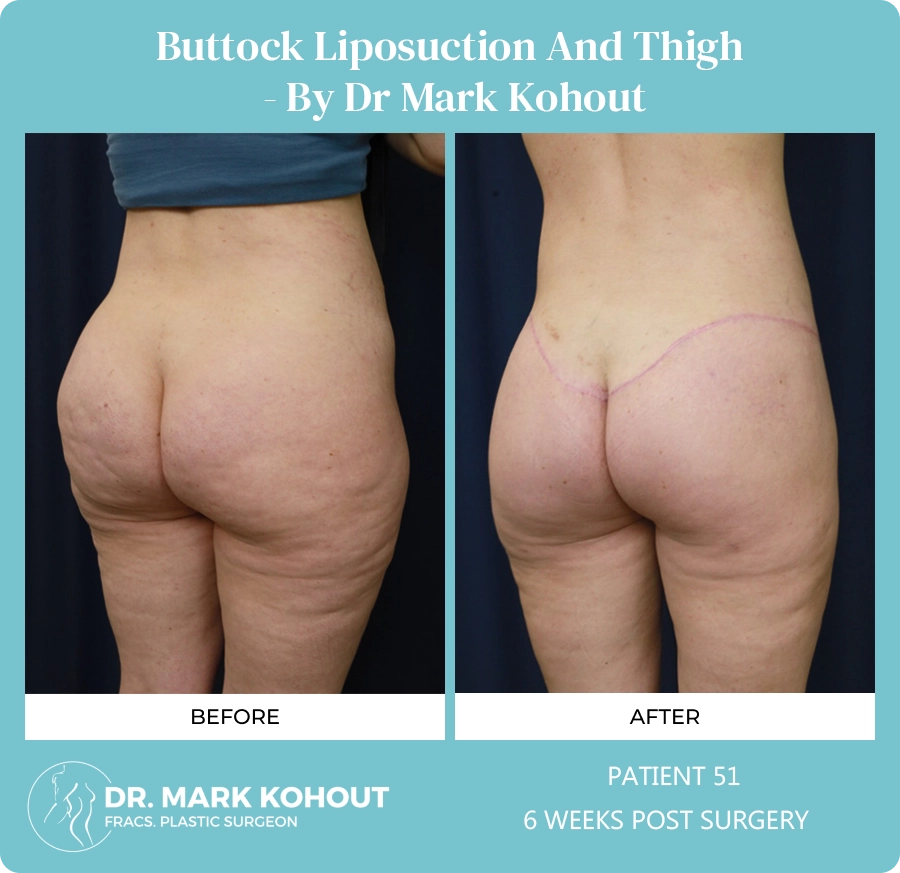
Buttock Liposuction Before and After Images
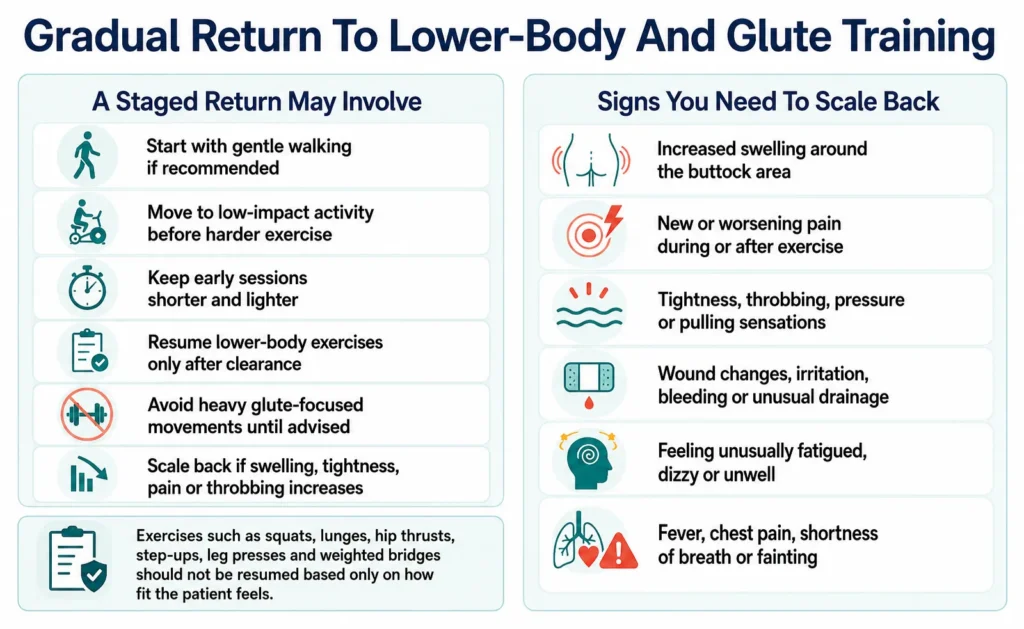
Gradual Return To Lower-Body And Glute Training
Returning to lower-body and glute training after buttock reshaping should be gradual and guided by the surgical team. The goal is to reintroduce activity in stages, rather than jumping straight back into pre-surgery workouts.
A staged return may involve:
- Starting with gentle walking if this has been recommended
- Progressing to low-impact movement before higher-intensity exercise
- Keeping early sessions shorter and lighter than usual
- Reintroducing lower-body exercises only when cleared
- Avoiding heavy glute-focused movements until the surgical team advises
- Scaling back if swelling, tightness, pain or throbbing increases
Lower-body training can involve direct pressure, stretching, muscle contraction and load through the buttock area. For this reason, exercises such as squats, lunges, hip thrusts, step-ups, leg presses and weighted bridges should not be resumed based only on how fit the patient feels.
Signs You Need To Scale Back
Patients should scale back activity if exercise causes symptoms to increase or recovery feels less settled afterward. A temporary reduction in activity can help patients avoid pushing beyond what is appropriate for their current recovery stage.
Signs that activity may be too much include:
- Increased swelling around the buttock area
- New or worsening pain during or after exercise
- Tightness, throbbing, pressure or pulling sensations
- Wound changes, irritation, bleeding or unusual drainage
- Feeling unusually fatigued, dizzy or unwell
- Fever, chest pain, shortness of breath or fainting
These signs should not be used as a self-diagnosis checklist. Patients should contact Dr Kohout’s Broadway Sydney practice if symptoms feel concerning, and urgent symptoms such as chest pain, breathing difficulty or fainting require immediate medical attention.
Discuss Your Fitness Routine With Dr Kohout’s Broadway Sydney Practice
If you are planning your return to exercise after buttock reshaping, ask Dr Mark Kohout FRACS and his team at the Broadway, Sydney practice about your specific training routine. Your return-to-activity plan should reflect your procedure, recovery progress, sitting restrictions, work demands and fitness goals.
Patients can ask when walking, cardio, resistance training, lower-body exercise and glute-focused movements may be appropriate. Clear guidance can make the return to fitness feel more structured while keeping the focus on safe recovery.
FAQs About Exercise After Buttock Reshaping
When can I start walking after buttock reshaping?
Gentle walking may be recommended early in recovery, depending on the procedure and the patient’s post-operative instructions. Patients should keep movement light and follow Dr Kohout’s guidance rather than treating walking as exercise too soon.
When can I go back to the gym after buttock reshaping?
Gym timing varies depending on swelling, tenderness, incision healing, sitting restrictions and the type of training planned. Patients should wait for clearance from Dr Kohout’s team before returning to cardio, resistance training or lower-body workouts.
Can I do squats after buttock reshaping surgery?
Squats place load through the lower body and may affect the buttock area during recovery. Patients should not restart squats until the surgical team confirms that lower-body training is appropriate.
When can I resume glute-focused workouts?
Glute-focused workouts such as hip thrusts, weighted bridges, lunges and step-ups should be reintroduced gradually and only after clearance. These movements can place pressure, stretch and load on the treated area, so timing should be individualised.
Is cardio safe after buttock reshaping?
Low-impact cardio may be reintroduced before higher-impact exercise in some recovery plans. Running, jumping, HIIT and intense cycling should be avoided until Dr Kohout’s team advises that they are suitable.
Can exercise increase swelling after buttock surgery?
Exercise can sometimes make swelling, tightness or throbbing more noticeable during recovery. If swelling increases after activity, patients should scale back and contact the clinic if symptoms feel unusual or do not settle.
Should I train upper body while my buttocks are healing?
Upper-body training may still involve bracing, sitting, bending or pressure through the lower body. Patients should ask Dr Kohout’s team which movements are suitable before returning to any form of resistance training.
What should I do if I feel pain during exercise?
Pain during exercise is a sign to stop and reassess the activity. If pain worsens, persists or occurs with swelling, wound changes, bleeding, fever or feeling unwell, patients should contact Dr Kohout’s Broadway Sydney practice.
Medical References
- Butt Reshaping/Gluteal Recontouring Surgeries in Aesthetic and Regenerative Gynecology – Aesthetic and Regenerative Gynecology – https://link.springer.com/chapter/10.1007/978-981-16-1743-0_21
- Butt Lift – Aftercare & Recovery – The Aesthetic Society – https://www.theaestheticsociety.org/procedures/body/butt-lift/aftercare-recovery
- Buttock Reshaping With Intramuscular Gluteal Augmentation in an Asian Ethnic Group: A Six-Year Experience With 130 Patients – Annals of Plastic Surgery – https://www.ovid.com/jnls/annalsplasticsurgery/abstract/10.1097/sap.0000000000000399~buttock-reshaping-with-intramuscular-gluteal-augmentation-in
Take our Plastic Surgery Quiz to find out if you’d be a good candidate and if you are ready for cosmetic surgery.
Further Reading
- Read Dr Mark Kohout’s Procedure Page about Buttock Implant Surgery in Sydney
- Read Dr Mark Kohout’s Blog on Preparing For Buttock Reshaping Surgery: A Practical Pre-Op Checklist
- Read Dr Mark Kohout’s Blog on Gluteal Augmentation With Implants in Sydney: Understanding a Surgical Option
- Read Dr Mark Kohout’s Blog on Why Your Buttocks Look Flat Despite Exercise
- Buttock Implant Surgery Safety: Key Considerations
Related Blog Posts
What Is Empty Buttock Syndrome? Causes,…
Volume changes in the buttocks are sometimes described as “Empty Buttock Syndrome,” a non-medical term used to explain a noticeable reduction in shape or projection following certain procedures or significant…

Gluteal Augmentation With Implants in Sydney:…
Interest in fuller, more projected buttock shapes has grown steadily, encouraged in part by social media and online imagery. Many people in Sydney arrive at a consultation with screenshots, mixed…
FAQs About Bodylift Surgery
Dr Mark Kohout, Plastic Surgeon in Sydney, brings over 25 years of experience in aesthetic and reconstructive surgery. His practice is known for its patient-focused approach and thorough consultation process.…
Experienced Plastic Surgeon
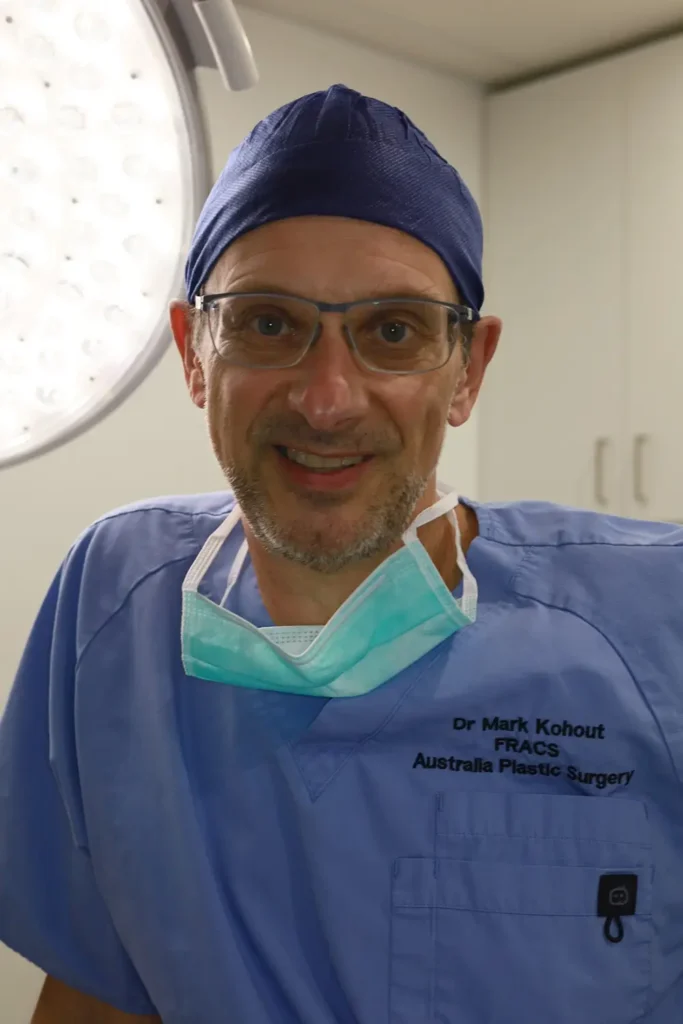
Dr. Mark Kohout
A qualified plastic surgeon who operates with care and integrity, based in central Sydney with over 20 years of experience in the cosmetic field. His extensive training and experience assures patients they are in well trained surgical hands. Dr. Kohout is a dedicated, friendly professional who is committed to providing the high quality care, support and results, alongside his compassionate team.
Dr Mark Kohout (MED0001133000)
Specialist Plastic Surgeon
Specialist registration in Surgery – Plastic Surgery