Upper Lip Lift Sydney

With Dr. Mark Kohout

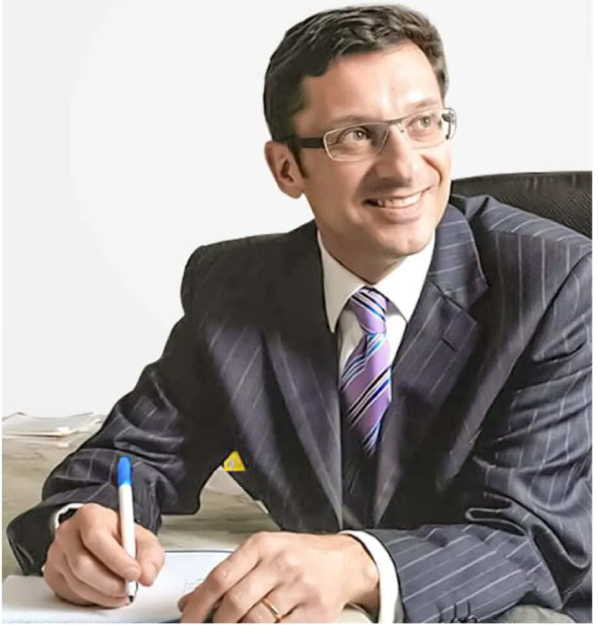
Upper Lip-Lift by Dr Mark Kohout

The proportions of the upper lip can influence the relationship between the nose, mouth, teeth and lower face. Some people naturally have a longer distance between the base of the nose and the upper lip, while others notice this distance changing over time. An upper lip lift is a surgical procedure that reduces the vertical height of the upper lip and may alter the amount of visible lip vermilion and upper tooth display.

Dr Mark Kohout, MBBS (Syd), FRACS (Plast), is a Specialist Plastic Surgeon practising in Sydney with more than 25 years of experience in plastic and reconstructive surgery. Lip lift surgery is among the facial procedures currently listed by his practice. For people considering an upper lip lift in Sydney, consultation involves assessing the upper lip together with the nose, teeth and surrounding facial anatomy, as well as discussing what surgery may change, what it cannot predictably change, the position of the surgical scar and the risks associated with treatment.

What Is an Upper Lip Lift?

An upper lip lift is an operation that reduces the amount of skin between the base of the nose and the upper lip. This area is sometimes broadly called the philtral region. More precisely, the philtrum is the vertical groove between the nose and Cupid’s bow, while the surgical assessment considers the entire cutaneous upper lip and its relationship with surrounding structures.

Unlike procedures that add volume to the lips, a lip lift primarily changes the position and vertical proportions of the upper lip. Removing a carefully measured amount of skin beneath the nose can expose more of the coloured portion of the upper lip and may change the amount of upper tooth display. The extent of these changes differs between patients and depends on anatomy and surgical planning.

  • Reduces the vertical height of the cutaneous upper lip
  • May increase visible upper-lip vermilion
  • May alter upper incisor display
  • Changes lip position rather than simply adding volume
  • Requires individual measurements and surgical planning

Why Can Upper-Lip Proportions Change?

Upper-lip length differs naturally from person to person. Genetics, facial skeletal proportions, dental anatomy, nasal shape, skin characteristics and the relationship between the upper and lower lips can all influence how the area appears. A comparatively long upper lip is an anatomical variation and does not, by itself, represent a medical condition requiring treatment.

Changes can also occur with ageing.The cutaneous upper lip may gradually lengthen, while changes in soft-tissue support can affect the amount of vermilion and upper incisor visible at rest. Surgery is one possible option for selected patients who wish to address these anatomical changes, but treatment is elective and should only be considered after the potential benefits, limitations and risks have been discussed.

  • Genetics influence upper-lip proportions
  • Dental position can affect tooth display
  • Nasal anatomy influences how upper-lip length is perceived
  • Soft tissues may change over time
  • There is no single upper-lip measurement that determines a need for surgery

Types of Upper Lip Lift Surgery

Different lip lift techniques have been described, and the appropriate surgical approach depends on the area being addressed, the patient’s anatomy and the location of the resulting scar. The subnasal lip lift, also known as a bullhorn lip lift, is one of the most frequently used approaches and places the incision around the lower contours of the nose.

Other methods use different incision locations or focus on particular parts of the lip. A direct lip lift places the incision close to the vermilion border, while an Italian lip lift typically uses shorter incisions beneath the nostrils. A corner lip lift addresses the oral commissures rather than primarily shortening the central upper lip.

  • Subnasal or bullhorn lip lift: incision positioned beneath the nasal base
  • Italian lip lift: shorter incisions beneath the nostrils
  • Direct lip lift: incision positioned near the upper vermilion border
  • Corner lip lift: focuses on the corners of the mouth
  • Technique selection depends on anatomy and the intended area of change

How Is an Upper Lip Lift Planned and Performed?

Planning begins with examination of the lips at rest and during facial movement. The surgeon assesses cutaneous upper-lip height, vermilion show, upper incisor display, Cupid’s bow, nasal base anatomy and existing asymmetry. Measurements can assist with planning, but they should not be used in isolation because facial proportions differ substantially between individuals.

For a subnasal lip lift, markings are made around the nasal base before surgery. A measured segment of tissue is removed and the wound is closed so that the lower skin edge is repositioned closer to the nose. The anaesthetic approach varies according to the planned operation, the clinical setting and the patient’s circumstances. The specific operative plan is discussed before surgery.

  • Lip and facial measurements are taken before surgery
  • The nasal base and tooth display are assessed
  • Existing asymmetry is documented
  • A measured amount of tissue is removed
  • The incision is closed around the planned anatomical contours
  • The anaesthetic arrangement is determined individually

Who May Be Suitable for an Upper Lip Lift?

People seek an assessment for different reasons. Some have always had a greater distance between the nose and upper lip, while others are concerned about changes that have developed over time. Reduced vermilion exposure or limited upper incisor display may also contribute to the decision to seek information about lip lift surgery.

Suitability is not determined by age, photographs or a standard philtrum measurement. Medical history, previous facial treatments, smoking or nicotine use, healing characteristics, nasal anatomy, dental position and expectations all require consideration. The proposed operation should address a clearly identified anatomical feature, and patients should understand that deciding against surgery remains an appropriate option.

  • Longer cutaneous upper-lip height may be present
  • Vermilion exposure may be limited
  • Tooth display may form part of the assessment
  • Previous nasal or lip procedures need to be considered
  • Medical conditions and medications may affect suitability
  • Expectations should be realistic and specific

Will an Upper Lip Lift Leave a Scar?

Yes. An upper lip lift involving an external incision creates a surgical scar. With a subnasal technique, the incision is generally positioned around the natural contours beneath the nose. This location may make the scar less conspicuous in some patients once healing has progressed, but it should not be described as invisible or guaranteed to become difficult to see.

Scar appearance varies considerably. During early healing, the incision may look red, firm, raised or more noticeable than expected. Scars usually continue to change over subsequent months, but some may remain widened, raised, irregular or pigmented. Previous scar history and individual healing characteristics should therefore be discussed during consultation.

  • A visible incision is required for most lip lift techniques
  • Early scar redness and firmness can occur
  • Scar maturation continues for several months
  • Some scars can widen or become raised
  • Pigmentation changes may occur
  • Final scar appearance cannot be guaranteed

Upper Lip Lift Recovery

Recovery after an upper lip lift in Sydney varies according to the individual, surgical technique and whether other procedures are performed at the same time. Swelling, bruising, tenderness, tightness and changes in sensation can occur around the upper lip and nose during the early postoperative period. Swelling may temporarily make the lip position or smile appear different from the later result.

Patients receive instructions concerning wound care, medications, physical activity and follow-up. Movements or activities that place excessive tension on the incision may need to be limited during early healing. There is no single recovery timeframe that applies to every patient, and the appearance continues to change after the initial incision has healed.

  • Swelling is expected after surgery
  • Bruising and tenderness can occur
  • Tightness around the upper lip may be present
  • Lip movement may temporarily feel different
  • Physical activity may need to be restricted
  • Follow-up allows wound and scar development to be reviewed

Risks and Possible Complications

Upper lip lift surgery is an invasive procedure and has potential risks. In addition to general surgical complications such as bleeding, infection and delayed wound healing, there are procedure-specific considerations because the operation is performed close to the nostrils, mouth and structures involved in facial movement.

Some concerns improve as healing progresses, while others may persist or require further treatment. Revision surgery may sometimes be considered, but it cannot guarantee correction of every postoperative concern. Risks relevant to the individual patient should be discussed before informed consent is provided.

  • Bleeding or haematoma
  • Infection
  • Delayed wound healing
  • Wound separation
  • Visible, widened or raised scarring
  • Changes in pigmentation
  • Temporary or persistent numbness
  • Altered sensation
  • Asymmetry
  • Under-correction or over-correction
  • Changes to the nostril or nasal base
  • Changes in tooth display
  • Changes in smile movement
  • Prolonged swelling
  • Dissatisfaction with the appearance
  • Possible need for additional treatment or revision surgery
  • Anaesthetic complications

What Changes Can an Upper Lip Lift Produce?

The primary anatomical effect of a lip lift is a reduction in cutaneous upper-lip height. Depending on the starting anatomy and the amount of tissue repositioned, more of the upper-lip vermilion may become visible. Some patients may also experience increased upper central tooth display at rest.

Results cannot be predicted solely from another patient’s photographs or measurements. Existing asymmetry may remain, and surgery cannot guarantee exact lip dimensions, a particular Cupid’s bow shape or a predetermined amount of dental show. Swelling and scar development also affect the early appearance, so the longer-term result is assessed after healing has progressed.

  • Cutaneous upper-lip height may be reduced
  • Vermilion exposure may increase
  • Upper tooth display may change
  • Cupid’s bow position may be altered
  • Existing asymmetry can remain
  • Individual responses and results vary

How Long Do Lip Lift Changes Last?

Unlike temporary treatments that add volume, a surgical lip lift involves removal and repositioning of tissue. The structural change is therefore generally long lasting. However, it is important not to interpret this as meaning that the appearance of the upper lip remains unchanged indefinitely.

Ageing continues after surgery. Skin, soft tissue, bone and dental structures change over time, and later dental treatment, weight variation or additional facial procedures may also influence the appearance of the lips. Long-term appearance therefore differs between patients and cannot be guaranteed at the time of surgery.

  • Removed skin does not return in its original form
  • Facial ageing continues
  • Dental changes may affect lip position
  • Weight changes can influence facial tissues
  • Additional facial procedures may alter proportions
  • Long-term appearance differs between individuals

Upper Lip Lift Versus Lip Filler

Lip lift surgery and dermal filler address different anatomical concerns. An upper lip lift shortens the cutaneous portion of the upper lip and changes its position. Dermal filler adds volume to selected lip tissues but does not surgically reduce the distance between the upper lip and nasal base.

This distinction is important when deciding what, if any, treatment is appropriate. Someone primarily concerned about lip volume may not require a lip lift, while adding volume does not directly address increased upper-lip height. Previous filler use should be discussed during a surgical consultation because it may influence assessment of the lip tissues.

  • Lip lift surgery changes position and vertical proportion
  • Filler primarily adds volume
  • Filler does not surgically shorten the upper lip
  • Lip lift surgery creates a scar
  • Previous lip treatment should be disclosed
  • Neither option is automatically appropriate for every patient

Upper Lip Lift Cost in Sydney

The cost of upper lip lift surgery in Sydney depends on factors including the surgical plan, facility charges, anaesthetic requirements and postoperative care arrangements. Dr Kohout’s practice currently lists lip lift surgery within its facial surgery services, but patients should confirm current fees directly with the practice because pricing and individual requirements can change.

A written quotation should explain which costs are included and whether separate facility, anaesthetic or other charges apply. Patients should also understand the financial arrangements that may apply if an unexpected complication requires additional assessment or treatment.

  • Surgical fees should be explained before treatment
  • Facility charges may apply
  • Anaesthetic costs depend on the operative plan
  • Postoperative arrangements should be clarified
  • Further treatment can potentially involve additional costs
  • Current individual pricing should be confirmed with the practice

Cosmetic Surgery Consultation Requirements in Australia

Australian cosmetic surgery is subject to specific Medical Board of Australia requirements. Patients seeking cosmetic surgery require a referral, preferably from their usual GP or another independent general practitioner or medical specialist. The practitioner who will perform the surgery must assess the patient’s reasons for requesting the operation, expectations, medical suitability and available alternatives.

Patients seeking cosmetic surgery must also be assessed for underlying psychological conditions that may affect suitability, including body dysmorphic disorder, using a validated screening tool. At least two preoperative consultations are required, with at least one occurring in person with the practitioner who will perform the surgery. A minimum seven-day cooling-off period applies after informed consent requirements have been met before surgery can be booked or a deposit paid.

  • A GP or medical specialist referral is required
  • The operating practitioner must assess suitability
  • Reasons and expectations for surgery must be discussed
  • BDD screening using a validated tool is required
  • At least two preoperative consultations are required
  • At least one consultation must be in person with the operating practitioner
  • A minimum seven-day cooling-off period applies
  • Alternatives, including no surgery, should be discussed

About Dr Mark Kohout

Dr Mark Kohout, MBBS (Syd), FRACS (Plast), is a Specialist Plastic Surgeon practising in Sydney and Orange. He obtained his medical degree from the University of Sydney and undertook plastic and reconstructive surgery training in Australia and the United Kingdom. His postgraduate training has also included microsurgery research through the University of Melbourne and fellowship training in maxillofacial surgery at Harvard Medical School.

Dr Kohout has more than 25 years of experience in plastic and reconstructive surgery. His current practice includes a range of facial procedures, and lip lift surgery is listed among the facial surgery services offered by the practice. Consultation focuses on the patient’s anatomy, medical history, reasons for considering treatment, potential risks, recovery and whether surgery is an appropriate option.

  • MBBS, University of Sydney
  • FRACS (Plast)
  • Specialist registration in Surgery – Plastic Surgery
  • AHPRA registration number MED0001133000
  • More than 25 years of plastic and reconstructive surgery experience
  • Practices in Sydney and Orange
  • Lip lift is listed among the practice’s facial surgery services
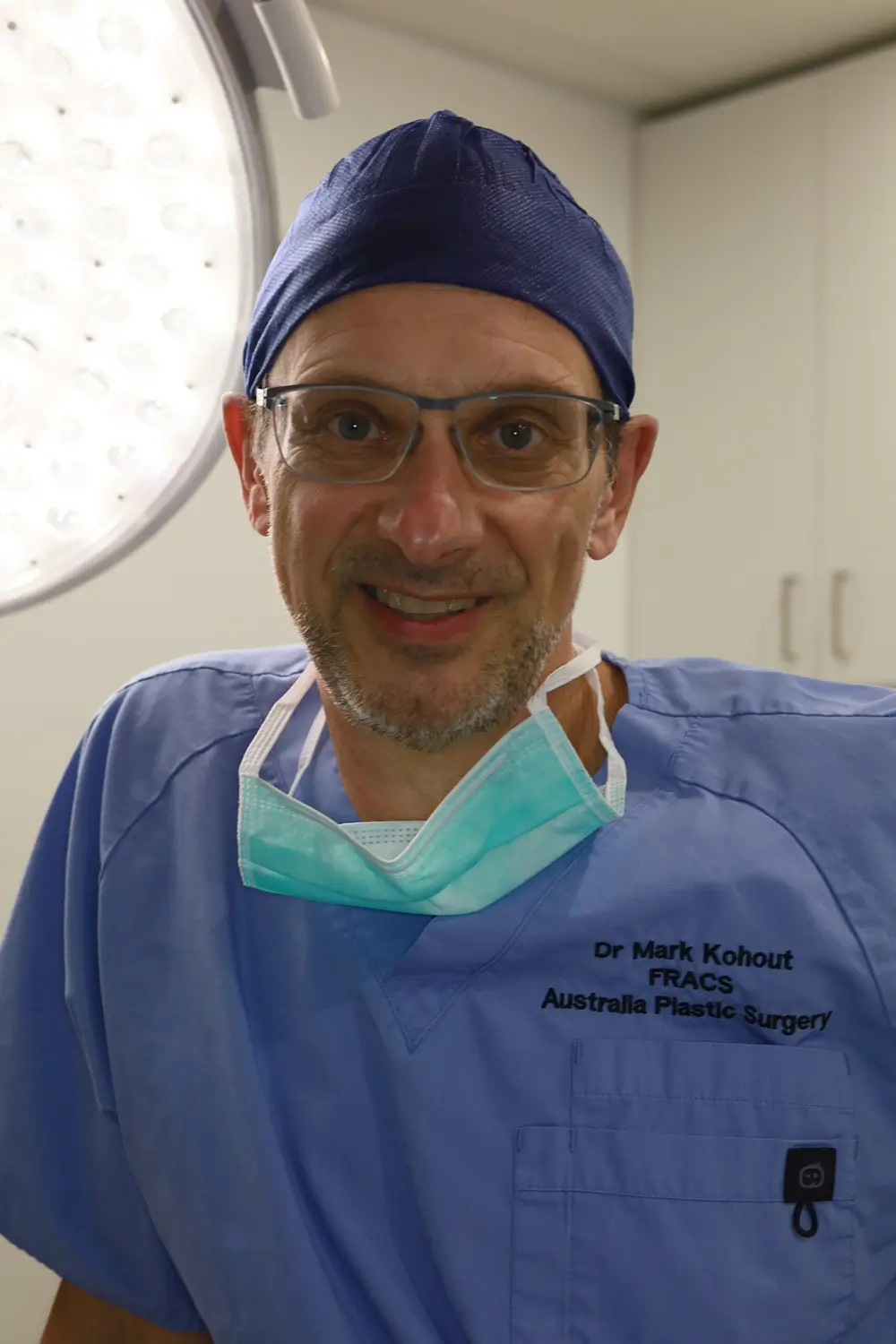
Dr Mark Kohout
Dr Mark Kohout Portrait Image

FAQs About Upper Lip Lift Surgery in Sydney

Is an upper lip lift the same as lip filler?No. An upper lip lift surgically changes the vertical height and position of the upper lip, while dermal filler adds volume to selected areas. Filler does not remove skin or shorten the distance between the nose and upper lip. The appropriate approach depends on the anatomical feature being assessed and the patient’s medical circumstances.
Will I have a visible scar after an upper lip lift?An external-incision lip lift creates a scar. With a subnasal technique, the incision is positioned beneath the nose and follows the contours of the nasal base. Scar appearance changes during healing and varies between patients. Some scars may remain visible, widened, raised or pigmented despite appropriate care.
How long is recovery after upper lip lift surgery?There is no identical recovery period for every patient. Swelling, bruising, tenderness, tightness and temporary changes in lip movement can occur in the early postoperative period. The incision heals progressively, while swelling, tissue position and scar appearance continue to change over a longer period. Individual postoperative instructions should be followed.
Will an upper lip lift show more of my upper teeth?Upper incisor display can increase in some patients because shortening the cutaneous upper lip changes its position relative to the teeth. The extent of this change depends on existing dental show, tooth position, lip anatomy and the amount of tissue repositioned. This relationship should be assessed before surgery.
Can a lip lift change the shape of my nose?It can. Because the incision and tissue repositioning occur around the nasal base, changes in tension can potentially affect nostril shape or the relationship between the nose and upper lip. Nasal anatomy is therefore an important part of preoperative assessment and surgical planning.
How long do the results of an upper lip lift last?The structural changes produced by removing and repositioning tissue are generally long lasting, but surgery does not stop ageing. The lips and surrounding facial structures continue to change over time. Dental work, weight changes and future facial procedures may also influence the later appearance.
How do I know whether I am suitable for an upper lip lift?Suitability requires an individual medical and surgical assessment. Factors include upper-lip proportions, vermilion and tooth display, nasal anatomy, previous procedures, medical history, medications, smoking or nicotine use, healing characteristics and expectations. The consultation should also cover alternatives and the option of not undergoing surgery.
Medical References

Thinking About a Lip Lift? Make Your Next Step an Informed One

If you are considering an upper lip lift in Sydney, a consultation with Dr Mark Kohout provides an opportunity to have your facial anatomy assessed and discuss what lip lift surgery may and may not change. You can also review scar placement, possible complications, recovery, alternative options and the Australian requirements that apply before cosmetic surgery.

Contact Dr Kohout’s Sydney practice if you would like further information about lip lift surgery or wish to arrange an individual consultation. There is no obligation to proceed with surgery after seeking medical advice, and taking time to consider the information provided is an important part of the decision-making process. 

Take our Plastic Surgery Quiz to find out if you’d be a good candidate and if you are ready for cosmetic surgery.​

Further Reading

Welcome to the Practice of
Dr. Mark Kohout

With over 25 years of experience and Harvard training, Dr. Mark Kohout offers experienced plastic and reconstructive surgery at his Sydney and Orange clinics. His patient-first approach focuses on delivering safe, natural results tailored to your unique goals.

What's Next?

Whether you are ready for a professional evaluation or just have a quick question, we’ve made it easy to connect with our team. Choose the option that best fits your needs below.

Book your Consultation

Take the first step toward your goals by filling out the brief form below. This information helps us understand your specific needs so we can make the most of our time together during your session. Once you submit your details, a member of our team will review your request and reach out shortly to confirm your appointment.

Patient Photo Assessment

Sending photos for a patient photo assessment can help you and your plastic surgeon prepare for your consultation. By reviewing clear, accurate photos, Dr Kohout can provide preliminary patient photo assessment like insights, assess your needs, and determine the right approach for your procedure.

Tips for Uploading Photos

ASK A FRIEND

Friend takes photo

GOOD LIGHTING

Plain wall, bright light

ALL ANGLES

Front / sides/ 45°

CLEAR & SHARP

No portrait mode

SEND ORIGINALS

No edits or compression

Dr. Mark Kohout Plastic Surgery in Sydney & Orange

Experienced Plastic Surgeon

Dr. Mark Kohout

A qualified plastic surgeon who operates with care and integrity, based in central Sydney with over 20 years of experience in the cosmetic field. His extensive training and experience assures patients they are in highly trained surgical hands. Dr. Kohout is a dedicated, friendly professional who is committed to providing the high quality care, support and results, alongside his compassionate team.

Dr Mark Kohout (MED0001133000)
Specialist Plastic Surgeon
Specialist registration in Surgery – Plastic Surgery

25

Years of Experience

Years of Delivering Exceptional Cosmetic Care.

10000+

Surgical Procedures

Procedures performed by our qualified surgeons.

15+

Available Treatments

Cosmetic treatment options tailored to your needs.

Our Trusted

Accreditations

fracs

Dr Mark Kohout is a qualified plastic surgeon based in central Sydney, with over 20 years of experience in the field of cosmetic and reconstructive surgery. He draws on extensive surgical training and clinical experience to tailor care to the individual needs and goals of each patient.

Dr Kohout is known for his thoughtful, patient-centred approach, guiding individuals through each stage of their surgical journey — from initial consultation to post-operative care. Working alongside a compassionate and professional team, he is committed to providing high standards of care in a supportive and respectful environment.

Locations

Opening Hours

Monday - Friday

8:30AM - 05:00PM

Saturday - Sunday

Closed

Disclaimer: Dr Mark Kohout (MED0001133000) a Registered Medical Practitioner, Specialist Plastic Surgeon. All surgical or invasive procedures carry risks and complications. We recommend seeking a second opinion from an appropriately qualified medical practitioner before proceeding with any surgery. Results depend on individual patient circumstances and can vary significantly. Results may also be impacted by a variety of factors including your lifestyle, weight, nutritional intake and overall health. Consult your Specialist Plastic Surgeon for details. This information is general in nature and is not intended to be medical advice nor does it constitute a doctor-patient relationship. Surgery risks and complications will be covered in detail during a consultation with your Surgeon. We recommend seeking a second opinion from an appropriately qualified medical practitioner before proceeding with surgery.

©2024  All Rights Reserved

This website contains imagery which is only suitable for audiences 18+. All surgery contains risks, read more here.

Close Welcome Bar

Get Your Skin Tightening with Renuvion and Bodytite Guide

Get Your Buttock Lift & Implants Guide

Get Your Facial Aesthetic

Get Your Breast Implant Removal

Get Your Female Genital Surgery Guide

Get Your Excess Skin Guide

Get Your Gynaecomastia Guide

Get Your Liposuction Guide

Get Your Abdominoplasty Guide

Get Your Cost of Surgery Guide

Get Your Breast Implant Replace Guide

Get Your Breast Reduction Guide

Get Your Breast Augmentation Guide

Make an Enquiry