

Medicare and body lift surgery can be difficult to understand because eligibility depends on the reason for surgery, the areas being treated and whether the proposed procedure meets the requirements of a current Medicare Benefits Schedule item. Cosmetic body lift surgery is generally self-funded, while Medicare and private health insurance may contribute only in selected medically indicated cases. Even when a rebate applies, patients may still have out-of-pocket costs for the surgeon, anaesthetist, hospital and other services.
Dr Mark Kohout MBBS, FRACS (Plast) is a Specialist Plastic Surgeon in Sydney with more than 25 years of experience in plastic and reconstructive surgery. During consultation, Dr Kohout assesses the patient’s medical history, anatomy and treatment goals before discussing appropriate surgical options, limitations, risks and expected costs. This page explains when Medicare may be relevant, which fees may be involved and why a personalised quote can only be prepared after consultation.
What Does Body Lift Surgery Involve?
Body lift surgery may be considered by patients with redundant skin and tissue around the trunk following substantial weight change. The term “body lift” does not describe one standard operation. It may refer to treatment involving the abdomen, waist, lower back, outer thigh region or buttock region.
A lower body lift may involve an incision extending around a substantial part of the torso. Through this incision, redundant skin and tissue can be removed and the remaining tissues repositioned according to the surgical plan.
The extent of surgery differs considerably between patients. One person may require treatment of the abdomen and waist, while another may require a circumferential operation involving the lower abdomen and back. Some patients may be advised to have more than one operation rather than combining several areas into a single procedure.
The proposed approach depends on factors such as:
- the location and amount of redundant skin
- the distribution of tissue around the trunk
- the patient’s weight history
- previous abdominal or bariatric surgery
- existing scars
- functional symptoms
- general health
- the likely duration of surgery
- the risks of combining multiple procedures
Body lift surgery involves substantial incisions and permanent scars. It also carries risks, including bleeding, infection, delayed wound healing, fluid collections, altered sensation, asymmetry, blood clots, anaesthetic complications and the possibility of further surgery.
A consultation is required to determine whether body lift surgery may be clinically appropriate and what form the operation would take.

Is a Body Lift Covered by Medicare in Australia?
Medicare does not provide automatic coverage for a procedure described generally as a body lift. Medicare rebates apply to defined medical services listed in the Medicare Benefits Schedule, rather than to broad procedure names used by patients or clinics.
A body lift undertaken only for cosmetic reasons is generally not eligible for a Medicare rebate. In selected circumstances, an MBS item may be relevant when surgery is undertaken to address functional problems caused by redundant skin after significant weight loss.
Current MBS materials include lipectomy items for the removal of redundant abdominal or non-abdominal skin following significant weight loss. The item descriptions refer to functional problems, weight loss equivalent to at least five body mass index points and a stable weight for at least six months before surgery. The non-abdominal item applies to one or two non-abdominal areas and is subject to restrictions concerning associated services.
These criteria must be considered in full. A history of weight loss, redundant skin or previous bariatric surgery does not, by itself, establish Medicare eligibility.
The exact service proposed must correspond with the wording of the applicable item. Restrictions may also apply when several procedures or MBS items are performed during the same operation.
MBS information is updated periodically. The July 2026 MBS files took effect on 1 July 2026, so eligibility and item wording should always be checked against the schedule in force on the date of treatment.
Medicare eligibility cannot be confirmed from an online enquiry, photographs or a procedure name alone. Dr Kohout must assess the patient’s anatomy, symptoms, medical history, weight history and proposed surgical plan.
When Might a Medicare Item Apply?
An MBS item may be considered where redundant skin following significant weight loss is causing functional problems and the proposed operation meets all parts of the relevant item description.
Functional problems are considered clinically. They are not determined solely by how the skin looks or how the patient feels about its appearance.
The assessment may consider:
- whether redundant skin interferes with activities of daily living
- the location of the affected tissue
- the amount and timing of weight loss
- whether the patient’s weight has been stable for the required period
- the number of anatomical regions being treated
- whether the proposed operation is abdominal or non-abdominal
- whether other surgery is planned at the same time
- the patient’s medical and surgical history
- supporting records from other treating practitioners
The current lipectomy item structure removed an earlier requirement relating specifically to intertrigo and failed conservative treatment. The current descriptors instead refer more broadly to functional problems following weight loss equivalent to at least five BMI points, together with the required period of weight stability.
This does not mean that every patient who has lost five BMI points qualifies. The presence and nature of functional problems, the exact procedure and all item restrictions remain relevant.
During a consultation, Dr Kohout may ask about activities affected by the redundant skin, changes in weight, previous treatments, bariatric procedures and other health conditions. Medical records or a referral may also be requested.
The practice may identify an MBS item that appears relevant to the proposed surgery, but Medicare remains responsible for administering claims. Services Australia provides an MBS items online checker for health professionals to review patient and claim eligibility conditions.
What Does a Medicare Rebate Pay?
A Medicare rebate is a contribution towards an eligible medical service. It does not necessarily equal the fee charged by the surgeon or the total cost of the operation.
The Medicare Benefits Schedule assigns a schedule fee to each listed service. Medicare benefits are calculated according to Medicare rules and the circumstances in which the service is provided. The surgeon’s actual fee may be higher than the scheduled amount.
The difference between the provider’s fee and the combined Medicare and insurer benefits is commonly referred to as a gap or out-of-pocket cost.
For body lift surgery, possible costs may include:
- Dr Kohout’s surgical fee
- the anaesthetist’s fee
- hospital and operating theatre fees
- a surgical assistant’s fee
- pathology or medical investigation costs
- prescribed garments
- medications
- wound-care supplies
- other post-operative services
A Medicare item applying to one component of the operation does not mean that every component is covered.
For example, Medicare may provide a rebate towards an eligible surgical service, while the patient still has a gap for the surgeon and anaesthetist. Hospital costs may be considered separately under private health insurance.
Patients should not interpret the statement “Medicare may apply” as meaning that surgery will be provided without personal expense.
Can Private Health Insurance Contribute?
Private health insurance may contribute to some costs when a valid MBS item applies and the patient’s policy includes the relevant category of hospital treatment.
The level of cover varies between funds and policies. Factors that may affect benefits include:
- the type and level of hospital cover
- policy exclusions or restrictions
- waiting periods
- the hospital selected
- agreements between the hospital and insurer
- the proposed MBS item
- the patient’s annual excess
- any hospital co-payment
- the insurer’s medical gap arrangements
- benefits payable to the surgeon and anaesthetist
Holding private hospital insurance does not automatically mean body lift surgery is covered. A policy may exclude or restrict plastic and reconstructive surgery, or it may provide benefits only when Medicare recognises the hospital treatment.
Once a proposed MBS item has been identified, patients should contact their insurer directly and ask:
- Is this MBS item included under my current hospital policy?
- Have I completed all applicable waiting periods?
- Is the proposed hospital covered under my policy?
- Will an excess or co-payment apply?
- Are there restrictions or exclusions relevant to this admission?
- What benefits may be payable for the surgeon and anaesthetist?
- Is written pre-authorisation or further clinical information required?
Where possible, patients should request written confirmation.
An estimate from the practice is not a guarantee that an insurer will pay a particular benefit. Insurers assess claims under their own policy terms, and the patient remains responsible for accounts not paid by Medicare or the insurer.
Body Lift Fees and Out-of-Pocket Costs
The cost of body lift surgery is usually made up of several separate fees. Each provider may issue an individual estimate or account.
Surgeon’s fee
The surgeon’s fee relates to the operation performed by Dr Kohout and may include specified post-operative reviews. The amount depends on the individual surgical plan.
Factors affecting the surgical fee may include:
- the number of regions being treated
- whether the operation extends around the torso
- the amount and distribution of redundant tissue
- technical complexity
- expected operating time
- previous operations and existing scars
- whether treatment is performed in one stage or several stages
- whether another procedure is combined with the body lift
The written quote should state what is included in Dr Kohout’s fee and whether any services are billed separately.
Anaesthetist’s fee
Body lift surgery is performed under anaesthesia. The anaesthetist generally provides a separate estimate.
The anaesthetic fee may be influenced by:
- the anticipated duration of surgery
- the patient’s medical history
- the complexity of anaesthetic management
- the expected hospital course
- the anaesthetist’s billing arrangements
Medicare and private health insurance may contribute to an eligible anaesthetic service, but a patient gap may remain.
Hospital and theatre fees
Hospital costs may include:
- use of the operating theatre
- hospital accommodation
- nursing care
- theatre consumables
- medications provided during admission
- monitoring and other hospital services
The total hospital charge can vary according to the operating time and length of stay.
Patients with appropriate private hospital insurance may receive benefits towards an eligible admission. Patients without applicable cover may need to pay the private hospital costs themselves.
Surgical assistant’s fee
A surgical assistant may be involved, depending on the extent and complexity of the procedure. This fee is commonly separate from the surgeon’s account.
A Medicare or insurer benefit may apply to assistance at surgery when the relevant billing requirements are met. Services Australia publishes specific rules for assistance at surgery, anaesthesia and post-operative treatment.
Other possible expenses
Other costs may include:
- pre-operative blood tests or imaging
- consultations with other medical practitioners
- prescribed medications
- compression garments
- dressings and wound-care products
- travel and accommodation
- time away from work
- help at home during the initial recovery period
- treatment of complications
- further surgery where clinically required
Patients should review all written estimates together rather than considering the surgeon’s fee in isolation.
Before and After Photos of Body Lift Surgery
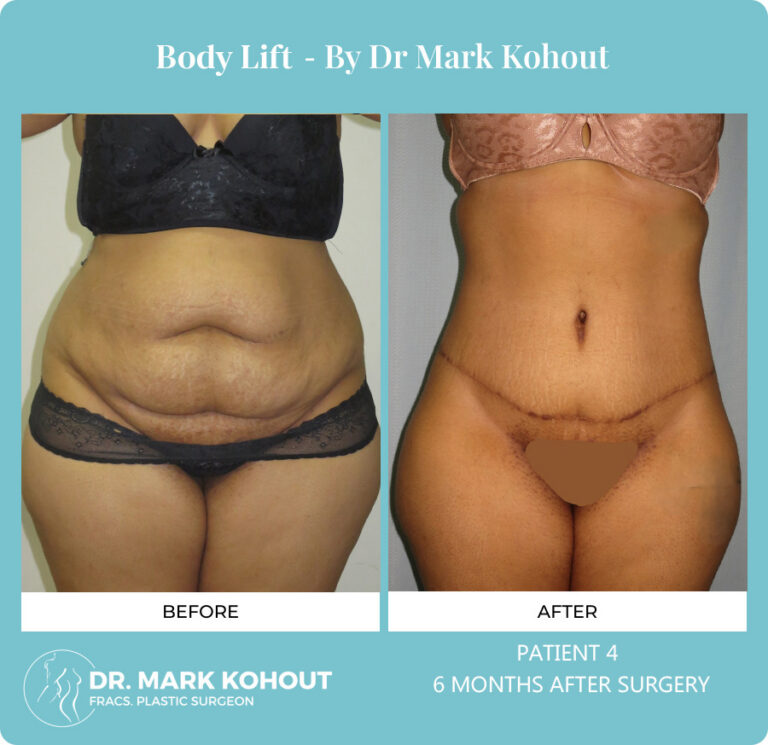
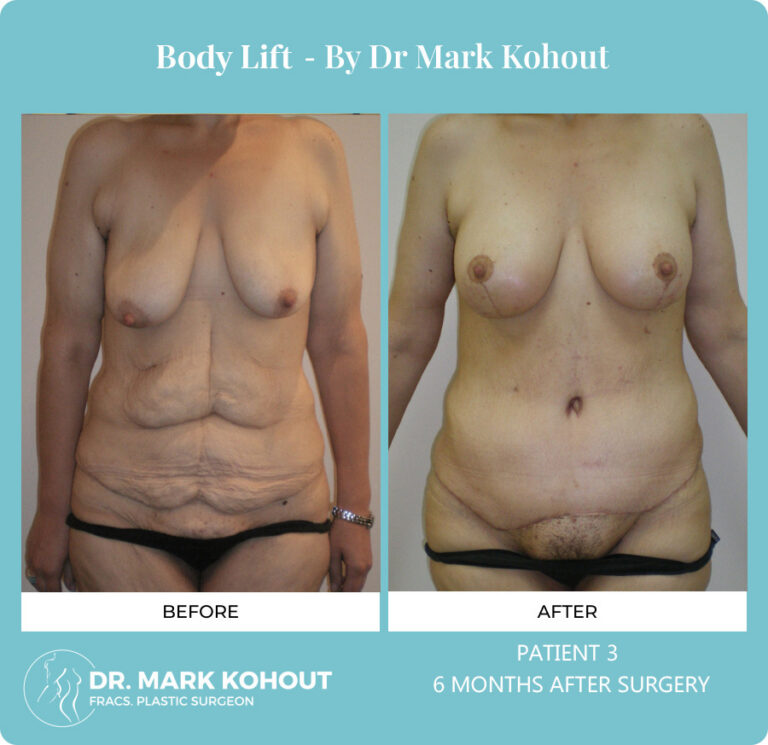
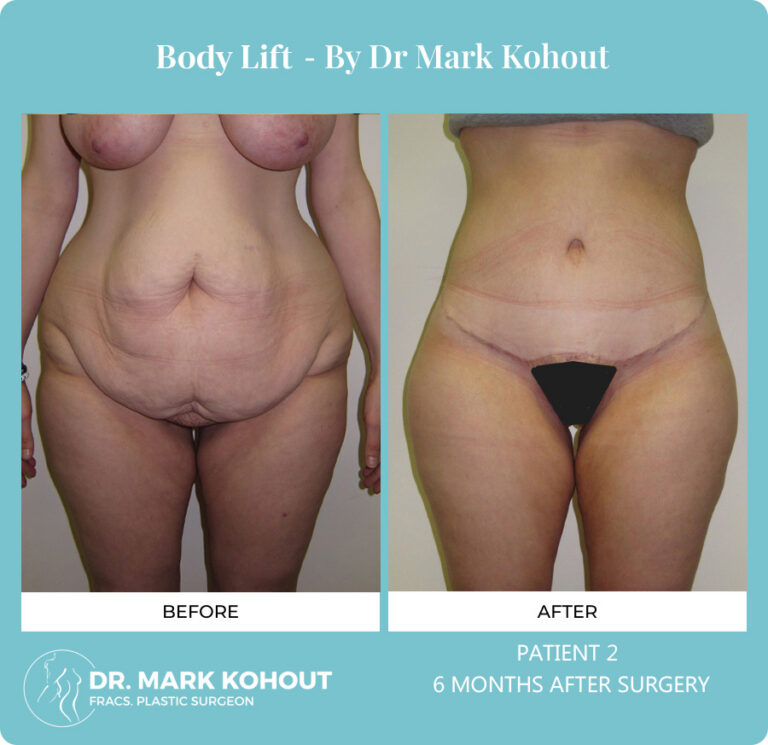
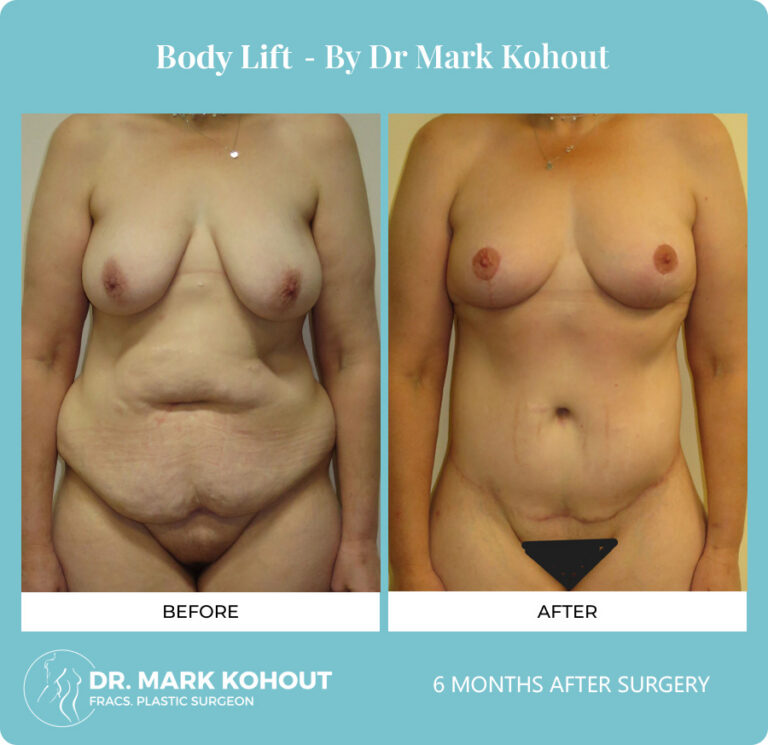
Before and after images may be available during consultation where appropriate. Images should be viewed as examples of individual patient cases, not as a prediction of your own outcome. These should not create an expectation that the same result can be achieved for another patient. Outcomes vary depending on anatomy, healing and surgical plan.
Key points:
- Images show individual patient examples.
- Outcomes vary between patients.
- Photos do not guarantee a similar outcome.
- Context and timing after surgery matter.
Disclaimer
Individual results vary due to personal health factors and genetics, and all surgical procedures carry inherent risks that should be discussed with a qualified health professional.
Why Is There No Standard Body Lift Price?
There is no single body lift price that accurately applies to every patient.
“Body lift” may describe a range of operations with different incision patterns, operating times, hospital requirements and levels of complexity. A limited operation involving one region is different from circumferential surgery involving the abdomen, waist and lower back.
Costs may vary according to:
- the extent of the proposed operation
- the anatomical areas included
- the anticipated theatre time
- the expected hospital stay
- anaesthetic requirements
- the patient’s health and previous surgery
- whether multiple procedures are combined
- whether surgery is staged
- whether a Medicare item applies
- the patient’s private health insurance arrangements
Previous bariatric or abdominal surgery may alter the planning of incisions and tissue movement. Existing scars can also affect blood supply and wound planning.
Medical conditions such as diabetes, cardiovascular disease, anaemia or a history of blood clots may require additional assessment or changes to the surgical plan.
For these reasons, an advertised figure or telephone estimate may not represent the operation an individual patient requires. A personalised quote can only be prepared after consultation, examination and development of a proposed surgical plan.

Why Is a Consultation Required Before a Quote?
The consultation is a clinical assessment rather than a pricing appointment alone.
During the consultation, Dr Kohout may:
- discuss the patient’s reasons for considering surgery
- review weight loss and weight stability
- examine the areas of concern
- assess functional symptoms
- review previous operations and scars
- consider current medical conditions and medications
- discuss smoking or nicotine use
- explain possible incision locations
- consider whether the operation should be staged
- discuss risks, limitations and recovery requirements
- determine whether an MBS item may be relevant
- explain the components likely to affect fees
A quote cannot be prepared accurately until the procedure has been defined. The cost of an abdominal operation will differ from that of a circumferential body lift or a staged plan involving more than one anatomical area.
Additional information may be requested from a GP, bariatric surgeon, physician or another treating practitioner. Some patients may also require medical investigations before a final surgical recommendation can be made.
Following assessment, the practice can provide a written estimate for Dr Kohout’s fee and identify other providers from whom separate estimates should be obtained.
What If Only Part of the Surgery Is Medically Indicated?
A proposed operation may include both medically indicated and cosmetic components.
In this situation, Medicare may apply only to the eligible service. Additional areas or procedures that do not meet an MBS item description are generally self-funded.
For example, a patient may meet the requirements for treatment of redundant tissue in one area but request surgery in another area that is not associated with documented functional problems. The second component may not attract a Medicare rebate or insurer benefit.
MBS restrictions may also prevent certain items from being billed together. The item descriptions for abdominal and non-abdominal lipectomy list services with which they cannot be associated.
Where a surgical plan contains covered and self-funded components, the written fee information should identify the distinction where possible.
A procedure cannot be classified as medically indicated solely for the purpose of obtaining Medicare or insurer benefits. The item used must accurately describe the service performed and the clinical circumstances.
What Should You Bring to Your Consultation?
Patients seeking an assessment regarding Medicare and body lift surgery may find it helpful to bring:
- a current Medicare card
- private health insurance details
- a GP referral, where applicable
- a list of medications and supplements
- details of medical conditions
- records of previous surgery
- information about previous bariatric treatment
- an approximate timeline of weight changes
- documents relating to functional symptoms
- relevant reports from other treating practitioners
- a list of questions about fees and insurance
Documentation may assist the assessment but does not establish eligibility by itself.
Patients may also wish to ask:
- What operation is being proposed?
- Which anatomical areas are included?
- Is a current MBS item potentially relevant?
- What is included in the surgeon’s quote?
- Will the anaesthetist and hospital provide separate estimates?
- Could the procedure require more than one stage?
- What follow-up appointments are included?
- What expenses may not be covered by Medicare or insurance?
- What happens if the surgical plan changes?
- What financial arrangements apply if complications require additional care?
FAQs About Medicare and Body Lift Surgery
Does Medicare cover body lift surgery in Australia?
Medicare does not automatically cover body lift surgery. A rebate may apply only when the proposed procedure is medically indicated and meets the full requirements of a current Medicare Benefits Schedule item. Surgery performed solely to change appearance is generally self-funded.
Can Medicare apply after significant weight loss?
It may apply in selected cases where redundant skin following significant weight loss causes documented functional problems. The amount of weight lost, the period of weight stability, the area being treated and the proposed operation must all be assessed.
Does previous bariatric surgery mean I will qualify?
No. Previous bariatric surgery does not automatically establish Medicare eligibility. Dr Kohout must assess your weight history, current symptoms, anatomy and proposed surgical plan against the relevant MBS criteria.
Will Medicare pay the full cost of a body lift?
Usually not. Medicare provides a rebate toward an eligible medical service rather than paying the full cost of surgery. Out-of-pocket costs may still apply for the surgeon, anaesthetist, hospital, surgical assistant and other services.
Can private health insurance cover body lift surgery?
Private health insurance may contribute when a valid Medicare item applies and the patient’s policy includes the relevant hospital treatment. Waiting periods, exclusions, excesses, co-payments and hospital agreements may affect the amount payable.
Why can’t I receive a body lift price before consultation?
Body lift surgery varies considerably between patients. The cost depends on the anatomical areas treated, the extent of surgery, operating time, hospital stay, anaesthetic requirements and whether surgery is performed in one stage or several stages. A personalised quote can only be prepared after an individual assessment.
Are the hospital and anaesthetist included in the surgeon’s quote?
These fees are generally separate. Patients may receive individual estimates from Dr Kohout, the anaesthetist, the hospital and, where applicable, a surgical assistant. Each estimate should be reviewed when calculating the likely out-of-pocket cost.
Medical References
- Guaranteeing Medicare – Medical Benefits Schedule review – Plastic and reconstructive surgery services. https://www.health.gov.au/sites/default/files/documents/2021/05/guaranteeing-medicare-medical-benefits-schedule-review-plastics-reconstructive-surgery-services.pdf
- Guaranteeing Medicare – Medical Benefits Schedule review – Plastics and Reconstructive Surgery. https://www.health.gov.au/sites/default/files/documents/2021/06/guaranteeing-medicare-medical-benefits-schedule-review-plastics-and-reconstructive-surgery.docx
- Circumferential Lower Body Lift With Auto-Buttock Augmentation: A New Approach. https://pmc.ncbi.nlm.nih.gov/articles/PMC6750466/
- Prioritising patients for publicly funded bariatric surgery in Queensland, Australia. https://www.nature.com/articles/s41366-024-01615-2
- Quality of Life After Bariatric and Body Contouring Surgery in the Australian Public Health System. https://www.sciencedirect.com/science/article/pii/S0022480422008599
- Bariatric surgery: a call for greater access to coordinated surgical and specialist care. https://www.mja.com.au/journal/2022/217/5/bariatric-surgery-call-greater-access-coordinated-surgical-and-specialist-care
- Trends in Medicare Reimbursement for Body Contouring. https://journals.lww.com/prsgo/Fulltext/2021/10001/Trends_in_Medicare_Reimbursement_for_Body.151.aspx
Discuss Medicare, Fees and Body Lift Surgery in Sydney
Understanding Medicare and body lift costs begins with knowing which procedure is being considered and whether a current MBS item may be relevant. A consultation with Dr Mark Kohout allows your weight history, functional concerns, medical background and proposed surgical plan to be assessed individually.
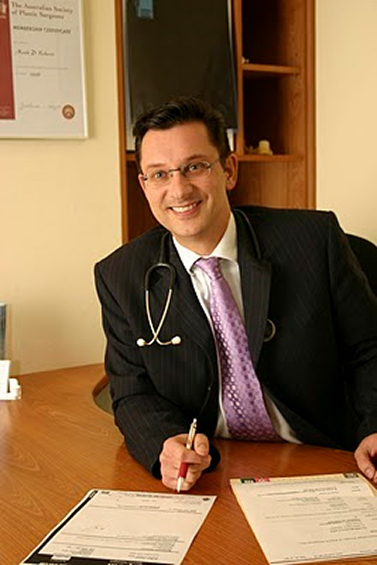
Dr Mark Kohout MBBS, FRACS (Plast), Specialist Plastic Surgeon, consults at Australia Plastic Surgery, Suite 2, 37 Bay St, Glebe, Sydney NSW 2037. Contact the practice to arrange a consultation and receive information about the proposed procedure, expected fee components and questions to raise with Medicare or your private health insurer.
Take our Plastic Surgery Quiz to find out if you’d be a good candidate and if you are ready for cosmetic surgery.
Further Reading
- View Body Lift Surgery Gallery
- Read more about Body Procedures
- Read more about Abdominoplasty / Tummy Tuck Sydney
- Read more about Liposuction Sydney
- Read more about Costs and Finance Page
- Read more about Using Your Superannuation to Pay for Surgery
- Read more about Risks and Complications of Plastic Surgery
Welcome to the Practice of
Dr. Mark Kohout
With over 25 years of experience and Harvard training, Dr. Mark Kohout offers experienced plastic and reconstructive surgery at his Sydney and Orange clinics. His patient-first approach focuses on delivering safe, natural results tailored to your unique goals.
What's Next?
Whether you are ready for a professional evaluation or just have a quick question, we’ve made it easy to connect with our team. Choose the option that best fits your needs below.
Book your Consultation
Take the first step toward your goals by filling out the brief form below. This information helps us understand your specific needs so we can make the most of our time together during your session. Once you submit your details, a member of our team will review your request and reach out shortly to confirm your appointment.
Patient Photo Assessment
Sending photos for a patient photo assessment can help you and your plastic surgeon prepare for your consultation. By reviewing clear, accurate photos, Dr Kohout can provide preliminary patient photo assessment like insights, assess your needs, and determine the right approach for your procedure.
Tips for Uploading Photos
ASK A FRIEND
Friend takes photo
GOOD LIGHTING
Plain wall, bright light
ALL ANGLES
Front / sides/ 45°
CLEAR & SHARP
No portrait mode
SEND ORIGINALS
No edits or compression

Experienced Plastic Surgeon
Dr. Mark Kohout

A qualified plastic surgeon who operates with care and integrity, based in central Sydney with over 20 years of experience in the cosmetic field. His extensive training and experience assures patients they are in highly trained surgical hands. Dr. Kohout is a dedicated, friendly professional who is committed to providing the high quality care, support and results, alongside his compassionate team.
Dr Mark Kohout (MED0001133000)
Specialist Plastic Surgeon
Specialist registration in Surgery – Plastic Surgery

25
Years of Experience
Years of Delivering Exceptional Cosmetic Care.

10000+
Surgical Procedures
Procedures performed by our qualified surgeons.

15+
Available Treatments
Cosmetic treatment options tailored to your needs.
Our Trusted
Accreditations





Dr Mark Kohout is a qualified plastic surgeon based in central Sydney, with over 20 years of experience in the field of cosmetic and reconstructive surgery. He draws on extensive surgical training and clinical experience to tailor care to the individual needs and goals of each patient.
Dr Kohout is known for his thoughtful, patient-centred approach, guiding individuals through each stage of their surgical journey — from initial consultation to post-operative care. Working alongside a compassionate and professional team, he is committed to providing high standards of care in a supportive and respectful environment.
Explore
Locations
- Suite 2, 37 Bay St, Glebe, Sydney, NSW 2037
- Level 5, 1521 Forest Rd, Orange NSW 2800
©2024 All Rights Reserved