

Dr Mark Kohout

Managing Swelling and Bruising after Breast Augmentation

doctor working
Home » Blog » Managing Swelling and Bruising after Breast Augmentation
Managing Swelling and Bruising after Breast Augmentation by Dr Mark Kohout

Table of Contents

Managing Swelling and Bruising after Breast Augmentation banner

Breast augmentation is a frequently requested surgical procedure in Sydney, offering patients the opportunity to alter the size and shape of their breasts through the placement of implants. For individuals considering this procedure, one of the most common postoperative concerns is the presence of swelling and bruising. These are normal aspects of the body’s healing process and, while temporary, can influence how patients perceive their recovery. For many patients, this stage can also be a source of uncertainty and emotional sensitivity, making it essential to have a clear understanding of what is typical and what may need medical attention.

This article, written with insights from Dr Mark Kohout, a Plastic Surgeon based in Sydney, aims to provide clear, factual guidance about managing bruising after breast augmentation. By understanding what to expect and how to respond appropriately, patients can better navigate the recovery process with confidence. Informed patients are often more prepared for recovery and more comfortable with the temporary changes their bodies undergo after surgery.

What Causes Bruising After Breast Augmentation Surgery?

During breast augmentation, tissues within the chest are carefully manipulated to create space for implants. In the process, small blood vessels can be disrupted, causing minor bleeding under the skin. This collection of blood – known as bruising – results in visible discolouration that can appear purple, blue, green, or yellow as it heals. The location and degree of bruising can vary significantly from one patient to another, depending on individual vascular structure and healing response.

Importantly, bruising is not typically a sign of complications. It reflects the body’s response to surgery and is part of a standard recovery. Factors such as implant placement (submuscular versus subglandular), patient skin tone, natural healing ability, and even surgical technique can influence the extent and appearance of bruising. For instance, submuscular placement often results in more pronounced bruising due to greater disruption of deeper tissues.

Additionally, the use of electrocautery or blunt dissection methods during surgery may also play a role in the severity of bruising. Certain individuals, such as those with a history of easy bruising or who take anticoagulants, may be predisposed to more extensive discolouration. Proper patient screening and preoperative planning with Dr Mark Kohout help to mitigate some of these risk factors and set clear expectations for recovery.

Download Dr Mark Kohout’s Breast Augmentation

The Appearance and Timeline of Postoperative Bruising

Most patients will notice some degree of bruising around the breasts and possibly along the sides of the chest wall. This bruising may appear uneven or asymmetrical, which is generally expected due to individual anatomical differences. The affected area may initially feel firm or tender, which typically improves as the bruising resolves.

In the early days following surgery, bruising may be accompanied by swelling and a sensation of tightness in the chest. This is a result of both fluid accumulation and the initial inflammatory response to surgical intervention. As the body clears the blood trapped beneath the skin, the colour of bruising will evolve, moving from dark hues to lighter shades.

Some patients may notice that bruising migrates downward slightly due to gravity. This is especially common in the lower breast and abdominal areas. It’s important for patients to understand that this pattern is not necessarily a cause for concern. As the body gradually reabsorbs the blood, bruises typically fade without the need for intervention.

Follow-up appointments are an opportunity for the surgical team to monitor this healing process. Dr Mark Kohout may take clinical photos during these visits to compare progress and reassure patients about the expected course of recovery.

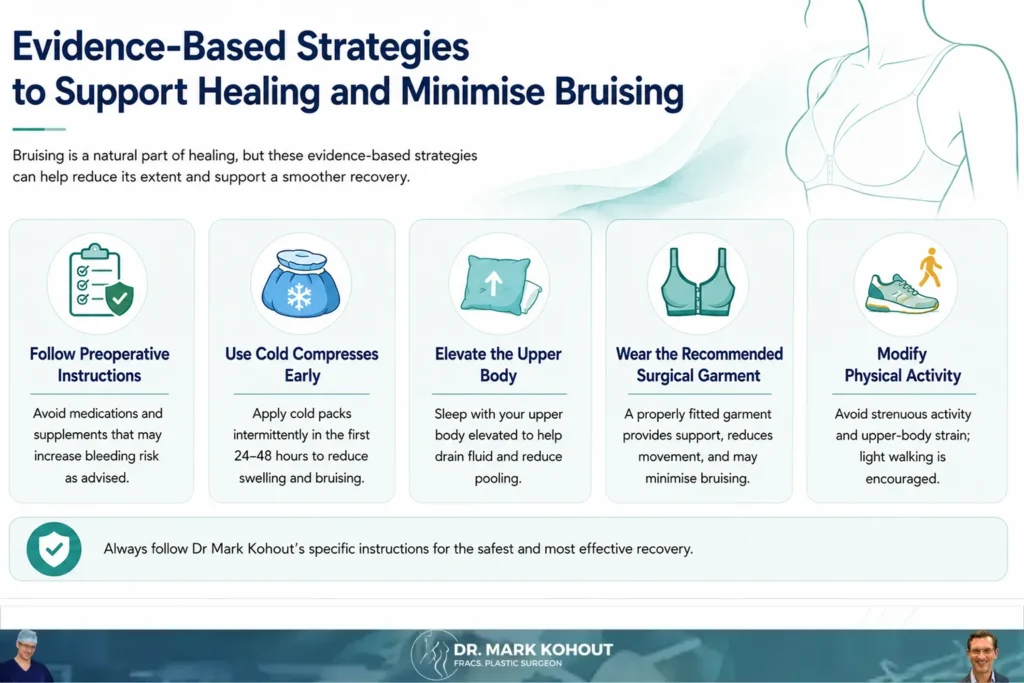
Evidence-Based Strategies to Support Healing and Minimise Bruising

While bruising cannot be entirely prevented, there are several strategies known to support healing and reduce its extent. Following these guidelines can help shorten the duration and intensity of bruising and contribute to overall comfort during recovery.

✓ Follow Preoperative Instructions Carefully

Before surgery, Dr Mark Kohout, Plastic Surgeon in Sydney, provides detailed preoperative guidance to help prepare the body for optimal healing. Patients are often advised to avoid medications or supplements that may increase bleeding risk, such as aspirin, anti-inflammatories, vitamin E, and fish oil. These recommendations aim to reduce the chance of excessive bruising.

Patients may also be instructed to undergo blood testing to assess clotting function, especially if there’s a history of bleeding disorders. Making these adjustments in advance creates a safer surgical environment and reduces postoperative complications.

✓ Use Cold Compresses in the Early Days

In the first 24-48 hours after surgery, applying cold packs (wrapped in cloth) to the chest area intermittently can help constrict blood vessels and limit bleeding into the tissues. This may assist in minimising both swelling and superficial bruising. Care must be taken not to apply ice directly to the skin.

Proper timing and gentle application are important for effectiveness. Cold therapy should be used in moderation to avoid slowing the body’s natural inflammatory response, which plays a key role in wound healing. When used correctly, this method can provide both physical relief and cosmetic benefit.

✓ Elevate the Upper Body While Resting

Keeping the upper body elevated-using extra pillows or an adjustable bed-can assist in drainage and reduce the pooling of fluid and blood in the surgical area. This position is especially useful during sleep in the first week following surgery.

This technique also decreases pressure on the incision sites and minimises the risk of fluid accumulation. Patients are encouraged to maintain this elevation both day and night during the initial postoperative period, gradually returning to their usual sleeping posture once advised by Dr Mark Kohout.

✓ Wear the Recommended Surgical Garment

A properly fitted surgical bra or support garment helps stabilise the implants, reduce tissue movement, and apply gentle compression. These factors may contribute to a reduction in bruising by limiting further vascular disruption during healing. Dr Mark Kohout typically advises wearing these garments continuously, except when showering, during the early postoperative period.

Wearing the garment as instructed also helps reduce discomfort and promotes a sense of support. This external stabilisation contributes not only to aesthetic results but also to safety during recovery. Patients report feeling more confident performing light tasks when wearing their surgical bra.

✓ Modify Physical Activity

Strenuous physical activity, especially involving the upper body, should be avoided for several weeks. However, light walking is encouraged to promote circulation and support overall recovery. By avoiding lifting, pushing, or pulling heavy objects, patients reduce the risk of re-injury to healing blood vessels.

Gradual reintroduction of movement helps prevent stiffness and supports cardiovascular health. Patients should wait for clearance from Dr Mark Kohout before returning to any gym-based or upper-body workouts. Patience and adherence to guidelines often result in a smoother, more predictable recovery.

Evidence Based Strategies to Support Healing and Minimise Bruising by Dr Mark Kohout

When Bruising May Require a Closer Look

While bruising after breast augmentation is almost always benign, there are instances where it may indicate an issue such as a haematoma (a more significant collection of blood). Patients should promptly seek medical review if they experience symptoms that deviate from the expected healing course.

An expanding or firm bruised area that causes discomfort or visible asymmetry may suggest bleeding under pressure. Haematomas often appear within the first few days after surgery and may require drainage to prevent tissue stress or implant displacement. Infections, although rare, may also present with redness, warmth, or systemic signs such as fever.

Timely recognition of these symptoms allows early intervention and typically leads to good outcomes. Dr Mark Kohout, practising in Sydney, provides comprehensive follow-up care and encourages patients to attend all scheduled reviews to monitor recovery and address any concerns early.

Individual Recovery Variation: Setting Realistic Expectations

Each person’s healing process is unique. Some patients may have minimal bruising that fades quickly, while others may experience more prominent or longer-lasting discolouration. These differences can be influenced by age, skin type, surgical details, and genetics.

It is also important to acknowledge the psychological aspect of recovery. Visible bruising and swelling may cause concern, especially during the first week. Patients are encouraged to focus on the broader recovery journey rather than isolated visual changes.

Having realistic expectations allows patients to navigate the emotional aspects of recovery with greater ease. Open communication with Dr Mark Kohout supports this mindset, as each consultation offers clarity and reinforces the expected healing trajectory. Ultimately, full results often emerge over several months as internal healing completes and tissues adapt to their new contour.

Role of the Plastic Surgeon in Postoperative Support

The guidance of a qualified plastic surgeon is essential not only for the surgical procedure itself but also throughout the postoperative period. A surgeon’s role includes overseeing healing progress and offering reassurance and modifications when needed.

Trust and continuity of care are crucial. From initial assessment through to final follow-up, Dr Mark Kohout remains engaged with each patient’s recovery. He helps monitor for complications, answers questions about expected bruising, and tailors advice based on the patient’s response to surgery.

Many patients find this ongoing connection reassuring and informative. It reinforces that they are not alone in their recovery and that support is always available if questions or concerns arise along the way.

Geographic Relevance: Recovery in Sydney, Australia

Recovery from breast augmentation may be influenced by local climate and lifestyle. Sydney’s warmer temperatures-particularly in spring and summer-can potentially increase swelling. As such, rest, hydration, and the use of cooling techniques become particularly important.

Urban living may also require planning to avoid crowded areas or activities that involve bumping or jostling the chest area. Sydney’s healthcare infrastructure supports accessible postoperative care, making it easier for patients to receive timely reviews and medical input.

Living close to Dr Mark Kohout’s clinic ensures that patients have the benefit of accessible care throughout their recovery. Whether for routine check-ups or unanticipated issues, being nearby enhances the safety and convenience of the healing journey.

Preparing for Surgery with a Clear Recovery Plan

Preparation plays a key role in how smoothly the postoperative period progresses. Patients who proactively organise their recovery environment tend to experience lower stress and better comfort during the early days after surgery.

This may involve preparing a designated rest area at home, ensuring mobility is easy and essentials are within reach. Arranging childcare, pet care, or work responsibilities in advance allows for uninterrupted rest. Partnering with a friend or family member to assist with basic tasks, particularly in the first 48 hours, also contributes to a safer recovery.

During preoperative consultations, Dr Mark Kohout, Sydney-based Plastic Surgeon, discusses expected healing milestones and addresses individual concerns, including bruising and swelling. A clear understanding of what lies ahead enables patients to feel more in control of their recovery experience. Education, preparation, and consistent follow-up together form the foundation for a positive surgical journey.

FAQs About Bruising After Breast Augmentation

Can bruising appear several days after surgery even if it wasn’t visible immediately?

Yes, delayed bruising is not uncommon following breast augmentation. As swelling subsides and blood migrates through the tissues, discolouration may become more apparent a few days post-surgery. This is part of the normal healing trajectory and generally does not indicate a complication.

Why does one breast appear more bruised than the other?

Asymmetry in bruising is common due to natural differences in blood vessel distribution, implant pocket creation, and individual side-specific tissue response. Variations in bruising do not usually reflect surgical issues and often resolve without intervention.

Can sleeping positions affect the extent or duration of bruising?

Yes, sleeping flat or on your side too early in recovery can exacerbate bruising or swelling. Elevation supports fluid drainage and minimises blood accumulation near the surgical area. Dr Mark Kohout generally recommends sleeping with your upper body elevated during the first week.

Does skin tone or complexion influence how bruising appears?

Darker or olive skin tones may show bruising differently than lighter complexions. Bruises might appear deeper in hue or be more subtle in some patients. While the appearance can vary, the biological process behind bruising remains consistent across skin types.

Is there a link between emotional stress and prolonged bruising?

While not a direct cause, elevated stress can influence how the body heals, potentially impacting inflammatory processes. Prioritising rest, emotional wellbeing, and low-stress environments during recovery can be beneficial for overall healing.

How does hydration influence bruising resolution?

Staying well-hydrated assists circulation and lymphatic drainage, both of which are important in clearing bruising. Dehydration may delay this process, so patients are encouraged to maintain adequate fluid intake postoperatively, especially in Sydney’s warmer climate.

Should I be concerned if bruising reappears after it seemed to fade?

In some cases, light activity or massage may cause residual blood in the tissue to shift slightly, leading to a temporary re-darkening of the area. This should fade again as healing continues. If accompanied by swelling or discomfort, a review with Dr Mark Kohout may be warranted.

Medical References

Final Considerations on Postoperative Bruising After Breast Augmentation

Bruising is a common and expected part of the healing process following breast augmentation. By understanding its causes, expected timeline, and management strategies, patients can approach recovery with realistic expectations and a proactive mindset.

Recognising the difference between normal healing and signs that warrant further attention is crucial. Partnering with a trusted healthcare professional throughout the recovery journey helps ensure optimal outcomes.

For those considering breast augmentation in Sydney, consultation with a qualified plastic surgeon is an essential step. Dr Mark Kohout, Plastic Surgeon based in Sydney, offers patient-focused care that supports informed decision-making and comprehensive postoperative guidance. His commitment to thorough consultation, surgical planning, and follow-up makes him a reliable partner throughout each patient’s recovery experience.

Further Reading

Related Blog Posts

How to Choose the Right Breast Implant Size in Sydney

How to Choose the Right Breast…

Many people who visit Dr Mark Kohout’s practice in Sydney arrive with the same key question in mind: “What breast implant size will suit my body?“   Some are hoping for…

FAQs About Breast Augmentation with Breast Implants

FAQs About Breast Augmentation with Breast…

Breast augmentation with breast implants is a procedure many individuals consider for various reasons, including balancing asymmetry, restoring volume after pregnancy or weight loss, or achieving a sought aesthetic appearance.…
Recovery after Breast Implants Surgery

Recovery after Breast Implants Surgery

What to Anticipate in the Initial 6 Months after Breast Augmentation Whether you’re undergoing breast augmentation for cosmetic reasons or reconstructive purposes, understanding the recovery process is important for a smooth transition…
Dr. Mark Kohout

Experienced Plastic Surgeon

Dr. Mark Kohout

A qualified plastic surgeon who operates with care and integrity, based in central Sydney with over 20 years of experience in the cosmetic field. His extensive training and experience assures patients they are in highly trained surgical hands. Dr. Kohout is a dedicated, friendly professional who is committed to providing the high quality care, support and results, alongside his compassionate team.

Dr Mark Kohout (MED0001133000)
Specialist Plastic Surgeon
Specialist registration in Surgery – Plastic Surgery

This website contains imagery which is only suitable for audiences 18+. All surgery contains risks, read more here.

X

Get Your Breast Augmentation Guide

Get Your Facial Aesthetic

Get Your Breast Implant Removal

Get Your Female Genital Surgery Guide

Get Your Excess Skin Guide

Get Your Gynaecomastia Guide

Get Your Liposuction Guide

Get Your Abdominoplasty Guide

Get Your Cost of Surgery Guide

Get Your Breast Implant Replace Guide

Get Your Breast Reduction Guide

Make an Enquiry